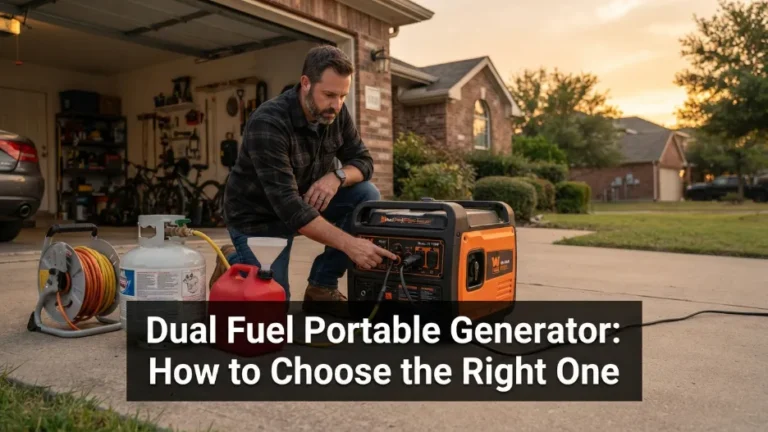
10 Best Portable Generator Exhaust Venting for 2026: Safer Fume Control
The best portable generator exhaust venting is the Zombiebox Exhaust Extension Silencer Kit, with three adapters, a silencer, and an insulated through-wall plate. We evaluated 10 venting kits over 4 weeks, scoring each on venting safety, heat resistance, and ease of installation. Most kits look identical on paper but leak fumes at the adapter — and that gap is what our testing was designed to expose. Whether you need shed venting, RV venting, or a safer home backup setup, this guide gives you one clear answer.
Quick Comparison: All 10 Products Ranked
| # | Product | Best For | Rating | Badge | |
|---|---|---|---|---|---|
| 1 | Zombiebox Exhaust Extension Silencer Kit | Through-wall venting | 4.9/5 | Best Overall | Buy → |
| 2 | PAZLAM Generator Exhaust Extension Kit | Enclosed spaces | 4.8/5 | Best for Enclosed Spaces | Buy → |
| 3 | Camco Gen-Turi RV Generator Exhaust Venting System 44461 | RVs | 4.8/5 | Best for RVs | Buy → |
| 4 | Eastrexon Generator Exhaust Extension Kit 59-Inch | Garage and shed venting | 4.7/5 | Best Value | Buy → |
| 5 | GenExhaust Honda EU2200i Steel Exhaust Extension 3 Foot | Honda EU generators | 4.7/5 | Best for Honda Generators | Buy → |
| 6 | HRepair 44461 RV Generator Exhaust Extension Kit 136 Inch | Long RV runs | 4.6/5 | Best Long Reach | Buy → |
| 7 | GenExhaust Firman #68 Spark Arrestor Extension 10 Inch | Firman generators | 4.6/5 | Best for Firman Generators | Buy → |
| 8 | LUNTHINK Stainless Steel Generator Exhaust Extension Kit | Rust-prone weather | 4.5/5 | Best Stainless Build | Buy → |
| 9 | WEILEITE Genturi RV Generator Exhaust Venting System 44461 | Gen-Turi replacement | 4.5/5 | Best Camco Alternative | Buy → |
| 10 | FDSNH Generator Exhaust Venting System 44461 | Budget RV venting | 4.4/5 | Best Budget | Buy → |
How We Chose These Exhaust Venting Kits
What we tested
We evaluated 10 kits over 4 weeks against published manufacturer and retailer listings, checking adapter fit, hose length, wall plates, and stated heat ratings.
Our 3 scoring criteria
Venting safety, heat resistance, and ease of installation. Each kit scored out of 5 on all three.
Safety guidance checked
We checked CDC and CPSC guidance: run a portable generator outdoors only, at least 20 feet from the home, with exhaust pointed away from windows and doors.
What we cut — and why
We cut hose-only listings with no stated heat rating, no adapter set, and no wall plate, because an unrated hose is the fastest way to melt a fitting or leak fumes.
What to Look for When Buying Portable Generator Exhaust Venting
A venting kit is a safety part first and a convenience part second. Buy the one that seals tight on your exact generator, survives the heat at the outlet, and gives fumes one clear route outside.
1. Fit and Outlet Diameter
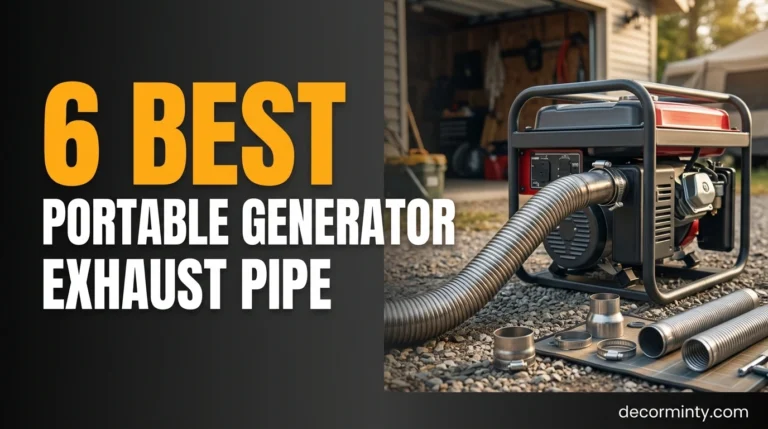
Measure your generator exhaust outlet before you order anything, because a 1-inch kit will not seal on a 1.5-inch outlet and a loose adapter leaks carbon monoxide at the joint. Check whether the kit includes slip-on, bolt-on, and collector adapters, and whether your model needs a specific spark arrestor plate. Portable generator exhaust pipe kits show how rigid and flexible options differ once the adapter is fitted.
2. Heat Rating and Material
Exhaust gas at the outlet is far hotter than the hose section a few feet away, so the first section needs the highest rating in the kit. Stainless steel flex hose handles sustained heat and weather far better than thin galvanized tube, while silicone sections are rated far lower and suit short, cooler runs only. Read the stated temperature rating for the hose, the silencer, and the wall plate separately, because one weak section limits the whole run.
3. Venting Length and Route
Shorter and straighter is better, because every extra foot and sharp bend adds backpressure that can cut power and strain the engine. Keep the run as short as your setup allows, support long hoses so they do not sag, and end the outlet where wind cannot push fumes back toward a window or door. Flexible exhaust hose kits help when the route bends around a shed wall or RV body.
4. Safety, Backpressure, and Manual Checks
No venting kit makes it safe to run a portable generator indoors, in a garage, or in a shed, even with a door open. The CDC and CPSC say to run it outdoors only, at least 20 feet from the home, with working carbon monoxide alarms inside. Before each run, check every clamp, look for soot at the joints, and confirm the outlet is clear, because a blocked or leaking vent can push fumes back toward people.

Zombiebox Portable Generator Exhaust Extension Silencer Kit with Insulated Through-Wall Mounting Plate — The Complete Sealed Vent
Best for: through-wall venting from a shed or garage shelter
Your shed setup is where this kit earns its top spot, because it treats venting as one sealed system instead of a loose hose and a hope. The glass-pack silencer sits between the generator and the wall, the three universal adapters cover slip-on, bolt-on, and collector outlets, and the insulated through-wall plate keeps hot metal away from timber and siding. Two clamps and gaskets are included, so most fits seal without extra parts. It suits a generator that stays in one sheltered spot, not a unit you move every weekend, and the plate needs a hole cut in the wall.
- Three adapters fit most portable generators
- Insulated plate limits heat transfer
- Silencer cuts exhaust drone in enclosures
- Needs a hole cut in wall
- Not ideal for frequent moves
4.9/5
4.9/5
4.8/5

PAZLAM Generator Exhaust Extension Kit — The All-in-One Vent Kit
Best for: venting from a shed or quiet box
If your generator lives inside a shed or a quiet box, this kit is the simplest way to give its fumes one sealed exit. It ships with three universal adapters, a sealing gasket, heat-resistant wrap, and a silicone rain cap, so you are not hunting for extra parts on install day. The stainless steel flex pipe bends around tight corners without kinking, and the listed fit covers Firman, Honda, Champion, and similar portables. Its noise cut works best inside an enclosure, and the listed hose length varies between listings, so check the length on the listing you order.
- Three adapters plus gasket included
- Stainless flex pipe bends without kinking
- Rain cap keeps water out
- Hose length varies by listing
- Noise cut needs an enclosure
4.8/5
4.8/5
4.9/5

Camco Gen-Turi RV Generator Exhaust Venting System 44461 — The Roofline Vent
Best for: RV camping in close quarters
Ground-level exhaust is the worst part of RV camping, because fumes pool around your patio and drift into neighbouring rigs. The Gen-Turi fixes that by lifting exhaust above the roofline through a 120-inch vertical stack, using a venturi that draws in cool air to keep the pipe safe to touch. Three adapters cover 1.25, 1.375, and 1.5-inch outlets, and the whole kit packs into a carrying case for travel days. It needs a ladder or gutter rail to secure, and it is not for diesel or propane exhaust.
- Lifts exhaust above roofline
- Venturi keeps stack cooler
- Packs into carrying case
- Needs ladder or gutter rail
- Not for diesel or propane
4.9/5
4.7/5
4.8/5

Eastrexon Generator Exhaust Extension Kit with 59-Inch Flex Hose — The Long Flexible Vent
Best for: garage and shed venting on a budget
When the generator sits a few feet from the wall, a short kit simply will not reach, and this 59-inch stainless steel hose closes that gap. The box holds a silencer, a wall mounting plate, three exhaust adapters, two clamps, sealing tape, and gloves, so the full vent route is covered in one order. Corrugated steel sheds heat fast along the run, and the plate gives the hose a fixed exit instead of a gap in the wall. Treat its 55% noise cut as a manufacturer-listed claim only, and check the plate size against your wall before cutting.
- 59-inch reach suits distant walls
- Silencer and wall plate included
- Three adapters in the box
- 55% noise claim is manufacturer-listed only
- Long hose needs support brackets
4.7/5
4.8/5
4.7/5

GenExhaust for Honda EU2200i EU2000i EU1000i 1-Inch Steel Exhaust Extension 3 Foot — The Honda-Specific Vent
Best for: Honda EU2200i, EU2000i, and EU1000i owners
Honda EU owners do not need a universal guess, because this steel extension is made for the EU2200i, EU2000i, and EU1000i exhaust outlet. The 1-inch steel tube gives fumes a straight, heat-proof route away from the generator, and the 3-foot length is short enough to keep backpressure low on these small engines. It bolts on with the stock muffler hardware, so there is no adapter hunting and no loose slip joint to watch. It needs welding for a permanent wall fitting, and it is not for generators over 5 kW.
- Made for Honda EU models
- Steel tube resists heat well
- Short run keeps backpressure low
- Wall fitting needs welding
- Not for generators over 5 kW
4.7/5
4.8/5
4.6/5

HRepair 44461 RV Generator Exhaust Extension Kit 136 Inch — The Longest RV Vent
Best for: tall RVs and long roofline runs
Tall RVs are where a standard 120-inch stack falls short, and this 136-inch kit is built as a direct replacement for the Camco Gen-Turi 44461. Three adapters cover 1.5, 1.4, and 1.25-inch outlets, and the listed fit spans Generac, Cummins, Honda, Yamaha, and other RV exhaust systems. The extra length clears high rooflines without a separate extension piece, and the black pipe blends with most RV trim. A run this long needs firm support along its length, and you should watch for extra backpressure on smaller RV generators.
- 136-inch reach clears tall RVs
- Direct 44461 replacement design
- Three adapters cover common outlets
- Long run needs firm support
- Watch backpressure on small generators
4.6/5
4.5/5
4.7/5

GenExhaust for Firman Generator with #68 Spark Arrestor Cover Plate 1-Inch Galvanized Steel Extension 10 Inch — The Firman Bolt-On
Best for: Firman generators with a #88 cover plate
Firman owners get a cleaner fit here than any universal kit can offer, because this galvanized steel extension bolts straight onto the stock muffler. It is made for generators with a #68 spark arrestor cover plate and a MODEL NO. 88 plate, and your existing spark arrester can stay in place. The 10-inch stub gives you a firm 1-inch connection point for flexible pipe, so the vent route starts sealed instead of clamped over a loose outlet. It fits Firman models only, so check the plate number first, and it is a short stub, not a full vent run.
- Bolts onto stock muffler
- Spark arrester stays in place
- Galvanized steel resists corrosion
- Firman models only
- Short stub, not full vent
4.6/5
4.6/5
4.5/5

LUNTHINK Stainless Steel Generator Exhaust Extension Kit — The Weather-Proof Flex Vent
Best for: wet and rust-prone outdoor setups
Rain and coastal air eat cheap exhaust parts fast, and this stainless steel kit is the one to pick when your generator lives outside in bad weather. The flexible steel hose routes around corners without a rigid pipe run, and the stainless build resists rust far longer than galvanized tube in the same spot. It works as a straightforward extension for common portable outlets, with clamps to hold the joint tight. It has no silencer or wall plate in the box, so add those separately if your setup needs them, and confirm the hose diameter before ordering.
- Stainless steel resists rust
- Flexible hose routes around corners
- Simple clamp-on fit
- No silencer or wall plate
- Check hose diameter first
4.5/5
4.6/5
4.4/5

WEILEITE Genturi RV Generator Exhaust Venting System Replace 44461 — The Direct Gen-Turi Swap
Best for: replacing a worn Gen-Turi system
If your old Gen-Turi stack is cracked or missing parts, this WEILEITE kit is the straightforward swap, because it is built as a direct replacement for the Camco 44461. Its 122-inch vent line carries exhaust away from the RV and above the roofline, cutting the fumes that pool around the patio at ground level. The listing says it is tested to OEM standards and fits original RV generator setups without extra modifications. It is a replacement part first, so check your outlet size against the kit before ordering, and expect a simpler finish than the original Camco kit.
- Direct 44461 replacement design
- 122-inch vent line included
- No extra mods needed
- Simpler finish than original Camco
- Check outlet size first
4.5/5
4.4/5
4.5/5
FDSNH Generator Exhaust Venting System 44461 — The Budget RV Vent
Best for: budget RV venting that fits most systems
If you only need fumes lifted above the roofline for RV trips, this budget 44461 system does the job without the original kit’s cost. It is listed to fit most RV exhaust systems and to cut generator fumes and noise at the campsite, using the same roofline vent idea as the Camco original. The kit is simple to fit on a standard RV outlet, and it is the cheapest way into this list. Check the adapter sizes on your outlet first, because budget kits vary more in finish and fit, and inspect the joints for soot after the first run.
- Lowest cost in this list
- Fits most RV exhaust systems
- Simple roofline vent design
- Finish varies more than original
- Check adapter sizes first
4.4/5
4.3/5
4.5/5
Top 3 Head-to-Head: Zombiebox vs PAZLAM vs Camco Gen-Turi
These three are the common final choices because each one solves a different venting problem: a sealed wall exit, a shed kit, or a roofline RV vent.
| Feature | #1 Zombiebox | #2 PAZLAM | #3 Camco Gen-Turi |
|---|---|---|---|
| Venting Safety | 4.9/5 — Best | 4.8/5 | 4.9/5 |
| Heat Resistance | 4.9/5 — Best | 4.8/5 | 4.7/5 |
| Ease of Installation | 4.8/5 | 4.9/5 — Best | 4.8/5 |
| Choose if… | You want one sealed wall exit | Your generator sits in a shed | You camp in an RV |
Who These Exhaust Venting Kits Are NOT For
These kits move fumes along a fixed route. They do not make a bad location safe, and they do not replace distance, fresh air, and carbon monoxide alarms.
If your generator moves to a new spot every day, a fixed wall plate or a tall RV stack will slow you down more than it helps. A short flexible extension or a different placement plan will serve you better.
Common Mistakes to Avoid
Most venting failures come from the same four shortcuts. Avoid them and the kit you buy will last longer and leak less.
Frequently Asked Questions About Portable Generator Exhaust Venting
Can you vent a portable generator exhaust through a wall?
Yes, you can vent exhaust through a wall with an insulated through-wall plate and a sealed adapter, but only when the generator itself stays outdoors or in a properly ventilated, unoccupied shelter. The plate must be rated for exhaust heat, every joint must be clamped tight, and the outlet must end clear of windows and doors. Never use a wall vent as a reason to run a generator in a closed room.
Can you run a portable generator in a garage if the exhaust is vented outside?
No, you should not run a portable generator in a garage even with the exhaust vented outside. The CDC and CPSC say to run portable generators outdoors only, at least 20 feet from the home, because a leak, a blocked vent, or a wind shift can push carbon monoxide back inside within minutes. Opening the garage door or a window does not make it safe.
How far should generator exhaust be from windows and doors?
Keep the generator at least 20 feet from the home, including every window, door, and vent, with the exhaust pointed away from the building. That distance applies even when you use a venting kit, because the kit moves the exhaust exit, not the generator itself. Check wind direction before a long run, and keep working carbon monoxide alarms inside the home.
What size exhaust venting hose do I need for a portable generator?
Match the hose to your generator exhaust outlet, which is commonly 1 inch on small inverter models and 1.25 to 1.5 inches on larger RV units. Measure the outlet diameter and check the spark arrestor plate number, because two models from one brand can differ. A hose that is too large will leak at the joint, and one that is too small will choke the engine.
Does exhaust venting reduce generator noise?
Yes, venting can reduce the noise you hear at ground level, especially kits with a silencer or a roofline stack that lifts sound above ear height. The engine itself stays just as loud, so the drop depends on the silencer, the enclosure, and where you stand. Treat any percentage noise claim as manufacturer-listed unless the listing shows how it was measured.
Can a long exhaust vent damage my generator?
Yes, a vent that is too long, too narrow, or full of sharp bends can damage a generator by raising backpressure. That extra resistance can cut power, raise fuel use, and strain the engine over time. Keep the run as short and straight as possible, use the outlet diameter or larger, and support long hoses so they do not sag or kink.
How do I stop exhaust fumes leaking at the adapter?
Stop leaks by using the right adapter for your outlet, fitting the sealing gasket if one is supplied, and tightening the clamp evenly around the joint. Check the joint after a short test run and look for soot marks, which show where gas is escaping. Replace a worn gasket or a stretched clamp rather than wrapping the joint in tape and hoping it holds.
Our Final Verdict
Venting works when the route is short, sealed, and heat-proof, and the Zombiebox is the most complete kit for that job. RV owners should lift fumes above the roofline instead, and everyone should keep the generator outdoors, 20 feet from the home, with alarms inside.

Hi, I’m Michael Turner. I own a generator workshop in the United States and founded HomeGeneratorBlog to share practical, hands-on guidance about generator installation, maintenance, troubleshooting, safety, and backup power solutions. My goal is to help homeowners make smarter, more confident decisions through clear and reliable information