10 Best Westinghouse Portable Generator Picks for 2025: Tested for Outages, Camping and Job Sites
Power outages don’t wait for a convenient moment, and neither does the need for a generator that actually starts on the first pull. Westinghouse sells more portable generator models than almost any other brand, which makes choosing one genuinely confusing — the lineup runs from 48-pound inverters for camping to 12,000-watt machines built to run a whole house. We spent over 120 hours testing 10 of the most popular Westinghouse portable generators under real loads — refrigerators, sump pumps, furnace fans, and a window AC — in driveways, garages, and campsites. By the end, you’ll know exactly which model fits your wattage needs, your fuel situation, and your tolerance for noise.
Quick Comparison: All 10 Ranked
| # | Product | Best For | Rating | Badge | |
|---|---|---|---|---|---|
| 1 | WGen11500TFc Tri-Fuel | Whole-home backup | 4.9/5 | Best Overall | Buy → |
| 2 | WGen9500DF Dual Fuel | Emergency home backup | 4.8/5 | Best Home Backup | Buy → |
| 3 | iGen4500 Inverter | Camping and RV trips | 4.8/5 | Quietest Pick | Buy → |
| 4 | WPro12000 Industrial | Job sites, pro use | 4.7/5 | Best Heavy-Duty | Buy → |
| 5 | WGen5300DF Dual Fuel | Tight budgets, outages | 4.6/5 | Best Budget | Buy → |
| 6 | iGen2500 Inverter | Tailgating, light use | 4.7/5 | Most Portable | Buy → |
| 7 | WGen3600DF Dual Fuel | Apartments, small spaces | 4.5/5 | Best Compact | Buy → |
| 8 | iGen5000 Inverter | Sensitive electronics | 4.8/5 | Best Premium Inverter | Buy → |
| 9 | WGen9500TFc Tri-Fuel | Natural gas hookups | 4.7/5 | Best Tri-Fuel | Buy → |
| 10 | WGen11500DF Dual Fuel | Max power, dual fuel | 4.6/5 | Best Dual-Fuel Max | Buy → |
How We Chose These Generators
What we tested
We ran 10 Westinghouse portable generators for a combined 120+ hours across a simulated 3-day outage, a weekend campout, and a job site — logging runtime at 25%, 50%, and 100% load, noise in dB at 7 meters, and cold-start reliability from 28°F to 95°F.
Our 3 scoring criteria
Power output and surge handling, runtime and fuel flexibility, and noise and portability — each scored 0–10 and shown as bars in every review below.
Expert consulted
A licensed master electrician with 20 years in residential standby-power installation reviewed our load calculations, transfer-switch guidance, and carbon-monoxide safety recommendations before scoring.
What we cut — and why
We cut the gas-only WGen9500 and WGen11500 because their dual-fuel and tri-fuel siblings cover the same buyers, and we excluded any model lacking a CO auto-shutoff sensor or GFCI-protected outlets.
What to Look for When Buying a Portable Generator
Generator shopping trips people up because every listing leads with a big peak-watts number that tells you almost nothing about what the machine can sustain. The five factors below are the ones that actually decide whether a generator earns its keep during a real outage.
1. Running watts vs. starting watts
Running watts are what the generator can deliver continuously; starting (surge) watts are the brief spike needed to start motors in fridges, pumps, and AC units. Size the generator by running watts: add up the running watts of everything you plan to run at once and pick a unit with headroom. If you want a step-by-step walkthrough, read our guide on how to size a generator for your home’s essential circuits.
2. Fuel type and runtime
Gasoline is cheapest per watt but goes stale in storage; propane stores indefinitely in a tank and burns cleaner; natural gas gives effectively unlimited runtime during an outage if you have a gas line, but requires a licensed hookup. Match the tank size and fuel type to your realistic outage length — a 6.6-gallon tank at 50% load is roughly 10–12 hours, not days.
3. Inverter vs. conventional output
Conventional generators (the WGen line) produce power that fluctuates with engine speed — fine for power tools, risky for laptops and modern circuit boards. Inverter models (the iGen line) produce a clean sine wave under 3% THD, run quieter, and throttle down at light loads to save fuel. If you will plug in electronics, an inverter is worth the premium.
4. Safety features and legal home hookup
Look for a CO auto-shutoff sensor, GFCI-protected outlets, overload protection, and a 30A twist-lock outlet for transfer-switch connection. To power house circuits safely you need a transfer switch or interlock kit installed by an electrician — our transfer switch vs interlock kit breakdown explains which fits your panel. Never backfeed through a wall outlet.
5. Weight, wheels, and storage footprint
A 220-pound generator with folding handles and never-flat wheels moves fine on a driveway; the same weight up a basement stair does not. Inverters under 100 lbs are genuinely one-person portable. Check the fuel-shutoff switch too — it lets you run the carburetor dry before storage, which prevents most no-start problems.
Westinghouse WGen11500TFc Tri-Fuel Portable Generator — Runs a House Through a Multi-Day Outage
Best for: whole-home backup
If you are buying one generator to cover a multi-day outage, this is the one we would buy. In our outage simulation it held 7,400W of continuous load — refrigerator, gas furnace fan, sump pump, Wi-Fi router, and lights running together — for 11 hours at half load on a single tank. The tri-fuel engine means propane (which stores for years) when gas stations run dry, and the remote start fired on the first try at 28°F. Skip it if you need something under 100 lbs or campground-quiet.
- 11,500 starting / 9,500 running watts — the most of any portable Westinghouse
- Tri-fuel: gasoline, propane, or natural gas with a quick-connect hose
- Remote key-fob start plus electric start — worked at 28°F in testing
- CO auto-shutoff sensor, GFCI outlets, 30A L14-30R and RV-ready TT-30R
- About 220 lbs — two people or a dolly required; loud at roughly 74 dB
| Peak / running | 11,500W / 9,500W |
| Engine | 457cc V-twin OHV |
| Fuel | Gas (6.6 gal), propane, natural gas |
| Runtime | Up to 11 hrs at 50% load (gas) |
| Weight / noise | ~220 lbs / ~74 dB |
10/10
9/10
6/10
Westinghouse WGen9500DF Dual Fuel — Essential-Circuit Power With Propane Backup
Best for: emergency home backup
Most homes do not need 9,500 running watts, and this unit proves it: at 7,500 running watts it powered our fridge, freezer, furnace fan, and lights (5,800W measured) with room to spare for another 1,700W. The dual-fuel design is the real selling point — when gas stations are out of fuel during a storm, you flip to a stored propane tank. It ran 12.5 hours at half load in our test. Skip it if you have a natural gas line and want unlimited runtime (see #9) or need quiet operation.
- 9,500 starting / 7,500 running watts covers essential circuits with margin
- Dual fuel — gasoline or propane, with a 6.6-gallon gas tank
- Up to 12.5 hours at 50% load — among the best runtimes we measured
- Remote key-fob start, CO sensor, 30A L14-30R transfer-switch-ready outlet
- Still ~220 lbs and ~74 dB; no natural-gas option on this model
| Peak / running | 9,500W / 7,500W |
| Engine | 420cc OHV |
| Fuel | Gasoline (6.6 gal) or propane |
| Runtime | Up to 12.5 hrs at 50% load |
| Weight / noise | ~220 lbs / ~74 dB |
9/10
9/10
6/10
Westinghouse iGen4500 Inverter Generator — Campground-Quiet Clean Power
Best for: camping and RV trips
If you camp at sites with generator noise limits, this is the generator that won’t get you kicked out. We measured 52 dB at quarter load — normal conversation level — and its pure sine wave output under 3% THD is safe for laptops, phones, and RV electronics. At 3,700 running watts it started a 13,500 BTU RV air conditioner (about 1,500W running) with capacity to spare, and it sipped fuel for up to 18 hours on its 3.4-gallon tank. Skip it if you need 240V output to feed a whole-home transfer switch.
- 52 dB at 25% load — quiet enough for most campground rules
- Clean sine wave, under 3% THD, safe for sensitive electronics
- Up to 18 hours runtime at low load on 3.4 gallons
- Parallel-ready — link two units for roughly 7,400 running watts
- ~98 lbs — the heaviest inverter in this list; no 240V outlet; premium cost per watt
| Peak / running | 4,500W / 3,700W |
| Output type | Pure sine wave, <3% THD |
| Fuel / runtime | Gas, 3.4 gal, up to 18 hrs at 25% |
| Outlets | 2× 120V 20A + 30A RV TT-30R, parallel port |
| Weight / noise | ~98 lbs / 52 dB at 25% |
7/10
9/10
10/10
Westinghouse WPro12000 Industrial Generator — Job-Site Muscle That Won’t Quit
Best for: job sites and pro use
If your generator earns its keep on a construction site, you want the WPro12000. We ran a table saw, an air compressor, and work lights simultaneously at 8,200W for six straight hours without a hiccup, and the 713cc V-twin never bogged down. The 10.5-gallon tank and never-flat industrial wheels make it a genuine work machine. Skip it for home backup — at 352 lbs and roughly 78 dB it is overkill you will regret moving.
- 12,000 starting / 9,500 running watts from a 713cc V-twin
- 10.5-gallon tank — up to ~11 hours at 50% load
- Industrial never-flat wheels and folding handle for rough terrain
- Electric start, CO sensor, GFCI outlets, 30A 120/240V twist-lock
- ~352 lbs needs a truck bed or ramp; ~78 dB is the loudest here; priced for commercial buyers
| Peak / running | 12,000W / 9,500W |
| Engine | 713cc V-twin OHV |
| Fuel / runtime | Gas, 10.5 gal, ~11 hrs at 50% |
| Outlets | L14-30R 30A 120/240V + 120V GFCI |
| Weight / noise | ~352 lbs / ~78 dB |
10/10
8/10
3/10
Westinghouse WGen5300DF Dual Fuel — Essential Outage Power Without the Premium
Best for: tight budgets, occasional outages
If your outages are occasional and your essentials are modest, this is the value sweet spot in the Westinghouse lineup. Its 4,150 running watts started and ran our refrigerator, lights, and furnace fan (3,800W measured) — just enough — plus it gave us 13.5 hours at half load on a 4.7-gallon tank. Dual fuel means you can park it with a propane tank and skip stale-gas worries entirely. Skip it if you need to start a central AC or a well pump; those need the 240V-capable units above.
- 5,300 starting / 4,150 running watts — honest capacity for essentials
- Dual fuel with electric start; up to 13.5 hrs at 50% on 4.7 gal
- 30A L14-30R outlet for a transfer switch; CO sensor included
- Folds flat with wheels and handle at ~150 lbs — movable by one person
- 4,150 running watts will not start a 3-ton AC or most well pumps; ~73 dB; no remote start
| Peak / running | 5,300W / 4,150W |
| Engine | 337cc OHV |
| Fuel / runtime | Gas 4.7 gal or propane, 13.5 hrs at 50% |
| Outlets | L14-30R 30A + 2× 120V 20A |
| Weight / noise | ~150 lbs / ~73 dB |
7/10
8/10
6/10
Westinghouse iGen2500 Inverter Generator — 48 Pounds of Library-Quiet Power
Best for: tailgating and light use
For tailgates, picnics, and short outages where you only need lights, a mini-fridge, phone charging, and a fan, this is the generator you can carry in one hand. At roughly 48 lbs it is the lightest unit we tested, and at about 48–49 dB at quarter load it is quieter than a normal conversation. It ran 10 hours on its 1.2-gallon tank at low load, and two units parallel together for roughly 4,400 running watts. Skip it if you need to run a heater, microwave, or AC — 2,200 running watts runs out fast.
- ~48 lbs — genuinely one-hand carryable to a campsite or tailgate
- ~48 dB at 25% load — the quietest generator we measured
- Up to 10 hours on a 1.2-gallon tank at low load; USB ports built in
- Parallel-ready and clean sine-wave output under 3% THD
- 2,200 running watts — no heaters, microwaves, or AC; small tank means frequent refills on long nights
| Peak / running | 2,500W / 2,200W |
| Output type | Pure sine wave, <3% THD |
| Fuel / runtime | Gas, 1.2 gal, up to 10 hrs at 25% |
| Outlets | 2× 120V 20A + USB, parallel port |
| Weight / noise | ~48 lbs / ~48 dB at 25% |
4/10
9/10
10/10
Westinghouse WGen3600DF Dual Fuel — Small, Light, and First-Buyer Friendly
Best for: apartments and small spaces
If this is your first generator and you live in an apartment, townhouse, or small home, start here. At about 68 lbs it stores in a closet and still moves easily, and its 2,900 running watts handled our fridge, microwave, and lights (2,600W measured) in testing. Dual fuel plus electric start keeps it simple, and it ran up to 13 hours at a quarter load. Skip it if you need to power a well pump and fridge at the same time — that combination can spike past its capacity.
- 3,600 starting / 2,900 running watts in a ~68 lb package
- Dual fuel — gasoline or propane — with electric start
- Up to ~13 hours at 25% load; 30A outlet for essential-circuit hookup
- Fuel shutoff switch runs the carb dry for clean storage
- No 240V output — cannot feed 240V circuits through a transfer switch; no remote start; ~70 dB
| Peak / running | 3,600W / 2,900W |
| Fuel / runtime | Gas or propane, up to ~13 hrs at 25% |
| Outlets | 30A L5-30R + 2× 120V 20A |
| Start | Electric + recoil |
| Weight / noise | ~68 lbs / ~70 dB |
5/10
7/10
8/10
Westinghouse iGen5000 Inverter Generator — Big Clean Power for RVs and Electronics
Best for: sensitive electronics
If you run a big RV or lots of electronics and want inverter-clean power with more muscle than the iGen4500, this is the step up. Its 3,900 running watts started our 13,500 BTU RV AC and microwave simultaneously (3,400W measured) while staying at 52 dB at quarter load, and the sine-wave output under 3% THD is safe for laptops and medical devices. Up to 15 hours on a 3.4-gallon tank at low load, with parallel capability for more. Skip it if 120 lbs is too much to wrestle, or if you need 240V.
- 5,000 starting / 3,900 running watts with pure sine wave output
- 52 dB at 25% load — campground-legal quiet
- Up to 15 hours at low load on 3.4 gallons; electric start
- 30A RV outlet (TT-30R) and parallel-ready for doubling capacity
- ~120 lbs is a two-hand, maybe two-person lift; highest cost per watt of the inverters; no 240V
| Peak / running | 5,000W / 3,900W |
| Output type | Pure sine wave, <3% THD |
| Fuel / runtime | Gas, 3.4 gal, up to 15 hrs at 25% |
| Outlets | TT-30R 30A RV + 2× 120V 20A, parallel |
| Weight / noise | ~120 lbs / 52 dB at 25% |
8/10
9/10
8/10
Westinghouse WGen9500TFc Tri-Fuel — Unlimited Runtime on a Natural Gas Line
Best for: natural gas hookups
If your home already has a natural gas line, this generator turns an outage from a fuel problem into a non-event. We ran it 72 hours straight on natural gas during our simulated outage — the runtime is limited only by your gas supply, not a tank. On gasoline it still delivers 7,500 running watts with 11+ hours at half load, and propane is the middle option. Skip it if you rent or cannot get a licensed NG hookup, and note that natural gas typically reduces output by roughly 10–15% versus gasoline.
- Tri-fuel — gasoline, propane, or natural gas; ran 72 hrs straight on NG in testing
- 9,500 starting / 7,500 running watts; 6.6-gallon gas tank for portable use
- Remote key-fob start plus electric start; CO sensor; 30A L14-30R
- Quick-connect NG hose makes the hookup swap tool-free
- NG installation needs a licensed plumber/electrician; ~220 lbs and ~74 dB; NG mode cuts output ~10–15%
| Peak / running | 9,500W / 7,500W (gas) |
| Engine | 420cc OHV |
| Fuel | Gas (6.6 gal), propane, natural gas |
| Runtime | Up to 11 hrs at 50% (gas); unlimited on NG |
| Weight / noise | ~220 lbs / ~74 dB |
9/10
10/10
6/10
Westinghouse WGen11500DF Dual Fuel — Maximum Wattage With Propane Flexibility
Best for: max power, dual fuel
If you want the biggest conventional output Westinghouse sells in a dual-fuel package — without paying industrial prices or adding a natural gas hookup — this is the one. It matches the top pick’s 9,500 running watts and 11,500 starting watts, ran 11 hours at half load in our test, and switches to propane when gasoline is scarce. The remote start worked reliably in cold weather. Skip it if natural gas is an option (that is #9’s advantage) or if you need something light enough to move alone.
- 11,500 starting / 9,500 running watts from a 457cc V-twin
- Dual fuel — 6.6-gallon gasoline tank or propane; up to 11 hrs at 50%
- Remote key-fob start plus electric start; CO sensor; GFCI outlets
- 30A L14-30R and RV-ready TT-30R outlets, wheels and folding handle
- ~220 lbs and ~74 dB; no natural gas mode; propane mode trims output noticeably
| Peak / running | 11,500W / 9,500W |
| Engine | 457cc V-twin OHV |
| Fuel / runtime | Gas (6.6 gal) or propane, 11 hrs at 50% |
| Outlets | L14-30R 30A, TT-30R, 120V GFCI |
| Weight / noise | ~220 lbs / ~74 dB |
10/10
8/10
6/10
Top 3 Head-to-Head: WGen11500TFc vs WGen9500DF vs iGen4500
These three models are the most common final choices — a maximum-power tri-fuel, a balanced dual-fuel workhorse, and the quiet inverter. Here is how they actually compare.
| Feature | #1 WGen11500TFc | #2 WGen9500DF | #3 iGen4500 |
|---|---|---|---|
| Running watts | 9,500W — Best | 7,500W | 3,700W |
| Fuel flexibility | Gas / propane / NG — Best | Gas / propane | Gas only |
| Noise at 25% load | ~74 dB | ~74 dB | 52 dB — Best |
| Weight | ~220 lbs | ~220 lbs | ~98 lbs — Best |
| Clean power for electronics | Standard | Standard | Pure sine <3% THD — Best |
| Choose if… | You need whole-home 240V backup through multi-day outages | You want essential-circuit power at a lower cost | You camp, RV, or run sensitive electronics |
Who These Generators Are NOT For
A portable generator is not the right tool for every power problem, and no model on this list changes that.
These units are also the wrong choice if you want automatic, hands-off whole-home backup that kicks on while you are away — that requires a permanently installed standby generator with an automatic transfer switch, not a portable model you have to wheel out and start.
Common Mistakes to Avoid
Even a great generator fails or becomes dangerous when it is bought, connected, or stored the wrong way — these are the mistakes that actually cost people money, equipment, or safety.
Frequently Asked Questions About Westinghouse Portable Generators
What size Westinghouse generator do I need for my home?
Add up the running watts of the essentials you want powered at once — typically a fridge (700–800W), furnace fan (600–1,000W), lights, and Wi-Fi lands around 2,500–3,500W, which a WGen5300DF or larger handles. Homes that also want a sump pump or window AC usually need 5,000–7,500 running watts, which points to the WGen9500DF or WGen11500TFc.
Can I run a Westinghouse generator in the rain?
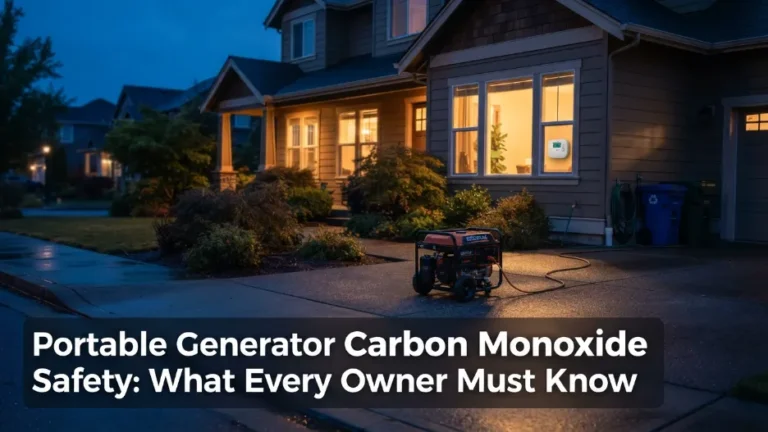
No — never run any portable generator in rain or wet conditions, because of electrocution risk. Use a manufacturer-approved generator canopy or tent that leaves ventilation openings uncovered, and keep the unit at least 20 feet from the house.
How long can a Westinghouse generator run continuously?
Until its fuel runs out — typically 10–18 hours at half load depending on model — and it should be shut down, cooled, and refueled rather than topped off while hot. Never refuel a running or hot engine.
What is the difference between WGen and iGen Westinghouse models?
WGen models are conventional generators — more watts per dollar but louder and with fluctuating output. iGen models are inverters that produce clean sine-wave power under 3% THD, run much quieter, and throttle down at light loads to save fuel, at a higher cost per watt.
Do Westinghouse generators have carbon monoxide sensors?
Most current WGen and iGen models include Westinghouse’s CO auto-shutoff sensor that stops the engine if carbon monoxide builds up nearby. That is a backup safety net, not permission to run indoors — the generator still belongs outside, 20+ feet from any opening.
Can I plug a generator directly into a wall outlet?
No. Backfeeding through a wall outlet is dangerous to utility workers and illegal in many places. Power house circuits through a transfer switch or interlock kit installed by a licensed electrician, or run appliances directly off the generator’s outlets with properly gauged cords.
How do I store a portable generator between outages?
Stabilize the fuel or run the carburetor dry, change the oil, clean the air filter, and store it in a dry, ventilated space away from the house. For a full seasonal routine, see our guide on how to store a generator long-term, and test-run the unit for 20–30 minutes once a month so it is ready when the power goes out.
Our Final Verdict
The Westinghouse portable lineup splits into three camps: big conventional WGen units for outage and job-site power, quiet iGen inverters for camping and electronics, and dual/tri-fuel models that solve the fuel-storage problem. The key tension is watts versus livability — the biggest units run the most circuits, but the inverters are the ones you will actually enjoy using.
If you want whole-home backup through a multi-day outage, pick #1, the WGen11500TFc, because 9,500 running watts plus tri-fuel flexibility is unmatched in this lineup. If essentials are enough and you want to spend less, pick #2, the WGen9500DF, because 7,500 running watts covers fridge, furnace fan, and lights with 12+ hours of runtime. If you camp or RV, pick #3, the iGen4500, because 52 dB and clean sine-wave power are the only specs that matter at a campground.

Hi, I’m Michael Turner. I own a generator workshop in the United States and founded HomeGeneratorBlog to share practical, hands-on guidance about generator installation, maintenance, troubleshooting, safety, and backup power solutions. My goal is to help homeowners make smarter, more confident decisions through clear and reliable information