Predator 5000 Watt Generator Review: Is It Worth It?
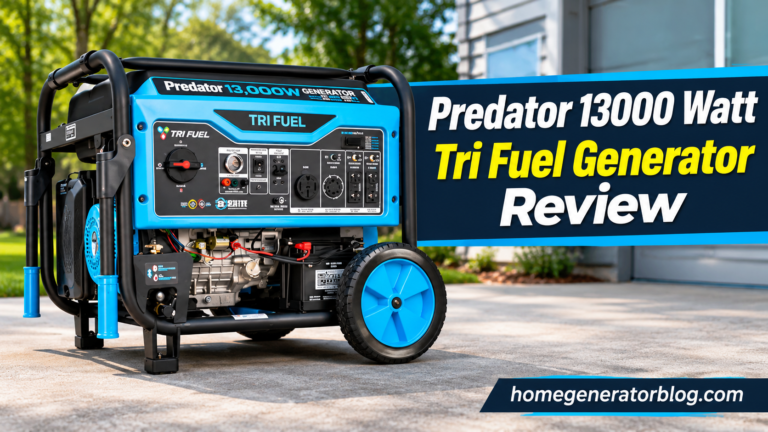
The Predator 5000 Watt Gas-Powered Portable Generator is an open-frame gasoline generator delivering 5,000 starting watts and 4,000 running watts. It is designed to power essential household appliances, selected jobsite tools, and equipment during outages.
This Predator 5000 watt gas powered portable generator review examines its power capacity, runtime, safety systems, and ownership requirements. It targets buyers prioritizing practical backup electricity over quiet inverter operation.
The important distinction is continuous output. Its 5,000-watt headline rating represents temporary starting power, not the electricity available indefinitely.
🏆 My Quick Verdict
💡 Best For: Homeowners needing emergency electricity and contractors operating compatible portable tools.
⚡ Key Specs:
5,000 starting watts; 4,000 running watts; 224cc engine; 15.2-hour advertised runtime at 50% load; 120/240V output.
✅ Bottom Line: A practical option for essential backup loads and general outdoor power requirements. Its useful output connections and safety controls are appealing, although manual starting, substantial weight, and conventional-generator noise limit convenience.

Predator 5000 Generator at a Glance
- Provides 4,000 continuous watts and 5,000 starting watts.
- Uses a 224cc, four-stroke gasoline engine.
- Offers up to 15.2 hours of runtime at 50% load.
- Includes CO SECURE carbon monoxide detection and automatic shutdown.
- Features GFCI household receptacles and a 120/240V twist-lock connection.
- Weighs approximately 110 pounds without a separately purchased wheel kit.
Predator 5000 Generator Specifications
| Specification | Details |
|---|---|
| Model | 72613 |
| Starting Watts | 5,000W |
| Running Watts | 4,000W |
| Engine | 224cc, four-stroke OHV |
| Fuel | Unleaded gasoline, 87+ octane |
| Runtime | Up to 15.2 hours at 50% load |
| Noise Rating | 71.3 dBA at 50% load |
| Voltage | 120/240V AC |
| Starting Method | Recoil |
| Weight | 110 lb. |
| Dimensions | 23.3 × 18.6 × 19.23 inches |
| Safety | CO SECURE, low-oil shutdown, circuit breakers |
| Product Warranty | 90 days, subject to manufacturer terms |
Design and Build Quality
The Predator 5000 uses a traditional open-frame construction. Its heavy-duty steel frame surrounds the engine and provides accessible points for handling and securing the machine.
The layout suits jobsites and utility storage. However, an exposed engine offers less acoustic isolation than a fully enclosed inverter design.
Its dimensions are manageable for a medium-output generator, but weight matters significantly. At 110 pounds, moving it without assistance or suitable transport equipment can be difficult.
- The steel frame helps protect the engine during normal handling.
- Outlet covers reduce exposure to dust and debris.
- Vibration isolators help limit transmitted engine vibration.
- The separately sold wheel kit improves movement between locations.
Setup, Installation, and Ease of Use
- Inspect the packaging, generator frame, receptacles, and included accessories before assembly.
- Position the generator outdoors on stable, level ground.
- Keep it at least 20 feet from buildings, windows, doors, and ventilation openings.
- Check the engine-oil level and add the manual-specified oil before starting.
- Fill the fuel tank with the recommended unleaded gasoline.
- Inspect the air filter and ensure connected electrical loads are disconnected.
- Follow the manual’s fuel-control and recoil-starting instructions.
- Allow the engine to stabilize before connecting compatible equipment.
- Use appropriately rated outdoor cables and avoid exceeding circuit limits.
- Cool the generator before refueling, transporting, or storing it.
- Never connect generator output directly to household wiring without approved transfer equipment.
Core Performance and Power Output
The Predator 5000 provides sufficient continuous output for a carefully selected group of essential loads. Its 4,000-watt operating rating should guide appliance planning.
Starting watts provide temporary capacity for motor-driven equipment. Refrigerators, pumps, and certain power tools may briefly demand more electricity when their motors activate.
Home Backup Performance
During an outage, the generator may operate a refrigerator, lighting, fans, and selected additional appliances. Actual compatibility depends on each appliance’s running demand and startup surge.
It should not be treated as a whole-house generator. Simultaneous high-demand devices can quickly exceed its available output.
Jobsite Power
The 120V household receptacles support compatible corded equipment. Workers should calculate the combined consumption of drills, saws, compressors, and other tools before connecting them.
Equipment with demanding starting motors deserves additional allowance. Circuit protection helps respond to overloads but does not replace correct load management.
Runtime and Fuel Efficiency
Harbor Freight advertises up to 15.2 operating hours at 50% electrical load. This is a manufacturer-rated figure rather than an independently verified endurance test.
Runtime changes with electrical demand, operating conditions, and maintenance. The integrated fuel gauge helps owners schedule refueling before extended operation.
Expert Insight
Calculate your combined running load and the largest likely simultaneous motor-starting surge before purchasing. A generator’s starting-watt rating is not its continuous operating capacity, and leaving appropriate headroom improves practical load management.
Key Features Explained
CO SECURE Technology
The CO SECURE system automatically shuts down the engine when its sensor detects harmful carbon monoxide conditions. This additional protection is valuable, but it never makes indoor operation safe.
120/240V Twist-Lock Connection
The L14-30R receptacle provides a connection option for compatible 120/240V equipment or properly installed transfer-switch arrangements. It does not authorize backfeeding electricity through a household wall outlet.
Digital Monitoring Display
An integrated display reports voltage, frequency, and operating hours. These readings help owners monitor output and plan routine servicing without relying entirely on estimates.
Automatic Engine Protection
Low-oil shutdown and circuit-breaker protection address important operating risks. Owners must still follow maintenance schedules and prevent excessive electrical loading.
Real-World Usability and Maintenance
Ownership requires regular engine-oil checks, air-filter inspections, and periodic spark-plug maintenance. Follow the exact service intervals in the manual rather than assuming automotive maintenance schedules apply.
Gasoline storage also deserves attention, especially when emergency use is infrequent. Proper fuel stabilization, storage practices, and periodic operational checks help maintain readiness.
The recoil starter avoids dependence on an electric-start battery. Nevertheless, manual starting may be inconvenient for users with limited mobility or during difficult weather conditions.
Predator 5000 Generator Pros and Cons
Advantages
- Its 4,000 running watts support many essential backup-power requirements.
- The 120/240V receptacle broadens connection options.
- CO detection and low-oil shutdown add valuable protection.
- The published half-load runtime supports extended operation.
Disadvantages
- Its 71.3 dBA noise rating makes it unsuitable for noise-sensitive settings.
- The recoil-only starting system requires manual effort.
- Its substantial weight and separately sold wheels reduce portability.
Common Problems and Practical Fixes
Generator Will Not Start
Starting problems can result from insufficient fuel, low oil, or incorrect control settings. Check those conditions against the manufacturer’s troubleshooting instructions before attempting repairs.
Connected Equipment Loses Power
Excessive electrical demand can trip the generator’s protective circuit breakers. Disconnect loads, investigate total wattage, and follow the specified breaker-reset procedure.
Unexpected Engine Shutdown
Low oil or carbon monoxide detection can trigger automatic engine shutdown. Check the warning indicators, address the underlying condition, and never bypass a safety system.
What to Know Before You Buy
This generator uses gasoline only, unlike Predator’s similarly named dual-fuel inverter models. Buyers needing propane operation should consider another product.
Check receptacle requirements carefully before purchasing. A 120/240V twist-lock connector is useful only when paired with compatible equipment and properly rated cables.
Manufacturer warranty terms also deserve attention. Harbor Freight lists a 90-day product warranty and separate two-year emissions-control coverage, subject to stated conditions.
Verify local compliance and availability for your location. The reviewed version is designated 49-state compliant, with a separate California-compliant listing.
Who Should Buy It and Who Should Skip It?
✅ Who Should Buy It
- Homeowners preparing for occasional electricity outages.
- Contractors operating compatible equipment outdoors.
- Buyers wanting conventional 120/240V generator output.
- Users comfortable with gasoline-engine maintenance.
✗ Who Should Skip It
- Campers prioritizing exceptionally quiet operation.
- Buyers requiring propane or natural-gas capability.
- Users who need convenient electric starting.
- Households with electrical demands exceeding 4,000 running watts.
Alternatives to Consider
Predator 4375 Watt Portable Generator
Best For: Buyers with smaller backup-power requirements.
Main Advantage: A lower-output alternative for modest electrical loads.
Trade-off: Less starting power than the Predator 5000.
Key Spec: 4,375 starting watts.
Predator 6500 Watt Portable Generator
Best For: Users needing greater starting-power capacity.
Main Advantage: More peak output for demanding equipment.
Trade-off: Higher output does not eliminate fuel, weight, or noise considerations.
Key Spec: 6,500 starting watts.
Is the Predator 5000 Generator Worth It?
The Predator 5000 represents a sensible purchase when its output matches a specific power plan. Its practical value depends more on appliance compatibility and ownership expectations than its headline wattage.
Buyers should compare total ownership costs, including maintenance supplies, fuel, extension cables, and potential mobility accessories. A lower initial purchase price does not automatically produce the lowest long-term cost.
For occasional emergency use, its conventional design may be entirely adequate. Buyers needing quieter or more versatile operation should evaluate inverter and dual-fuel options instead.
Final Verdict
The Predator 5000 Watt Gas-Powered Portable Generator is a capable option for selected home backup and outdoor equipment loads. Choose it when 4,000 continuous watts meet your requirements and conventional gasoline operation fits your needs.
Frequently Asked Questions
How many watts does the Predator 5000 produce?
It produces 4,000 running watts and 5,000 starting watts. Continuous appliance calculations should use the lower figure.
Can the Predator 5000 power a refrigerator?
Yes, provided the refrigerator’s electrical requirements fit the available capacity. Check both operating consumption and compressor-starting demand.
How long does the Predator 5000 run?
The manufacturer specifies up to 15.2 hours at 50% load. Actual runtime depends on operating conditions and electrical demand.
Is the Predator 5000 suitable for an RV?
It can support compatible RV equipment when properly connected. Check plug compatibility, starting demand, and campground noise restrictions.
What is the Predator 5000 generator warranty?
Harbor Freight lists 90 days of product warranty coverage. Separate two-year emissions-system coverage has additional conditions.
How should I maintain the Predator 5000?
Check engine oil, inspect the air filter, and follow scheduled servicing. Always use the manufacturer’s maintenance procedures and recommended supplies.
Affiliate disclosure: homegeneratorblog.com earns a small commission when you purchase through links on this page — at no extra cost to you. Our editorial process is independent: affiliate relationships never influence which products we recommend or how we rank them.

Hi, I’m Michael Turner. I own a generator workshop in the United States and founded HomeGeneratorBlog to share practical, hands-on guidance about generator installation, maintenance, troubleshooting, safety, and backup power solutions. My goal is to help homeowners make smarter, more confident decisions through clear and reliable information