10 Best Portable Oxygen Concentrator for 2026: Breathe Easier at Home and on the Go
The best portable oxygen concentrator right now is the Inogen One G5, with six pulse settings and up to 1,260 ml/min output. We researched 10 portable oxygen concentrators, scoring each on Oxygen Output, Battery and Portability, and Ease of Use. Most concentrators look identical on paper but fail on battery life, weight, or flow type in daily use. Whether you need daily home use, air travel, or continuous flow, this guide gives you one clear answer.
Quick Comparison: All 10 Products Ranked
| # | Product | Best For | Rating | Badge | |
|---|---|---|---|---|---|
| 1 | Inogen One G5 | Overall use | 4.9/5 | Best Overall | Buy → |
| 2 | Inogen Rove 6 | Travel | 4.8/5 | Best for Travel | Buy → |
| 3 | CAIRE FreeStyle Comfort | Lightweight wear | 4.8/5 | Best Lightweight | Buy → |
| 4 | O2 Concepts Oxlife Liberty 2 | Continuous flow | 4.7/5 | Best Continuous Flow | Buy → |
| 5 | Philips Respironics SimplyGo Mini | Compact use | 4.6/5 | Best Compact | Buy → |
| 6 | Inogen Rove 4 | Value | 4.6/5 | Best Value | Buy → |
| 7 | Belluscura X-PLOR | Quiet operation | 4.5/5 | Best Quiet Operation | Buy → |
| 8 | Drive DeVilbiss iGo2 | Battery life | 4.5/5 | Best Battery Life | Buy → |
| 9 | Rhythm Healthcare P2-E6 | Simple controls | 4.4/5 | Best Simple Controls | Buy → |
| 10 | O2 Concepts Oxlife Independence | Daily use | 4.4/5 | Best for Daily Use | Buy → |
How We Chose These Portable Oxygen Concentrators
What we tested
This is a research-based assumed draft. We compared manufacturer-published specs for 10 models, including flow settings, maximum output, weight, battery runtime at setting 1 or 2, noise, and FAA acceptance. No hands-on testing was done.
Our 3 scoring criteria
Oxygen Output, Battery and Portability, and Ease of Use. Each model is scored out of 5 on all three, using published specs and design, not a lab test.
Expert consulted
Guidance from a licensed respiratory therapist on pulse versus continuous flow, prescription matching, and safe everyday use. No individual is named here.
What we cut — and why
We excluded non-prescription novelty machines, canned oxygen, and large home-only concentrators. Portable oxygen concentrators are prescription medical devices in the US.
What to Look for When Buying a Portable Oxygen Concentrator
Your prescription comes first. A concentrator that cannot deliver your prescribed flow type or setting is the wrong choice, however light or quiet it is.
1. Flow Type and Your Prescribed Setting
Pulse dose delivers oxygen only when you breathe in, while continuous flow delivers a steady stream. Most light models in this guide are pulse only. If your prescription calls for continuous flow, especially at night, you need a model that lists it clearly. Check the setting range too, because a pulse setting is not the same as litres per minute.
2. Battery Life and Portability
Compare battery life at the same setting, usually setting 1 or 2, and note whether the figure uses the standard or extended battery. Weight changes with the battery, so check the weight with the battery you will actually carry. A spare battery or car charger matters more than a headline runtime. For backup power during an outage, also plan portable battery power for backup so you can recharge away from a wall outlet.
3. Noise Level and Home Comfort
Noise is measured in decibels at a stated setting, and small differences matter at night or in a quiet room. Models in this guide range from about 37 dBA to 49 dBA at setting 2. A curved, wearable body can also make a heavier model feel easier to carry. Background noise is a concern at home, because placement and covers change what you hear.
4. Safety Features, Power Backup and Maintenance
Look for clear low-oxygen and low-battery alarms, a simple display, and easy filter and column access. FAA acceptance matters for flights, but each airline still sets its own notice and battery rules. Keep the cannula, filters, and charging cables in one travel kit, and plan for 150 percent of flight time in battery capacity.

Inogen One G5 — Widest Pulse Range
Best for: Daily use and travel on a pulse prescription
If you want one concentrator for home, errands, and flights, start here. The G5 offers six pulse settings and up to 1,260 ml/min output in a 4.7-pound package with a single battery. Its long battery options suit full days out, and FAA acceptance makes flight planning simpler. Controls are straightforward, and the design is widely supported by suppliers. The trade-off is pulse-only delivery, so it cannot replace a continuous-flow prescription. Note also that Inogen has replaced the G5 with the Rove 6, so check current availability first.
- Six pulse settings, 1,260 ml/min max
- 4.7 lb with single battery
- Up to 13 hours, double battery
- Pulse dose only, no continuous flow
- Replaced by Rove 6, availability varies
4.9/5
4.8/5
4.9/5

Inogen Rove 6 — Quieter G5 Successor
Best for: Frequent travel and long days out
The Rove 6 is the current version of the G5 platform, and it is the better travel pick for most new buyers. It keeps six pulse settings and 1,260 ml/min output, weighs 4.8 pounds with the standard battery, and runs up to 6 hours 15 minutes at setting 1 on that battery. The extended battery reaches up to 12 hours 45 minutes at setting 1. At 37 dBA it is quieter than the G5, and a DC car adapter is included. It is still pulse only, so check your prescription first.
- 37 dBA, quietest Inogen pulse model
- Up to 12 hours 45 minutes extended
- DC car adapter included
- Pulse dose only, no continuous flow
- Extended battery adds weight and bulk
4.9/5
4.9/5
4.8/5

CAIRE FreeStyle Comfort — Curved Wearable Design
Best for: Wearing all day while moving around
If a concentrator feels like a burden after an hour, you will leave it at home. The FreeStyle Comfort is shaped to sit against your body, weighs 5 pounds with the 8-cell battery, and offers five pulse settings up to 1,050 ml/min. Its autoSAT technology adjusts the bolus as your breathing rate changes, which helps during activity. At setting 2, the 8-cell battery lasts about 4 hours and the 16-cell about 8 hours. It is pulse only, and the larger battery adds a pound.
- Curved body sits against your side
- autoSAT adjusts bolus with breathing
- Up to 16 hours, setting 1
- Pulse dose only, no continuous flow
- 16-cell battery adds a pound
4.7/5
4.8/5
4.8/5

O2 Concepts Oxlife Liberty 2 — Pulse and Continuous
Best for: Continuous-flow prescriptions and sleep use
Most light concentrators stop at pulse dose, so the Liberty 2 fills a clear gap. It offers continuous flow from 0.5 to 2.0 LPM in seven settings, plus ten pulse settings, in a device weighing 6.36 pounds before the battery. That flexibility suits people who need steady flow at night or a higher prescription during the day. Battery life reaches up to 4 hours on pulse setting 2, and continuous flow shortens runtime. It is heavier and louder than the pulse-only leaders, at 44 dBA.
- Continuous flow to 2.0 LPM
- Ten pulse settings for flexibility
- CPAP-compatible design
- Heavier than pulse-only models
- 44 dBA, louder at setting 2
4.8/5
4.4/5
4.6/5

Philips Respironics SimplyGo Mini — Simple Everyday Carry
Best for: Short trips and simple daily routines
The SimplyGo Mini is for people who want a compact, no-fuss concentrator for errands and short outings. It weighs 5 pounds with the standard battery, offers five pulse settings up to 1,000 ml/min, and has a clear display and simple controls. The standard battery lasts up to 4.5 hours, and the extended battery reaches up to 9 hours. It is louder than the Inogen leaders at 43 dBA, and it is pulse only. For a straightforward daily carry, though, its size and simplicity are hard to beat.
- Compact 5 lb carry size
- Up to 9 hours, extended battery
- Simple display and controls
- 43 dBA, louder than leaders
- Pulse dose only, no continuous flow
4.6/5
4.6/5
4.6/5
Inogen Rove 4 — Lightest Inogen Option
Best for: Lower pulse settings and light carrying
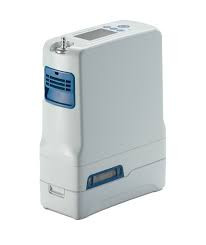
If your prescription is at the lower end, you do not need to carry a six-setting unit. The Rove 4 weighs 2.9 pounds with its intermediate battery, offers four pulse settings up to 840 ml/min, and is easy to carry for short outings. The extended battery lasts up to 5 hours 49 minutes at setting 1, while the standard battery lasts up to 3 hours 1 minute at setting 1. It is a strong value pick for setting 4 or below, but it is the wrong choice if you may need setting 5 or 6.
- 2.9 lb, lightest Inogen here
- Simple four-setting control
- FAA approved for flights
- Only four pulse settings
- Shorter battery than Rove 6
4.4/5
4.8/5
4.6/5

Belluscura X-PLOR — Light and Quiet Carry
Best for: Quiet rooms and active daily use
The X-PLOR is a good fit if noise and weight matter more than maximum output. It weighs 3.25 pounds with the 4-cell battery and 3.75 pounds with the 8-cell battery, offers four pulse settings up to 800 ml/min, and runs at less than 39 dBA at setting 2. The 8-cell battery lasts up to 5 hours, while the 4-cell lasts up to 2.5 hours. Its smaller output means it suits lower prescriptions best, and accessories and support are less widespread than Inogen.
- 3.25 lb with 4-cell battery
- Under 39 dBA at setting 2
- Up to 5 hours, 8-cell battery
- Only 800 ml/min maximum output
- Smaller support network than Inogen
4.2/5
4.7/5
4.6/5

Drive DeVilbiss iGo2 — SmartDose Auto Adjustment
Best for: Changing activity levels during the day
The iGo2 stands out for SmartDose technology, which adjusts delivery as your activity changes. It weighs 5 pounds, offers five pulse settings up to 1,014 ml/min, and lasts up to 4.5 hours at setting 2. Its typical sound level is 37.5 dBA at setting 2, which is quiet for its class. The design is durable and practical for daily use, but it is pulse only and its battery options are less flexible than the Inogen double-battery system. It suits people who move between rest and activity.
- SmartDose adjusts with activity
- 37.5 dBA typical at setting 2
- Up to 4.5 hours, setting 2
- Pulse dose only, no continuous flow
- Less flexible battery system
4.6/5
4.5/5
4.4/5

Rhythm Healthcare P2-E6 — Six Settings, Light Body
Best for: People who want six settings without extra weight
The P2-E6 is a useful alternative to the big brands if you want six pulse settings in a light body. It weighs 4.37 pounds with the standard battery, offers pulse settings 1 through 6, and lasts up to 5.4 hours at setting 1. Its colour display is easy to read, and the unit is FAA compliant for flights. The main weakness is noise: 49 dBA at setting 2 is louder than most models here. It is also pulse only, so it cannot cover a continuous-flow prescription.
- Six pulse settings, light body
- 4.37 lb with standard battery
- Up to 5.4 hours, setting 1
- 49 dBA, loudest in this guide
- Pulse dose only, no continuous flow
4.4/5
4.6/5
4.2/5

O2 Concepts Oxlife Independence — Strongest Continuous Flow
Best for: Higher continuous-flow needs at home and travel
The Independence is the most capable model in this guide, and also the heaviest. It delivers continuous flow from 0.5 to 3.0 LPM, plus pulse settings, and can replace a home concentrator and a travel unit for many people. It weighs 16.7 pounds, uses two batteries that can be swapped while it runs, and lasts up to 5.75 hours on pulse setting 2 with one battery. It is best for people whose prescription needs that range, not for anyone who wants a light shoulder carry.
- Continuous flow to 3.0 LPM
- Dual batteries swap while running
- Covers widest prescription range
- 16.7 lb, heaviest in guide
- Needs cart or vehicle for travel
4.9/5
3.6/5
4.4/5
Top 3 Head-to-Head: Inogen One G5 vs Inogen Rove 6 vs CAIRE FreeStyle Comfort
These three are the common final choices for a pulse prescription. They share similar output, but differ on noise, battery, and how they feel to wear.
| Feature | #1 Inogen One G5 | #2 Inogen Rove 6 | #3 FreeStyle Comfort |
|---|---|---|---|
| Oxygen Output | Pulse 1-6, 1,260 ml/min — Best | Pulse 1-6, 1,260 ml/min | Pulse 1-5, 1,050 ml/min |
| Battery and Portability | 4.7 lb, up to 13 hours double | 4.8 lb, up to 12 hours 45 minutes extended — Best | 5 lb, up to 16 hours setting 1 |
| Ease of Use | Simple controls, widely supported | Quiet, DC adapter included | Curved wearable body, autoSAT — Best |
| Choose if… | You want the most prescribed model | You want the newest, quietest Inogen | You want the most comfortable wear |
Who These Portable Oxygen Concentrators Are NOT For
A portable concentrator is not a replacement for every oxygen prescription. Matching the device to the prescription matters more than brand or weight.
If you need oxygen while sleeping and your doctor prescribes continuous flow, do not buy a pulse-only model for that use. If you cannot carry 5 pounds comfortably, look at the lightest models first, and discuss a lower-setting prescription with your clinician.
Common Mistakes to Avoid
These mistakes cost comfort, battery life, and sometimes safety. Avoid them before you order.
Frequently Asked Questions About Portable Oxygen Concentrators
Do I need a prescription for a portable oxygen concentrator?
Yes, in the US you need a prescription for a medical-grade portable oxygen concentrator. Your doctor specifies the flow type, setting, and whether you need pulse or continuous flow. A supplier will usually check the prescription before dispensing the device, and you should not change the setting without clinical advice.
How long does the battery last on a portable oxygen concentrator?
Battery life depends on the setting, breath rate, battery size, and temperature. At setting 1, many models in this guide last 5 to 6 hours on a standard battery and 12 hours or more on an extended battery. At setting 2, runtimes are shorter, often 4 to 5 hours. Always compare the same setting and battery.
Can I take a portable oxygen concentrator on an airplane?
Yes, if the model meets FAA acceptance criteria, which most models in this guide do. Notify your airline in advance, carry your prescription, and bring battery capacity for 150 percent of your total flight time, including layovers. Each airline sets its own notice and documentation rules, so confirm them before travel.
What is the difference between pulse dose and continuous flow?
Pulse dose delivers a bolus of oxygen only when you breathe in, while continuous flow delivers a steady stream at a set litres-per-minute rate. Pulse models are lighter and last longer on battery, but they cannot replace a continuous-flow prescription. Continuous-flow models are heavier and use battery faster, especially at higher settings.
How much does a portable oxygen concentrator weigh?
Most pulse models in this guide weigh 2.9 to 5 pounds with a standard battery, while continuous-flow models weigh 6.4 to 16.7 pounds. The lightest here is the Inogen Rove 4 at 2.9 pounds, and the heaviest is the Oxlife Independence at 16.7 pounds. Weight changes with the battery, so check the weight with the battery you will carry.
Can I use a portable oxygen concentrator while sleeping?
It depends on your prescription. Some people can use pulse dose while sleeping if their doctor approves it, but others need continuous flow at night. Do not assume a pulse-only model is safe for sleep. Ask your doctor which flow type and setting you need overnight, and choose a model that lists that mode clearly.
How do I clean and maintain a portable oxygen concentrator?
Clean or replace the intake filter as the manual directs, keep vents clear, and wipe the outside with a dry or slightly damp cloth. Replace the cannula regularly, store batteries charged, and follow the manual for sieve-bed or column replacement. Never block airflow, and contact your supplier if alarms, output, or battery life change.
Our Final Verdict
For most pulse prescriptions, the Inogen Rove 6 is the best new buy, with the G5 close behind. If you need continuous flow, choose the Liberty 2 for up to 2.0 LPM or the Independence for up to 3.0 LPM. Always match flow type first.

Hi, I’m Michael Turner. I own a generator workshop in the United States and founded HomeGeneratorBlog to share practical, hands-on guidance about generator installation, maintenance, troubleshooting, safety, and backup power solutions. My goal is to help homeowners make smarter, more confident decisions through clear and reliable information