Portable Generator Cover: Storage, Weather & Running Guide
Quick Answer A portable generator cover protects your machine from dust, sun, rain, snow, and debris, but you need the…

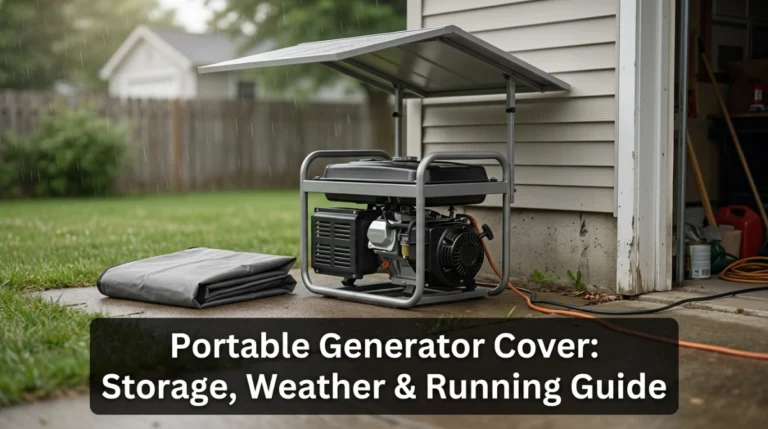
Quick Answer A portable generator cover protects your machine from dust, sun, rain, snow, and debris, but you need the…
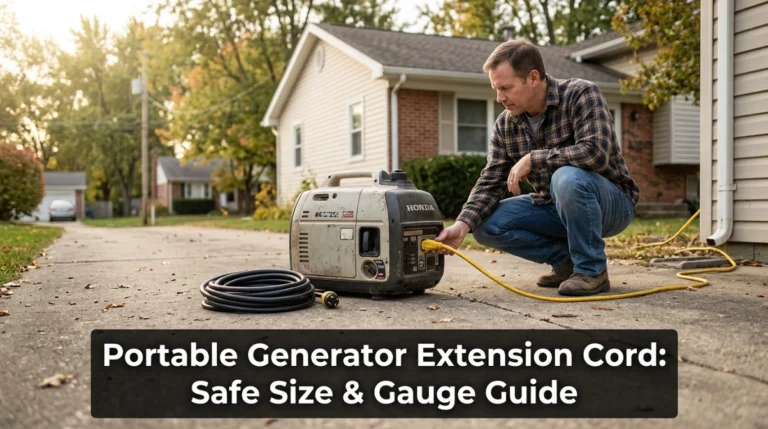
Quick Answer For most portable generator setups, use a heavy-duty, grounded, outdoor-rated extension cord that can safely carry the appliance’s…
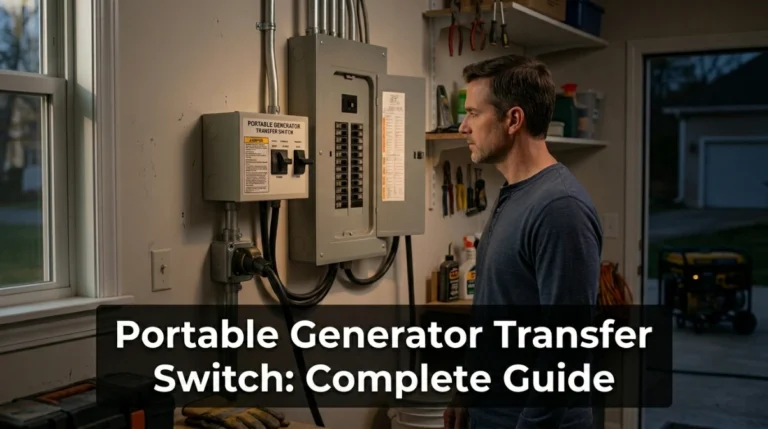
Quick Answer A portable generator transfer switch safely connects a generator to selected circuits in your home’s electrical system while…
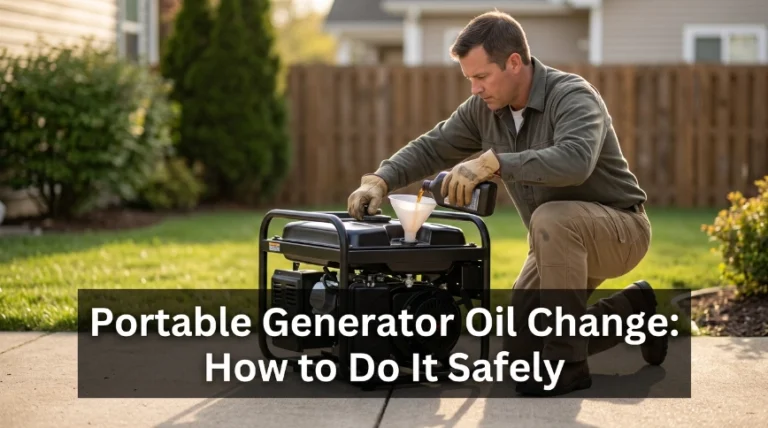
Quick Answer To change portable generator oil, warm the engine briefly, shut it off, disconnect the spark plug boot, drain…
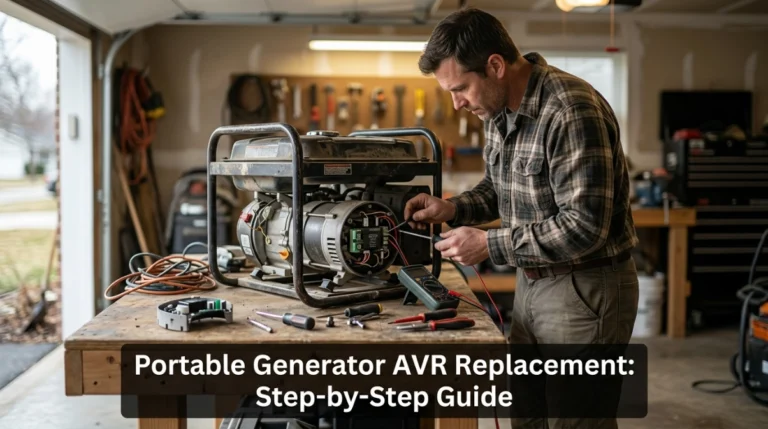
Quick Answer Portable generator AVR replacement usually involves confirming the regulator is faulty, disconnecting all power sources, removing the alternator…
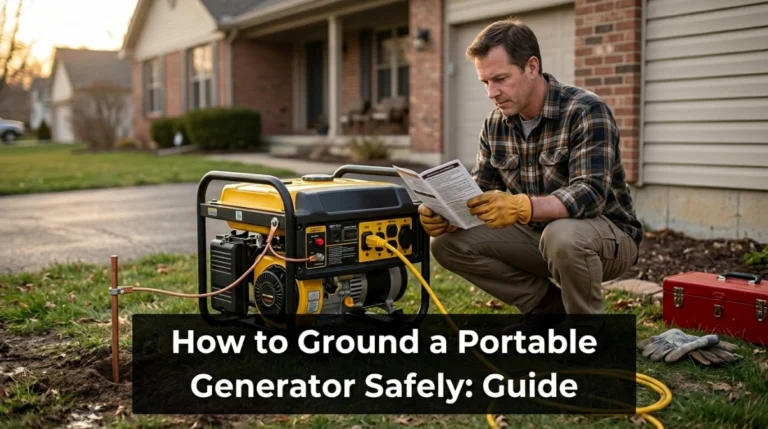
Quick Answer You do not automatically need a separate ground rod for every portable generator. According to OSHA portable generator…
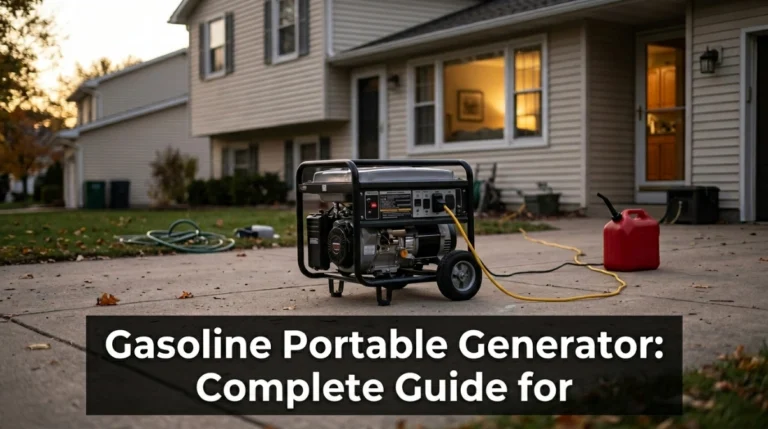
Quick Answer A gasoline portable generator uses a small gas engine to produce temporary electricity for appliances, tools, RVs, and…
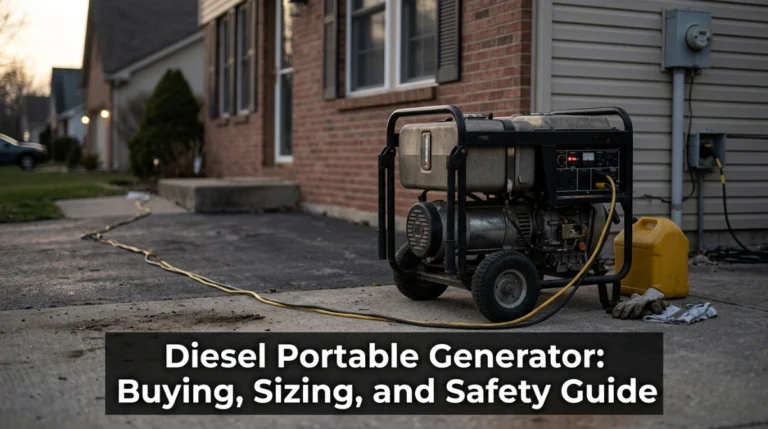
Quick Answer A diesel portable generator makes the most sense when you need long-duty-cycle power, a durable engine, and dependable…
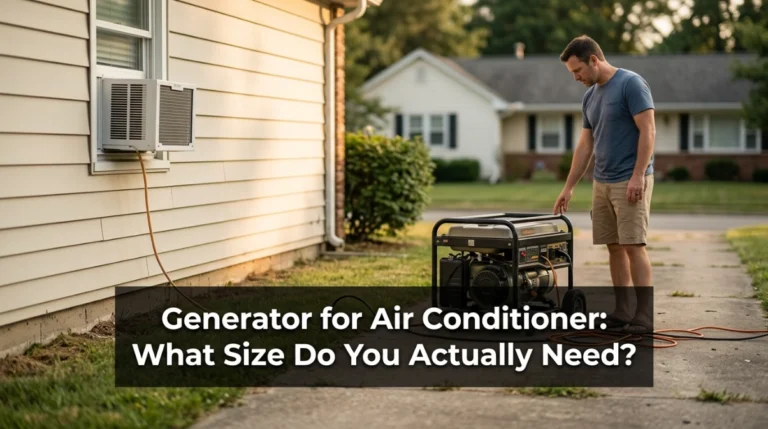
Quick Answer Most window and portable AC units need a 2,000–3,500 watt generator, while a 3-ton central air conditioner can…
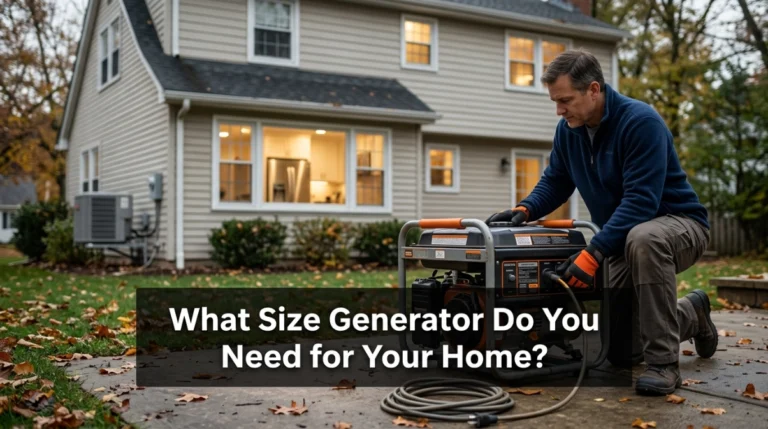
Quick Answer Most homes need somewhere between 5,000 and 8,500 running watts to cover the essentials (fridge, well pump, furnace…