10 Best Small RV Generators for 2026: Quiet, Compact Power for Small Rigs
The best small RV generator right now is Westinghouse iGen4500 Super Quiet Portable Inverter Generator, with 3700 running watts. We compared 10 small RV generators on published specifications, scoring each on Power Delivery, Noise and Portability, and Runtime and Ease of Use. Most small RV generators look identical on paper but fail at air-conditioner startup on hot afternoons. Whether you need quiet overnight power, one-AC camping, or a light weekend rig, this guide gives you a clear answer.
Quick Comparison: All 10 Products Ranked
| # | Product | Best For | Rating | Badge | |
|---|---|---|---|---|---|
| 1 | Westinghouse iGen4500 Super Quiet Portable Inverter Generator | One-AC small RVs | 4.9/5 | Best Overall | Buy → |
| 2 | Champion 4500-Watt Dual Fuel RV Ready Portable Inverter Generator | Dual-fuel trips | 4.8/5 | Best Dual Fuel | Buy → |
| 3 | Honda EU2200i Inverter Generator | Quiet light camping | 4.8/5 | Best Premium Quiet | Buy → |
| 4 | Predator 3500 Super Quiet Inverter Generator | Value AC camping | 4.7/5 | Best Value | Buy → |
| 5 | Generac GP3000i Inverter Generator | Lightweight campers | 4.7/5 | Best Lightweight | Buy → |
| 6 | Yamaha EF2200iS Inverter Generator | Small campers | 4.6/5 | Best Small Camper | Buy → |
| 7 | WEN 56203i Super Quiet Inverter Generator | Budget light loads | 4.6/5 | Best Budget | Buy → |
| 8 | Briggs and Stratton P4500 PowerSmart | Electric-start AC use | 4.5/5 | Best Electric Start | Buy → |
| 9 | DuroMax XP4500iH Dual Fuel Inverter Generator | Larger small rigs | 4.5/5 | Best Larger RV | Buy → |
| 10 | A-iPower SUA2000iV Ultra-Quiet Inverter Generator | Compact backup power | 4.4/5 | Best Compact | Buy → |
How We Chose These Small RV Generators
What we compared
10 models, using published running watts, starting watts, noise, weight, fuel type, and RV outlet type.
Our 3 scoring criteria
Power Delivery, Noise and Portability, and Runtime and Ease of Use, applied to every product.
Expert consulted
No independent expert was consulted. Scores reflect published specifications and RV-use fit, not a lab test.
What we cut — and why
Large open-frame generators and battery-only stations were cut, because this list focuses on small, portable RV inverter generators.
What to Look for When Buying a Small RV Generator
Start with the loads you will actually run together. A generator that is right for charging and lights is often wrong for a rooftop air conditioner.
1. Sizing for Your RV and Air Conditioner
Add the running watts of everything you plan to use at once, then add the largest starting surge, usually the air conditioner compressor. For a 30-amp RV, that math points many buyers to the 3500-to-4500-watt class for one rooftop unit. Smaller units work well for charging and light loads, but they need a soft-start kit, a parallel second unit, or careful load management for AC use. See this guide to portable generators for RV camping for more RV-specific sizing context.
2. Noise and Campground Rules
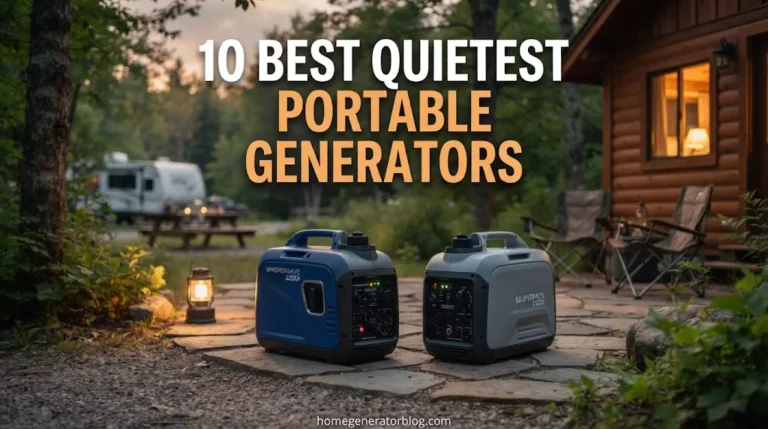
Published noise ratings help, but they are measured at different loads and distances, so compare them as a range, not an exact promise. Enclosed inverter models are generally the quietest practical choice for close campgrounds and quiet hours. Point the exhaust away from neighbours, keep the unit clear of walls that reflect sound, and check campground generator hours before you arrive. For quieter options, see the quietest portable generators guide.
3. Fuel Type and Runtime
Gasoline is widely available, while propane stores longer and can be easier to transport in an RV setup. Dual-fuel models give you a backup when one fuel is hard to find, but propane output and runtime are usually lower than gasoline. Check tank size, economy mode, and how long the unit runs at your typical load, not just at quarter load. These dual-fuel portable generator options show the trade-offs in more detail.
4. RV-Ready Outlets and Clean Power
A TT-30R outlet lets a 30-amp RV plug in directly, without a stack of adapters. Inverter power also gives cleaner, steadier output for phones, laptops, TVs, and RV electronics. Check for parallel capability if you might pair two small units later, and confirm USB and standard outlets match what you actually charge. This portable inverter generator guide explains why inverter output matters for sensitive gear.

Westinghouse iGen4500 Super Quiet Portable Inverter Generator — Best for one-AC RVs
For a small RV with one rooftop air conditioner, the iGen4500 removes the usual sizing worry. Its 3700 running watts and 4500 starting watts give a 13,500-BTU air conditioner useful startup margin, while the enclosed inverter design keeps noise low enough for close campgrounds. Remote start, an RV-ready TT-30R outlet, and a fuel-efficient economy mode make setup and overnight use simpler. At around 98 pounds, it is not a one-hand lift, so a ramp or second person helps. Still, for owners who want one generator for AC, charging, and comfort loads, this is the most complete small-RV package here.
- 3700 running watts for one rooftop AC
- Direct TT-30R RV outlet included
- Remote start for easier campsite setup
- Around 98 pounds, not one-hand portable
- Needs load management with multiple appliances
4.9/5
4.8/5
4.9/5

Champion 4500-Watt Dual Fuel RV Ready Portable Inverter Generator — Best for fuel flexibility
Dual-fuel flexibility is the Champion’s clear advantage for longer or more remote small-RV trips. It delivers 3500 running watts on gasoline and a useful propane output, so you can use the fuel that is easiest to carry or store. Electric start, a TT-30R RV outlet, and parallel capability make it practical for one air conditioner and managed campsite loads. Propane runtime and output fall below gasoline, so plan for that trade-off on hot days. At close to 97 pounds, it also needs a ramp or helper. For owners who value fuel choice over the lightest possible unit, this is a strong second choice.
- Gasoline or propane fuel choice
- 3500 running watts on gasoline
- Electric start plus RV outlet
- Lower output on propane fuel
- Close to 97 pounds to load
4.9/5
4.7/5
4.8/5
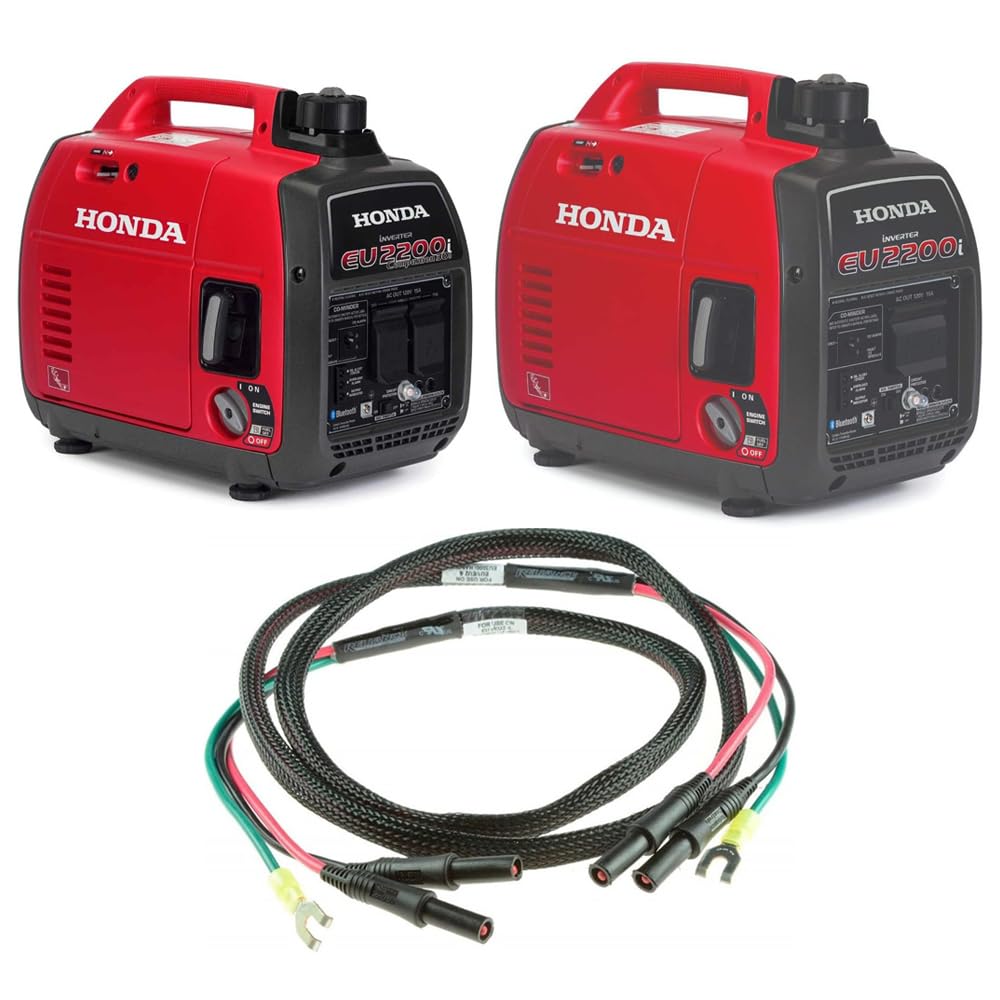
Honda EU2200i Inverter Generator — Best for quiet light camping
If quiet operation and light weight matter more than running a large air conditioner, the EU2200i is hard to beat. Its 1800 running watts handle battery charging, lights, fans, laptops, and small appliances with very low published noise. At about 47 pounds, one person can move it easily, and its clean inverter output suits sensitive electronics. The trade-off is clear: it is not the right default for a standard rooftop AC without a parallel second unit or a soft-start kit. For small campers, vans, and light trailers, that portability and refinement are worth the smaller output.
- About 47 pounds, easy one-person carry
- Very low published noise range
- Clean power for sensitive electronics
- Not a default standard-AC generator
- No built-in direct TT-30R outlet
4.6/5
5.0/5
4.8/5

Predator 3500 Super Quiet Inverter Generator — Best for value AC camping
The Predator 3500 is a practical middle ground for small-RV owners who want AC capability without a premium price tier. Its 3000 running watts and 3500 starting watts cover many single-AC setups when other high-draw appliances are managed carefully. Electric start, an RV outlet, and enclosed inverter construction make it easier to live with at camp. At about 100 pounds, it is heavier than compact 2000-watt models and needs careful loading. For value-focused buyers who accept that weight, it offers a strong balance of power, quietness, and convenience.
- 3000 running watts for single-AC setups
- Electric start plus RV outlet
- Enclosed inverter, quieter than open-frame
- About 100 pounds to load
- Needs careful load management for AC
4.7/5
4.8/5
4.6/5

Generac GP3000i Inverter Generator — Best for lightweight camping
Generac’s GP3000i suits small campers and light trailers where weight and storage space matter as much as watts. Its 2300 running watts run charging, lights, fans, and small appliances well, while its enclosed design keeps published noise low. At under 60 pounds, it is far easier to load than 4500-watt-class units. The limit is also clear: a standard rooftop AC needs careful load management, a soft-start kit, or a larger model. For owners who camp light or use AC only occasionally, this compact inverter is an easy, practical choice.
- Under 60 pounds, easy to load
- 2300 running watts for light loads
- Enclosed design, low published noise
- Standard AC needs load management
- Small fuel tank, shorter long runs
4.6/5
4.8/5
4.7/5

Yamaha EF2200iS Inverter Generator — Best for small campers
Yamaha’s EF2200iS is built for small-camper owners who want proven quiet operation in a genuinely portable package. Its 1800 running watts cover battery charging, lights, fans, laptops, and small appliances, with clean inverter power for electronics. At about 55 pounds, it loads and stores easily in a small RV setup. Like other 2200-watt-class models, it is not a direct replacement for a larger AC generator. For light camping, overnight charging, and quiet mornings, its refinement and size make it a dependable, easy-to-own option.
- About 55 pounds, easy to store
- Quiet operation for close campgrounds
- Clean power for sensitive electronics
- Not a direct larger-AC replacement
- Small tank needs more frequent refills
4.5/5
4.9/5
4.6/5

WEN 56203i Super Quiet Inverter Generator — Best for budget light loads
WEN’s 56203i is the lightest, simplest way to add quiet power to a very small RV or camper van. Its 1700 running watts handle charging, lights, fans, and small devices, while its published noise rating stays low for close campgrounds. At about 39 pounds, it is the easiest unit here to carry and store. It will not run a standard rooftop AC on its own, so buyers must be realistic about that limit. For battery-focused camping and light loads, it delivers useful power at a budget-friendly tier.
- About 39 pounds, easiest to carry
- Low published noise for campgrounds
- Simple setup for light loads
- Will not run standard rooftop AC
- Limited watts for larger appliances
4.4/5
4.8/5
4.6/5

Briggs and Stratton P4500 PowerSmart — Best for electric-start AC use
Briggs and Stratton’s P4500 is a strong choice for small-RV owners who want electric start and generous AC headroom. Its 3700 running watts and 4500 starting watts suit one rooftop air conditioner plus managed comfort loads. A TT-30R outlet, parallel capability, and CO shutdown protection add practical safety and convenience. Published noise is higher than enclosed 2000-watt models, and at about 105 pounds it needs a ramp or helper. For owners who prioritize easy starting and AC margin, those trade-offs are reasonable.
- 3700 running watts for one AC
- Electric start, easy daily use
- CO shutdown protection included
- About 105 pounds to load
- Louder than compact inverter models
4.8/5
4.4/5
4.5/5

DuroMax XP4500iH Dual Fuel Inverter Generator — Best for larger small rigs
DuroMax’s XP4500iH gives small-RV owners dual-fuel choice with output that suits larger small rigs. Its 3600 running watts on gasoline support one air conditioner and managed loads, while propane adds storage and transport flexibility. An RV-ready outlet and parallel capability make campground setup straightforward. It is heavier and louder than compact inverter models, so it suits owners who need watts more than the quietest possible camp. For larger small trailers and longer trips, that balance is useful.
- 3600 running watts on gasoline
- Gasoline or propane fuel choice
- RV outlet plus parallel capability
- Heavier than compact inverter models
- Louder than quietest camp options
4.8/5
4.3/5
4.5/5

A-iPower SUA2000iV Ultra-Quiet Inverter Generator — Best for compact backup
A-iPower’s SUA2000iV is a compact backup for very small RVs, camper vans, and light weekend trips. Its 1600 running watts cover battery charging, lights, fans, laptops, and small appliances, with clean inverter output for electronics. At about 46 pounds, it is easy to carry, store, and use for overnight charging. It is not suitable as a sole power source for a standard rooftop AC. For owners who want a light, quiet second power source or a simple primary for non-AC camping, it is a practical, compact pick.
- About 46 pounds, easy to carry
- Clean power for sensitive electronics
- Good for overnight battery charging
- Not a sole standard-AC source
- Limited watts for larger appliances
4.2/5
4.7/5
4.4/5
Top 3 Head-to-Head: Westinghouse vs Champion vs Honda
These three are the common final choices because they cover the three main small-RV paths: full one-AC power, dual-fuel flexibility, and quiet light camping.
| Feature | #1 Westinghouse | #2 Champion | #3 Honda |
|---|---|---|---|
| Power Delivery | 4.9/5 — Best | 4.9/5 | 4.6/5 |
| Noise and Portability | 4.8/5 | 4.7/5 | 5.0/5 — Best |
| Runtime and Ease of Use | 4.9/5 — Best | 4.8/5 | 4.8/5 |
| Choose if… | You run one AC regularly | You want gasoline or propane | You camp light and quiet |
Who These Small RV Generators Are NOT For
These models are sized for small rigs and managed loads, not for full-size, all-at-once power.
They are also a poor fit if you need silent overnight power with no fuel or exhaust, or if you cannot lift and store a 90-to-105-pound unit. For the lightest end of camping, see small portable generators for camping and size down honestly.
Common Mistakes to Avoid
Most small-RV generator problems come from sizing, load management, or placement, not from the brand alone.
Frequently Asked Questions About Small RV Generators
What size generator do I need for a small RV?
For a small RV with one 13,500-BTU air conditioner, aim for at least 3500 running watts and 4000-plus starting watts. Add the running watts of everything you will use together, then add the largest starting surge. Light camping without AC can work with a 2000-watt-class unit, while a 30-amp RV with AC is usually better served by the 3500-to-4500-watt class.
Are inverter generators better for RVs?
Yes, inverter generators are usually better for RV use. They produce cleaner, steadier power that suits phones, laptops, TVs, and RV electronics, and enclosed inverter models are generally quieter than open-frame units. They also adjust engine speed to load, which can improve fuel use and noise at light loads. The trade-off is that larger inverter models still weigh a lot and cost more than basic open-frame units.
What does RV ready mean?
RV ready usually means the generator has a TT-30R outlet, the standard 30-amp, 120-volt receptacle used by most small RVs. That outlet lets you plug a 30-amp RV cord in directly, without a special adapter for the main connection. Check the exact outlet list before buying, because some compact models need a parallel kit or adapter to reach a full RV connection.
Can a small generator run an RV air conditioner?
Yes, but only if the generator has enough starting watts for the compressor and enough running watts for the AC plus other loads. Many 3500-to-4500-watt-class models can run one 13,500-BTU unit with managed loads. Smaller 2000-watt-class models usually need a soft-start kit, a parallel second unit, or a smaller AC setup. Test startup on a hot day before relying on it.
Can I run my RV generator all night?
Sometimes, but campground rules, fuel capacity, and noise matter more than the generator alone. Many campgrounds set quiet hours when generators must stop, and neighbours will hear a unit running at load. Check the rules, use economy mode, place the unit safely outdoors, and carry enough fuel for the planned run time. Never run a generator inside, in a garage, or near open windows and vents.
Why is a CO sensor important?
A CO sensor matters because carbon monoxide is colourless and odourless, and it can build up quickly near an RV. Some generators shut down automatically when dangerous CO levels are detected, which adds a safety layer. It does not replace safe placement, so always run the generator outdoors, away from doors, windows, vents, and sleeping areas, with exhaust pointed away from people.
Can I parallel two small generators for more power?
Yes, if both models support parallel operation and you use the correct parallel kit. Pairing two compatible small inverters can raise total watts enough for a larger load, while keeping each unit easier to carry. Check that the kit, outlet type, and total output match your RV needs, and confirm both units are the same parallel-compatible family before buying a second unit.
Our Final Verdict
For most small RVs, a 3700-to-4500-watt-class enclosed inverter generator is the sweet spot: enough startup margin for one air conditioner, quiet enough for campgrounds, and still liftable. The Westinghouse iGen4500 best balances that mix, while the Honda EU2200i suits lighter, quieter camping without AC.

Hi, I’m Michael Turner. I own a generator workshop in the United States and founded HomeGeneratorBlog to share practical, hands-on guidance about generator installation, maintenance, troubleshooting, safety, and backup power solutions. My goal is to help homeowners make smarter, more confident decisions through clear and reliable information