How to Ground a Portable Generator Safely: 2026 Guide
Quick Answer
You do not automatically need a separate ground rod for every portable generator. According to OSHA portable generator grounding guidance, the generator frame can serve as the grounding electrode when specific bonding and receptacle conditions are met. If those conditions are not met, or the generator supplies a structure through certain transfer-switch arrangements, a proper grounding electrode system may be required.
Quick grounding check
- 1. Check the manual: Find whether your generator has a bonded neutral, floating neutral, and specific grounding instructions.
- 2. Identify the load: Directly plugged appliances and a house transfer-switch connection have different grounding considerations.
- 3. Inspect the frame: Confirm receptacle grounding terminals and exposed metal parts are properly bonded to the generator frame.
- 4. Use a rod only when required: Do not assume every portable generator needs an earth rod.
- 5. Connect correctly: When an electrode is required, use an approved conductor and clamp between the labeled generator ground terminal and approved grounding electrode.
- 6. Get help for house wiring: Transfer switches, neutral bonding, and panel connections should be evaluated by a qualified electrician.
One rule I never ignore
- Never connect a portable generator directly to household wiring without an approved transfer method installed for that purpose.
Grounding a portable generator sounds simple until you start reading about ground rods, bonded neutrals, floating neutrals, transfer switches, and equipment grounding conductors.
The important point is that grounding depends on how the generator is being used. I start with the electrical setup before reaching for a ground rod.
Does a Portable Generator Need to Be Grounded?
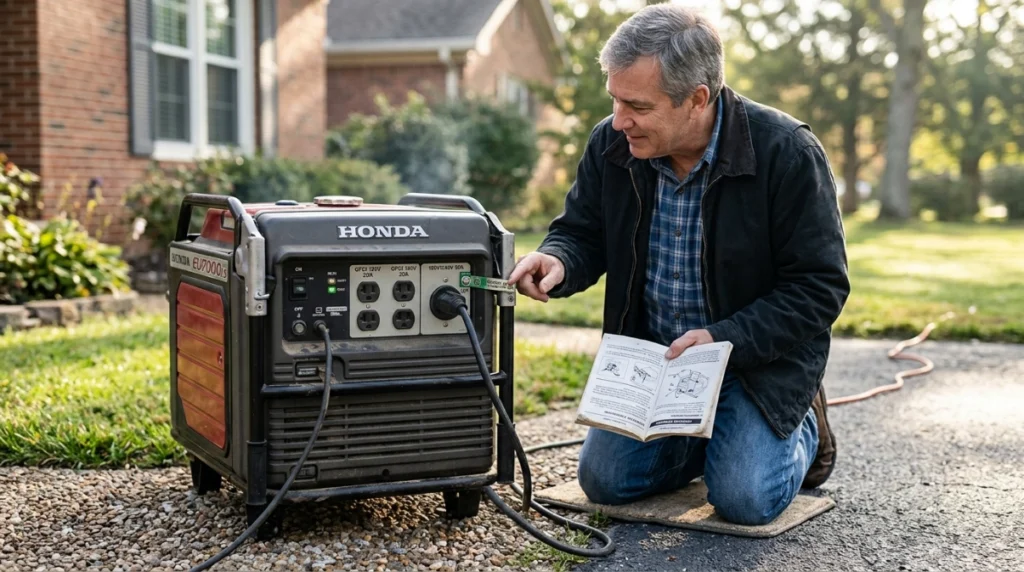
A portable generator needs a safe grounding and bonding system, but that does not always mean driving a separate rod into the earth.
For many standalone applications, the generator’s metal frame can serve as the grounding reference when the required parts are properly bonded to that frame.
Portable generator grounding: Grounding establishes an electrical connection to a reference ground. Bonding connects conductive parts together so fault current has a dependable path. They are related, but they are not the same thing.
OSHA says a portable generator’s frame does not need a separate earth connection when the generator only supplies equipment mounted on it or cord-and-plug equipment through its own receptacles, provided the required metal parts and receptacle grounding terminals are bonded to the frame.
If those conditions are missing, a grounding electrode may be required.
When the generator frame may serve as the ground
- The load plugs directly into generator receptacles.
- The receptacles are mounted on the generator.
- The receptacle grounding terminals are bonded to the frame.
- Non-current-carrying metal components are properly bonded.
- The manufacturer’s instructions permit the setup.
This is why I would never tell every generator owner to automatically buy a grounding rod. First determine what electrical system you actually have.
When Do You Need a Ground Rod for a Portable Generator?
A separate grounding electrode becomes relevant when the generator’s intended setup does not qualify for frame grounding alone or when it is connected into a building electrical system.
Generator-to-building connections deserve extra attention because the transfer equipment and neutral configuration affect the grounding arrangement.
| Generator setup | Separate ground rod? | What matters most |
|---|---|---|
| Appliances plugged directly into generator receptacles | Often not required | Correct frame and receptacle bonding |
| Tools connected with properly grounded extension cords | Often not required | Grounding conductor continuity and generator design |
| Generator connected to a building through transfer equipment | Grounding electrode system requirements apply | Transfer-switch design, neutral switching, bonding, and local code |
| Generator manual specifically requires an earth connection | Follow manufacturer instructions | Correct conductor, electrode, clamp, and installation |
| Bonding configuration is unknown | Do not guess | Manual and electrician verification |
As of 2026, the safest approach is still to follow the generator manual, applicable electrical code, and instructions for the transfer equipment being used.
Do not add or remove neutral-to-frame bonding just because another generator owner uses a different configuration.
How Do You Ground a Portable Generator With a Ground Rod?
If your manufacturer, electrician, or applicable code requires an earth electrode, the connection runs from the generator’s designated ground terminal to an approved grounding electrode.
The exact conductor size and electrode installation must match the applicable system and local requirements. Do not choose them by guesswork.
Step 1: Shut down and disconnect the generator
Turn the generator off and disconnect all loads before working around its grounding terminal.
Allow the engine to cool if it has been operating.
Step 2: Find the generator grounding terminal
Look for a terminal marked Ground, Ground Terminal, or with the standard grounding symbol.
Never attach a grounding conductor to a random frame bolt unless the manufacturer specifically identifies that location for grounding.
Step 3: Confirm that an electrode is actually required
Read the owner’s manual before installing anything. Check whether the generator uses a bonded neutral or floating neutral arrangement.
Also determine whether you are powering individual cord-connected loads or connecting through building transfer equipment.
Step 4: Locate underground utilities before driving anything
A grounding electrode can extend deep into the soil, so blindly driving one into the yard creates another hazard.
In the United States, contact 811 Before You Dig before disturbing the ground so buried utilities can be located.
Step 5: Install the approved grounding electrode
Use the electrode type and installation method required for your system and jurisdiction.
A copper-bonded ground rod is common, but soil conditions and electrical requirements can affect the installation.
- Keep the rod away from marked underground utilities.
- Use equipment suitable for the electrode material.
- Protect the rod and conductor from physical damage.
- Do not substitute pipes, fencing, or random metal objects for an approved electrode.
Step 6: Attach the grounding conductor
Connect the approved grounding conductor to the generator’s labeled grounding terminal.
Secure the other end with a listed clamp intended for the grounding electrode being used.
Step 7: Inspect the connection
The conductor should be secure, undamaged, and protected from being pulled loose.
OSHA notes that the integrity of generator-frame and grounding-terminal connections can be tested by a competent electrician using appropriate equipment.
What Is the Difference Between Bonded Neutral and Floating Neutral?
A bonded-neutral generator has an intentional connection between the neutral conductor and the generator frame at the generator.
A floating-neutral generator does not have that neutral-to-frame bond at the generator, although equipment grounding terminals may still connect to the frame.
This distinction becomes especially important when a portable generator feeds a transfer switch, RV, or building electrical system.
- Bonded neutral: Neutral and generator frame are intentionally connected.
- Floating neutral: Neutral is isolated from the generator frame.
- Equipment ground: Connects exposed conductive parts and receptacle grounding terminals through the intended fault-current path.
Generac, Honda, and other manufacturers publish model-specific grounding information because generator designs differ.
I would not modify a neutral bond unless the generator and transfer-equipment instructions specifically require it and the work is handled correctly.
Can You Ground a Generator to Your House Ground?
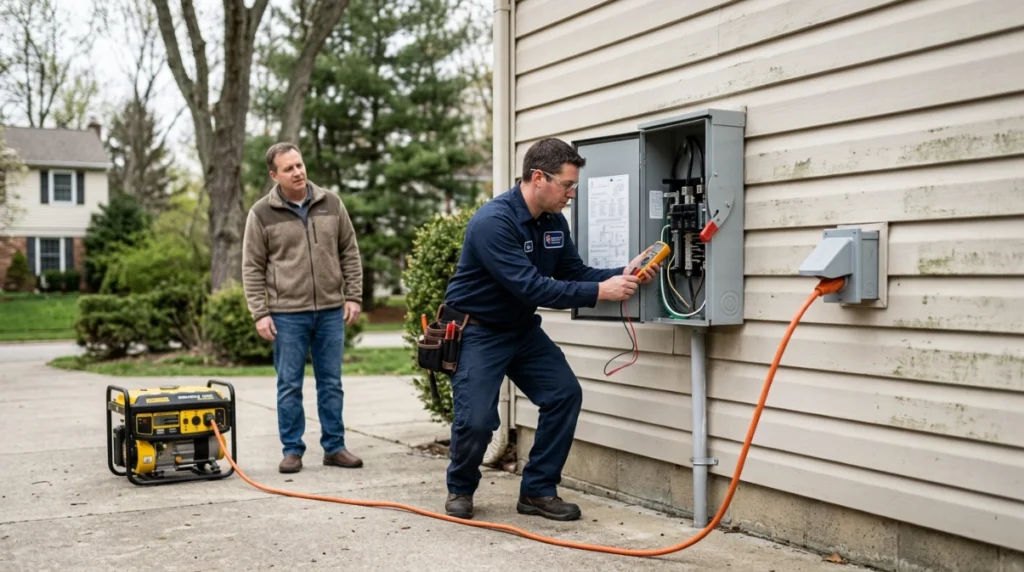
A portable generator connected to a home’s electrical system must be integrated with the building grounding and bonding system correctly.
This is not the same as clipping a wire from the generator to any convenient piece of metal.
The transfer-switch configuration determines how generator conductors interact with the home’s neutral and grounding system.
The Electrical Safety Foundation International warns against connecting a generator directly to household wiring without a transfer switch because dangerous backfeeding can occur.
Why backfeeding is dangerous
Backfeeding can energize wiring that utility workers expect to be dead during an outage.
It can also damage equipment when utility power returns.
- Never use a homemade double-male generator cord.
- Never feed a house through a dryer or range receptacle.
- Never defeat breakers or interlocks.
- Use approved transfer equipment installed for the application.
For a home connection, I recommend having a qualified electrician confirm the transfer switch, neutral treatment, equipment grounding conductor, and grounding electrode system as one complete setup.
What Grounding Mistakes Should You Avoid?
The most common mistake is assuming that more grounding hardware automatically means a safer generator.
An incorrect extra bond can create unintended current paths, while a missing required connection can leave exposed metal without the intended fault path.
- Installing a ground rod automatically: First determine whether one is required.
- Ignoring the owner’s manual: Bonding arrangements vary between models.
- Using a random frame bolt: Use the designated grounding terminal.
- Using damaged extension cords: Use properly rated three-wire cords with intact grounding pins.
- Changing neutral bonding casually: This can create an unsafe electrical configuration.
- Connecting directly to house wiring: Proper transfer equipment is required.
- Driving a rod without utility locating: Underground electrical, gas, water, or communications lines may be present.
- Running the generator near the house: Electrical grounding does nothing to protect you from carbon monoxide.
The last point is easy to overlook. A perfectly grounded generator can still be deadly when operated in the wrong location.
Does Grounding Protect You From Carbon Monoxide?
No. Generator grounding addresses electrical safety and does nothing to remove carbon monoxide from engine exhaust.
The CDC generator safety guidance says portable generators must be used outdoors because their engines produce carbon monoxide.
CDC guidance also recommends keeping generators at least 20 feet from the home and away from doors, windows, and vents.
For more detail, read our guide to portable generator carbon monoxide safety.
You can also review where to place a portable generator safely before setting up emergency power.
How Can You Check Whether Your Generator Is Grounded Correctly?
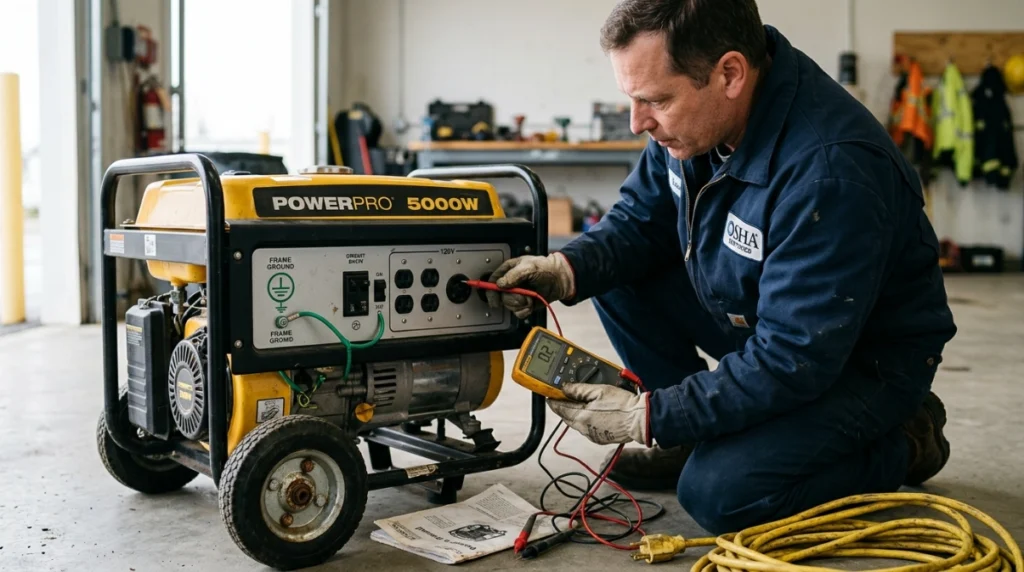
A visual inspection can identify obvious problems, but it cannot prove every bonding connection is electrically sound.
Start by checking the manual, labeled ground terminal, receptacles, cords, and visible conductors.
- Look for loose or corroded grounding hardware.
- Check three-prong receptacles for physical damage.
- Inspect extension cords for missing ground pins.
- Confirm your generator’s bonded or floating neutral configuration.
- Check transfer-equipment instructions before connecting a building.
OSHA states that a competent electrician can verify continuity between the generator frame and receptacle grounding terminals with appropriate test equipment.
The resistance of the intended bonding connection should be near zero rather than intermittent.
If you want to understand where these components sit in the machine, see our guide to portable generator parts and functions.
Our explanation of how a portable generator works also helps put the engine, alternator, receptacles, and electrical output system into context.
Useful Tools and Grounding Equipment
If your setup requires grounding equipment, I prefer simple products with clearly defined specifications rather than complicated kits with unknown hardware.
🏆 Best Ground Rod
Southwire GR8C Copper-Bonded Ground Rod
★★★★☆
The GR8C is a 5/8-inch by 8-foot copper-bonded grounding rod intended for direct-burial grounding applications. I like a recognized electrical brand when an approved rod is actually required, but your local installation requirements still come first.
💰 Best Starter Kit
Zonon 8-Foot Ground Rod Kit
★★★★☆
This kit combines copper-clad rod sections, couplers, and grounding clamps. It can be convenient when the required electrode specifications match the kit, but I would confirm those requirements before ordering.
🔧 Best Receptacle Tester
Klein Tools RT250 GFCI Receptacle Tester
★★★★½
The RT250 works with North American 120-volt three-wire receptacles and displays voltage plus common wiring faults. I treat it as a useful screening tool, not a substitute for professional bonding or continuity testing.
Frequently Asked Questions
Do I need to ground my portable generator with a rod?
Not always. A separate ground rod may not be required when a portable generator only supplies equipment through its own receptacles and the required metal parts and grounding terminals are bonded to the frame. Check the owner’s manual and the rules for your specific setup.
Can I use rebar as a generator ground rod?
Do not substitute random metal objects for an approved grounding electrode. Grounding electrodes, clamps, and conductors must suit the electrical system and applicable code. If a rod is required, use an approved product and installation method.
Can I connect the generator ground wire to a water pipe?
Do not assume a nearby pipe is an acceptable grounding point. Modern plumbing may contain plastic sections, and electrical grounding-electrode requirements are specific. Use the grounding method approved for your generator and electrical installation.
What size ground wire does a portable generator need?
There is no single conductor size that is correct for every portable generator installation. Generator output, system configuration, grounding-electrode requirements, manufacturer instructions, and applicable electrical code can affect the conductor size. Have an electrician verify it when connecting to a structure.
Will a GFCI replace generator grounding?
No. A ground-fault circuit interrupter and the grounding/bonding system perform different jobs. Use GFCI protection where required or specified, but do not treat it as a replacement for correct grounding, bonding, equipment grounding conductors, or transfer equipment.
Final Takeaway
The right way to ground a portable generator starts with one question: how is the generator supplying power?
If appliances plug directly into properly bonded generator receptacles, the frame may provide the required grounding function without a separate rod.
If the generator connects to a home, transfer switch, RV, or another electrical system, the grounding and neutral arrangement becomes more complicated.
Check the manual first. Never change neutral bonding or connect a generator to household wiring by guesswork.
Most importantly, treat grounding as only one part of generator safety. Keep the unit outdoors, protect it from unsafe moisture exposure, use sound cords, prevent backfeeding, and keep exhaust well away from occupied buildings.

Hi, I’m Michael Turner. I own a generator workshop in the United States and founded HomeGeneratorBlog to share practical, hands-on guidance about generator installation, maintenance, troubleshooting, safety, and backup power solutions. My goal is to help homeowners make smarter, more confident decisions through clear and reliable information