Portable Generator Spark Plug: Gap, Size, Symptoms, and Replacement
Quick Answer
A portable generator spark plug creates the spark that ignites the compressed fuel-air mixture inside the engine. The correct plug type and gap depend on your exact engine, so check the owner’s manual instead of assuming every generator uses a 0.030-inch gap. Understanding your portable generator engine makes plug problems much easier to diagnose.
Signs and Checks That Matter
- Hard starting: A fouled, worn, or incorrectly gapped plug can make the engine difficult to start.
- Rough running: Misfires, sputtering, and uneven engine speed can point toward weak ignition.
- Black deposits: Heavy dry carbon can indicate a rich mixture, dirty air filter, or extended low-load operation.
- Wet plug: Fuel on the firing end often means the cylinder is flooded or the mixture isn’t igniting.
- Wrong gap: Measure the existing gap with a wire gauge and compare it with your manufacturer’s specification.
Before Buying a Replacement
- Match the plug number, thread size, reach, heat range, and required gap to the generator or engine manual.
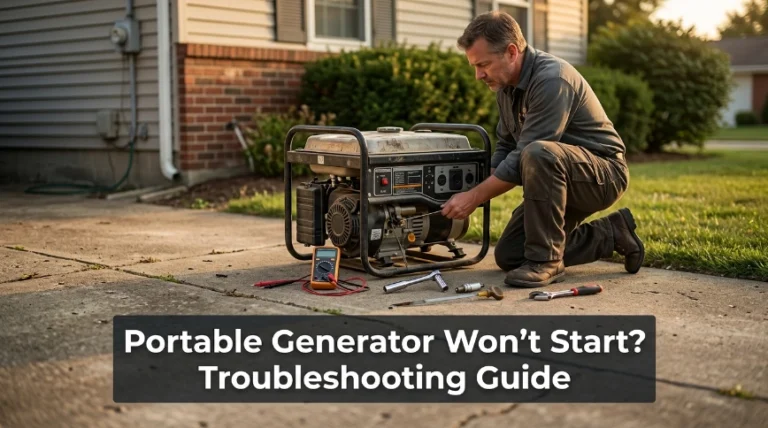
A spark plug is one of the first things I inspect when a gasoline generator suddenly becomes hard to start. It takes only a few minutes, and the condition of the plug can reveal several useful clues.
The tricky part is choosing the right replacement. This guide explains spark plug sizes, gaps, symptoms, inspection, replacement, and troubleshooting without treating one specification as universal.
What Does a Portable Generator Spark Plug Do?
A portable generator spark plug is an ignition component that creates an electrical spark inside a gasoline engine’s combustion chamber. That spark ignites the compressed air-fuel mixture and starts the power stroke.
Without reliable ignition, the engine can’t maintain the combustion cycle needed to turn the generator’s alternator.
- Ignition coil: Produces the high voltage needed for the spark.
- Spark plug wire or boot: Carries that voltage to the plug.
- Center and ground electrodes: Create the gap where the spark jumps.
- Insulator: Keeps the electrical charge from escaping through the plug body.
- Threads and seat: Secure and seal the plug inside the cylinder head.
NGK explains that the spark plug’s main job is to provide the location where ignition-system voltage jumps the electrode gap and lights the air-fuel mixture.
Workshop tip: If an engine cranks normally but won’t fire, I check fuel, oil shutdown conditions, and ignition before assuming something expensive has failed.
What Spark Plug Does My Portable Generator Need?
Your generator needs the exact spark plug specified by its engine manufacturer or an approved equivalent. Thread diameter alone doesn’t determine compatibility.
Two plugs can physically screw into the same cylinder head yet have different reach, heat range, resistor design, or electrode position.
Start With the Model Number
Before buying anything, locate the generator’s model and serial label. Then check the engine model if the engine carries its own identification number.
The same generator brand can use different engines across its product line.
- Generator manufacturer and model
- Engine manufacturer and model
- Original spark plug number
- Required electrode gap
- Plug thread and reach
- Recommended equivalent part numbers
If you’re identifying other service components at the same time, my guide to portable generator parts explains where common maintenance items fit into the system.
Common Spark Plug Examples
These examples show why you shouldn’t buy a plug based only on generator wattage. Even engines from the same manufacturer may use different specifications.
| Engine / Example | Recommended Plug | Specified Gap | Important Note |
|---|---|---|---|
| Champion 118cc and larger engines | NHSP F6RTC; NGK BPR6ES or equivalent | 0.028–0.031 in. (0.7–0.8 mm) | Confirm against your exact Champion model. |
| Champion 79cc–80cc engines | NHSP E7RTC; NGK BPR7HS or equivalent | 0.024–0.028 in. (0.6–0.7 mm) | Smaller Champion engines use a different plug family. |
| Briggs & Stratton OHV example replacing RC12YC | Briggs & Stratton 491055S | 0.030 in. | Briggs lists several engine-specific plug options. |
You can compare current specifications in the Champion spark plug recommendation chart and the Briggs & Stratton spark plug and gap guide.
What Spark Plug Gap Should a Portable Generator Have?
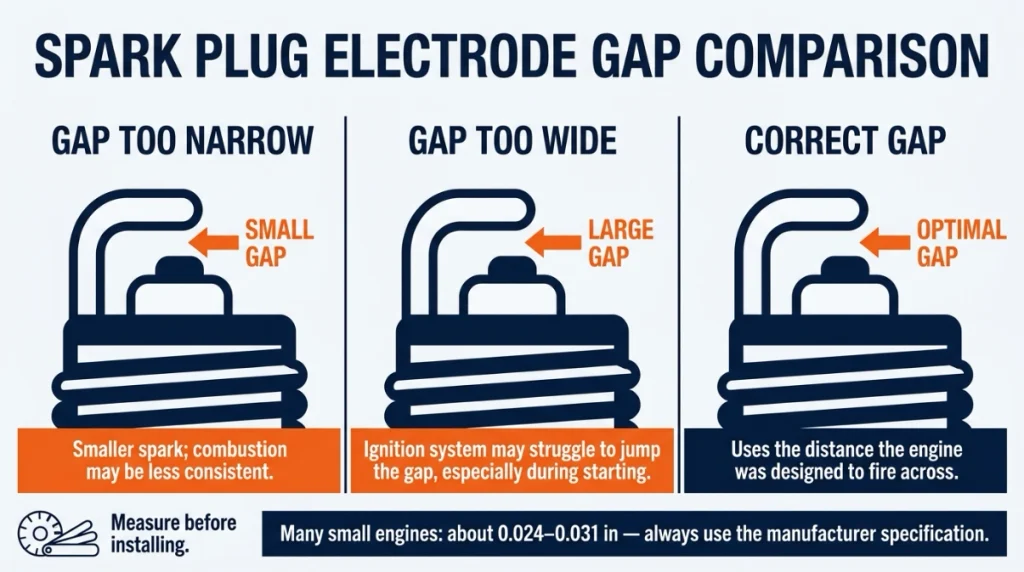
There is no single spark plug gap for every portable generator. Many small engines fall somewhere around 0.024 to 0.031 inch, but the correct number is always the manufacturer’s specification.
The gap controls the distance the ignition spark must jump between the center and ground electrodes.
- Gap too narrow: The spark may be smaller and combustion may become less consistent.
- Gap too wide: The ignition system may struggle to jump the gap, especially during starting.
- Correct gap: Gives the ignition system the distance the engine was designed to fire across.
I prefer a wire-style gap gauge because it lets me check the actual opening without relying on eyesight. Measure before installing, even when the box says the plug comes pre-gapped.
Follow the engine specification rather than changing the gap to chase more power. NGK’s spark plug gapping guidance also explains why gap size affects the voltage needed to create a spark.
Should You Gap Iridium or Platinum Spark Plugs?
Be cautious with fine-wire iridium or platinum plugs. Their small center electrodes can be damaged by aggressive gap tools.
If your generator calls for one, follow the plug maker and engine manufacturer’s instructions. Never pry directly against the fine center electrode.
How Do I Know If My Generator Spark Plug Is Bad?
A bad generator spark plug commonly causes hard starting, misfires, rough operation, or failure to start. Those symptoms aren’t exclusive to the plug, so inspection matters.
In my workshop, I usually pull the plug before tearing into the carburetor. It often tells me whether I’m dealing with ignition, excess fuel, or another engine problem.
- Engine won’t start: The plug may be fouled, worn, cracked, or unable to spark.
- Many pull-cord attempts: Weak ignition can make cold starting harder.
- Rough idle: An inconsistent spark may produce intermittent misfires.
- Sputtering under load: Ignition trouble can appear when cylinder pressure rises.
- Visible electrode wear: Rounded or badly eroded electrodes justify replacement.
- Cracked porcelain: Replace the plug rather than attempting to reuse it.
A fuel problem can create similar symptoms. If the plug checks out but the generator still surges or won’t start, inspect the portable generator fuel system next.
What Does the Color of a Generator Spark Plug Mean?
A spark plug can provide clues about what has been happening inside the cylinder. Treat its appearance as diagnostic evidence, not a complete diagnosis by itself.
| Plug Appearance | Possible Meaning | What I Check Next |
|---|---|---|
| Light tan or gray | Often consistent with normal combustion | Electrode wear and gap |
| Dry black carbon | Rich mixture or restricted airflow may be involved | Air filter, choke, carburetor, operating conditions |
| Wet with gasoline | Flooding or failed ignition | Spark, choke position, carburetor |
| Oily deposits | Oil may be entering the combustion chamber | Oil level, cylinder condition, rings or valve guides |
NGK also provides a useful guide on how technicians read spark plug condition from deposits and firing-end appearance.
How Do You Check and Replace a Portable Generator Spark Plug?
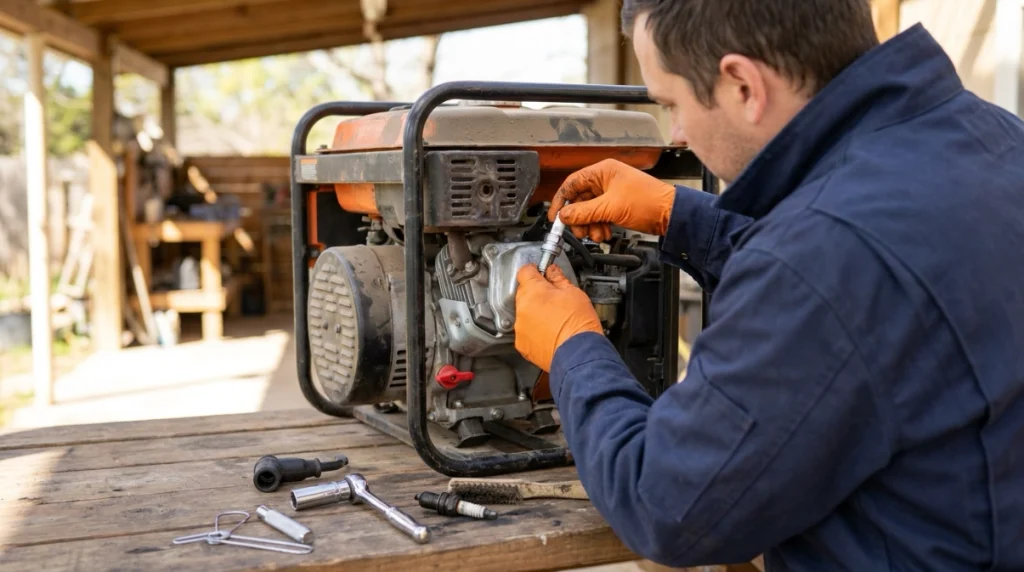
Replacing a portable generator spark plug is usually a straightforward maintenance job. The engine should be shut down, cool, and isolated from connected electrical loads first.
Work outside in a well-ventilated area. Never service a hot engine next to spilled gasoline.
- Turn the generator off. Disconnect all loads and allow the engine and muffler to cool.
- Close the fuel valve. This reduces the chance of unwanted fuel flow while you work.
- Remove the plug boot. Grip the boot rather than yanking directly on the ignition wire.
- Clean around the plug. Keep loose dirt from falling into the cylinder after removal.
- Remove the spark plug. Use the correct spark plug socket and ratchet.
- Inspect the firing end. Look for carbon, oil, cracks, electrode damage, or excessive wear.
- Measure the gap. Compare the reading with your engine manual.
- Install the correct replacement. Start it by hand to reduce the risk of cross-threading.
- Tighten correctly. Follow the manufacturer’s torque or tightening specification.
- Reconnect the boot. Make sure it seats securely before restarting the generator.
Don’t force a plug that doesn’t thread smoothly by hand. Cylinder-head thread repairs cost far more than a new spark plug.
Important: Over-tightening can damage cylinder-head threads, while an under-tightened plug may not transfer heat or seal correctly. Use the engine maker’s torque specification whenever it is available.
If you run the engine afterward, follow current CPSC portable generator safety guidance. Keep the generator outdoors and at least 20 feet from the home, with exhaust directed away from openings.
How Often Should You Replace a Portable Generator Spark Plug?
Replacement intervals vary by generator, so the owner’s manual wins. Many manufacturers call for inspection during scheduled maintenance and replacement when wear, damage, or fouling makes continued use questionable.
I also inspect the plug before storm season if a generator has been sitting for months. A five-minute check is easier than discovering an ignition problem after the utility power goes out.
- Inspect the plug during scheduled engine maintenance.
- Replace a cracked or heavily worn plug immediately.
- Check the gap whenever a reusable conventional plug is inspected.
- Keep one verified spare plug with your maintenance supplies.
- Record the correct plug number in your generator maintenance log.
Spark plug service is only one part of engine life. Oil changes, clean filters, fresh fuel, and proper storage matter more over the long term, as I explain in my guide to how long portable generators last.
Portable Generator Spark Plug Troubleshooting: Plug or Something Else?
A new plug won’t fix every no-start condition. If you install the correct plug and the engine still refuses to run, troubleshoot the whole combustion system instead of replacing random parts.
| Symptom | Spark Plug Could Cause It? | Other Things to Check |
|---|---|---|
| Cranks but won’t start | Yes | Fuel supply, carburetor, low-oil shutdown, ignition coil |
| Runs rough | Yes | Air filter, stale fuel, carburetor jet |
| Starts then dies | Possible | Fuel-cap vent, carburetor, fuel valve, oil sensor |
| Engine runs but no electricity | Usually no | Breaker, AVR, alternator, receptacle system |
If the generator has been stored with gasoline in the carburetor, stale fuel deserves special attention. The maintenance needs of a gasoline portable generator extend beyond the ignition system.
Recommended Spark Plug Tools and Parts
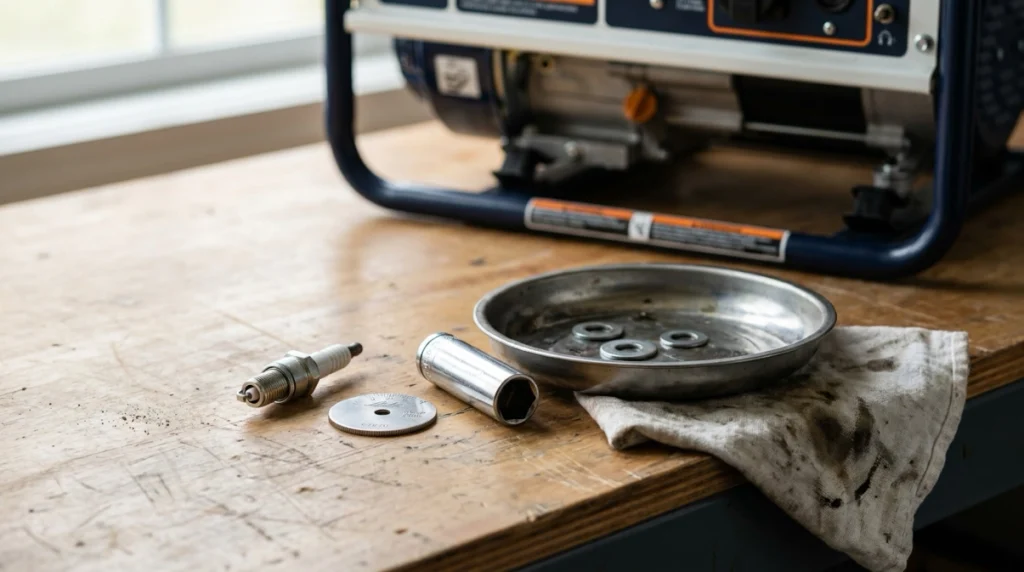
If you’re building a simple generator maintenance kit, these are the spark plug items I’d keep on the shelf. Always confirm plug and socket compatibility with your exact generator before ordering.
🏆 Best Common Replacement
NGK BPR6ES Standard Spark Plug
My rating: ★★★★☆ 4.8/5
The BPR6ES is a common replacement specified for several portable-generator engine families, including many larger Champion engines. I like keeping one as a spare, but only when the owner’s manual specifically lists BPR6ES or an approved equivalent.
📏 Best for Accurate Gapping
Lisle 67870 Spark Plug Gauge & Gapper
My rating: ★★★★☆ 4.7/5
The Lisle 67870 covers gaps from 0.020 to 0.100 inch and includes a dedicated section for adjusting the ground electrode. I prefer a proper gauge over guessing whether a new plug’s factory setting survived shipping.
🔧 Best Basic Socket
GEARWRENCH 80403 13/16-Inch Spark Plug Socket
My rating: ★★★★☆ 4.6/5
This 3/8-inch-drive socket fits common 13/16-inch spark plug hexes and is designed to hold the plug during removal and installation. I recommend confirming your plug’s hex size first because some compact generator engines use a different socket size.
Frequently Asked Questions
What is the most common spark plug gap for a portable generator?
Many portable generator engines specify gaps near 0.028 to 0.031 inch, but that range isn’t universal. Smaller engines may use a narrower gap, and other designs differ, so always use the specification in your generator or engine owner’s manual.
Can a bad spark plug stop a generator from starting?
Yes. A fouled, cracked, worn, or incorrectly gapped spark plug can prevent the air-fuel mixture from igniting. However, a clogged carburetor, stale gasoline, faulty ignition coil, low-oil shutdown system, or fuel-delivery problem can create the same no-start symptom.
Can I clean a generator spark plug instead of replacing it?
You can sometimes clean light carbon deposits from a conventional plug if the electrodes and insulator remain undamaged. Since standard small-engine spark plugs are inexpensive, I replace plugs with heavy deposits, cracked porcelain, severe corrosion, or significant electrode wear.
Can I use any spark plug that fits my generator?
No. A plug can have the correct thread diameter but the wrong reach, heat range, resistor design, or electrode configuration. Use the manufacturer’s exact part number or a documented cross-reference that matches all required specifications.
Should I keep a spare generator spark plug?
Yes, especially if the generator is part of your emergency outage plan. Label the spare with the generator model and required gap so you don’t have to search for specifications during a storm or extended power failure.
Final Takeaway
A portable generator spark plug is inexpensive, but it has a critical job. Match the plug to the exact engine, verify the gap, inspect its condition, and install it without cross-threading or over-tightening.
Keep the correct spare plug, a gap gauge, and the right socket with your generator supplies. That small maintenance kit can turn a frustrating no-start problem into a quick repair when backup power matters most.

Hi, I’m Michael Turner. I own a generator workshop in the United States and founded HomeGeneratorBlog to share practical, hands-on guidance about generator installation, maintenance, troubleshooting, safety, and backup power solutions. My goal is to help homeowners make smarter, more confident decisions through clear and reliable information