
How Long Do Portable Generators Actually Last?
Quick answer: A well-maintained portable generator typically lasts 10 to 15 years, or roughly 1,000 to 2,000 hours of engine run time, whichever comes first. Inverter models often reach the higher end of that range, while cheap open-frame units used hard during long outages tend to wear out sooner. How you store, load, and maintain it matters more than the brand name on the case.
Most owners never think about their generator's lifespan until it won’t start during the exact week they need it. That’s the wrong time to find out.
The honest answer isn’t a single number. It’s two numbers — calendar years and engine hours — and knowing both is what actually tells you where your unit stands.
Years vs. Run-Hours: Why Both Numbers Matter
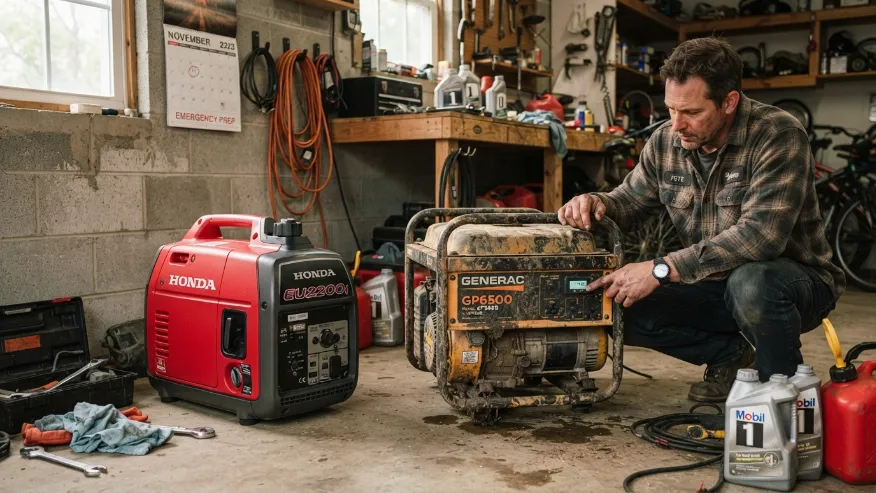
A generator sitting in a shed for 11 months a year ages differently than one grinding through 12-hour shifts on a job site. Manufacturers rate small engines in run-hours, not calendar time, because hours are what actually wear down pistons, rings, and valves.
Most consumer portable generators are built around small air-cooled engines rated for somewhere between 1,000 and 2,000 total hours of operation before major components need rebuilding or replacing. Run one for 100 hours a year — a normal amount for occasional outages — and that math stretches into a 10 to 20 year service life. Run one 8 hours a day at a construction site, and you’ll burn through that same engine in two or three years.
Fuel type changes the equation too. Diesel engines are built heavier from the factory and can log 15,000+ hours in commercial use, though that’s mostly relevant to standby units, not the portable gas and dual-fuel models most homeowners buy.
| Generator Type | Typical Lifespan (Years) | Typical Run-Hour Rating |
|---|---|---|
| Open-frame gasoline | 8–12 years | 1,000–1,500 hours |
| Inverter generator | 10–15 years | 1,500–2,000 hours |
| Dual-fuel (gas/propane) | 10–15 years | 1,500–2,000 hours |
| Portable diesel | 15–20 years | 3,000–5,000 hours |
These are averages, not guarantees. A neglected unit can fail in year three. A well-cared-for one can outlive the numbers above by a decade.
What Actually Shortens a Generator’s Life
I’ve pulled apart enough dead carburetors over the years to notice the pattern: it’s rarely the engine that fails first. It’s almost always fuel.
Gasoline left sitting in the tank and carburetor for months gums up jets with a sticky varnish as the ethanol breaks down. That single habit probably kills more portable generators than every other cause combined.
The biggest culprits
- Stale fuel left in the tank between uses, especially ethanol-blended gasoline
- Skipped oil changes — small engines have tiny oil capacities and dirty oil does damage fast
- Running at or near max rated wattage for hours at a time instead of staying in the 50–75% load range
- Outdoor storage without weather protection, which corrodes electrical contacts and cracks fuel lines
- Dirty air filters that starve the engine and force it to run hot
- Long idle periods with no test-runs, which lets seals dry out and fuel systems clog
Overloading deserves its own mention. A generator rated for 5,000 running watts that’s constantly asked for 4,800 watts is working near its ceiling continuously. Engines built for that kind of sustained strain exist — they’re called industrial or standby units, and they cost accordingly. A homeowner-grade portable isn’t one of them.
Vibration is another quiet contributor most owners never consider. Portable generators are, by design, not perfectly balanced — the engine and alternator both introduce vibration that loosens fasteners and fatigues wiring connections over years of use. Setting the unit on a flat, stable surface rather than uneven gravel or a wobbling cart reduces this wear meaningfully, and it’s a five-second fix most people simply never think to make.
Does Brand Actually Change How Long It Lasts?
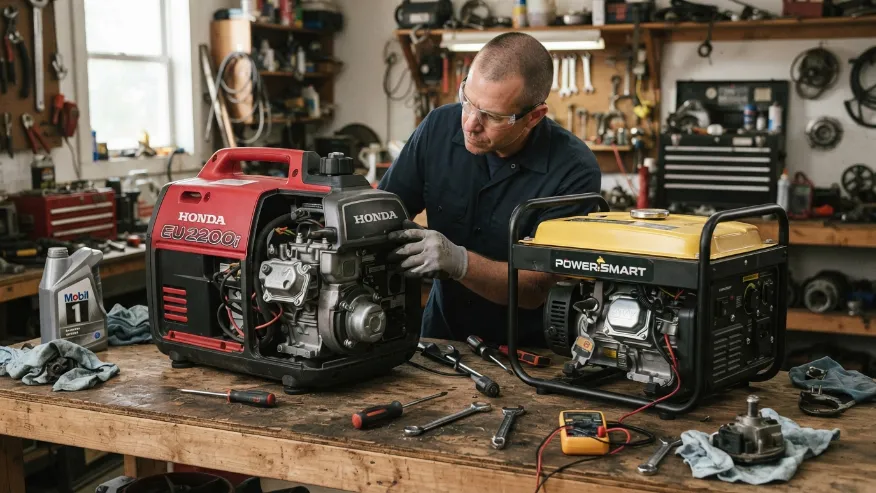
Brand matters less than people assume, and more than marketing suggests. What actually separates a generator that lasts 15 years from one that dies at 5 usually comes down to the engine underneath the plastic shell, not the logo on it.
Names like Honda and Briggs & Stratton have built reputations on engine durability specifically, and that reputation is generally earned — their small engines tend to tolerate neglect better and hold tighter tolerances over time. Budget brands built around generic engines aren’t necessarily bad, but they usually have thinner margins for error. Skip one oil change on a premium engine and it shrugs it off. Skip one on a bargain unit and you may shorten its life meaningfully.
The practical takeaway: paying more up front buys you some cushion against imperfect maintenance, but it doesn’t replace maintenance. A cheap generator that’s babied will often outlast an expensive one that’s neglected.
How Climate and Storage Conditions Change the Math
Where you live and where you store the unit both quietly shift its expected lifespan, and this is one of the most overlooked variables in the whole conversation.
Coastal and high-humidity climates accelerate corrosion on electrical contacts, control panels, and fuel lines — salt air is especially hard on exposed metal components. Homeowners in these regions often see meaningful rust and connector failures years before an equivalent unit would show the same wear in a dry inland climate.
Cold climates bring a different problem: thickened oil makes cold starts harder on the engine, and repeated hard starts wear piston rings faster than smooth ones. If you’re in a region with regular sub-freezing outages, switching to a lighter winter-weight oil before storm season and keeping the unit somewhere insulated from direct freezing air both help meaningfully.
Heat has its own toll. Generators run in direct summer sun or in poorly ventilated enclosures run hotter than their design target, which stresses seals, gaskets, and electronic components like the AVR (automatic voltage regulator) that many owners never think about until it fails.
Signs Your Generator Is Nearing the End
A generator rarely dies without warning. It tells you first — you just have to be paying attention.
Watch for harder starts than usual, a noticeable drop in output voltage under load, or a rough, uneven engine note that wasn’t there last season. Smoke that’s thicker or a different color than normal, oil consumption between changes, and a generator that runs hot to the touch faster than it used to are all late-stage warning signs.
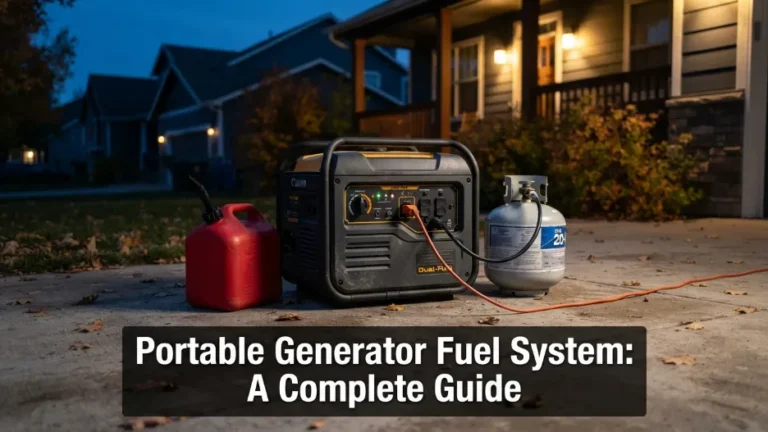
If you’re shopping for a replacement because yours is showing these symptoms, a dual-fuel portable generator is worth a look — running it on propane part of the time avoids the stale-gasoline problem that shortens so many units’ lives in the first place.
How to Extend the Life You’ve Got
None of this is complicated. It’s the same handful of habits, repeated consistently, that separates a generator that dies at year four from one still running at year eighteen.
| Task | Frequency | Why It Matters |
|---|---|---|
| Oil change | Every 50–100 hours or once a season | Dirty oil accelerates internal engine wear |
| Air filter check/clean | Every 25 hours or monthly in storage | Prevents overheating and lean-running damage |
| Fuel stabilizer or drain tank | Before any storage over 30 days | Stops varnish buildup in the carburetor |
| Test-run under load | Monthly, 20–30 minutes | Keeps seals lubricated and reveals problems early |
| Spark plug replacement | Annually or every 100 hours | Worn plugs cause hard starts and misfires |
| Covered, dry storage | Ongoing | Prevents rust and corroded electrical contacts |
Storage matters more than most people realize. A generator kept under a proper weatherproof storage cover avoids the slow corrosion that ruins wiring harnesses and control panels on units left exposed to rain and UV.
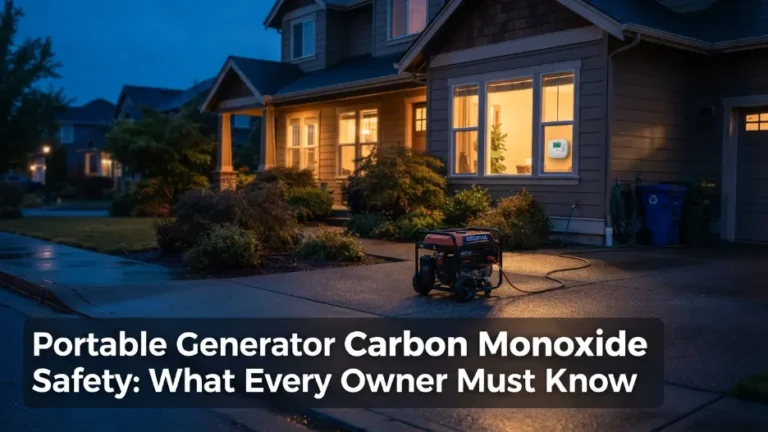
Never operate a portable generator indoors, in a garage, or in any partially enclosed space — the carbon monoxide it produces can incapacitate and kill within minutes, and this holds true even with fans running or doors propped open, according to the U.S. Consumer Product Safety Commission.
Repair or Replace? A Simple Way to Decide
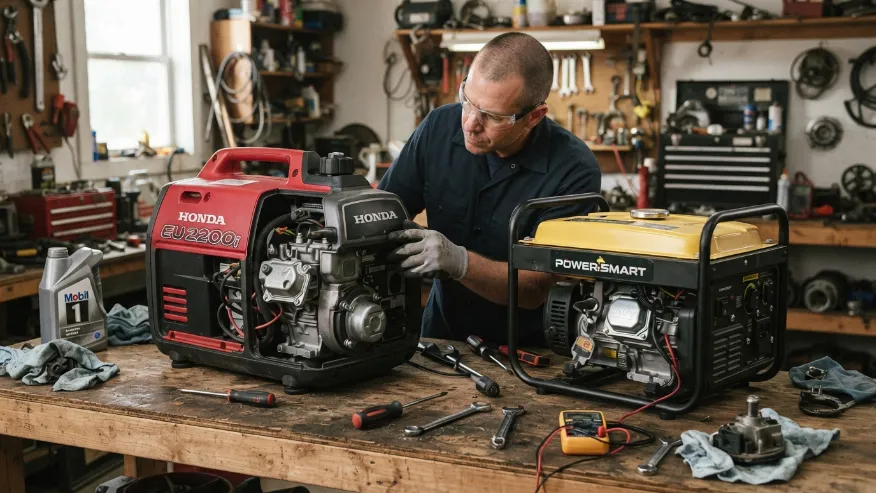
Somewhere around year 8 to 10, most owners face this question after a breakdown. Here’s the framework I use with my own equipment.
If the repair cost is under 25% of a comparable new unit’s price and the generator has fewer than 800–1,000 hours on it, fix it. Between 25–50% of replacement cost, weigh the age against how critical reliable backup power is for your situation. Above 50%, or if the engine block itself is the problem, replacement almost always makes more financial sense than chasing one repair after another.
Age alone isn’t the deciding factor — a 12-year-old unit with 300 hours on it and one clean owner is in far better shape than a 4-year-old unit that’s been rented out or run hard on a jobsite.
Conclusion
A portable generator’s lifespan comes down to hours and habits, not the calendar on the wall. Keep fuel fresh, change the oil on schedule, avoid running it flat-out for hours at a time, and store it somewhere dry — and 10 to 15 years is a realistic, achievable number for most homeowners. Skip those basics, and you’ll be shopping again well before then. I’m Michael Turner, and after years of keeping generators running through outages of every length, the maintenance habits above are the difference I’ve seen most consistently between units that last and ones that don’t.
If your current unit is showing its age, a modern dual-fuel portable generator gives you the flexibility to run on propane for storage-friendly fuel that won’t gum up over the winter, which solves the single biggest cause of early generator failure.
How many hours is considered high for a portable generator?
Most homeowner-grade portable generators are rated for 1,000 to 2,000 total hours before major engine work is likely needed. A unit with over 1,500 hours on it is entering the higher-mileage range, though a well-maintained engine can often run well past its rated hours.
Does running a generator every week shorten its life?
No — the opposite is usually true. A short monthly test run under load actually extends lifespan by keeping seals lubricated, burning off old fuel, and catching small problems before they become expensive ones.
How long can gasoline sit in a generator before it causes damage?
Untreated gasoline can start breaking down and gumming up a carburetor in as little as 30 days, faster in hot weather. Adding a fuel stabilizer before storage or running the tank dry between uses prevents this.
Do inverter generators last longer than standard portable generators?
Inverter generators often land at the higher end of the typical lifespan range, largely because they’re built with more efficient, load-adjusting engines that don’t run at full throttle constantly. They still depend on the same maintenance habits to reach that potential.
Is it worth repairing an older portable generator?
It depends on the repair cost relative to the engine’s hours. If the fix is under roughly a quarter of a new unit’s price and the generator has under 1,000 hours on it, repairing is usually the better value than replacing.

Hi, I’m Michael Turner. I own a generator workshop in the United States and founded HomeGeneratorBlog to share practical, hands-on guidance about generator installation, maintenance, troubleshooting, safety, and backup power solutions. My goal is to help homeowners make smarter, more confident decisions through clear and reliable information
One Comment