Electric Start Portable Generator: What It Is, How It Works, and Is It Worth It (2026 Guide)
I’ve owned three generators over the past decade, and the jump from a pull-start 2,000-watt unit to an electric start 7,500-watt model changed how I feel about power outages. This guide covers exactly what electric start is, how it works under the hood, and whether it’s worth paying extra for on your next generator.
I’ll also walk through battery care, common no-start problems, and a few real models I’ve either used or recommend to readers.
What Is an Electric Start Portable Generator?
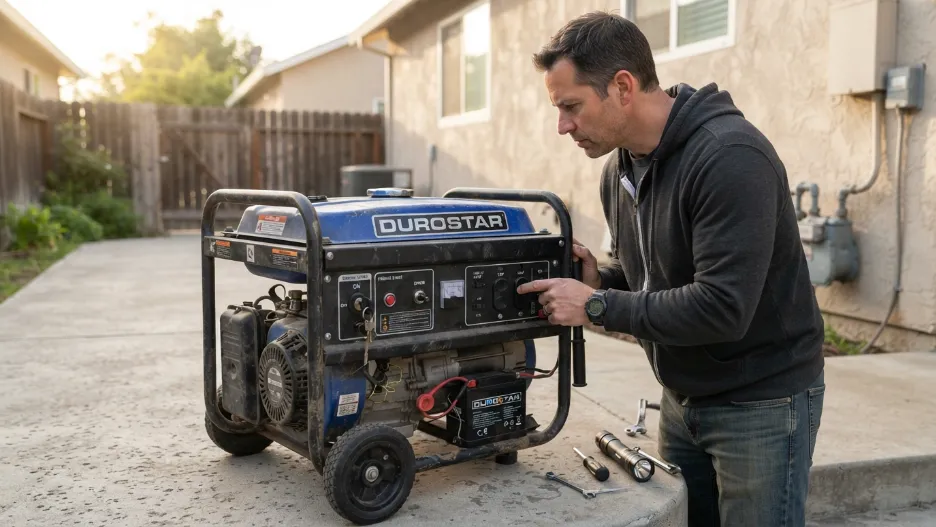
An electric start portable generator is a generator that uses a battery-powered starter motor to crank the engine, instead of requiring you to pull a recoil rope. It works the same way the ignition in your car does.
Turn the key, hold a button, or press a remote fob, and the starter motor spins the engine over until it fires. Most electric start units still have a pull cord bolted on as a manual backup, so a dead battery doesn’t strand you.
This feature shows up across every fuel type and generator style, from small inverter units to large dual-fuel workhorses.
How Does Electric Start Actually Work?
Electric start works through three linked components: a small battery, a starter motor, and the engine’s alternator. Press the start button, and the battery sends current to the starter motor, which physically turns the engine’s flywheel.
Once the engine catches and keeps running on its own, the starter motor disengages automatically. From there, the generator’s alternator sends a trickle charge back to the battery, so it’s topped off and ready for next time.
This is one of several core components covered in our breakdown of portable generator parts, which goes deeper into the alternator, carburetor, and engine block.
A few things happen behind the scenes that most buyers never think about:
- Cold weather draw: starter motors pull more current below freezing, which is why some models add “cold start” circuitry.
- Low-oil lockout: most electric start generators won’t crank at all if the low-oil sensor is tripped, protecting the engine.
- Choke automation: many electric start models auto-adjust the choke, so you don’t have to manually set it before pressing start.
Electric Start vs. Recoil Start: What’s the Real Difference?
The core difference is effort versus simplicity. Recoil (pull) start has no battery to fail and nothing extra to maintain, but it demands real physical effort, especially on larger engines.
Electric start trades a bit of added complexity and cost for convenience you’ll actually notice every time you use the generator.
| Factor | Electric Start | Recoil (Pull) Start |
|---|---|---|
| Startup effort | Push a button or turn a key | One to several firm pulls |
| Typical price premium | +$50 to $150 over recoil-only | None, it’s the base model |
| Extra maintenance | Battery needs occasional charging | None beyond the engine itself |
| Cold-weather starting | Easier, less physical strain | Harder, engine oil is thicker |
| Failure backup | Recoil cord included on most units | N/A, it’s already the backup method |
In practice, most mid-size and large generators (4,000 watts and up) sell an electric start version as an upgrade option. Smaller inverter generators under 2,200 watts are usually easy enough to pull-start that the upgrade matters less.
Is an Electric Start Generator Worth the Extra Money?
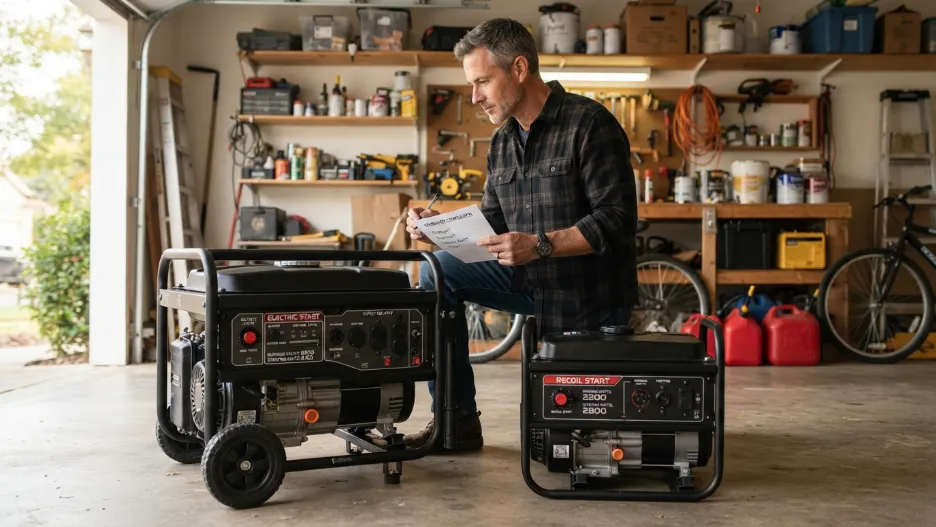
For most buyers, yes. A $50 to $150 price bump is small compared to how often you’ll use the start button, especially during a stressful outage when you just want power fast.
The math changes a bit depending on generator size and who’s operating it. Here’s how I’d think through it:
- Under 3,000 watts: pull-starting is usually easy, so electric start is a nice-to-have rather than essential.
- 3,000 to 5,000 watts: this is the sweet spot where electric start earns its keep, since larger engines resist a pull cord more.
- Above 5,000 watts: I’d consider electric start close to mandatory unless you’re confident in your upper-body strength.
- Cold climates: starter motors handle cold-engine compression far better than a human arm can.
Before you land on a specific wattage, it helps to nail down your actual power needs. Our guide on sizing a generator for your home walks through the math so you’re not overpaying for capacity you won’t use.
One thing I always tell readers: electric start doesn’t fix a badly maintained generator. A dead battery, stale fuel, or fouled spark plug will keep any generator from starting, button or not.
What Kind of Battery Does an Electric Start Generator Use?
Most electric start portable generators use a small sealed lead-acid (SLA) or AGM 12-volt battery, similar in chemistry to a motorcycle or lawn tractor battery. It’s sized just large enough to crank the starter motor, not to run the generator itself.
Some premium and inverter-style models swap in a lithium battery instead, which is lighter and holds a charge longer during storage. Our inverter portable generator buying guide covers which models tend to use these upgraded batteries.
Either way, the battery is separate from the generator’s power output. It exists purely to start the engine, not to supply your outlets.
How Do You Maintain an Electric Start Generator’s Battery?
Battery neglect is the single biggest cause of “my electric start won’t work” complaints I hear from readers. The good news is that upkeep takes minutes, not hours.
Follow these steps to keep the starter battery reliable:
- Run the generator at least once a month for 15-20 minutes so the alternator can recharge the battery.
- If the generator sits unused for more than 30 days, connect a trickle charger or battery tender.
- Check terminals twice a year for corrosion, and clean them with a wire brush if you see white or green buildup.
- Store the generator somewhere temperatures stay above freezing when possible, since cold weather drains SLA batteries faster.
- Replace the battery every 2-4 years, even if it still seems to work, since capacity fades gradually.
Battery life is closely tied to overall generator lifespan. Our guide on portable generator lifespan breaks down what typically fails first and when it’s worth replacing versus repairing.
Why Won’t My Electric Start Generator Start?
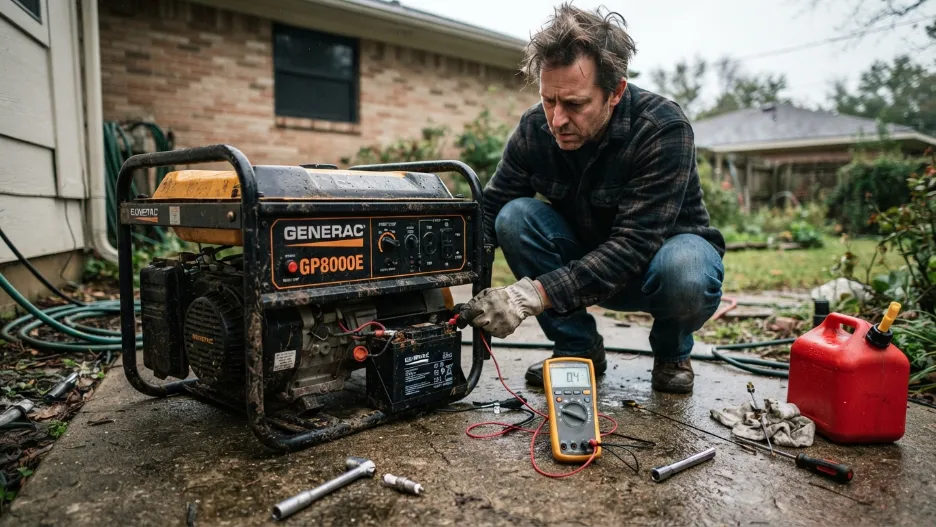
A dead or weak battery is the most common culprit, followed closely by old fuel and a tripped low-oil sensor. Before assuming the starter motor is broken, work through the simple stuff first.
Check these in order:
- Battery voltage: a healthy 12V battery should read close to 12.6 volts at rest; anything under 12 volts often can’t crank the starter.
- Oil level: most generators refuse to start if oil is low, even with a fully charged battery.
- Fuel age: gasoline over 30 days old without stabilizer can gum up the carburetor and prevent starting.
- Loose connections: corroded or loose battery terminals interrupt the current before it reaches the starter.
- Blown fuse: many electric start circuits have a small inline fuse that can trip and needs replacing.
If all of that checks out and it still won’t crank, the recoil cord backup lets you start the generator manually while you troubleshoot or order a replacement battery.
Whatever generator you land on, always run it outdoors and away from windows and doors. The OSHA fact sheet on portable generator safety covers carbon monoxide and electrical hazards worth reading before your first use.
If you’re buying specifically for storm season, the Ready.gov power outage guide is a solid checklist for what else to have on hand.
If you’re ready to pick one, here’s what I’d actually recommend based on wattage, battery quality, and how each one has held up in real use:
Frequently Asked Questions
Does an electric start generator still have a pull cord?
Yes, almost every electric start portable generator keeps a manual recoil cord as a backup. If the battery ever dies or won’t hold a charge, you can still start the engine the old-fashioned way without being stranded.
How long does the battery last on an electric start generator?
Most sealed lead-acid starter batteries last 2 to 4 years with regular use and occasional trickle charging. Batteries left uncharged in storage for months at a time tend to fail much sooner, sometimes within a year.
Can I add electric start to a generator that only has a pull cord?
In some cases, yes, if the manufacturer sells a compatible electric start conversion kit for that engine. It typically requires adding a starter motor, battery, and wiring harness, and it’s not available for every model.
Do electric start generators need a special battery charger?
A standard automotive or motorcycle trickle charger rated for 12V SLA or AGM batteries works fine. Avoid high-amp automotive chargers meant for large car batteries, since they can overcharge a small generator battery.
Why does my electric start generator crank but not start?
Cranking without starting usually points to stale fuel, a dirty carburetor, or a fouled spark plug rather than a battery problem. If the starter motor is spinning, the electrical side is working fine and the issue is on the fuel or ignition side.
🏁 My Final Verdict
Yes, an electric start portable generator is worth the extra $50 to $150 for most homeowners, especially on anything over 4,000 watts. It’s one of the few upgrades that pays off every single time you use it, not just occasionally.
- Skip electric start on small inverter units under 2,200 watts, where pull-starting is genuinely easy.
- Prioritize it on anything 4,000 watts and up, especially if you’re not confident pull-starting a large engine.
- Run the generator monthly to keep the starter battery charged, even when there’s no outage.
- Keep a trickle charger on hand for off-season storage.
- Don’t skip the low-oil and fuel checks just because you have a push-button start; electric start can’t fix a starved engine.
If a power outage has ever left you wrestling with a pull cord in the dark, electric start is the upgrade that fixes it for good. Pick a wattage that matches your real needs, keep the battery charged, and you’ll have power at the press of a button when it matters most.
Hi, I’m Michael Turner. I own a generator workshop in the United States and founded HomeGeneratorBlog to share practical, hands-on guidance about generator installation, maintenance, troubleshooting, safety, and backup power solutions. My goal is to help homeowners make smarter, more confident decisions through clear and reliable information