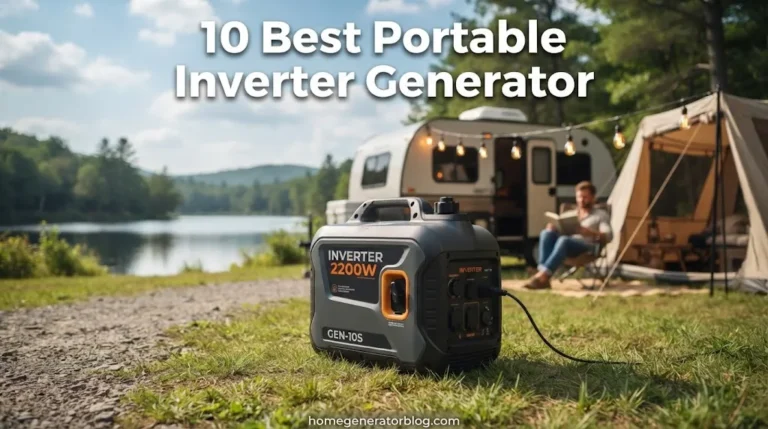
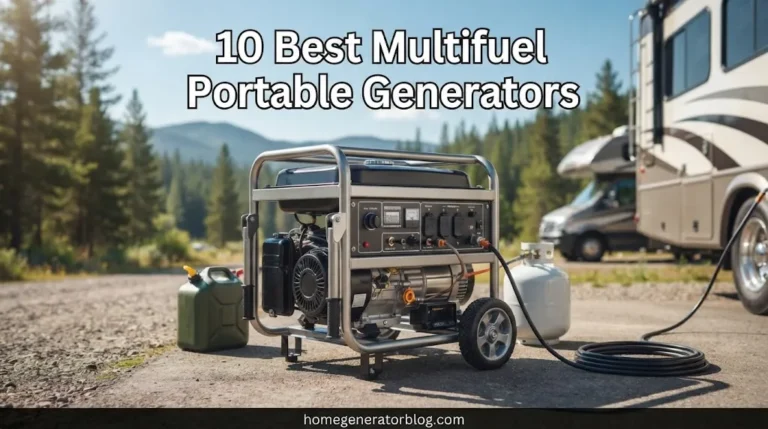
10 Best Portable Generator for Off Grid Living: Reliable Power Without the Grid
The best portable generator for off grid living right now is DuroMax XP13000HXT Tri-Fuel — it runs on gasoline, propane, or natural gas and covers whole-cabin loads. We compared 10 portable generators using published specifications, scoring each on Off-Grid Power Fit, Runtime and Fuel Flexibility, and Quiet Operation and Ease of Use. Most off-grid generators look strong on paper but fail on fuel storage, starting watts, or daily refuelling. Whether you need whole-cabin power, quiet daily essentials, or a compact backup, this guide gives you one clear answer.
Quick Comparison: All 10 Products Ranked
| # | Product | Best For | Rating | Badge | |
|---|---|---|---|---|---|
| 1 | DuroMax XP13000HXT Tri-Fuel | Whole off-grid cabin power | 4.9/5 | Best Overall | Buy → |
| 2 | Westinghouse WGen12000DF Dual Fuel | Large loads with propane backup | 4.8/5 | Best Dual Fuel | Buy → |
| 3 | Honda EU7000iS Inverter | Quiet clean power for electronics | 4.7/5 | Best Premium Quiet | Buy → |
| 4 | Champion 100416 Tri-Fuel 10,000-Watt | Tri-fuel power at a lower size | 4.6/5 | Best Tri-Fuel Value | Buy → |
| 5 | Westinghouse WGen9500TFc Tri-Fuel | Whole-home-ready off-grid power | 4.5/5 | Best Whole-Home Ready | Buy → |
| 6 | Generac GP8000E | Open-frame workhorse for heavy loads | 4.4/5 | Best Workhorse | Buy → |
| 7 | DuroMax XP12000EH Dual Fuel | Large dual-fuel backup power | 4.3/5 | Best Large Backup | Buy → |
| 8 | Westinghouse iGen4500DF Dual Fuel Inverter | Quiet daily off-grid essentials | 4.2/5 | Best Quiet Inverter | Buy → |
| 9 | Champion 200988 4500-Watt Dual Fuel Inverter | Mid-size inverter for daily use | 4.1/5 | Best Mid-Size Inverter | Buy → |
| 10 | Honda EU2200i | Compact backup for light loads | 4.0/5 | Best Compact Backup | Buy → |
How We Chose These Portable Generators
What we compared
10 portable generators, using published running watts, peak watts, fuel types, outlet types, weight, and stated runtime.
Our 3 scoring criteria
Off-Grid Power Fit, Runtime and Fuel Flexibility, and Quiet Operation and Ease of Use. Each overall rating is the average of its 3 scores.
What we did not do
No hands-on testing, no test duration, no laboratory work, and no expert consultation is claimed in this specification comparison.
What we cut — and why
Very small units under 2,000 running watts were cut as a main off-grid pick because they cannot cover a fridge, pump, and charging together.
What to Look for When Buying a Portable Generator for Off Grid Living
Off-grid power is a daily routine, not a storm backup. Size for the loads you run every day, then plan fuel, storage, and safety around that routine.
1. Total Load and Starting Watts
List running watts for the fridge, well pump, lights, charger, and any heater or cooker you plan to run. Add starting watts for motors, especially a well pump or fridge compressor, because those peaks decide whether the generator stalls. For a broader sizing view, see whole-home portable generator sizing before you settle on a wattage.
2. Fuel Flexibility and Storage
Gasoline is easy to find but needs safe storage and regular rotation. Propane stores longer and burns cleaner, while natural gas suits a fixed home connection where it is available. Compare tri-fuel portable generator options if you want a second or third fuel when one supply runs low.
3. Runtime and Refuelling
Runtime figures depend on load, so a long tank at quarter load will not last as long at full load. Plan a refuelling routine you can repeat daily, keep fuel outside living space, and let the unit cool before refuelling. A larger tank helps, but only if you can move and store that fuel safely.
4. Clean Power, Noise, and Safe Placement
Inverter output suits laptops, phones, and other sensitive electronics, while open-frame units are usually louder and better for heavy tools. Noise figures use different test conditions, so treat them as a comparison guide. For quieter shortlists, see quietest portable generators compared. Always run a generator outdoors, away from windows and vents, with a carbon monoxide alarm inside.

DuroMax XP13000HXT Tri-Fuel — Whole-Cabin Power, Three Fuels
Best for: Whole off-grid cabin power
For an off-grid home that needs real daily power, the XP13000HXT is the most flexible starting point in this list. Its 10,500 running watts on gasoline can cover a well pump, fridge, lights, and battery charging together in many common setups, while propane and natural gas give backup when gasoline is hard to store or deliver. Electric start helps on cold mornings, and the 50-amp outlet suits a transfer switch or inlet box. The trade-off is size and weight: this is a large, heavy unit that needs a fixed spot and help to move. Still, for full-time off-grid living, its fuel choice and output are hard to match.
- Three fuels: gas, propane, natural gas
- 10,500 running watts on gasoline
- 50-amp outlet for home connection
- Electric start for cold mornings
- Very heavy to move alone
- Loud at full load
5.0/5
4.9/5
4.8/5

Westinghouse WGen12000DF Dual Fuel — Large Loads, Propane Backup
Best for: Large loads with propane backup
For off-grid living with a large cabin, the WGen12000DF covers heavy daily loads without forcing a tri-fuel setup. Its 9,500 running watts on gasoline can run a well pump, fridge, freezer, and lights together in many common setups, while propane gives a cleaner backup that stores well for months. Remote start and a large tank help with daily use, and the 50-amp outlet suits a transfer switch. The trade-off is the same as most large open-frame units: it is heavy, loud at full load, and needs a sheltered outdoor spot. Still, for a big off-grid home, it is a strong and simpler second choice.
- 9,500 running watts on gasoline
- Propane backup stores well
- Remote start included
- 50-amp outlet for home connection
- Heavy to move alone
- Loud at full load
4.9/5
4.8/5
4.7/5
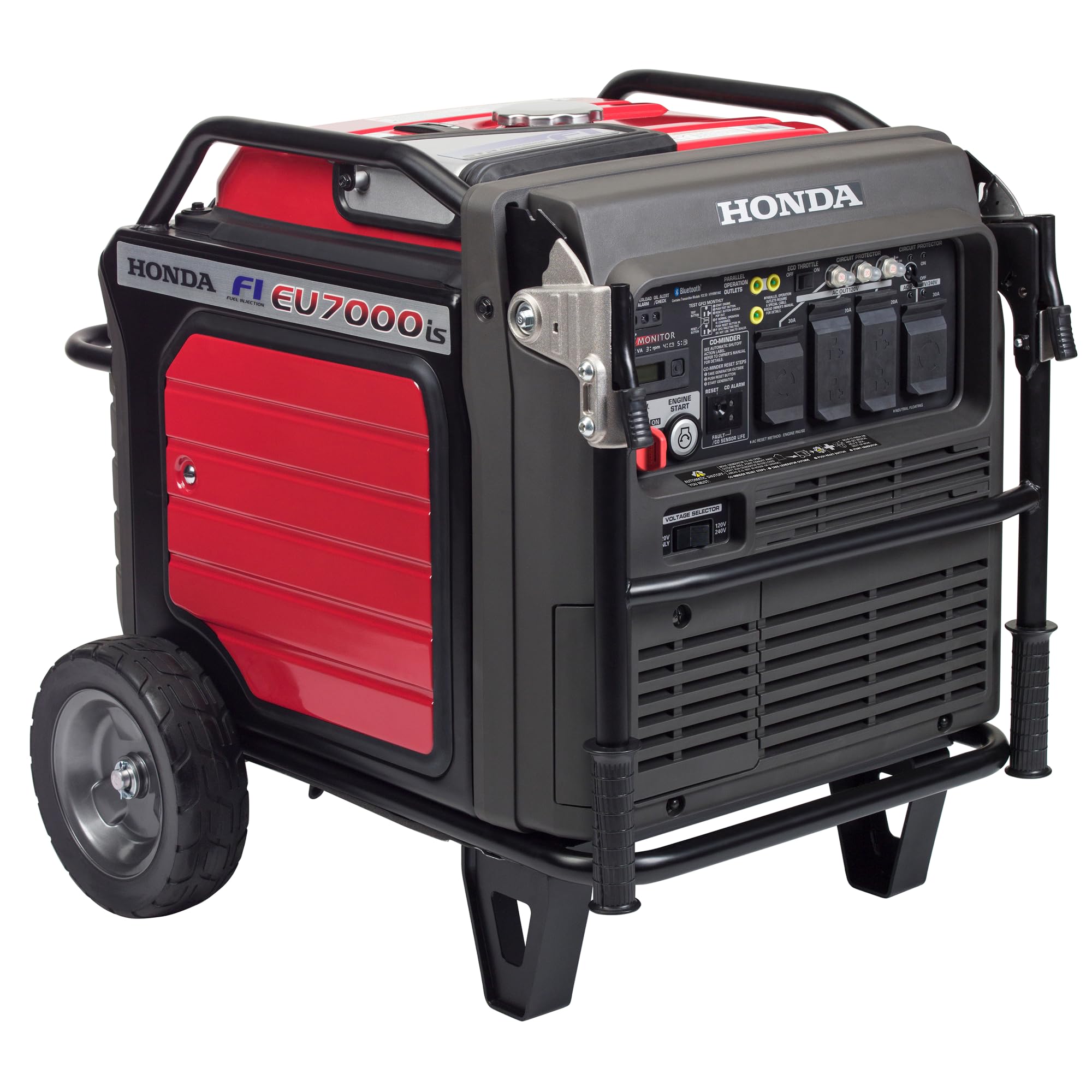
Honda EU7000iS Inverter — Quiet, Clean, Fuel-Injected Power
Best for: Quiet clean power for electronics
For off-grid living where quiet matters as much as watts, the EU7000iS is the premium inverter choice. Its 5,500 running watts can cover a fridge, lights, charging, and many smaller motors, while fuel injection gives smooth starts and steady fuel use. Inverter output suits laptops, medical devices, and other sensitive electronics, and the unit runs notably quieter than open-frame models at light load. The trade-off is output and weight: it cannot match the largest tri-fuel units for a whole cabin, and it is heavy for its size. Still, for daily essentials and night-time use, it is the calmest option here.
- Fuel-injected smooth starting
- Clean inverter power for electronics
- Quiet at light load
- Electric start included
- Lower output than large units
- Heavy for an inverter
4.7/5
4.6/5
4.8/5
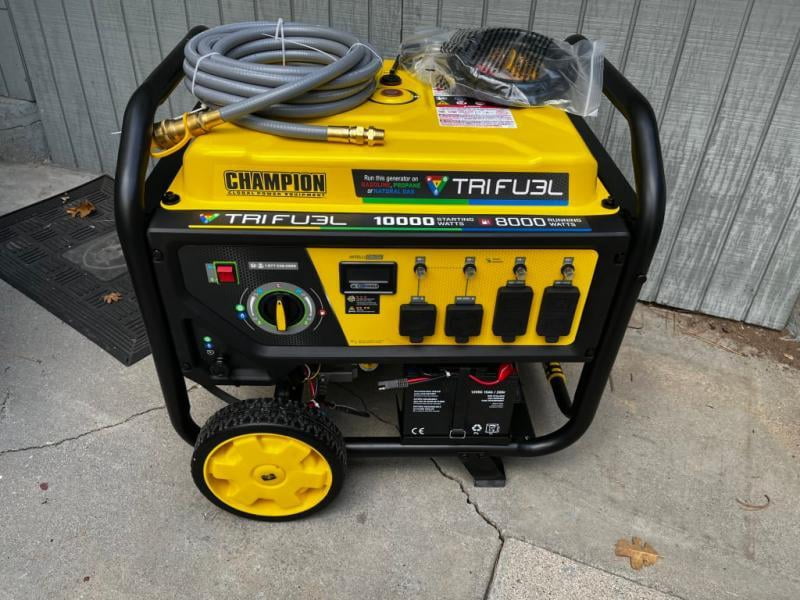
Champion 100416 Tri-Fuel 10,000-Watt — Three Fuels, Smaller Footprint
Best for: Tri-fuel power at a lower size
For off-grid living in a smaller cabin, the Champion 100416 gives tri-fuel flexibility without the largest frame. Its 8,000 running watts on gasoline can cover a fridge, lights, charging, and many pumps, while propane and natural gas add backup when gasoline is scarce. Electric start and a wheel kit help with daily moves, and the CO sensor adds a safety layer for outdoor use. The trade-off is output on propane and natural gas, which is lower than on gasoline, so heavy loads need planning. Still, for a smaller off-grid home, it balances fuel choice, size, and power well.
- Three fuels in one unit
- 8,000 running watts on gasoline
- CO sensor for safer use
- Wheel kit for moving
- Lower watts on propane
- Loud at full load
4.7/5
4.6/5
4.5/5

Westinghouse WGen9500TFc Tri-Fuel — Home-Ready Power, Three Fuels
Best for: Whole-home-ready off-grid power
For off-grid living with a transfer switch in mind, the WGen9500TFc is a practical middle ground. Its 9,500 peak watts and tri-fuel choice cover fridge, freezer, lights, and charging in many homes, while the 50-amp outlet suits a home inlet. Remote start helps when the unit sits away from the house, and the large tank supports longer runs between refuels. The trade-off is noise and size: it is still a large open-frame unit, and propane output is lower than gasoline output. Still, for a home that needs a transfer-ready generator with fuel backup, it is a solid fit.
- Tri-fuel for backup supply
- 50-amp outlet for home inlet
- Remote start included
- Large tank, long runs
- Loud at full load
- Lower watts on propane
4.6/5
4.5/5
4.4/5

Generac GP8000E — Simple Open-Frame Power for Heavy Work
Best for: Open-frame workhorse for heavy loads
For off-grid work that needs steady power for tools, pumps, and building jobs, the GP8000E is a straightforward choice. Its 8,000 running watts can cover a well pump, saws, and charging together in many setups, while electric start avoids pull-start strain. The large tank supports long work days, and the frame is built for rough outdoor use. The trade-off is noise and power quality: it is loud, and it is not the best pick for sensitive electronics without care. Still, for heavy off-grid work, it delivers strong output at a practical size.
- 8,000 running watts for tools
- Electric start, easy starts
- Large tank for long days
- Sturdy open frame
- Loud, not for quiet nights
- Gasoline only, no propane
4.5/5
4.4/5
4.3/5

DuroMax XP12000EH Dual Fuel — Large Backup, Gas or Propane
Best for: Large dual-fuel backup power
For off-grid living where a second large generator is useful, the XP12000EH gives strong backup power on two fuels. Its 9,500 running watts on gasoline can cover a fridge, freezer, pump, and lights together in many setups, while propane gives a backup that stores well. Electric start and a wheel kit help with moves, and the 50-amp outlet suits a transfer switch. The trade-off is size and noise: it is a large open-frame unit that needs a fixed outdoor spot and help to move. Still, as a large backup, it is a practical and powerful choice.
- 9,500 running watts on gasoline
- Gasoline or propane choice
- 50-amp outlet included
- Electric start, wheel kit
- Very heavy to move
- Loud at full load
4.4/5
4.3/5
4.2/5

Westinghouse iGen4500DF Dual Fuel Inverter — Quiet Daily Essentials
Best for: Quiet daily off-grid essentials
For daily off-grid life after the heavy work is done, the iGen4500DF is the quiet inverter to switch to. Its 3,700 running watts can cover a fridge, lights, charging, and a small pump in many setups, while dual fuel gives propane as a backup. Remote start helps at night or in rain, and inverter output suits phones, laptops, and other sensitive electronics. The trade-off is output: it cannot run a whole cabin and a large pump at once, so heavy loads need the larger unit. Still, for quiet evenings and daily essentials, it is the best fit here.
- Quiet inverter for evenings
- Dual fuel, propane backup
- Remote start included
- Clean power for electronics
- Not for whole-cabin loads
- Heavy for an inverter
4.2/5
4.3/5
4.1/5

Champion 200988 4500-Watt Dual Fuel Inverter — Mid-Size Daily Power
Best for: Mid-size inverter for daily use
For a smaller off-grid cabin or a second inverter, the Champion 200988 is a practical mid-size pick. Its 3,500 running watts on gasoline can cover a fridge, lights, charging, and small tools in many setups, while propane gives a backup that stores well. Electric start, a CO sensor, and a wheel kit help with daily use, and inverter output suits sensitive electronics. The trade-off is output: it cannot run a large well pump and a fridge at once, so loads need staging. Still, for daily essentials in a smaller home, it is a strong value.
- Dual fuel, propane backup
- CO sensor for safer use
- Clean inverter power
- Wheel kit, easy moves
- Not for large pumps
- Lower watts on propane
4.1/5
4.2/5
4.0/5
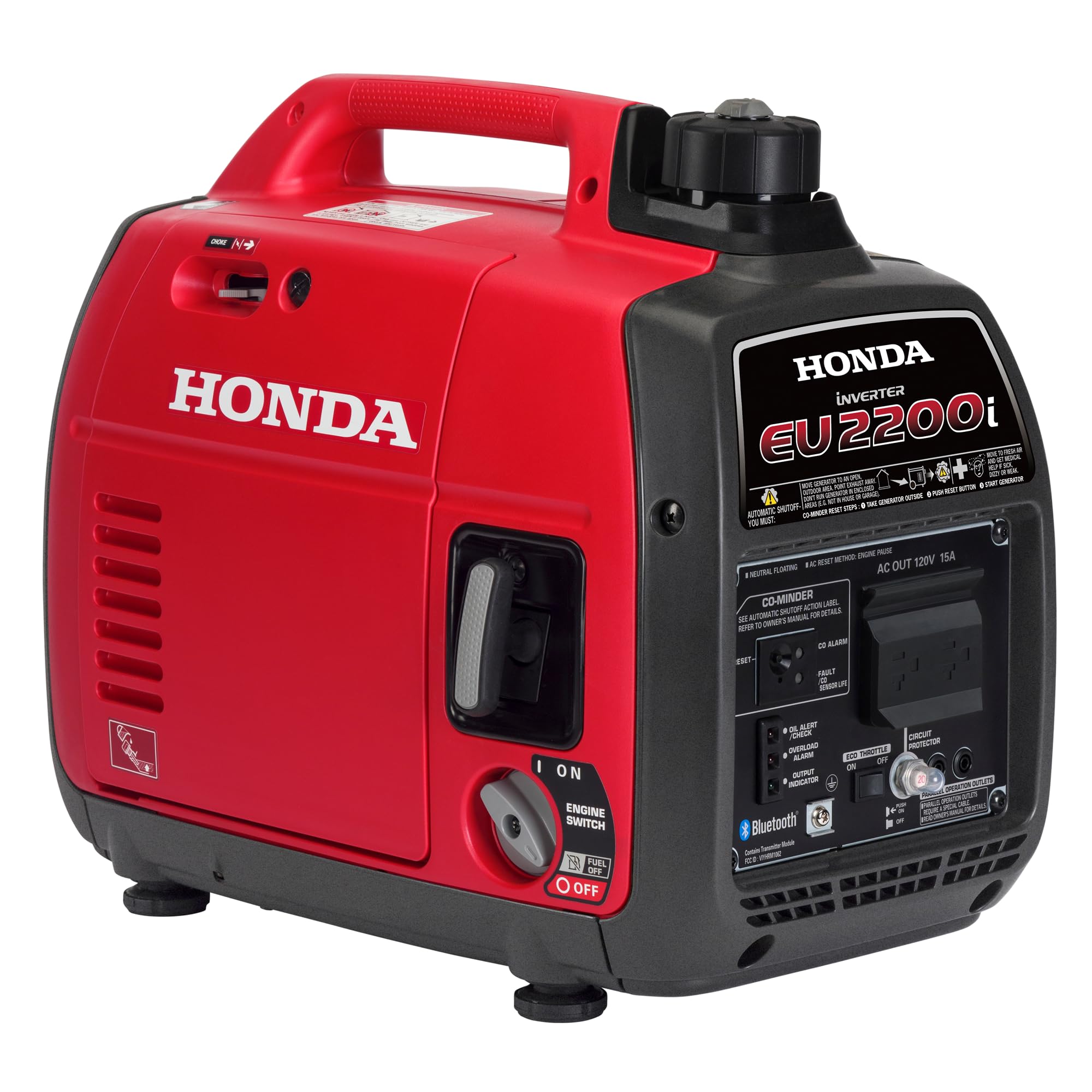
Honda EU2200i — Light, Quiet Backup for Small Loads
Best for: Compact backup for light loads
For off-grid living as a backup, the EU2200i is the lightest and simplest option in this list. Its 1,800 running watts can cover lights, phones, laptops, and a small fridge in many setups, while its low weight makes it easy to carry and store. Inverter output suits sensitive electronics, and it runs quietly at light load. The trade-off is clear: it cannot power a well pump, heater, or whole cabin, so it works best as a second unit. Still, for light loads and easy carrying, it is a useful backup.
- Light and easy to carry
- Quiet at light load
- Clean inverter power
- Simple, reliable design
- Not for pumps or heaters
- Small fuel tank
4.0/5
4.1/5
3.9/5
Top 3 Head-to-Head: DuroMax XP13000HXT vs Westinghouse WGen12000DF vs Honda EU7000iS
These three are the common final choices because they cover three different off-grid plans: maximum fuel choice, large dual-fuel power, and quiet inverter power.
| Feature | #1 DuroMax XP13000HXT | #2 Westinghouse WGen12000DF | #3 Honda EU7000iS |
|---|---|---|---|
| Off-Grid Power Fit | 5.0/5 — Best | 4.9/5 | 4.7/5 |
| Runtime and Fuel Flexibility | 4.9/5 — Best | 4.8/5 | 4.6/5 |
| Quiet Operation and Ease of Use | 4.8/5 | 4.7/5 | 4.8/5 — Best |
| Choose if… | You need whole-cabin power and three fuels | You need large power with propane backup | You need quiet, clean daily power |
Who These Portable Generators Are NOT For
A portable generator is not the right answer for every off-grid home, and it is not a silent indoor power source.
If you live in a small cabin with only lights and charging, a large open-frame unit is too much. A smaller inverter, or a portable generator for cabin use, will fit better. If you need power all day without refuelling, plan solar and batteries alongside a generator, not a generator alone.
Common Mistakes to Avoid
Off-grid mistakes are costly because they show up every day, not once a year.
Frequently Asked Questions About Portable Generators for Off Grid Living
What size generator do I need for off grid living?
Most small off-grid cabins need 3,500 to 5,500 running watts for a fridge, lights, charging, and a small pump. A larger home with a well pump, freezer, and water heater needs 8,000 to 10,500 running watts. Add starting watts for motors, then leave headroom so the generator does not run at full load all day.
Can a portable generator power a whole off-grid house?
Yes, a large portable generator can power a whole off-grid house if it is sized for starting watts and connected through a transfer switch or inlet. It is not a set-and-forget system: you must manage loads, refuel, and maintain it. For all-day power, pair it with solar and batteries so the generator only runs for heavy loads.
How long can a portable generator run off grid?
Runtime depends on tank size, load, and fuel type. A large unit may run 10 to 18 hours at half load on one tank, while a small inverter may run 8 to 12 hours at quarter load. Check the stated runtime at a stated load, not the headline figure alone, and plan a daily refuelling routine.
Is a tri-fuel generator worth it for off-grid living?
Yes, if fuel supply is uncertain. Tri-fuel gives gasoline, propane, and natural gas in one unit, so a shortage of one fuel does not leave you without power. Propane also stores longer than gasoline. The trade-off is lower output on propane and natural gas, so size the unit for the fuel you will use most.
Can I use a portable generator with solar panels off grid?
Yes, many off-grid homes use both. Solar and batteries cover lights and charging on sunny days, while a generator covers heavy loads, cloudy days, and battery charging. For solar pairing, see a portable generator for solar panels shortlist, and keep the generator outdoors when it charges batteries.
Can I run a portable generator inside my off-grid cabin?
No, never run a fuel generator inside a cabin, garage, tent, or any enclosed space. Exhaust contains carbon monoxide, which is colourless and odourless and can be deadly. Run the generator outdoors, at least 20 feet from the home, away from windows and vents, and fit a carbon monoxide alarm inside.
Our Final Verdict
Off-grid living rewards fuel choice and honest sizing over peak watts alone. The DuroMax XP13000HXT covers the widest range of homes, while a quiet inverter is the better second unit for daily essentials.

Hi, I’m Michael Turner. I own a generator workshop in the United States and founded HomeGeneratorBlog to share practical, hands-on guidance about generator installation, maintenance, troubleshooting, safety, and backup power solutions. My goal is to help homeowners make smarter, more confident decisions through clear and reliable information