Generator for Air Conditioner: What Size Do You Actually Need?
Quick Answer
Most window and portable AC units need a 2,000–3,500 watt generator, while a 3-ton central air conditioner can pull 5,000–7,500 starting watts. The number that trips people up isn’t running wattage — it’s the surge your compressor demands the instant it kicks on. Before you buy anything, check your unit’s nameplate for a wattage calculator or its LRA (locked rotor amps) rating so you’re sizing for the real spike, not just the label wattage.
Generator size by AC type
- Window unit (5,000–8,000 BTU): 1,200–2,200 running watts, up to 3,000 starting watts.
- Portable AC (10,000–14,000 BTU): 1,500–2,900 running watts, up to 3,600 starting watts.
- Mini-split (1-ton): 900–1,300 running watts, roughly 1,800 starting watts.
- Central AC (3-ton): 3,500–5,000 running watts, 5,000–7,500 starting watts.
- Central AC (5-ton): 5,000–7,000 running watts, 9,000–12,000+ starting watts.
Buying checklist
- Size for starting watts first, then leave a 15–20% buffer above that number.
- Add a soft-start kit if you’re running a central or mini-split system on a smaller generator.
- Pick an inverter generator if you also want to power sensitive electronics off the same circuit.
I got asked this exact question by a neighbor two summers ago, standing in his driveway next to a brand-new 3,500-watt generator he’d just bought for a heat-wave power outage. It ran his fridge and lights fine. His window AC unit tripped it every single time. That gap between “should work on paper” and “actually works” is what this guide is about — how much power your specific AC really needs, and how to size a generator so you’re not the guy resetting breakers at 2 a.m. in July 2026.
Why does an air conditioner need so much more power to start than to run?
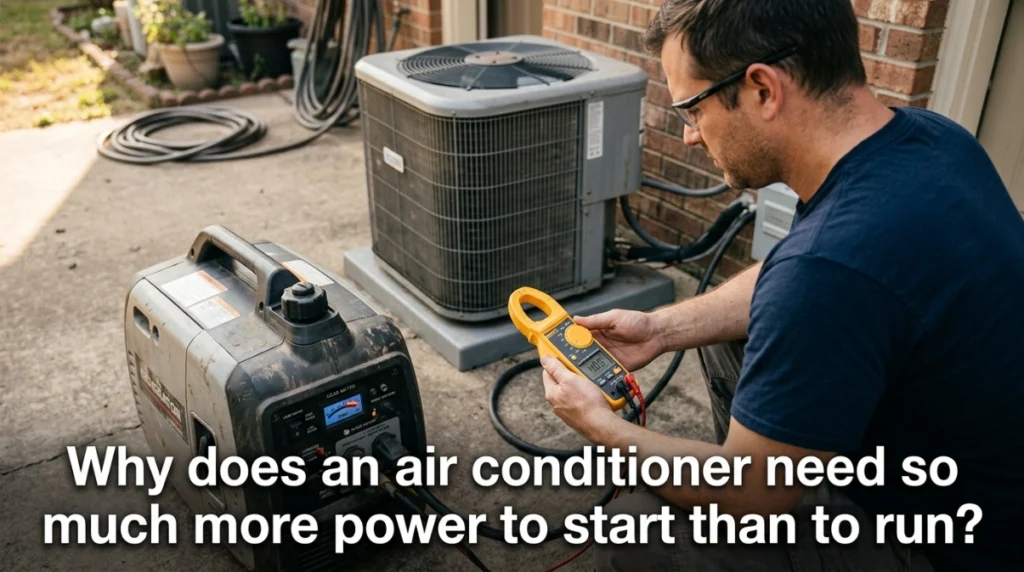
An air conditioner’s compressor motor draws several times its normal running current for a fraction of a second when it first kicks on — that’s the starting watt (or surge watt) spike. Once the compressor is spinning, power draw drops back down to the running watt figure listed on the nameplate.
This is exactly the problem my neighbor hit. His unit’s running wattage was around 1,150 watts, well within his generator’s capacity. But the starting surge briefly demanded almost 3,400 watts, and his generator’s peak output topped out at 3,500 — too close to survive with anything else plugged in.
How many watts does my specific air conditioner use?
Check the yellow EnergyGuide sticker or the data plate on the unit itself — you’re looking for either the wattage directly, or the amps and volts (multiply amps × volts to get running watts). If you only see BTUs, a rough rule of thumb is that 1,000 BTU of cooling capacity equals about 100–130 running watts, though efficiency varies by model.
Starting watts are trickier because they’re rarely printed anywhere. As a working estimate, plan on 2–3 times the running wattage for window and portable units, and up to 3 times for larger compressors like central air and mini-splits.
Generator sizing by AC type (comparison table)
| AC Type | Running Watts | Starting Watts | Recommended Generator |
|---|---|---|---|
| Window (5,000–8,000 BTU) | 1,200–2,200 W | 2,500–3,000 W | 3,000–3,500 W |
| Portable (10,000–14,000 BTU) | 1,500–2,900 W | 3,000–3,600 W | 4,000 W |
| Mini-split (1-ton) | 900–1,300 W | 1,800 W | 2,200–3,000 W |
| Central AC (3-ton) | 3,500–5,000 W | 5,000–7,500 W | 8,000–10,000 W |
| Central AC (5-ton) | 5,000–7,000 W | 9,000–12,000+ W | 12,000–14,000 W |
These figures assume the AC is the only major load on the generator. If you’re also running a fridge, well pump, or sump pump at the same time, add their running watts to the AC’s running watts — but the AC’s starting watts still set your peak requirement, since appliances rarely all surge at once.
Can I run a central air conditioner on a portable generator?
Yes, but only with a large portable or dual-fuel unit in the 10,000–14,000 watt range, and typically only for a single AC zone rather than the whole system plus everything else in the house. A 3-ton central AC’s starting surge alone can eat most of what a mid-size 5,000-watt generator produces, leaving nothing for anything else.
If your goal is running full central air through an extended outage, a whole-home standby generator wired through a transfer switch is the more realistic long-term answer. For camping, RV cooling, or a single portable AC unit during a summer outage, a portable generator sized off the table above is usually enough — our guide to sizing a generator for your whole home walks through combining multiple appliances if you’re planning further than just the AC.
What’s a soft-start device, and do I actually need one?
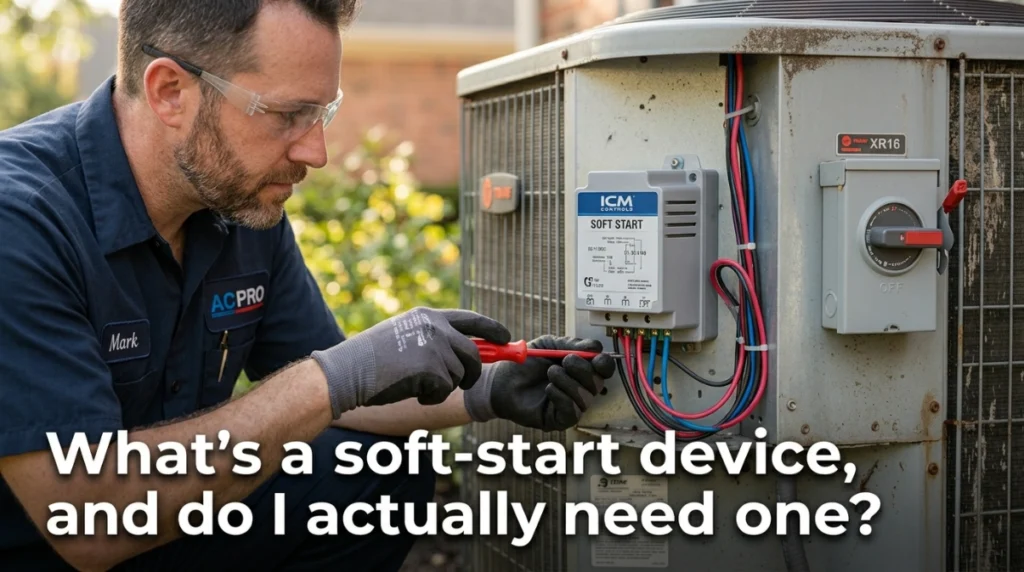
A soft-start device (sometimes sold as a “hard start kit”) is a small add-on that ramps the compressor up gradually instead of hitting it with full current all at once. In practice, I’ve seen these cut a compressor’s starting watt demand by 50–75%, which can mean the difference between needing a 10,000-watt generator and getting away with a 5,000-watt one.
I’d recommend one any time your generator’s peak output is within about 20% of your AC’s estimated starting watts — it’s cheap insurance against nuisance trips and it’s gentler on the compressor itself, whether you’re running off a generator or the grid.
Inverter generator vs conventional generator for air conditioning: which is better?
Inverter generators produce cleaner, more stable power with tighter voltage regulation, which matters for a compressor motor and any electronics sharing the circuit — a window unit’s control board is far happier on inverter power than on a raw conventional waveform. Conventional (open-frame) generators are usually cheaper per watt and better suited to pure brute-force loads.
For AC specifically, I lean toward inverter models below about 4,000 watts, where the price gap is small and voltage stability protects the compressor. Above that, large conventional or dual-fuel units become the more practical, budget-friendly choice for central air setups — our inverter portable generator buying guide breaks down the tradeoffs by wattage tier.
How do running watts vs starting watts change what generator I should buy?
Running watts tell you what the generator needs to sustain over hours; starting watts tell you what it needs to survive for that first half-second. A generator has to be rated to handle the higher starting figure, even though it will spend nearly all its runtime at the lower running figure.
This is the single most misunderstood spec on generator listings, and it’s worth reading in full before you shop — we go deeper on it in our running watts vs starting watts breakdown, including how manufacturers list both numbers on the same spec sheet.
Is it safe to run an air conditioner on a generator?
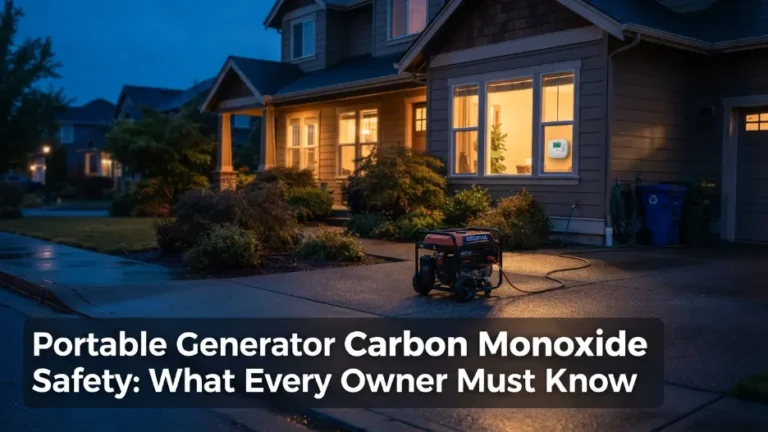
It’s safe as long as you size the generator correctly, keep it running outdoors at least 20 feet from windows and doors, and never run it in a garage or enclosed space. The CDC warns that portable generator exhaust is a leading cause of accidental carbon monoxide poisoning during power outages, and heat waves are exactly when people are most tempted to run one indoors or too close to the house.
Beyond CO safety, undersizing the generator for an AC’s surge repeatedly can shorten the compressor’s life through repeated hard restarts. If you want the full rundown on safe placement and ventilation, our portable generator carbon monoxide safety guide covers distance requirements and detector placement in detail.
What generator wattage do I need for a 5,000 BTU vs 12,000 BTU air conditioner?
A 5,000 BTU window unit typically needs around 1,200–1,400 running watts and 2,200–2,500 starting watts — comfortably handled by a 2,000–2,500 watt generator. A 12,000 BTU portable AC needs roughly 2,700–2,900 running watts and 3,300–3,600 starting watts, which pushes you into 3,500–4,000 watt territory, especially if anything else is plugged in at the same time.
Central air vs portable generator: what does the U.S. Department of Energy recommend?
The Department of Energy’s appliance energy estimating guidance recommends checking the nameplate wattage of any major appliance before sizing backup power, rather than relying on BTU-to-watt approximations alone, since efficiency (SEER rating) changes the real draw significantly between older and newer units. A newer high-SEER AC can use noticeably less running wattage than an older unit of the same BTU rating, which is worth checking if you’re deciding between upgrading the AC or upsizing the generator.
FAQ
What size generator do I need to run a window air conditioner?
Most window units need 1,200–2,200 running watts and up to 3,000 starting watts, so a 3,000–3,500 watt generator handles a single window unit comfortably, with some headroom for a fan or lights.
Can a 2,000 watt generator run an air conditioner?
A 2,000-watt generator can run smaller window units (5,000–6,000 BTU) if nothing else is drawing power at the same time, but it will struggle with 10,000+ BTU units or a soft-start device isn’t installed to reduce the surge.
How many watts does a 3-ton central air conditioner need to start?
A 3-ton central AC typically needs 5,000–7,500 starting watts and 3,500–5,000 running watts, which generally requires an 8,000–10,000 watt generator or a soft-start kit paired with a smaller unit.
Do I need a dual-fuel generator for running an air conditioner?
Dual-fuel isn’t required, but it adds flexibility during extended outages when gasoline is hard to find — propane stores indefinitely, which matters if you’re running an AC for days rather than hours during a heat wave.
Will running an AC on a generator damage it?
An undersized generator that can’t supply the starting watt surge can cause repeated hard restarts, which stresses the compressor over time; sizing correctly or adding a soft-start device prevents this.
If you’re shopping today, start with your AC’s exact running and starting watt numbers rather than the BTU rating alone, add the 15–20% buffer, and lean toward an inverter model if the wattage tier allows it. Get that part right, and running an air conditioner through a summer outage stops being a gamble and just becomes routine.

Hi, I’m Michael Turner. I own a generator workshop in the United States and founded HomeGeneratorBlog to share practical, hands-on guidance about generator installation, maintenance, troubleshooting, safety, and backup power solutions. My goal is to help homeowners make smarter, more confident decisions through clear and reliable information