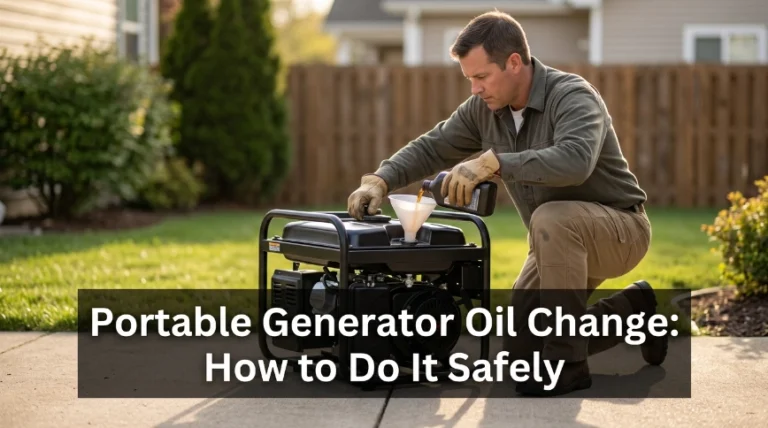
Portable Generator Carbon Monoxide Safety: What Every Owner Must Know
Portable generators produce carbon monoxide (CO), a colorless, odorless gas that can kill in minutes. Always run your generator at least 20 feet away from any door, window, or vent. Never use one indoors, in a garage, or in any enclosed space. Install a CO detector inside your home.
A power outage hits. You pull out your generator, fire it up, and feel relieved. But here’s the thing — that same generator can kill you silently if you’re not careful. Carbon monoxide poisoning from portable generators is one of the most preventable tragedies in the U.S., yet it keeps happening every single year.
I’m Michael Turner, and I’ve spent years writing about home safety and outdoor power equipment. I’ve seen how quickly a well-intentioned decision can turn deadly when people don’t know the basics. This guide gives you everything you need to use your generator safely — and stay alive doing it.
- Carbon monoxide from generators kills about 100 Americans every year, according to the U.S. Consumer Product Safety Commission (CPSC).
- CO is invisible and odorless — you can’t smell, see, or taste it before it harms you.
- Always place your generator at least 20 feet from your home, pointed away from windows and doors.
- A battery-powered CO detector is your best early warning system — install one on every level of your home.
- Never run a generator indoors, in a garage, or in any partially enclosed space, even with the door open.
What Is Carbon Monoxide and Why Is It So Dangerous?
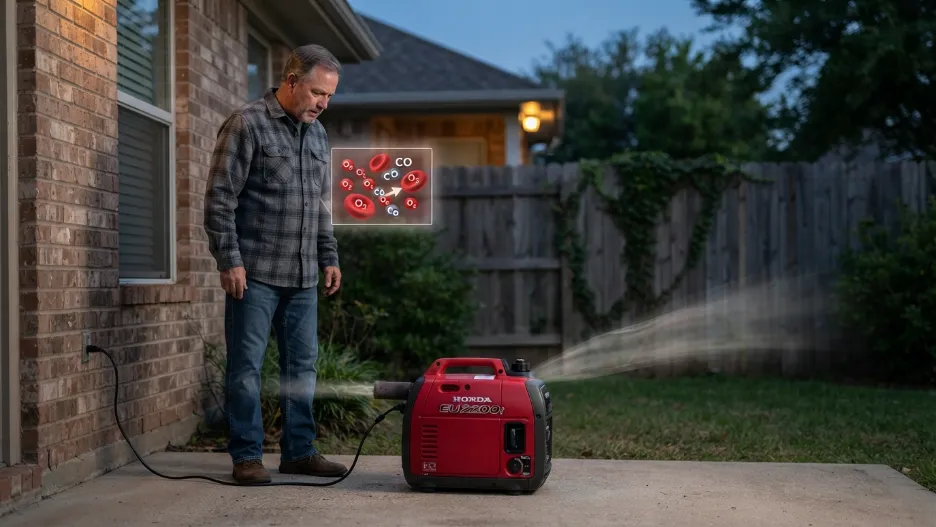
Carbon monoxide (CO) is a toxic gas produced when fuel burns without enough oxygen. Portable generators run on gasoline, propane, or diesel — all of which produce CO as a byproduct of combustion.
Carbon monoxide (CO) is a colorless, odorless gas that your body absorbs instead of oxygen, causing cells to shut down — often before you even realize something is wrong.
CO binds to hemoglobin in your blood 200 times more effectively than oxygen does. That means even a small amount of CO in the air quickly starves your brain and organs of oxygen. You may feel dizzy or tired. Then, without warning, you lose consciousness.
That’s what makes it so deadly. People often don’t realize they’re in danger until it’s too late to act.
How Much CO Does a Portable Generator Produce?
A single 5,500-watt portable gasoline generator produces as much carbon monoxide as six running cars combined, according to the U.S. Consumer Product Safety Commission (CPSC). That’s an enormous amount of toxic gas coming from a machine many people treat as harmless.
At just 400 parts per million (ppm), CO causes headaches and dizziness within 1–2 hours. At 1,600 ppm, it becomes life-threatening in under an hour. At 12,800 ppm, death can occur within 1–3 minutes.
| CO Level (ppm) | Symptoms | Time to Harm |
|---|---|---|
| 35 ppm | Headache after several hours | 2–3 hours |
| 400 ppm | Headache, dizziness, nausea | 1–2 hours |
| 800 ppm | Convulsions, unconsciousness | 45 minutes |
| 1,600 ppm | Loss of consciousness, death | Under 1 hour |
| 12,800 ppm | Death | 1–3 minutes |
Now here’s the part that surprises most people. Even running your generator in a garage with the door fully open can still allow CO to build to dangerous levels inside your home within minutes. Distance and ventilation are not the same thing.
What Are the Symptoms of CO Poisoning from a Generator?
Carbon monoxide poisoning symptoms mimic the flu — which is exactly why it’s so often missed. The key difference is that CO poisoning doesn’t cause a fever.
Early symptoms include:
- Dull headache
- Weakness or fatigue
- Dizziness
- Nausea or vomiting
- Shortness of breath
- Confusion
As exposure increases, symptoms get worse fast. Blurred vision, loss of muscle control, and unconsciousness can follow quickly. Many victims fall asleep — or lose consciousness — before they can escape.
If you or anyone in your home feels suddenly dizzy, has a headache, or feels confused while a generator is running — get outside immediately. Don’t stop to turn the generator off. Call 911 from outside.
Where Should You Place a Portable Generator to Prevent CO Poisoning?
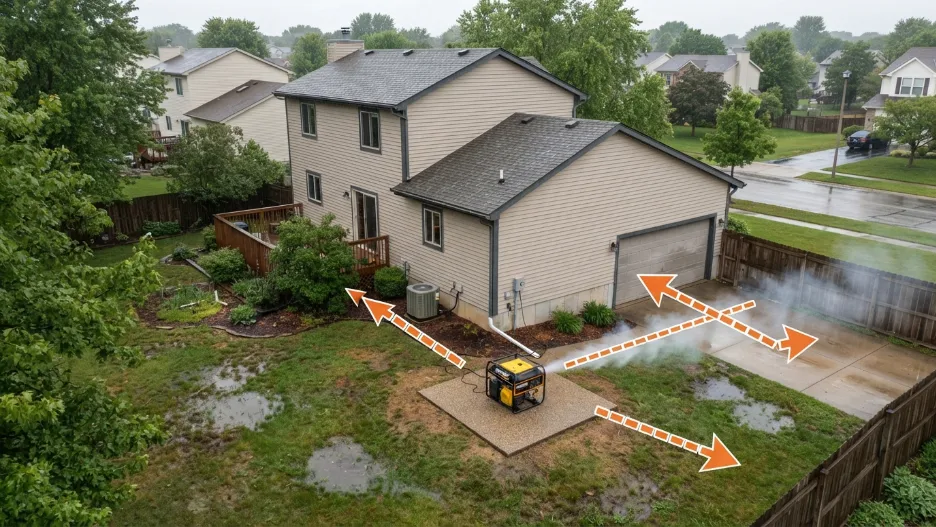
Portable generators must always be used outdoors, at least 20 feet away from any door, window, or vent — and the exhaust should point away from the building.
That 20-foot rule comes from the U.S. Consumer Product Safety Commission (CPSC), the federal agency that tracks consumer product deaths and sets safety standards. Many generator owners don’t realize the exhaust direction matters just as much as the distance. A generator 20 feet away but pointing at your back door still funnels CO directly toward your home.
- Move the generator at least 20 feet from your house, shed, or any structure.
- Point the exhaust pipe away from all windows, doors, and air vents.
- Check that no neighbor’s windows or doors are in the exhaust path.
- Keep the generator on a flat, dry surface — never on wet ground during rain.
- Confirm a CO detector is active inside the home before starting the generator.
Never put the generator in a garage, shed, carport, or on a covered porch. The CDC confirms that even leaving the garage door open is not enough — CO can still build to fatal levels very quickly in those spaces. Always treat “partially enclosed” the same as “fully enclosed.”
Can CO from an Outdoor Generator Still Enter Your Home?
Yes — carbon monoxide from an outdoor generator can still seep into your home through windows, doors, crawlspaces, and HVAC vents if the generator is too close or aimed incorrectly. This is one of the most misunderstood risks.
Your home’s HVAC system can pull air from outside and circulate CO throughout the entire house. That means a generator running 10 feet from an air return intake can poison every room in your home at the same time.
Check where your HVAC system’s outdoor air intake is located. Keep your generator far from it — on the opposite side of the house if possible.
CO is also heavier than air in some conditions, meaning it can hug the ground and travel along walls, foundations, and garden paths right to the nearest opening. Distance is your primary defense.
How Do CO Detectors Protect You from Generator Exhaust?
A battery-powered carbon monoxide detector is your last line of defense against generator CO poisoning. It monitors CO levels constantly and sounds an alarm before levels become life-threatening.
The CPSC recommends installing CO detectors on every level of your home and outside each sleeping area. Interconnected alarms — where every alarm sounds when one detects CO — provide the best protection, especially at night when you’re asleep and can’t notice symptoms.
Here’s what to look for when choosing a detector:
- Battery backup: Power outages are exactly when you need a generator — and your wired-in detectors may not work. Always have battery-powered CO alarms.
- Digital display: A model with a numerical readout shows exact CO levels, not just “safe” or “alarm” status.
- Listed certification: Look for UL 2034 certification, which confirms the detector meets U.S. safety standards.
- Combination alarm: A unit that detects both CO and smoke covers two major hazards at once.
You can find well-reviewed options by searching for a
battery-powered carbon monoxide detector
that fits your home layout. Choose one with a digital ppm display if you want real-time readings.
Test your CO detectors monthly and replace batteries at least once a year. Write the replacement date on a piece of tape stuck to the back of the unit.
Who Is Most at Risk from Generator CO Poisoning?
Carbon monoxide poisoning can affect anyone, but some people face much higher risk than others. Understanding who’s most vulnerable helps you take extra precautions when it matters.
High-risk groups include:
- Infants and young children: Their bodies absorb CO faster than adults.
- Pregnant women: CO can harm fetal development, even at lower exposure levels.
- Elderly adults: Reduced circulation means CO affects them more quickly.
- People with heart or lung disease: Their systems are already compromised.
- People who are asleep: They can’t notice early symptoms and may never wake up.
- Pets: Dogs and cats are also vulnerable — they can’t alert you when something is wrong.
According to the CDC’s generator safety guidance, CO poisoning incidents spike sharply after major storms and power outages, when generator use increases and people make rushed decisions about placement.
What Are the Most Common Generator CO Mistakes People Make?
Most generator CO poisoning incidents share the same preventable causes. Knowing these mistakes helps you avoid making them under pressure — which is exactly when people get careless.
Mistake 1: Running the generator in the garage. Even with the garage door fully open, deadly CO levels can build in minutes. Never do this.
Mistake 2: Placing the generator too close to the house. Many people put it right outside a window or door for convenience. The exhaust fumes travel straight inside.
Mistake 3: Using the generator during or after a storm without checking vents. Snow, ice, or debris can block generator exhaust or home vents, trapping CO near the structure.
Mistake 4: Ignoring the direction of exhaust. It’s not just about distance. The exhaust port must point away from your home, not sideways or toward it.
Mistake 5: Trusting the generator manual over safety guidelines. Some older generator manuals recommend distances shorter than 20 feet. Always follow the CPSC’s 20-foot minimum — it supersedes older manual guidance.
Never refuel a generator while it’s running. Hot engine parts can ignite gasoline vapor instantly. Always turn the generator off, let it cool for several minutes, then add fuel.
Do New Generators Have Built-In CO Safety Features?
Yes — many newer portable generators now include automatic CO shut-off technology, which detects rising CO levels and shuts the engine down before they become dangerous. This is a genuine advancement in generator safety.
The CPSC has pushed for these features as part of its generator safety initiative. Starting around 2018, major brands began introducing CO-sensing technology. By 2023, several major generator manufacturers had made CO shut-off a standard feature across their product lines.
Here’s an original insight most generator guides miss: CO shut-off technology is a safety net — not a substitute for correct placement. Some shut-off systems only trigger at high CO levels. By the time the engine stops, the CO in the surrounding air doesn’t disappear. You still need distance, ventilation, and working detectors indoors.
When shopping for a new generator, look for the CPSC’s “CO Safety Technology” label or ask specifically about automatic CO shut-off. A generator with this feature is significantly safer — but it doesn’t change the placement rules.
What Should You Do If a CO Alarm Sounds While the Generator Is Running?
If your CO alarm sounds while your generator is running, treat it as a life-threatening emergency — because it is.
- Get everyone — including pets — out of the house immediately. Do not stop to collect belongings.
- Leave the door open behind you to help air out the space.
- Call 911 from outside the home.
- Do not re-enter for any reason until emergency responders clear the building.
- Seek medical attention even if you feel fine — CO symptoms can be delayed.
Don’t assume the alarm is a false positive. CO alarms have very low false-alarm rates. The few minutes it takes to exit could save your life.
Generator Safety in Specific Situations: Storms, Floods, and Winter Outages
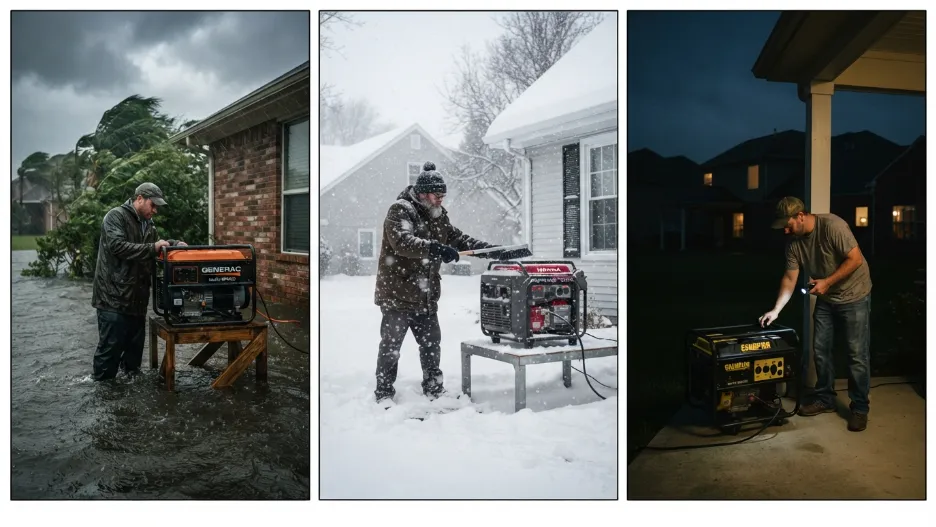
Generator-related CO poisoning spikes sharply after major weather events. Hurricanes, winter storms, and ice events knock out power for days — and people make rushed decisions under stress.
During hurricanes and floods: Never run a generator in a flooded area. Water can damage the engine and create shock hazards. Keep the generator elevated and dry. Watch for storm-drain gases that can mix with CO exhaust near standing water.
During winter storms: Snow can quickly cover and block generator exhaust outlets, causing CO to back up. Check the generator’s exhaust port every 30 minutes in heavy snowfall.
During extended outages: Fatigue makes people careless. Set an alarm to check generator placement regularly. Never let someone sleep in a room closest to where the generator is running.
Before storm season, walk around your home and identify the safest permanent generator position — at least 20 feet out, exhaust pointed away. That way, when the power goes out, you’re not making that decision under pressure and in the dark.
Generator Safety for RVs, Campers, and Boats
Portable generator CO risks don’t just apply to homes. RVs, campers, and boats create unique challenges because they’re small, enclosed, and people often sleep inside them while the generator runs.
In an RV or camper, never run a portable generator inside the vehicle or in an enclosed storage bay. Run it only on the exterior, pointed away from all windows and vents. Most modern RVs have onboard generators with proper ventilation — use that instead of a portable unit if available.
On boats, CO can accumulate in the swim platform area below the exhaust — a zone where swimmers spend time. This “station wagon effect” has killed swimmers on boats where an onboard generator or engine was running nearby. Never swim behind a boat with the engine or generator running.
Many serious RVers and boaters pair a portable generator with a
portable CO detector designed for RVs and marine use.
These compact units mount easily and run on batteries — important when you’re off-grid.
Generator CO safety applies everywhere — homes, garages, RVs, campers, and boats all carry risk. The rules are the same: run it outdoors, keep it 20+ feet away from any occupied space, point exhaust away from people, and always have a working CO detector nearby.
If you’re setting up a generator for storm season or extended off-grid use, a quality carbon monoxide detector with a digital display and battery backup is one of the most important safety purchases you can make. It gives you real-time readings and sounds the alarm before CO reaches dangerous levels indoors.
Your Next Step
Carbon monoxide from a portable generator is a real, fast, and invisible danger — but it’s entirely preventable. Place your generator 20+ feet from your home, point the exhaust away from windows and doors, and install battery-powered CO detectors on every floor. Those three steps alone eliminate the vast majority of generator-related CO deaths.
Take five minutes right now to find the safest spot in your yard for generator use before you need it in an emergency. A little preparation today could save your life later. I’m Michael Turner — and that single step is the most important thing you can do after reading this guide.
Frequently Asked Questions
How far should a portable generator be from the house?
A portable generator should be at least 20 feet away from any door, window, or vent in your home. The U.S. Consumer Product Safety Commission (CPSC) sets this as the minimum safe distance. The exhaust port must point away from the structure, not just be positioned far away.
Can carbon monoxide from a generator travel inside through walls?
Carbon monoxide can enter your home through any gap — open windows, unsealed doors, crawlspace vents, dryer vents, and HVAC intakes. It doesn’t need to travel through solid walls. Even a generator placed outside can push CO indoors if it’s too close or aimed incorrectly.
How quickly can a generator cause CO poisoning?
At high concentrations, carbon monoxide from a generator can cause unconsciousness in under an hour and death within a few minutes. At lower levels indoors, headaches and dizziness can begin within 1–2 hours. The speed depends on generator size, room size, and ventilation.
Is it safe to run a generator in an open garage?
No — running a generator in a garage with the door open is not safe. Even with good airflow, CO can still build to dangerous levels inside the garage and seep into the attached home. The only safe location for a generator is fully outdoors, at least 20 feet from any occupied building.
What should I do if I suspect CO poisoning from my generator?
Get everyone out of the building immediately and call 911 from outside. Don’t go back in to turn off the generator or collect anything. Seek medical attention even if symptoms feel mild — CO poisoning can worsen hours after exposure ends, especially with high initial CO levels.

Hi, I’m Michael Turner. I own a generator workshop in the United States and founded HomeGeneratorBlog to share practical, hands-on guidance about generator installation, maintenance, troubleshooting, safety, and backup power solutions. My goal is to help homeowners make smarter, more confident decisions through clear and reliable information