Where to Place a Generator Outside? Safe Distance and Setup Guide
Quick Answer
Place a portable generator outdoors at least 20 feet from your house, doors, windows, and air vents. Point the exhaust away from the building, keep the generator dry, and never run it in a garage, shed, porch, or carport. The CDC generator safety guidance also recommends using working carbon monoxide alarms inside your home.
Best Generator Placement Checklist
- Keep 20 feet away: Measure from the generator to your home and nearby openings.
- Face exhaust outward: Point the exhaust away from windows, doors, vents, and neighboring buildings.
- Use open air: Never run a generator inside a garage, shed, basement, porch, or carport.
- Keep it dry: Use a manufacturer-approved outdoor generator cover or canopy without blocking airflow.
- Allow ventilation: Keep several feet of clear space around the generator for cooling.
- Check CO alarms: Make sure carbon monoxide alarms inside your home are working before starting the generator.
One Rule I Would Never Compromise On
- If you cannot maintain a safe outdoor distance from the building, do not run the generator there.
Finding a convenient place for a portable generator sounds simple until the power goes out. The safest spot is often farther from the house than people expect.
My first priority is always carbon monoxide safety. After that, I look at rain protection, airflow, exhaust direction, electrical connections, and access for refueling.
How Far Should a Generator Be From the House?
A portable generator should normally be placed at least 20 feet from the house. That distance should also separate it from doors, windows, vents, and other openings.
This 20-foot rule is recommended by U.S. safety authorities because generator engines produce carbon monoxide, or CO. CO is a poisonous gas you cannot see or smell.
- Minimum house distance: 20 feet for a portable generator.
- Windows: Keep the generator at least 20 feet away.
- Exterior doors: Keep the same separation whenever possible.
- Air vents: Do not place the exhaust near intake or exhaust openings.
- Neighboring buildings: Consider their windows and doors too.
Don’t judge the distance by eye. A simple tape measure can prevent an unsafe setup.
As of 2026, both CDC and CPSC guidance continues to emphasize outdoor operation and roughly 20 feet of separation for portable generators.
Which Direction Should the Generator Exhaust Face?
Point the generator exhaust away from your house and any occupied building. Distance alone is not enough if the exhaust is blowing directly toward an open window.
Wind can carry exhaust back toward a structure. I prefer a location where the exhaust has a clear path into open space.
- Face the muffler away from the home.
- Avoid aiming exhaust toward windows or doors.
- Keep exhaust away from HVAC air intakes.
- Check nearby houses, garages, and recreational vehicles.
- Recheck wind conditions during long outages.
A generator can also become hot during operation. Keep combustible items, dry leaves, cardboard, and stored fuel away from the exhaust area.
Where Should You Never Put a Portable Generator?
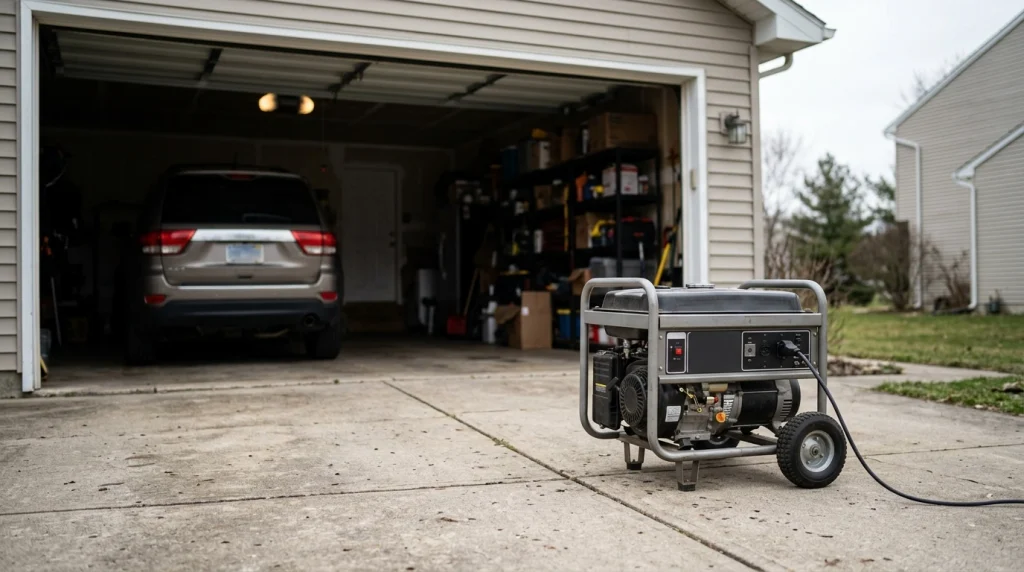
Never run a portable generator in an enclosed or partly enclosed space. Opening a door or window does not make an enclosed area safe.
Carbon monoxide can accumulate quickly, including in spaces that appear well ventilated.
| Location | Safe for Running a Portable Generator? | Main Concern |
|---|---|---|
| Open outdoor area 20+ feet from home | Generally yes | Still requires correct exhaust direction and weather protection |
| Attached garage | No | Carbon monoxide can enter the home |
| Detached garage | No | Enclosed-space CO buildup |
| Shed | No | Insufficient ventilation and heat buildup |
| Covered porch | No | Too close to doors, windows, and walls |
| Carport | No | Exhaust can collect near the building |
| Basement or crawlspace | Never | Extreme carbon monoxide danger |
I treat the garage-door-open idea as a hard no. An open garage door does not turn the garage into an outdoor space.
Can a Generator Be Outside in the Rain?
A generator needs fresh outdoor air, but its electrical components must also stay dry. That creates one of the biggest placement challenges during storms.
Do not operate a portable generator where rain, flooding, or standing water can reach it. Follow the manufacturer’s instructions for wet-weather operation.
- Place the generator on firm, level, dry ground.
- Keep it away from puddles and drainage paths.
- Never touch plugs or controls with wet hands.
- Do not cover the generator with a household tarp while it’s running.
- Use only a properly designed generator running cover when the manufacturer allows it.
A normal tarp can restrict cooling air or touch hot components. It can also direct exhaust back toward the generator operator.
The Occupational Safety and Health Administration recommends keeping generators dry and following safe electrical practices.
How Much Clearance Does a Generator Need Around It?
Leave enough open space for ventilation and cooling. OSHA guidance recommends approximately 3 to 4 feet of clear space around and above portable generators in applicable work settings.
Your owner’s manual remains important because individual manufacturers may specify different clearance requirements.
- Air intake: Never block cooling openings.
- Exhaust: Keep objects away from the muffler.
- Top clearance: Avoid low roofs or improvised covers.
- Service access: Leave room to shut the engine down safely.
- Combustibles: Move leaves, cardboard, wood scraps, and fuel containers away.
More clearance is usually easier to manage than a cramped setup. Good airflow also helps the engine shed heat during an extended outage.
What Is the Best Surface for a Generator?
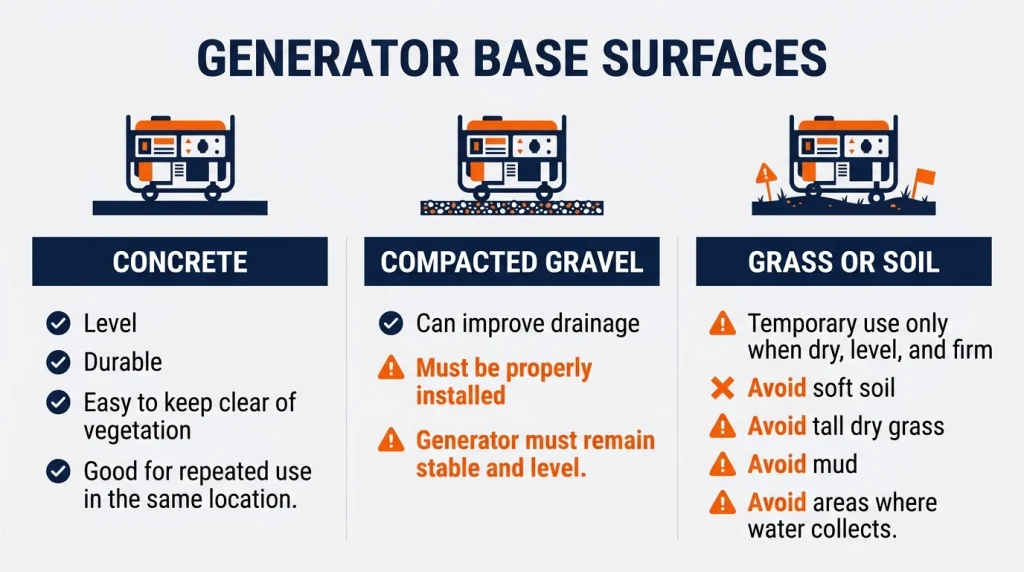
The best generator location has a stable, level, non-flooding surface. Concrete and properly prepared gravel are common choices for more permanent outdoor generator areas.
A portable generator should not rock, sink, or sit where storm runoff can surround it.
Concrete
Concrete creates a level, durable base and is easy to keep clear of vegetation. It works well when you regularly use a generator in the same location.
Compacted Gravel
Gravel can improve drainage when properly installed. Make sure the generator remains stable and level rather than sinking into loose stone.
Grass or Soil
Grass may work temporarily if the ground is dry, level, and firm. Avoid soft soil, tall dry grass, mud, and locations where water collects.
How Should You Connect a Generator to the House?
Placement and electrical connection are separate safety issues. Never connect a portable generator directly to household wiring through a wall outlet.
This unsafe practice is often called backfeeding. It can energize utility lines and put utility workers or neighbors at risk.
If you want to power household circuits, use a professionally installed transfer switch or other approved connection method. A qualified electrician can determine the correct equipment for your electrical system.
For individual appliances, use properly rated grounded extension cords according to the generator manufacturer’s instructions.
- Choose outdoor-rated extension cords.
- Check cords for cuts or damaged insulation.
- Match cord capacity to the electrical load.
- Avoid overloaded adapters and power strips.
- Keep connections dry and off wet ground.
OSHA specifically warns against connecting a generator to a building electrical system unless a qualified electrician has installed an appropriate transfer switch.
Should You Install Carbon Monoxide Detectors When Using a Generator?
Yes. Working carbon monoxide alarms provide an important second layer of protection. They do not make unsafe generator placement acceptable, though.
The generator must still stay outdoors and away from the house.
The U.S. Consumer Product Safety Commission recommends carbon monoxide alarms in the home and warns that portable generators can produce dangerous amounts of CO.
- Use battery-operated alarms or alarms with battery backup.
- Place alarms according to the manufacturer’s instructions.
- Make sure sleeping areas are protected.
- Test alarms regularly.
- Never ignore an alarm during generator operation.
If a CO alarm sounds, move everyone outside to fresh air immediately and follow emergency guidance.
How Do I Choose the Best Generator Location Before an Outage?
Choose the location before severe weather arrives. Trying to improvise during a nighttime outage usually creates unnecessary risks.
My approach is to walk the property with a tape measure and identify one or two possible locations.
- Measure 20 feet from the house. Start with the minimum safety distance.
- Check every opening. Look for windows, doors, dryer vents, soffit vents, and HVAC openings.
- Plan exhaust direction. Choose a position that lets exhaust face open space.
- Check drainage. Avoid low areas that collect rainwater.
- Plan weather protection. Use only a suitable generator canopy or running cover.
- Measure your cord route. Make sure properly rated cords can reach without creating hazards.
- Consider neighbors. Exhaust and noise should not be directed toward nearby homes.
This simple preparation removes a lot of guesswork. Marking the safe area can also help another family member set up the generator correctly.
Portable Generator Placement vs Standby Generator Placement
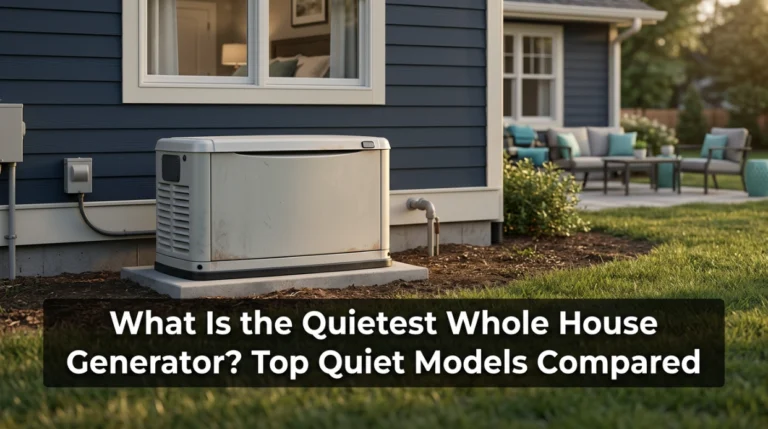
Portable and permanently installed standby generators have different placement requirements. The 20-foot portable-generator guidance should not be confused with installation clearances for a standby unit.
| Feature | Portable Generator | Standby Generator |
|---|---|---|
| Typical use | Temporary backup power | Permanent automatic backup |
| Placement | At least 20 feet from home/openings | Manufacturer and local-code requirements |
| Electrical connection | Cords or approved transfer equipment | Professionally installed system |
| Weather exposure | Requires safe operating protection | Purpose-built outdoor enclosure |
For a standby generator, follow the installation manual, local building codes, fuel codes, and permit requirements. Don’t apply portable-generator spacing rules as a substitute for those requirements.
Common Generator Placement Mistakes to Avoid
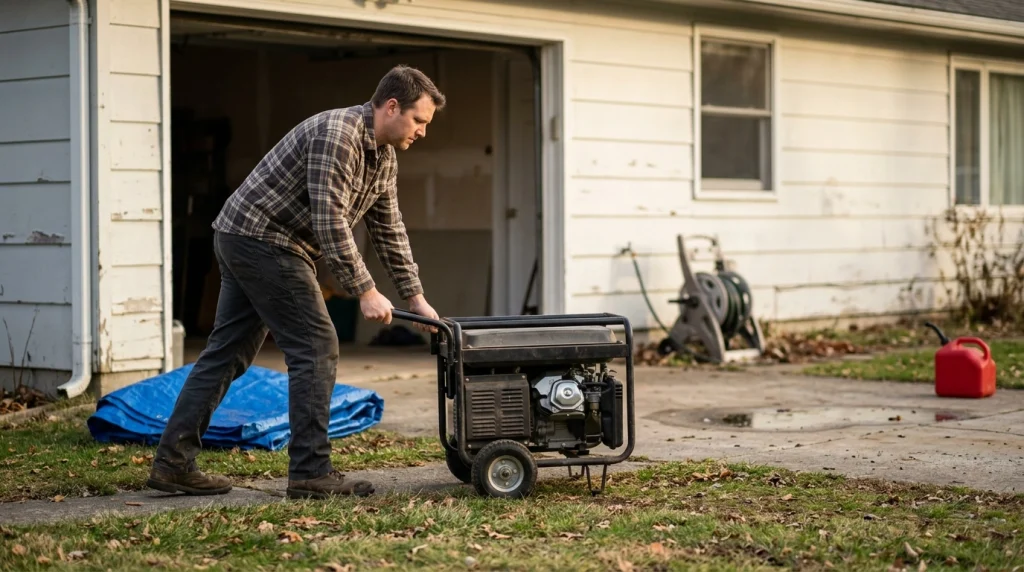
Most unsafe setups come from choosing convenience over distance and ventilation. These are the mistakes I would check first.
- Running it in an open garage: Carbon monoxide can still enter the house.
- Putting it under a porch: The generator remains too close to the structure and openings.
- Using a shed: A shed is an enclosed space, even if its door is open.
- Placing it beside a window: Exhaust can enter the living space.
- Pointing exhaust toward the house: This defeats much of the benefit of moving the generator away.
- Covering it with a tarp: Improvised covers may trap heat or exhaust.
- Setting it in standing water: Wet electrical equipment creates shock hazards.
- Refueling while hot: Shut the generator down and allow it to cool before adding fuel.
The safest location is not always the shortest cord run. Safety comes first.
Useful Equipment for a Safer Portable Generator Setup
If you’re preparing your outdoor generator area before the next outage, these are the types of products I’d consider first.
🏆 BEST FOR QUIET BACKUP POWER
Honda EU2200i Portable Inverter Generator
★★★★½ 4.7/5 Editorial Rating
A compact inverter generator suited to smaller backup loads and portable use. I like this type of unit when quiet operation and easy movement matter more than whole-house output.
⚡ BEST FOR HIGHER BACKUP LOADS
Westinghouse WGen9500DF Dual Fuel Generator
★★★★½ 4.6/5 Editorial Rating
This larger dual-fuel format is aimed at heavier emergency loads and offers gasoline or propane operation. I’d consider it when several household essentials need backup power at the same time.
🌧️ BEST SETUP ACCESSORY
Portable Generator Running Cover
★★★★☆ 4.4/5 Editorial Rating
A purpose-built running cover can help protect compatible generators from rain while preserving ventilation. I would always check generator and cover instructions together before operating in wet weather.
Frequently Asked Questions
Can I put my generator 10 feet from my house?
For a portable generator, 10 feet is closer than current CDC and CPSC recommendations. Their guidance calls for operating portable generators outdoors at least 20 feet from homes and away from doors, windows, and vents, with the exhaust facing away.
Can I run a generator under a covered patio?
No. A covered patio or porch can trap exhaust and is normally too close to doors, windows, walls, and other openings. Place the portable generator in a truly open outdoor area at least 20 feet from the home.
Can I run a generator in a garage with the door open?
No. Never operate a portable generator inside a garage, even when the main door is fully open. Carbon monoxide can accumulate or travel into the home, creating a potentially deadly exposure.
Should a generator exhaust point toward or away from the house?
Point the exhaust away from your house, nearby buildings, windows, doors, and ventilation openings. Check the wind as well, because moving air can carry exhaust back toward an occupied building.
Can I build a generator enclosure outside?
A running enclosure must be specifically designed for generator operation, ventilation, heat management, exhaust, and weather protection. Never place a running portable generator inside an ordinary storage shed or homemade sealed box. Follow the generator manufacturer’s instructions.
The Bottom Line
The safest answer to where to place a generator outside is straightforward: keep a portable generator at least 20 feet from your home and all openings, with its exhaust pointed away.
Keep the unit outdoors, dry, level, well ventilated, and away from enclosed spaces. Test your carbon monoxide alarms before an outage, and plan the location while you still have time to measure everything properly.
If your property cannot provide a safe operating location, don’t improvise. A qualified electrician or generator professional can help you choose a safer backup-power setup.

Hi, I’m Michael Turner. I own a generator workshop in the United States and founded HomeGeneratorBlog to share practical, hands-on guidance about generator installation, maintenance, troubleshooting, safety, and backup power solutions. My goal is to help homeowners make smarter, more confident decisions through clear and reliable information