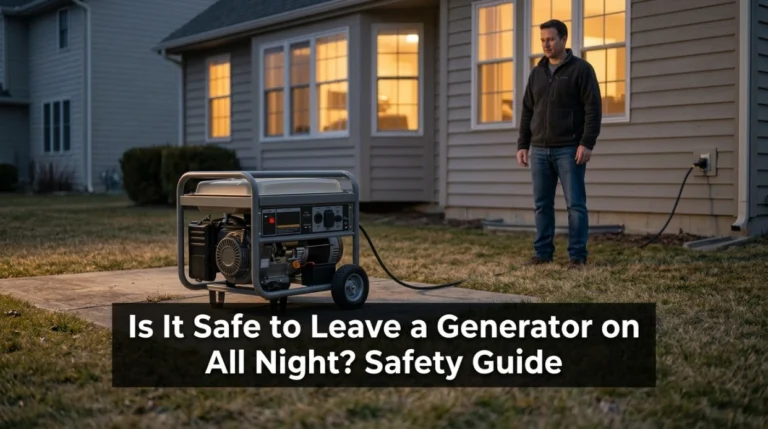
Can You Run a Generator 24 Hours a Day?
Quick Answer
Yes, some generators can provide power for 24 hours a day, but that does not mean every generator should run nonstop without inspection, refueling, or maintenance. Portable generators normally need planned shutdowns, while properly installed standby generators are better suited to extended outages; you also need to watch for portable generator overheating during long runs.
What matters during 24-hour operation
- Generator type: Standby generators are usually better suited to extended operation than homeowner-grade portable units.
- Maintenance intervals: Oil checks, filter service, and scheduled maintenance still apply while an outage continues.
- Safe refueling: Gasoline generators must be shut down and allowed to cool before fuel is added.
- Electrical load: Avoid continuously operating at or beyond the generator’s rated output.
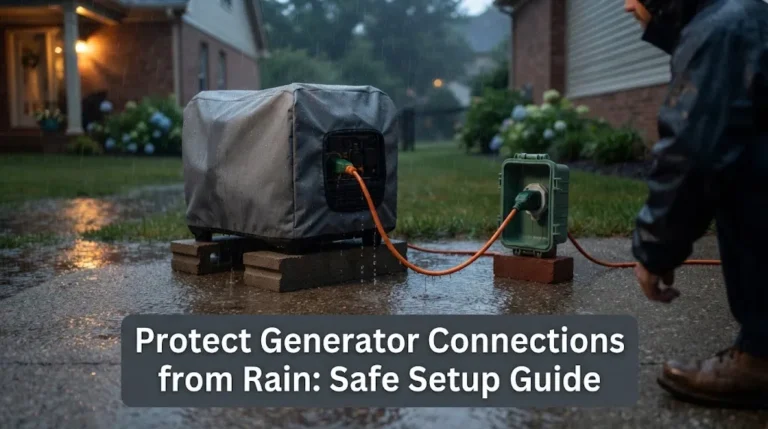
- Carbon monoxide: Portable generators must remain outdoors and far from occupied buildings.
- Owner’s manual: Your model’s instructions always take priority over a general runtime rule.
My rule for extended outages
- Treat 24 hours as a maintenance checkpoint, not permission to ignore the machine for another day.
When an outage stretches overnight, one of the first questions I hear is whether a generator can simply keep running around the clock. The answer depends heavily on the generator, fuel system, load, environment, and maintenance schedule.
I don’t treat “24-hour capable” as meaning “start it and forget it.” In extended outages, safe shutdowns and quick inspections are part of keeping the power available.
Can a Generator Really Run 24 Hours Straight?
Some generators can operate for 24 hours or longer, but there is no universal 24-hour runtime rule. The manufacturer’s operating and maintenance instructions determine how long your specific model can safely remain in service.
A generator may be capable of supporting a property throughout a 24-hour period without its engine literally running nonstop. Refueling, oil checks, maintenance, or troubleshooting may require planned shutdowns.
Definition: In this guide, 24-hour generator operation means keeping backup electricity available throughout a full day, including any necessary maintenance and refueling stops.
- Portable gasoline generator: Usually limited by tank capacity, cooling, refueling, and small-engine maintenance requirements.
- Dual-fuel generator: Can offer more fuel flexibility during long outages but still needs inspections and service.
- Portable inverter generator: Often runs efficiently at lighter loads, but runtime remains model-specific.
- Home standby generator: Designed specifically for automatic backup and extended outages, although maintenance is still required.
- Commercial diesel generator: Often engineered for much heavier duty cycles than homeowner portable equipment.
For perspective, Generac defines continuous use for certain air-cooled standby models as operation approaching or exceeding 24 hours. Its current guidance calls for a maintenance shutdown after each 24-hour period on the covered models.
How Long Can Different Generators Run Continuously?
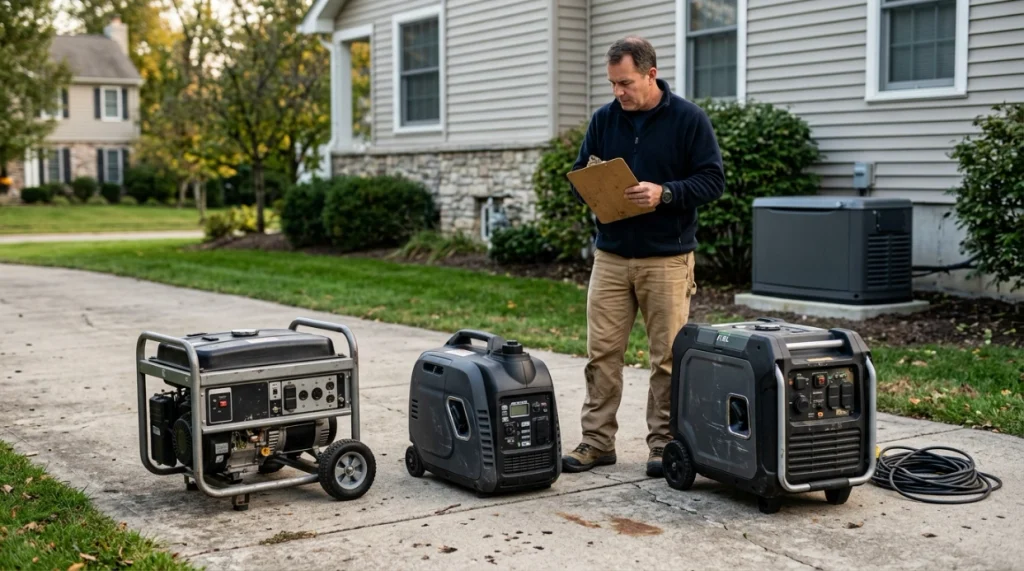
Runtime varies dramatically by generator design, electrical load, fuel capacity, and service requirements. A large fuel tank does not automatically mean the engine should operate indefinitely.
Here are several real manufacturer examples that show why one runtime number cannot cover every generator.
| Generator | Type | Published Output | Published Runtime / Continuous-Use Note | Best Fit |
|---|---|---|---|---|
| Westinghouse WGen9500DFc | Dual-fuel portable | 9,500 running watts on gasoline | Up to 12 hours at 25% load on gasoline | High-output home backup |
| Honda EU7000iS | Inverter portable | 5,500 rated watts | 6.4 hours at rated load; 16 hours at 1/4 load | Quiet, efficient portable backup |
| Champion 201421 | Dual-fuel inverter | 9,000 running watts on gasoline | Up to 15 hours on gasoline | Long portable-generator runtime |
| Generac air-cooled standby models | Home standby | Varies by model | Covered models require continuous-use maintenance after 24 hours | Automatic multi-day home backup |
The Honda example also shows how much electrical load affects runtime. The same tank lasts far longer at one-quarter load than it does at full rated output.
That’s why advertised hours should always be read beside the manufacturer’s test conditions. Comparing runtime numbers without comparing load percentages can be misleading.
Should You Shut a Generator Down After 24 Hours?
Yes, if the manufacturer requires an inspection, oil check, maintenance procedure, or cooling period. Do not keep an engine running merely because the utility power has not returned.
Generac currently instructs owners of certain 10–28 kW and 10–26 kW air-cooled standby generators to shut them down for at least 30 minutes after every 24 hours of continuous operation. The shutdown allows continuous-use maintenance tasks to be performed.
You can review the manufacturer’s continuous-use maintenance guidance for the covered standby models.
During a planned shutdown, the basic inspection can include:
- Check engine oil: Confirm the oil remains within the manufacturer’s specified range.
- Look for leaks: Inspect fuel and oil lines, fittings, and the ground beneath the generator.
- Clear cooling areas: Remove leaves, snow, dirt, or other debris blocking airflow.
- Check accumulated hours: Determine whether an oil, filter, or other service interval has arrived.
- Inspect unusual behavior: Investigate new noises, surging, smoke, vibration, or warning codes.
Maintenance schedules differ between brands and engines. Never copy another generator’s service interval unless your own manual specifies the same requirement.
Can a Portable Generator Run 24 Hours a Day?
A portable generator can support a 24-hour outage, but I would not assume it should run nonstop for the entire period. Portable machines face practical limits from fuel capacity, refueling safety, heat, load, and engine service intervals.
For example, a gasoline generator with a 10-hour tank runtime needs at least two refueling cycles during a full day. Each refueling event should become a proper shutdown rather than a rushed pit stop.
Before a multi-day outage, I pay attention to five things:
- Tank runtime: Know how many hours the generator runs at your expected load.
- Oil capacity: Small engines can consume oil during extended operation.
- Service interval: Keep a written record of accumulated engine hours.
- Airflow: Never surround the unit with makeshift walls that trap heat or exhaust.
- Load headroom: Avoid planning your entire outage around the generator operating at its absolute limit.
If you’re using a portable model through a long storm, my portable generator fuel safety guide covers safe storage and refueling in more detail.
Is It Safe to Run a Generator Overnight?
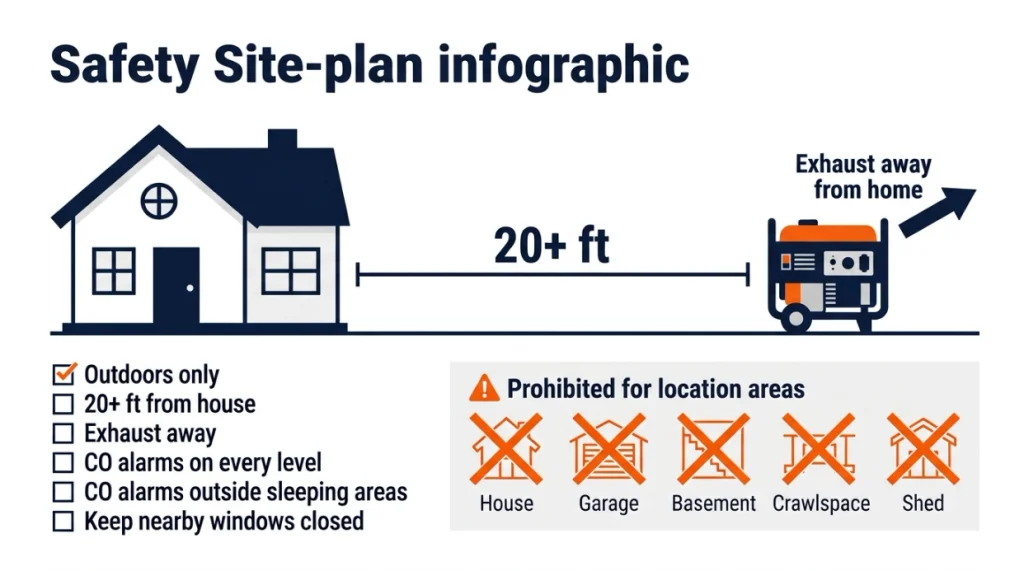
A generator can run overnight only when it is installed or positioned safely and the manufacturer allows extended operation. Carbon monoxide is the biggest concern with fuel-burning portable generators.
The U.S. Consumer Product Safety Commission warns never to operate a portable generator inside a house, garage, basement, crawlspace, or shed. Opening doors and windows does not make indoor generator operation safe.
CPSC guidance says portable generators should operate outside at least 20 feet from the house. Point the exhaust away from homes and other occupied buildings.
The CDC generator safety guidance also identifies generator exhaust as a carbon monoxide hazard. CO is colorless and odorless, so you cannot depend on your senses to detect it.
- Use working CO alarms: Install alarms on every level and outside sleeping areas.
- Keep the generator outside: A garage with its main door open is still not an acceptable location.
- Aim exhaust away: Keep exhaust away from doors, windows, vents, and neighboring structures.
- Keep openings closed: Close nearby windows while the generator operates.
- Respond to alarms: If a CO alarm sounds, move everyone to fresh air and follow emergency guidance.
A built-in CO shutdown system is useful, but I treat it as backup protection. It does not replace correct generator placement or working household CO alarms.
Can You Refuel a Generator While It Is Running?
No, you should not refuel a gasoline-powered portable generator while its engine is running or hot. Spilled gasoline can ignite when it contacts hot engine or exhaust components.
Shut the generator down and follow the manufacturer’s cooldown instructions before opening the fuel cap. Keep stored gasoline away from heat, sparks, flames, and the operating generator.
The OSHA portable generator safety guidance also warns against overloading generators and improper electrical connections. Long runtime does not change those electrical rules.
What Load Is Best for Running a Generator All Day?
Keep the generator within its rated continuous output and leave practical headroom for starting surges. Running at maximum advertised output throughout an outage gives you little room for motors and compressors starting unexpectedly.
A refrigerator, well pump, sump pump, air conditioner, or freezer may briefly demand more power when its motor starts. Those starting watts can push an already heavily loaded generator into overload.
For a 7,500-running-watt generator, I would rather manage a moderate essential load than intentionally hold the machine near 7,500 watts all day. Lower demand can also reduce fuel consumption and heat.
If the generator repeatedly trips, overheats, surges, or struggles when appliances start, reduce the load. Don’t keep resetting an overload without finding the cause.
Portable Generator vs Standby Generator for 24/7 Backup
A standby generator is normally the better choice when you routinely need multi-day, whole-home backup. Portable generators make more sense for occasional outages where lower purchase cost and mobility matter.
| Factor | Portable Generator | Standby Generator |
|---|---|---|
| Extended outages | Requires more hands-on monitoring | Designed around automatic home backup |
| Fuel | Often gasoline or propane tanks | Commonly natural gas or large propane supply |
| Refueling | Frequent on gasoline models | Natural gas removes portable-tank refueling |
| Automation | Usually manual setup and startup | Automatic transfer is standard on installed systems |
| Maintenance | Owner monitors small-engine service intervals | Still requires scheduled and continuous-use maintenance |
If repeated long outages are normal where you live, compare generator types rather than buying a larger portable model by default. My guide to choosing the best generator type for a home explains where standby, portable, and inverter systems fit.
How Do You Keep a Generator Reliable During a Multi-Day Outage?
The best strategy is to manage the generator by engine hours rather than simply counting days. An outage may last four days, but maintenance needs depend on how many hours the engine actually operated.
- Record the starting hour meter reading. Write it down when the outage begins.
- Track fuel consumption. Unexpectedly high consumption can signal heavier load or engine trouble.
- Inspect the oil regularly. Follow the manufacturer’s shutdown and oil-check procedure.
- Watch cooling airflow. Keep debris away from cooling openings and the exhaust area.
- Listen for changes. Surging, rattling, knocking, or unstable speed deserves attention.
- Service it on schedule. Do not postpone an oil or filter interval because the outage is still underway.
Long runtime also contributes to overall engine wear. You can compare expected service life in my guide to how long portable generators actually last.
What Happens If You Run a Generator Too Long?
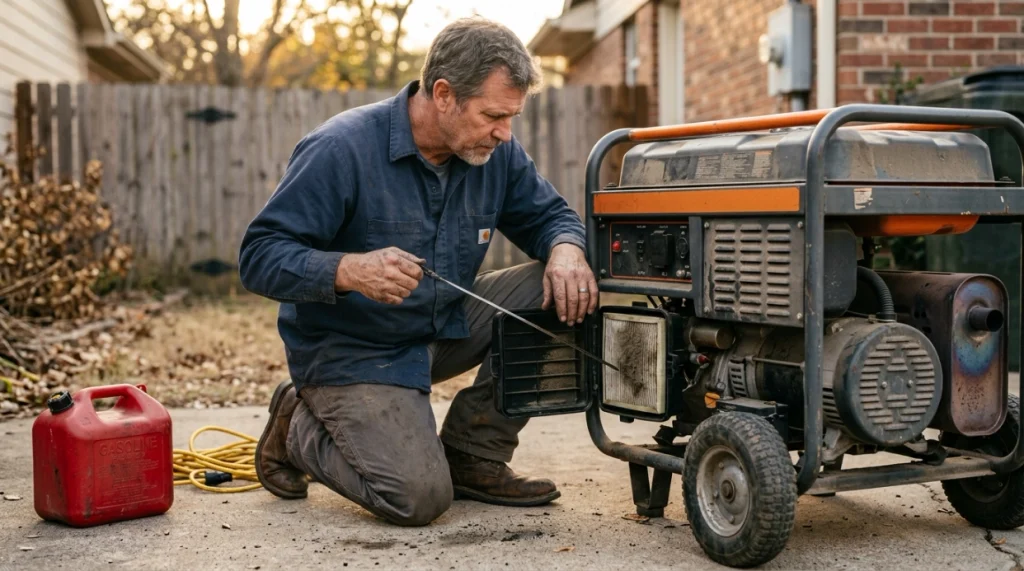
Extended operation without proper maintenance can lead to low oil, excessive heat, dirty filters, component wear, fuel problems, and eventual shutdown or damage. The exact failure point depends on the machine and operating conditions.
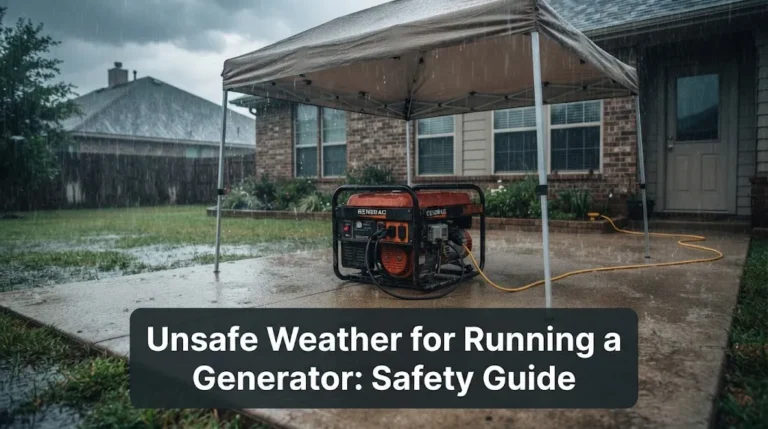
Heat deserves special attention during summer outages. High ambient temperatures and restricted ventilation make an already hard-working engine’s cooling system work harder.
- Low oil: Can trigger low-oil protection or damage an engine without adequate protection.
- Overheating: May result from excessive load, restricted airflow, high temperatures, or mechanical problems.
- Dirty air filter: Can restrict airflow and hurt engine performance.
- Overload: Can trip protection devices and generate excessive heat.
- Fuel interruption: A gasoline tank may simply empty long before 24 hours.
- Skipped service: A maintenance interval still counts during emergency operation.
The point is not that 24 hours is automatically dangerous. The mistake is assuming emergency use cancels the generator’s normal operating limits.
If you’re preparing specifically for long outages, these are the portable models I would put on the comparison list first:
🏆 Best High-Output Portable
Westinghouse WGen9500DFc
★★★★☆ 4.7/5 Editorial Rating
It delivers 9,500 running watts on gasoline, dual-fuel operation, a CO sensor, and up to 12 hours of gasoline runtime at 25% load. I like it for homeowners who need substantial 120/240V backup capacity but still want portable equipment.
🔇 Best Premium Inverter
Honda EU7000iS
★★★★☆ 4.8/5 Editorial Rating
Honda rates this inverter at 5,500 watts continuous output and up to 16 hours per tank at one-quarter load. Its quieter operation, fuel injection, inverter output, and CO-MINDER system make it my premium choice when clean power and noise matter.
⚡ Best Long-Runtime Inverter
Champion 201421 11,000W Dual-Fuel Inverter
★★★★☆ 4.6/5 Editorial Rating
This model provides 9,000 running watts on gasoline and manufacturer-rated runtime of up to 15 hours on gasoline. Dual fuel, inverter technology, and CO Shield make it an appealing option for long household outages where both output and runtime matter.
Frequently Asked Questions
Can I leave a generator running for 24 hours?
You can only leave a generator operating for that long if its manufacturer permits extended operation and all maintenance requirements are followed. Portable generators often need shutdowns for refueling and inspection, while some standby generators are designed for continuous outage duty with scheduled maintenance stops.
How many hours can a generator run without stopping?
There is no universal maximum. Some portable generators run roughly 8–16 hours per tank depending on load, while standby generators may operate much longer because they use larger propane supplies or utility natural gas.
Does a generator need to rest?
Some generators require planned shutdowns for maintenance, inspection, refueling, or cooling rather than a generic “rest” period. Check your owner’s manual because the required procedure depends on the engine, generator design, ambient temperature, and accumulated operating hours.
Can I run my generator all night while I sleep?
Only run it overnight when the generator is outdoors in a manufacturer-approved location and you have working carbon monoxide alarms. Portable generators should never operate in a house, garage, basement, shed, carport, or other enclosed or partly enclosed space.
Is a standby generator better for running 24 hours a day?
Yes, a permanently installed standby generator is generally better suited to repeated multi-day home outages than a portable generator. It can start automatically and may use a continuous natural-gas supply, but inspections and manufacturer-specified maintenance are still required.
Final Takeaway
So, can you run a generator 24 hours a day? You can keep backup power available around the clock, but you should not assume the engine can run forever without shutdowns.
A portable generator needs active fuel, load, oil, heat, and safety management. A standby generator handles long outages more conveniently, yet it still has maintenance intervals that do not disappear when the grid goes down.
For a 2026 outage plan, start with the owner’s manual, calculate your actual electrical load, store fuel safely, and prepare for scheduled maintenance before the storm arrives. That approach is far safer than discovering your generator’s limits in the middle of a two-day outage.

Hi, I’m Michael Turner. I own a generator workshop in the United States and founded HomeGeneratorBlog to share practical, hands-on guidance about generator installation, maintenance, troubleshooting, safety, and backup power solutions. My goal is to help homeowners make smarter, more confident decisions through clear and reliable information