Portable Generator Fuel Safety: Storage, Refueling, and Fire Prevention
Quick Answer
Portable generator fuel safety means storing fuel in approved containers, keeping it away from heat and ignition sources, and never refueling a running or hot generator. Fuel-powered generators must also run outdoors, well away from occupied buildings; see my portable generator carbon monoxide safety guide for the placement rules that protect your household from exhaust.
Fuel safety rules I never skip
- Use approved containers: Keep gasoline and diesel in containers designed and labeled for that specific fuel.
- Shut it down: Turn the generator off and let hot engine parts cool before opening the fuel tank.
- Move spare fuel: Keep fuel containers away from the generator, exhaust, electrical equipment, flames, and sparks.
- Control spills: Never restart a generator while spilled fuel or strong gasoline vapors remain around it.
- Vent exhaust outdoors: Run combustion generators outdoors, more than 20 feet from windows, doors, and vents.
- Follow local codes: Residential fuel-storage limits and approved storage locations vary by jurisdiction.
Before every refuel
- Disconnect or reduce loads, shut the engine down, allow it to cool, move ignition sources away, and pour slowly without overfilling.
A portable generator can be dependable backup power, but the fuel deserves as much attention as the electrical side. Gasoline vapor, hot engine parts, spilled fuel, and exhaust can turn a simple refueling mistake into an emergency.
I treat the fuel area around a generator as a controlled work zone. The can stays away from the running machine, and refueling never starts until the engine is shut down and safely cooled.
What Is Portable Generator Fuel Safety?
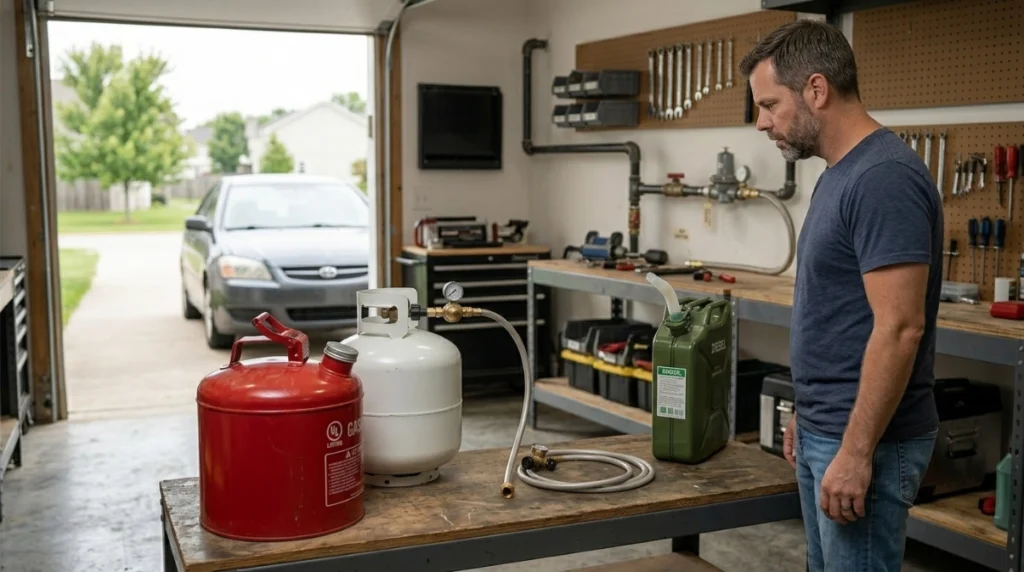
Portable generator fuel safety is the set of practices used to store, transport, pour, and use generator fuel without creating unnecessary fire, explosion, spill, or carbon monoxide hazards.
It covers more than gasoline. Propane, diesel, and natural gas each require different handling practices, even though every combustion-powered portable generator still produces dangerous exhaust.
- Gasoline: Produces highly flammable vapors and must be handled carefully around hot engines and sparks.
- Propane: Is stored under pressure, so cylinders, valves, hoses, and regulators need proper handling.
- Diesel: Still requires approved storage, clean transfer practices, and protection from ignition sources.
- Natural gas: Avoids portable fuel containers but requires a properly installed and maintained gas supply.
If you want to understand how the tank, fuel valve, lines, carburetor, and other components interact, my portable generator fuel system guide explains the complete path from stored fuel to combustion.
How Should You Store Portable Generator Fuel Safely?
Store generator fuel only in a container designed and approved for that fuel. Keep it away from living spaces, flames, pilot lights, heaters, hot equipment, and anything that could create a spark.
The exact amount you may legally store at home can depend on local fire codes. I don’t use one universal gallon limit because local requirements and approved storage arrangements can differ.
Gasoline Storage
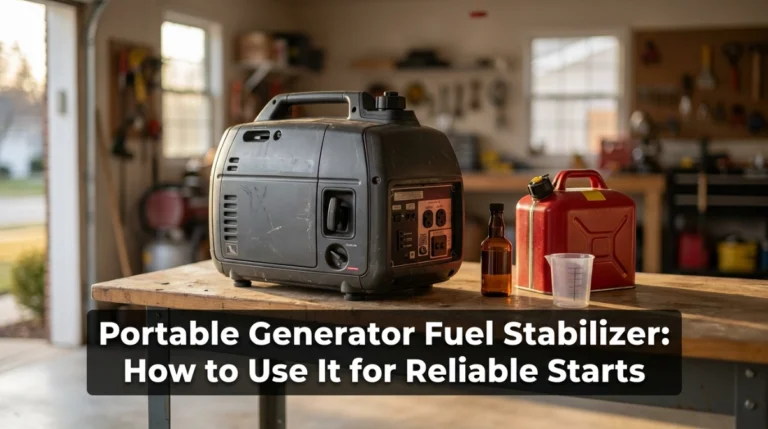
Gasoline needs a purpose-built container with a secure closure. Never improvise with drink bottles, buckets, glass containers, or unmarked jugs.
- Use a gasoline-approved container in good condition.
- Keep the cap or closure secured when the container isn’t being used.
- Protect the container from impact and excessive heat.
- Keep it away from furnaces, water heaters, cigarettes, switches, flames, and other ignition sources.
- Don’t store gasoline beside the generator while the generator is operating.
- Check local fire-code requirements before building a large emergency fuel supply.
The OSHA portable generator safety guidance recommends approved containers for generator fuel and warns against refueling around hot equipment.
Propane Storage
Propane doesn’t create the same stale-fuel problems as gasoline, but the cylinder contains fuel under pressure. Keep cylinders upright and protect the valve, hose, and regulator from damage.
Follow the cylinder manufacturer’s directions and local propane-storage rules. Never use a damaged, badly rusted, leaking, or questionable cylinder with your generator.
- Keep cylinders upright.
- Keep them away from excessive heat.
- Inspect the valve and connection before use.
- Protect hoses from cuts, crushing, and hot exhaust.
- Never test a suspected leak with a flame.
If you’re deciding whether propane is easier for your emergency plan, my dual-fuel portable generator guide explains the practical tradeoffs of keeping two fuel options available.
How Do You Refuel a Portable Generator Without Starting a Fire?
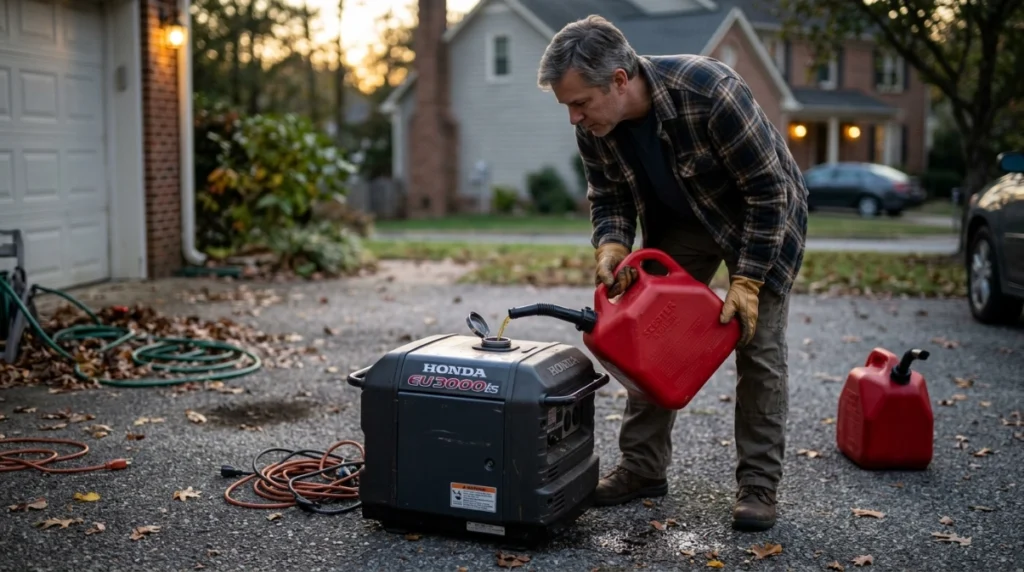
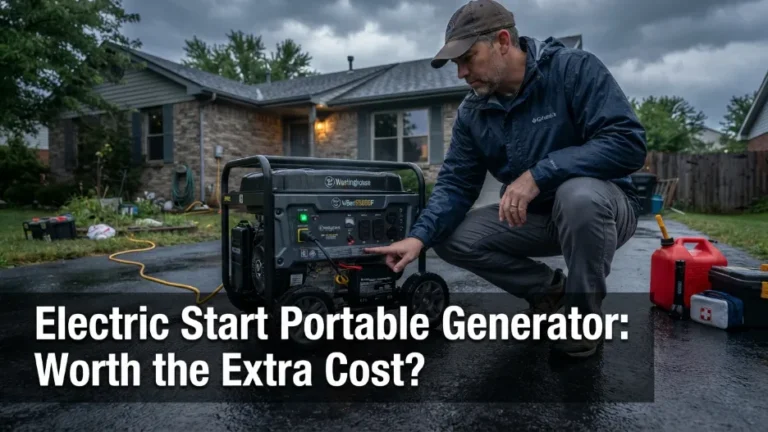
Shut the generator off before adding gasoline and let the engine cool according to the manufacturer’s instructions. Gasoline spilled onto a hot muffler or engine surface can ignite.
This is the part I refuse to rush during an outage. A few minutes without power is better than pouring gasoline beside a hot exhaust system.
- Reduce or disconnect electrical loads. This makes shutdown more controlled.
- Turn the generator off. Never pour gasoline into a running generator.
- Let the engine cool. Follow the cooling guidance in your owner’s manual rather than relying on a universal time.
- Move ignition sources away. No smoking, flames, heaters, or spark-producing work nearby.
- Open the tank carefully. Keep your face away from the filler opening.
- Pour slowly. Use the container’s proper spout or funnel and control the flow.
- Don’t overfill. Follow the fuel-level guidance for your exact generator.
- Secure the fuel cap. Wipe away any fuel on the outside of the tank.
- Move the fuel container away. Return spare fuel to its safe storage location before restarting.
- Check for spills or vapor. Don’t restart until the area is safe.
What Should You Do If Gasoline Spills?
Don’t start the generator after a spill. Keep flames, cigarettes, switches, and other potential ignition sources away while you deal with the fuel.
Follow the generator and fuel-container instructions for cleanup. If a large spill creates an immediate fire or exposure risk, move people away and contact local emergency services rather than trying to manage a dangerous situation alone.
| Situation | Safer Approach | Unsafe Shortcut | Main Risk |
|---|---|---|---|
| Generator needs gasoline | Shut down and cool before refueling | Pouring fuel while running | Fuel vapor ignition |
| Storing gasoline | Approved, labeled fuel container | Using a household bottle or jug | Leak, confusion, fire |
| Operating during an outage | Fuel supply stored away from running equipment | Gas cans beside the generator | Heat and ignition exposure |
| Propane connection | Inspect hose, regulator, and cylinder | Using damaged components | Gas leak and fire |
| Generator placement | Outdoors, more than 20 feet from openings | Garage, shed, or covered enclosed area | Carbon monoxide poisoning |
Where Should Fuel and the Generator Be Positioned During Use?
The generator belongs outdoors, and the spare fuel belongs away from the running generator. Don’t arrange your setup so the gas can sits beside the muffler simply because it’s convenient for the next refill.
The CDC carbon monoxide guidance says fuel-powered generators should operate outdoors, more than 20 feet from windows, doors, and vents.
- Generator: Outdoors on a stable, dry operating surface.
- Exhaust: Pointed away from buildings and occupied spaces.
- Spare fuel: Away from the generator and other ignition sources.
- CO alarms: Working inside the home, including protection near sleeping areas.
- Children and pets: Kept away from the hot machine, cords, and fuel-storage area.
For a complete layout, see my guide on where to place a portable generator safely.
Is a Garage Safe If the Door Is Open?
No. A garage, basement, shed, crawlspace, or similar enclosed area isn’t a safe operating location for a portable combustion generator.
The U.S. Consumer Product Safety Commission warns that opening doors or windows doesn’t make indoor or garage operation safe.
What Fuel-Safety Mistakes Should You Avoid?
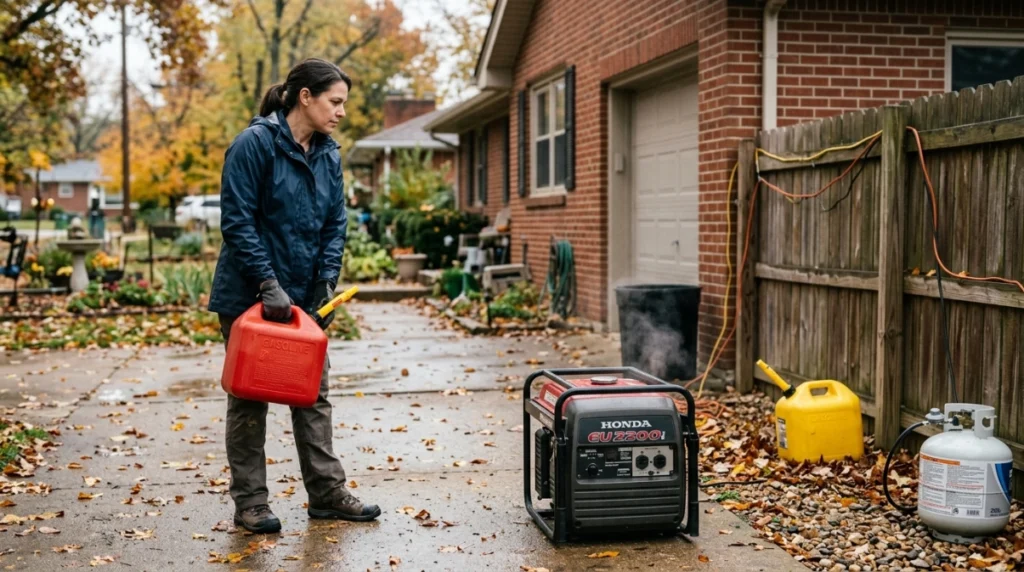
Most fuel mistakes come from convenience. The safest setup often takes a little more walking and a few extra minutes.
- Refueling while running: Fuel can reach hot engine or exhaust components.
- Refueling immediately after shutdown: The muffler and engine can remain hot after the engine stops.
- Keeping gas beside the machine: Spare fuel shouldn’t sit in the generator’s heat and exhaust zone.
- Using an improvised container: Unapproved containers can leak or be mistaken for something else.
- Ignoring a damaged fuel cap: A poor seal can allow leakage or vapor release.
- Overfilling the generator tank: Follow the manufacturer’s fill-level instructions.
- Ignoring propane hose damage: Cracks, abrasion, and damaged fittings need attention before operation.
- Running indoors because of rain: Weather doesn’t make a garage or shed safe for generator exhaust.
- Smoking around fuel: Keep every open flame and ignition source away.
- Guessing at storage rules: Check local fire codes when storing emergency fuel at home.
The EPA’s carbon monoxide guidance also warns that generator exhaust can create deadly indoor CO concentrations when the unit is used inside or too close to a building.
Gasoline vs Propane vs Diesel: Which Is Easier to Store Safely?
No generator fuel is risk-free. The best choice depends on your generator, storage location, local rules, expected outage length, and ability to handle that fuel correctly.
| Fuel | Main Handling Concern | Storage Priority | Good Fit |
|---|---|---|---|
| Gasoline | Flammable liquid and vapor | Approved container away from ignition sources | Common portable generators |
| Propane | Pressurized cylinder and gas leaks | Upright cylinder with protected valve and fittings | Dual-fuel backup planning |
| Diesel | Spills and combustible liquid handling | Correct container and clean transfer practices | Heavy or extended use |
| Natural gas | Gas-line leaks and installation | Proper fixed supply and qualified installation | Compatible tri-fuel setups |
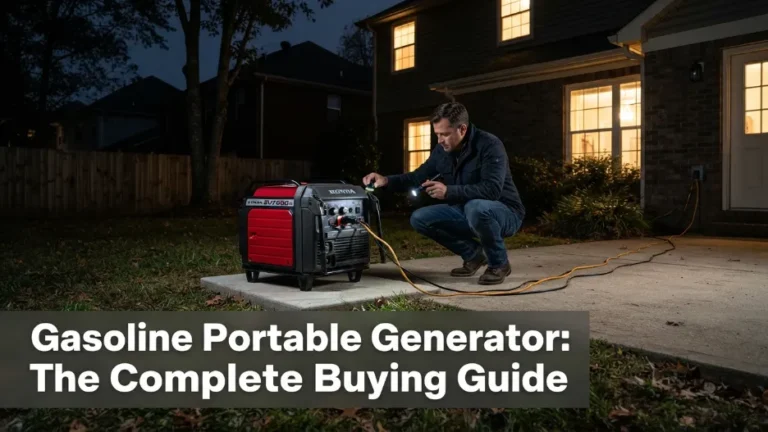
If gasoline is your primary fuel, my gasoline portable generator guide covers runtime, maintenance, fuel-system concerns, and safe everyday operation.
My Portable Generator Fuel Safety Checklist
I like to make the fuel check before the outage, not while standing outside in the dark. A short inspection can catch damaged containers, missing supplies, and unsafe placement before the generator is needed.
- Confirm every fuel container is designed and labeled for its contents.
- Check containers, caps, spouts, valves, hoses, and fittings for damage.
- Review your generator’s fuel requirements in the owner’s manual.
- Choose the outdoor generator location before the outage.
- Confirm the location is more than 20 feet from windows, doors, and vents.
- Point the exhaust away from occupied buildings.
- Test household carbon monoxide alarms.
- Keep spare fuel away from the operating generator.
- Keep smoking, flames, and spark sources away from fuel handling.
- Shut down and cool the engine before every gasoline refuel.
- Clean spills before attempting a restart.
- Check local fire-code requirements before storing larger fuel quantities.
Fuel-Safety Gear I Would Keep With a Generator
You don’t need a shelf full of accessories. Two useful items cover different parts of the risk: safer gasoline storage and independent carbon monoxide warning inside the home.
🏆 Fuel Storage Pick
Eagle UI-50-FS 5-Gallon Type I Safety Can
★★★★½ 4.7/5
This galvanized-steel 5-gallon safety can uses a spring-closing lid and flame arrester and is listed for flammable-liquid handling. I like this style when fuel storage safety matters more than having the lightest possible container.
🛡️ CO Safety Pick
First Alert CO400 Carbon Monoxide Alarm
★★★★½ 4.6/5
The CO400 uses battery power and an electrochemical CO sensor, so it continues monitoring during an electrical outage. I consider a working indoor CO alarm essential backup protection whenever a combustion generator is operating outside.
Frequently Asked Questions
Can I refuel a portable generator while it is running?
No. Shut the generator down and let the engine and exhaust components cool before adding gasoline. Fuel or vapor contacting hot components can ignite, so follow the cooling instructions in your generator’s owner’s manual before opening the tank.
Where should I keep gasoline for my portable generator?
Keep gasoline in an approved, properly labeled fuel container away from living spaces, excessive heat, flames, sparks, and the operating generator. Storage requirements can vary, so check your local fire code before keeping larger quantities at home.
Can I store the gas can beside the generator during an outage?
No. Move spare gasoline away from the operating generator and its exhaust. Keeping a fuel container beside a hot engine increases its exposure to heat, sparks, accidental impact, and spilled fuel.
Is propane safer than gasoline for a portable generator?
Propane avoids open-liquid gasoline handling, but it introduces pressurized-cylinder, hose, valve, and leak hazards. Both fuels require correct storage and handling, and generators burning either fuel still produce carbon monoxide outdoors.
What should I do if I smell gasoline around my generator?
Don’t start or restart the generator until you identify the source and the area is safe. Keep ignition sources away, inspect for spills or fuel-system leaks, and use a qualified technician if the source isn’t obvious or repairs are needed.
Final Takeaway
Portable generator fuel safety comes down to controlling three things: fuel, heat, and exhaust. Keep fuel in the correct container, separate it from ignition sources, and never refill a hot or running generator.
As of 2026, I also consider working CO alarms and a preplanned outdoor generator location basic parts of any fuel-powered backup setup. Prepare the fuel system before the outage, and you’ll have fewer reasons to take dangerous shortcuts when the power goes out.