Gasoline Portable Generator: Complete Guide for 2026
Quick Answer
A gasoline portable generator uses a small gas engine to produce temporary electricity for appliances, tools, RVs, and emergency home backup. Choose one by calculating your required running and starting watts, then use this generator sizing guide to match the output to your actual load.
What matters most
- Running watts: This is the continuous power the generator can provide.
- Starting watts: Motors can require a brief extra surge when they start.
- Fuel capacity: A larger tank can provide longer runtime between refueling stops.
- Generator type: Inverter models are usually quieter and better suited to sensitive electronics.
- CO safety: A gasoline generator must always operate outdoors and away from the home.
My practical rule
- Buy for the appliances you truly need instead of chasing the largest wattage number on the box.
A gasoline portable generator remains one of the simplest ways to get backup electricity when utility power disappears. It can also provide useful power at an RV site, workshop, or remote job.
What matters is choosing the right size and operating it correctly. This guide covers the details I want homeowners to understand before filling the tank and pulling the starter cord.
What Is a Gasoline Portable Generator?
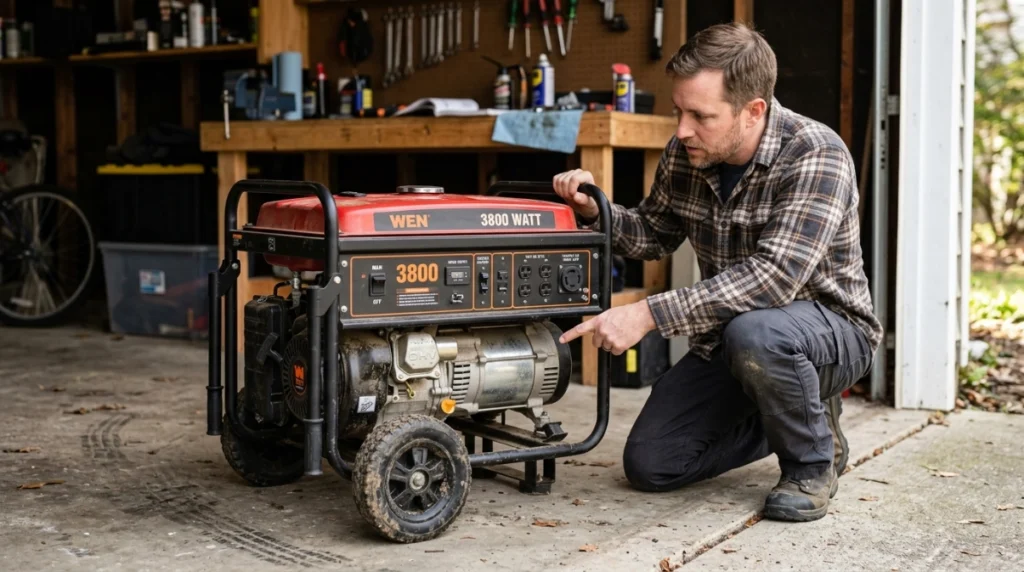
A gasoline portable generator is an engine-driven machine that converts the energy in gasoline into usable electrical power. Unlike a standby generator, you can move it between locations and store it when it isn’t needed.
The engine turns an alternator, which generates electricity for the outlets on the control panel. Most U.S. portable models supply 120-volt power, while larger units may also provide 240 volts.
- Engine: Burns gasoline and provides mechanical power.
- Alternator: Converts mechanical movement into electrical energy.
- Fuel tank: Stores gasoline for the engine.
- Control panel: Holds outlets, breakers, meters, and switches.
- Frame or enclosure: Protects components and makes the unit easier to move.
Portable does not always mean lightweight. Small inverter units can weigh around 50 pounds, while larger open-frame generators can exceed 100 pounds.
How Does a Gasoline Portable Generator Work?
Gasoline enters the engine through the fuel system and mixes with air before combustion. The running engine then spins the alternator to produce electricity.
The basic process looks like this:
- Gasoline flows from the tank toward the carburetor or fuel-delivery system.
- The engine mixes fuel with air and burns the mixture.
- Combustion turns the crankshaft.
- The crankshaft spins the generator’s alternator.
- The alternator creates electrical current.
- The generator regulates that output before sending power to its outlets.
If you want a closer look at tanks, valves, carburetors, filters, and fuel lines, my portable generator fuel system guide explains those parts in more detail.
How Many Watts Does a Gasoline Portable Generator Need?
The correct wattage depends on what you plan to run at the same time. Start with running watts, then account for the startup surge of motor-driven equipment.
Running watts support an appliance after it starts. Starting watts provide the short burst needed by compressors, pumps, and other motors.
| Generator Class | Typical Use | Best Fit |
|---|---|---|
| 1,800–2,200 running watts | Fridge, lights, phones, laptop | Light backup and camping |
| 3,000–4,000 running watts | More appliances, RV loads, small AC | RV and essentials backup |
| 5,000–8,500 running watts | Fridge, furnace blower, pumps, several circuits | Home emergency backup |
| 10,000+ watts | Large loads and extensive home backup | High-demand applications |
Check the appliance nameplates whenever possible. Manufacturer wattage data is more useful than a generic estimate.
I learned the importance of starting watts with a 5,000-watt unit that handled my normal load but struggled when a well pump started. That experience changed how I size generators.
My deeper guide to running watts vs. starting watts explains the calculation and why motor loads often catch buyers by surprise.
Gasoline Inverter Generator vs Conventional Generator: Which Is Better?
An inverter generator is usually the better choice when noise, portability, and power quality matter. A conventional open-frame generator often gives you more wattage per dollar.
Inverter generators use electronic power conversion and can change engine speed with electrical demand. Conventional models usually use a simpler design and are common in larger output classes.
| Feature | Inverter Generator | Conventional Generator |
|---|---|---|
| Noise | Usually quieter | Usually louder |
| Electronics | Clean, stable output on quality models | Power quality varies by model |
| Portability | Often lighter in smaller classes | Often heavier |
| Cost per watt | Usually higher | Usually lower |
| Best use | Camping, electronics, light backup | Higher-output home or jobsite power |
For a dedicated breakdown of that design, see my inverter portable generator guide.
What Should You Look for When Buying a Gasoline Portable Generator?
Start with wattage, but don’t stop there. The best generator is one you can safely move, fuel, connect, and maintain when the power goes out.
Running and Starting Capacity
Never choose a generator from its largest advertised number alone. That number is often peak or starting output rather than continuous output.
Runtime and Fuel Tank Size
Check how manufacturers calculate runtime because load level makes a major difference. A runtime measured at 25% load won’t equal runtime near maximum output.
Outlets
Make sure the generator has the receptacles your setup needs. RV users may want a TT-30R outlet, while larger home connections require suitable equipment and professional installation.
Carbon Monoxide Shutoff
A built-in CO sensor adds useful protection. It does not make indoor or garage operation safe.
Weight and Wheels
A 100-pound generator can be difficult to move without wheels and a good handle. Portability matters even more during storms or emergency setup.
Electric Start
Electric start can make a larger engine easier to use. Remember that starting batteries need maintenance and may lose charge during long storage.
- Confirm running and starting watt ratings.
- Check tank capacity and published runtime conditions.
- Match outlets to your intended equipment.
- Look for overload and low-oil protection.
- Consider a CO shutoff system.
- Check weight before assuming the unit is easy to move.
How Do You Use a Gasoline Portable Generator Safely?
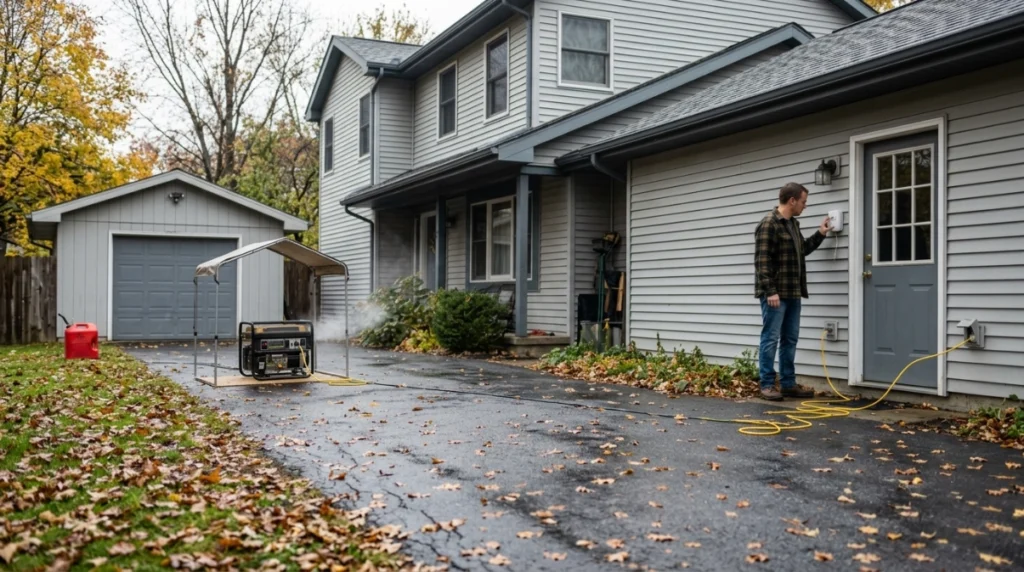
A gasoline generator creates carbon monoxide, heat, electrical hazards, and flammable fuel vapors. Safe placement matters more than convenience.
The U.S. Consumer Product Safety Commission advises operating portable generators outside at least 20 feet from the home. Exhaust should point away from the building.
- Keep it outside: Never operate a generator inside a house, garage, basement, shed, or other enclosed area.
- Watch openings: Keep exhaust away from doors, windows, and vents.
- Use CO alarms: Keep working carbon monoxide alarms inside the home.
- Keep it dry: Protect the generator from rain without enclosing it.
- Cool before fueling: Shut the engine down before adding gasoline.
- Avoid backfeeding: Never power a house by plugging the generator into a wall outlet.
The EPA’s carbon monoxide guidance also warns that dangerous CO can quickly accumulate in enclosed areas. Opening a garage door does not make generator operation there safe.
OSHA’s portable generator safety guidance recommends shutting the generator down and letting it cool before refueling. It also advises keeping fuel away from living areas.
The U.S. Fire Administration recommends heavy-duty extension cords for appliances and warns against fueling a running generator.
How Long Can a Gasoline Portable Generator Run?
Runtime depends on fuel capacity, engine efficiency, generator design, and electrical load. A lightly loaded generator normally runs longer on one tank than the same generator near maximum output.
Real manufacturer specifications show how widely runtime can vary:
- Honda EU2200i: Up to 8.1 hours at quarter load on its 0.95-gallon tank.
- Champion 201419: Up to 10 hours at 25% load from a 1.54-gallon gasoline tank.
- Westinghouse WGen3600c: Up to 14 hours at 25% load from a 4-gallon tank.
Those numbers should not be compared as fuel-efficiency rankings because the generators have different output capacities and designs. Treat them as examples of why you must read the test conditions beside the runtime claim.
What Are the Advantages and Disadvantages of Gasoline Generators?
Gasoline is familiar, widely used, and offers good power density. Those strengths make gas generators popular for short outages and portable applications.
Advantages
- Gasoline is commonly available.
- There are many generator sizes and designs.
- Gas models often provide strong output for their physical size.
- Small inverter models can be easy to transport.
- Refueling is straightforward when fuel stations remain open.
Disadvantages
- Gasoline has more storage concerns than some alternative fuels.
- Fuel vapors are highly flammable.
- Small engines need routine maintenance.
- Stale fuel can create starting and carburetor problems.
- Gasoline availability can become difficult during widespread outages.
If long-term fuel flexibility is important, compare gasoline-only machines with a dual fuel portable generator. Having gasoline and propane options can be useful during an extended outage.
How Should You Maintain a Gasoline Portable Generator?
Regular maintenance helps a generator start when you need it. Always follow the maintenance schedule in your exact model’s owner’s manual.
- Engine oil: Check the level before operation and change it at the specified interval.
- Air filter: Inspect and clean or replace it as required.
- Spark plug: Inspect the plug and replace it according to the service schedule.
- Fuel system: Avoid leaving aging gasoline in the carburetor for long storage periods.
- Cooling areas: Keep ventilation openings clear of dirt and debris.
- Exercise: Follow the manufacturer’s storage and periodic-use instructions.
Don’t assume every generator uses the same oil or maintenance interval. Engine size, design, temperature, and manufacturer requirements can change the service schedule.
Which Gasoline Portable Generators Would I Consider?
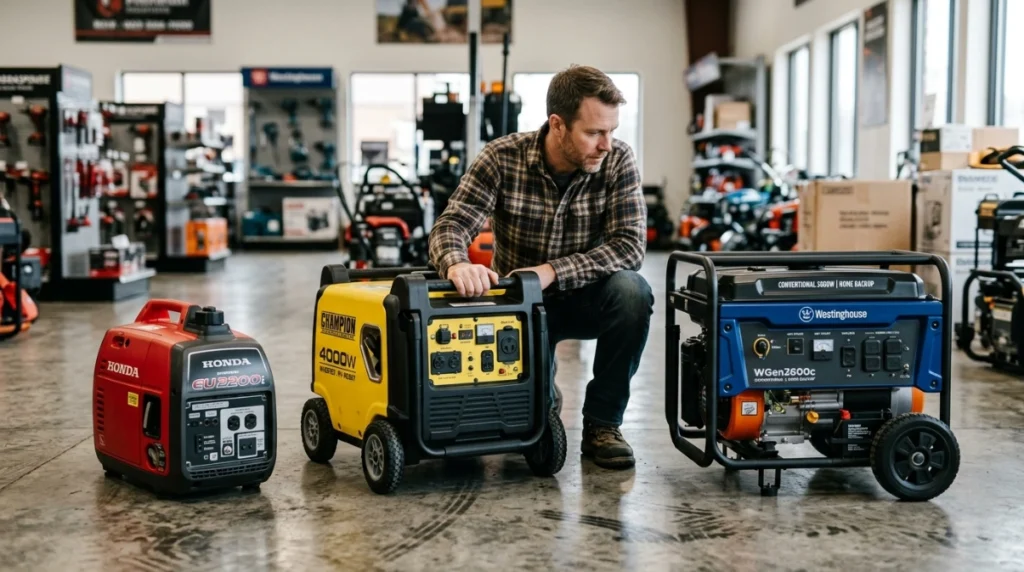
If you’re ready to choose a generator, these three models represent useful wattage and design classes. I would still size the generator to your actual loads before buying.
Frequently Asked Questions
Is a gasoline portable generator good for home backup?
Yes. A properly sized gasoline portable generator can power refrigerators, lights, pumps, furnace blowers, and other essentials during an outage. Larger home loads may require a transfer switch and electrician-installed connection equipment.
Can a gasoline generator run all night?
Some generators have enough fuel capacity for extended operation at light loads, but runtime varies by model and load. Follow the owner’s manual, check fuel levels safely, and never refuel a running or hot generator.
Can I run a portable generator in my garage with the door open?
No. Portable gasoline generators should never operate inside a garage, even with the garage door open. Place the generator outdoors, at least 20 feet from the home, with exhaust directed away from doors, windows, and vents.
Is an inverter generator better than a regular gasoline generator?
An inverter generator is often better for camping, close neighbors, and sensitive electronics because it can provide quieter, stable power. Conventional generators can make more sense when you need higher output at a lower cost per watt.
How large a gasoline generator should I buy?
Add the running watts of the equipment you want powered at the same time, then account for the largest motor-starting surge. Leave reasonable capacity above the calculated load rather than planning to operate continuously at maximum output.
Final Takeaway
A gasoline portable generator can be an excellent backup tool when its output matches your needs. Focus on running watts, starting watts, runtime, outlets, portability, and safety rather than the biggest marketing number.
As of 2026, I also consider a CO shutoff system a valuable feature on any new gasoline generator. It adds protection, but proper outdoor placement and working household CO alarms remain essential.
Calculate your loads before shopping, keep fresh fuel and maintenance supplies available, and practice setting the generator up before an emergency. A generator you already understand is far more useful when the lights suddenly go out.

Hi, I’m Michael Turner. I own a generator workshop in the United States and founded HomeGeneratorBlog to share practical, hands-on guidance about generator installation, maintenance, troubleshooting, safety, and backup power solutions. My goal is to help homeowners make smarter, more confident decisions through clear and reliable information