Portable Generator Fuel System: A Complete Guide
Quick answer: Most portable generators run on gasoline, but dual-fuel and tri-fuel models let you switch to propane or natural gas. Gasoline is cheapest and easiest to find but degrades in storage. Propane stores indefinitely and burns cleaner. Diesel is the most fuel-efficient for long runtimes. Pick based on how long you expect outages to last and how much fuel storage you’re willing to keep on hand.
If you’ve ever had a generator sputter out mid-outage because the gas in the tank went stale, you already know the fuel system matters as much as the wattage rating on the box. It’s the part of the generator most people ignore until it fails them.
This guide walks through how a portable generator’s fuel system actually works, which fuel type fits your situation, and the storage and maintenance habits that keep it running when you need it most.
How a Portable Generator Fuel System Works
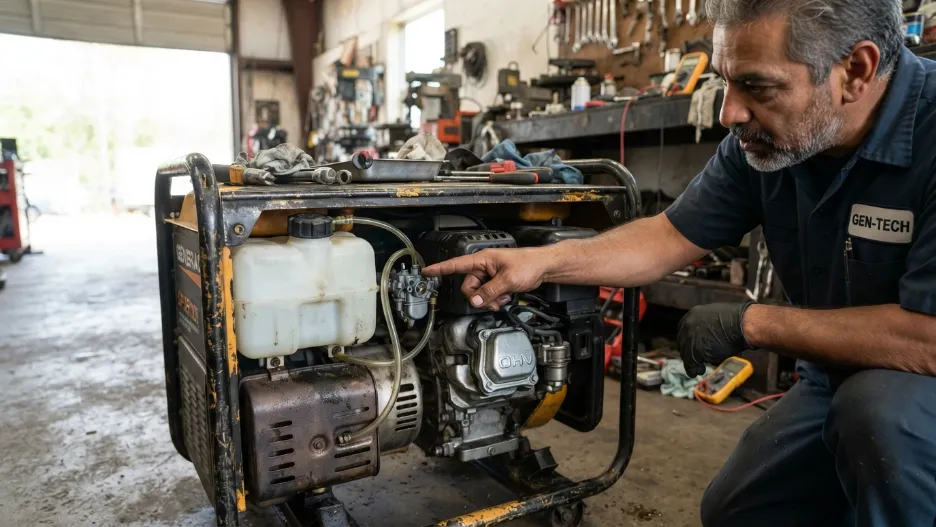
A gasoline portable generator pulls fuel from an onboard tank into a carburetor, where it mixes with air before combustion. Some newer inverter models use fuel injection instead, which meters fuel more precisely and improves cold starts.
Dual-fuel and tri-fuel units add a second (or third) fuel line and a selector valve, so the same engine can burn gasoline, propane, or in some tri-fuel cases, natural gas. Switching fuels usually means shutting the unit down, flipping a valve or dial, and restarting — not swapping parts.
The weak point in almost every fuel system is the carburetor. Old gasoline left sitting in the bowl gums up the tiny jets inside it, and that single issue causes more no-start calls than anything else in a generator’s life.
Which Fuel Type Is Right for Your Generator?
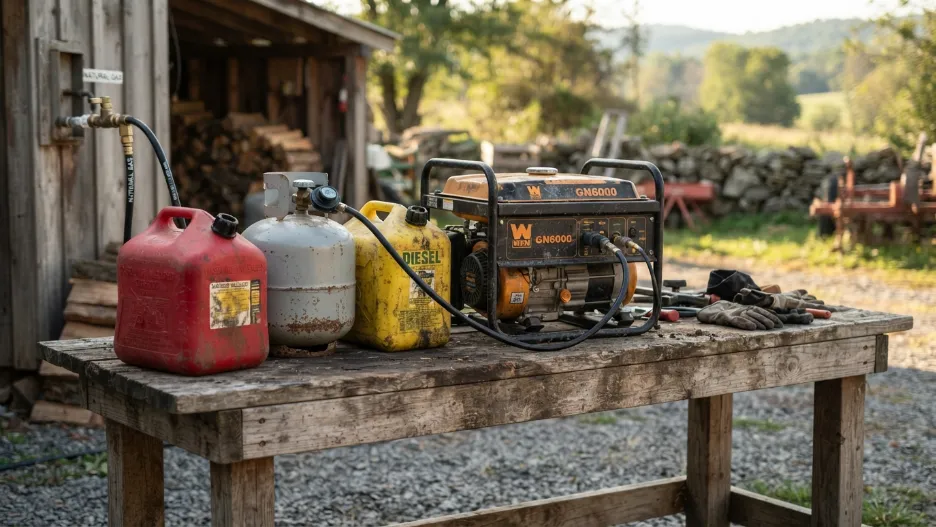
There’s no single best fuel — it depends on how long you expect to run the unit, how much you can store safely, and how often you’ll actually use it.
| Use Case | Recommended Fuel | Why |
|---|---|---|
| Short outages (1–2 days), occasional use | Gasoline | Cheapest, widely available, no special tank needed |
| Multi-day outages, storms with gas-station outages | Propane or dual-fuel | Propane stores for years and doesn’t gum up the carburetor |
| Job sites, heavy daily runtime | Diesel | Best fuel efficiency and engine longevity under load |
| Rural property with a fixed gas line | Natural gas (tri-fuel) | Unlimited supply, no refueling trips |
| Camping, tailgating, quiet operation | Gasoline (inverter) or battery/solar | Lightest and quietest option for portable use |
Gasoline: The Default Choice, With a Catch
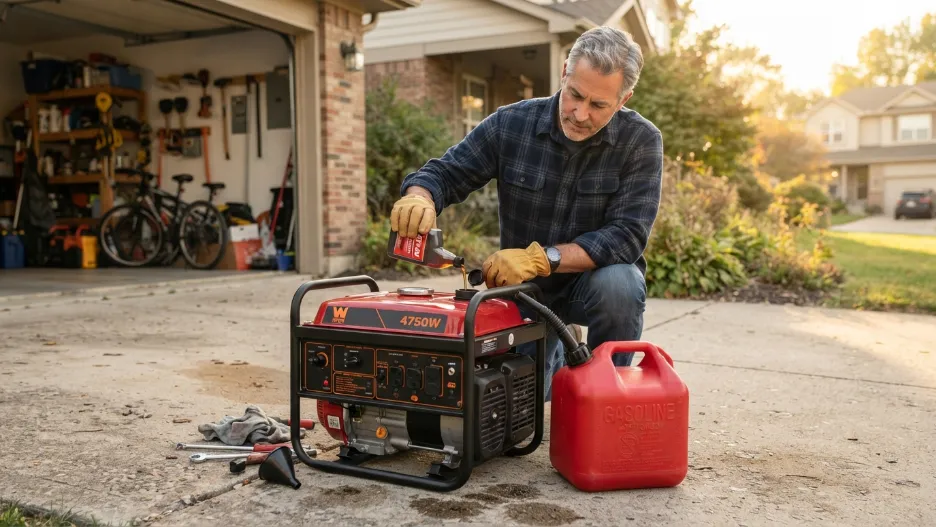
Gasoline is why most people can buy a generator and use it the same afternoon. It’s sold on every corner, and a standard portable unit will run 8–10 hours on a full tank at half load.
The catch is shelf life. Untreated gasoline starts breaking down in as little as 30 days, and ethanol-blended fuel absorbs moisture that corrodes fuel lines. Standard 87-octane unleaded with no more than 10% ethanol is the right call for nearly every portable generator engine, and there’s no benefit to paying more for premium.
If you’re storing a generator between uses, treat the fuel with a stabilizer or run the tank dry before putting it away. A bottle of stabilizer costs less than a service call.
Propane: Long Storage Life, Lower Output
Propane doesn’t degrade the way gasoline does. A sealed propane tank can sit in your shed for five years and still run your generator the day you need it — that alone is why a lot of preparedness-minded owners keep at least one propane tank on hand even if their main unit runs gasoline.
The tradeoff is output. Generators typically produce about 10–15% less wattage on propane than on gasoline, so if you’re running a generator near its rated capacity, size up before you switch fuels.
Diesel and Natural Gas: For Heavier Use
Diesel portable generators are less common in residential settings but show up often on job sites and in larger backup units. Diesel engines run cooler, last longer under continuous load, and burn less fuel per kilowatt-hour than gasoline. The downside is upfront cost — diesel units usually run several hundred dollars more than a comparable gasoline model.
Natural gas requires a fixed line, which rules it out for anything you plan to move around. But if your generator lives in one spot and you already have gas service to the house, a tri-fuel conversion removes fuel storage from the equation entirely.
Dual-Fuel and Tri-Fuel Generators: Best of Both Worlds?
A dual-fuel generator gives you gasoline for convenience and propane as backup — or vice versa, depending on what’s available during an outage. Champion and DuroMax both build well-known dual-fuel lines, and the fuel switch is usually a single dial on the control panel.
The first time I ran a 7500-watt dual-fuel unit through a five-day outage, the thing that caught me off guard wasn’t the fuel switch — it was how much longer the propane tank lasted than I’d budgeted for, because the generator was cycling my well pump and fridge instead of running flat-out the whole time. Load matters more than the spec sheet suggests.
A dual-fuel portable generator is worth the extra cost if you live somewhere gas stations routinely lose power during the same storms that knock out your electricity.
Fuel Storage: How Much and How Safely
Store gasoline only in approved, sealed containers, away from living spaces and any ignition source. Most fire codes cap residential gasoline storage at 25 gallons across all containers — check your local rules before stockpiling more.
Propane tanks should stand upright, outdoors, away from direct sun and at least 10 feet from any structure. Unlike gasoline, propane doesn’t need rotation — a full 20-lb tank bought today will still work the same in three years.
For gasoline, rotate your stock: use the oldest fuel in your car or mower first, and refill containers with fresh gas rather than letting them sit for a full season.
Carbon Monoxide: The Fuel-System Risk That Isn’t About the Fuel
Portable generators produce carbon monoxide — an odorless, colorless gas that can kill without warning — regardless of which fuel powers them. Federal safety investigators have found that the safest placement is at least 20 feet from windows, doors, and vents; a cracked garage door is not enough ventilation, even in an emergency.
Propane and natural gas burn cleaner than gasoline, but “cleaner” doesn’t mean safe indoors. Every fuel type still produces enough CO to be lethal in an enclosed space. Run your generator outside, every time, no exceptions.
For more detail on symptoms and prevention, the CDC’s generator safety fact sheet and the CPSC’s carbon monoxide safety toolkit are worth bookmarking before your next outage, not during it.
How Load Affects Fuel Consumption
Fuel burn isn’t a fixed number — it scales with how hard you’re working the engine. A generator running at 25% load sips fuel compared to the same unit pushed to 100%.
Take a common 7500-watt dual-fuel generator as an example. At a light load — say, just a refrigerator, some lights, and a phone charger — it might run 10–11 hours on a 6-gallon tank of gasoline. Push that same generator to run a window AC unit and a well pump at the same time, and runtime on that same tank can drop to 5–6 hours.
That’s the practical reason to size a generator a bit larger than your minimum need: running an undersized unit near its max continuously burns fuel faster and shortens engine life, while a right-sized or slightly oversized unit sips fuel at partial load.
Winterizing and Seasonal Storage of the Fuel System
If your generator sits unused for months at a time — which is normal for most backup units — the fuel system needs a bit of seasonal attention.
Before storing a gasoline unit for winter, either run the tank and carburetor dry or fill the tank completely and add stabilizer, then run the engine for a few minutes so treated fuel reaches the carburetor. A half-empty tank is the worst option: it leaves room for condensation, which introduces water into the fuel system.
Propane and dual-fuel units are lower maintenance in storage. Just disconnect the tank, check the hose and regulator for cracking, and store the tank upright outdoors as usual. There’s no fuel left inside the generator itself to go bad.
Common Fuel System Mistakes
- Leaving gasoline in the tank all summer. Stale fuel is the number one cause of hard starts and carburetor cleanings.
- Assuming propane gives full-rated wattage. Size your load with a 10–15% cushion if you’re running on propane.
- Storing fuel too close to the generator itself. Keep spare containers away from the running unit and any spark source.
- Skipping the fuel stabilizer. It’s the cheapest maintenance step that prevents the most expensive repair.
- Running a dual-fuel unit on propane without changing the jetting or settings the manufacturer specifies. Check your manual — some units need a manual adjustment when switching fuels.
Conclusion
The fuel system decides whether your generator starts on the first pull or sits there dead when you actually need it. Gasoline is the easy default, propane is the better long-term storage choice, and dual-fuel gives you flexibility for the price of a slightly bigger unit. Whatever you choose, treat your fuel and store it correctly — that’s the maintenance step people skip right up until the day it costs them. As Michael Turner always tells readers here, the generator that runs is the one whose fuel was ready before the storm hit.
If stale gasoline has ever left you stranded during an outage, a dual-fuel generator solves that problem by giving you a propane backup that never goes bad in storage. It’s the single upgrade that fixes the most common fuel-system headache.
Can I switch a gasoline-only generator to propane?
Only with a certified conversion kit, and only if your generator’s manufacturer allows it. Uncertified conversions can void your warranty and may not meet EPA emissions rules, so check with the manufacturer before installing one.
How long does gasoline last in a generator’s tank?
Untreated gasoline starts degrading within 30 days and is often unusable within 3–6 months, faster in hot climates. Adding a fuel stabilizer at fill-up extends that to about 12 months.
Is propane cheaper than gasoline for running a generator?
Per gallon, propane is often similar in price to gasoline, but it delivers less energy per gallon, so you’ll typically use more of it for the same runtime. The savings come from not losing fuel to spoilage, not from a lower per-hour cost.
Can I run a dual-fuel generator on propane and gasoline at the same time?
No. Dual-fuel systems use a selector valve that runs the engine on one fuel at a time. You switch between them; you don’t blend them.
Do I need a special tank for propane generators?
Most portable propane and dual-fuel generators connect to standard 20-lb propane tanks, the same size used for gas grills. Larger 100-lb tanks can extend runtime but usually require a hose adapter.

Hi, I’m Michael Turner. I own a generator workshop in the United States and founded HomeGeneratorBlog to share practical, hands-on guidance about generator installation, maintenance, troubleshooting, safety, and backup power solutions. My goal is to help homeowners make smarter, more confident decisions through clear and reliable information