Can You Run a Portable Generator 24 Hours a Day?
Quick Answer
Yes, you can run a portable generator 24 hours a day during an outage, but not as one nonstop, unattended run. Most portable generators need planned shutdowns for refueling, oil checks, cooling, and service intervals. You also need strict carbon monoxide spacing, as explained in the CDC generator safety guidance.
Safe 24-hour generator use comes down to these rules
- Plan shutdowns: Stop the engine before refueling, checking oil, or clearing debris.
- Watch oil hours: A 24-hour run can move you close to common oil-check and service intervals.
- Reduce load: Running below maximum output lowers heat, fuel burn, and wear.
- Control exhaust: Keep the generator outside, away from openings, with exhaust pointed away.
- Use safe wiring: Plug appliances directly into rated cords or use a proper transfer switch.
My practical rule
- For a multi-day outage, treat a portable generator like a work engine, not a household appliance.
You can keep power going around the clock with a portable generator, but the generator itself still needs breaks.
I’ve seen good generators survive long outages because the owner had a fuel plan, a service plan, and a safe outdoor setup. I’ve also seen nearly new machines cooked by low oil, blocked airflow, or panic refueling in the dark.
This guide explains how long you can run one, what can go wrong, and how I would plan a safe 24-hour schedule in 2026.
Can a Portable Generator Run for 24 Hours Straight?
A portable generator can support 24-hour backup power, but most should not run 24 hours straight without inspection or shutdown. The limiting factors are fuel, oil level, engine heat, load, and the manufacturer’s maintenance schedule.
That difference matters.
Running a generator “24 hours a day” usually means cycling it through safe operating periods. It does not mean ignoring it from breakfast one day until breakfast the next.
Continuous generator runtime means how long the engine can operate while staying fueled, lubricated, cooled, and safely loaded. It is not just the number printed beside “runtime” on the box.
As of 2026, many gasoline portable generators advertise 8 to 12 hours on one tank at partial load. Some inverter and dual-fuel models stretch longer at light load.
The engine still needs human attention. Fuel, oil, airflow, and exhaust placement do not manage themselves.
What Limits How Long a Portable Generator Can Run?
The biggest runtime limit is usually fuel. The second is maintenance.
A small inverter sipping fuel at 25 percent load behaves nothing like a 10,000-watt open-frame generator feeding pumps, refrigerators, and air conditioners.
- Fuel supply: Gasoline tank size, propane cylinder size, and load all change runtime.
- Oil level: Small engines can consume oil during long, hot runs.
- Heat: Blocked airflow or heavy load can raise operating temperature.
- Electrical load: Higher watt demand burns more fuel and stresses the engine.
- Weather: Rain, snow, dust, and wind can complicate safe placement.
- Service intervals: Oil, air filters, spark plugs, and spark arrestors need scheduled attention.
I always start with the owner’s manual before planning a long run. Then I build the schedule around the generator’s tank, oil interval, and load.
If you need help understanding how fuel moves from the tank to the carburetor or regulator, my portable generator fuel system guide explains the parts in plain English.
How Long Can Each Fuel Type Run?
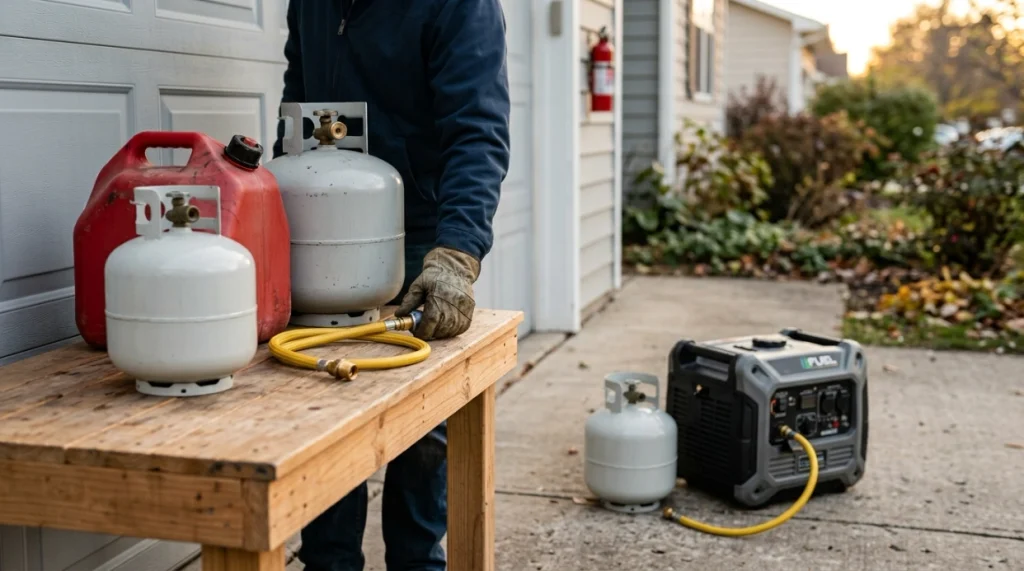
Fuel type changes the 24-hour plan more than most people expect. Gasoline is easy to find, propane stores better, and natural gas can run longer when the setup is installed correctly.
Here is the practical comparison I use with homeowners.
| Fuel Type | Typical Runtime Pattern | Best Use | Main 24-Hour Concern |
|---|---|---|---|
| Gasoline | Often 8-12 hours per tank at partial load | Short outages and easy refueling | Hot refueling and stale fuel problems |
| Propane | Depends heavily on tank size and load | Stored emergency fuel and dual-fuel flexibility | Small cylinders may empty fast |
| Natural gas | Can run continuously if supply and installation support it | Tri-fuel setups and longer outages | Lower output and professional hookup requirements |
Gasoline has more energy per gallon than propane, so the same generator often produces stronger output on gasoline. The U.S. Energy Information Administration lists motor gasoline at about 120,214 Btu per gallon and propane at about 91,452 Btu per gallon on its Btu comparison page.
That does not make propane a bad choice. It just means you need to size the generator and tank with the lower output in mind.
Should You Shut Down a Generator During a 24-Hour Outage?
Yes, you should plan short shutdowns during a 24-hour outage. Those breaks let you refuel safely, check oil, remove debris, and inspect cords.
One of the worst habits I see is “just let it run until it quits.” That can leave you with an empty tank, a hot engine, and no safe way to refuel under pressure.
- Before refueling: Shut the engine off and let hot parts cool.
- Every tank cycle: Check oil, cords, airflow, and fuel leaks.
- Every day: Inspect the air intake, exhaust area, and carbon monoxide alarm status.
- At service intervals: Change oil and service filters as the manual requires.
A generator running continuously can hit maintenance milestones fast. A 50-hour service point arrives in just over two days.
For a detailed service plan, use my portable generator maintenance schedule before storm season, not after the lights go out.
Is It Safe to Refuel a Generator While It Is Running?
No, you should not refuel a portable generator while it is running. Shut it down, let it cool, and only then add gasoline.
Gasoline spilled on a hot muffler, cylinder head, or exhaust shield can ignite quickly. Darkness, rain, and outage stress make that mistake easier.
Here is my refueling routine during long outages:
- Turn off heavy loads first. Let appliances stop drawing power before shutdown.
- Switch the generator off. Do not pour fuel into a running engine.
- Wait for cooling. Give hot engine parts time to drop in temperature.
- Refuel slowly. Use an approved container and avoid overfilling.
- Check for spills. Clean up fuel before restarting.
- Restart outside. Keep exhaust pointed away from the home.
My portable generator fuel safety guide goes deeper on storage, refueling, and fire prevention.
Do not skip this step because the freezer is warming up. A five-minute delay is better than a garage fire or burn injury.
Where Should a Generator Run for 24 Hours?
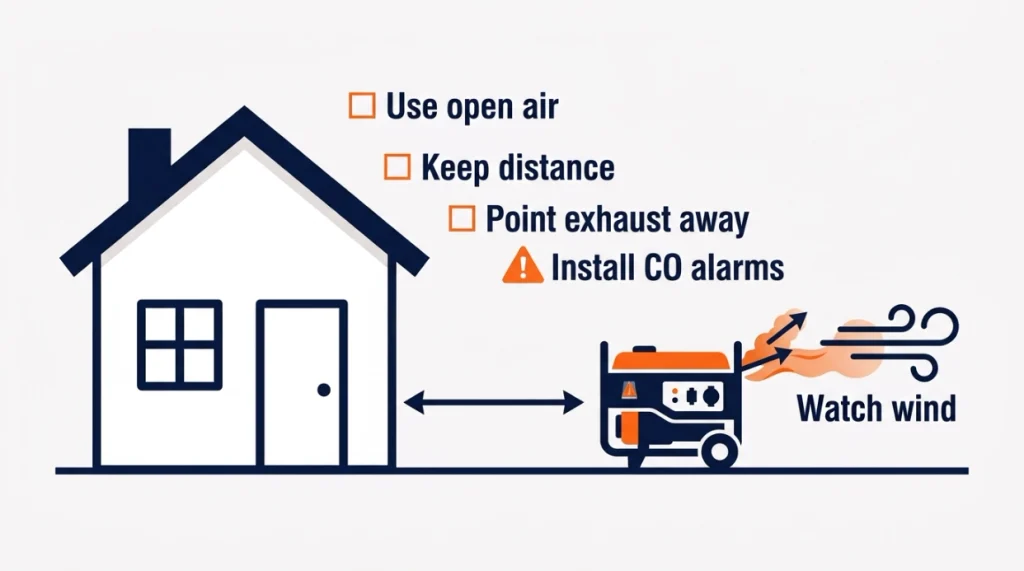
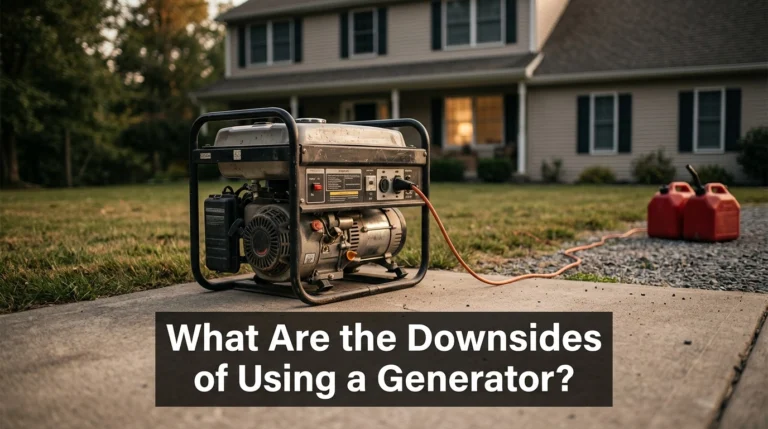
A portable generator should run outdoors only, far from doors, windows, vents, garages, crawl spaces, and covered porches. Exhaust direction matters as much as distance.
Carbon monoxide is colorless and odorless, so you cannot trust smell as a warning. The U.S. Consumer Product Safety Commission’s carbon monoxide safety center warns that generators belong outside only, away from the home.
- Use open air: Never run it indoors, in a garage, or in a shed.
- Keep distance: Use long, outdoor-rated cords to maintain safe spacing.
- Point exhaust away: Do not aim exhaust toward windows or neighboring buildings.
- Install CO alarms: Use working alarms on each level of the home.
- Watch wind: Move the generator if wind pushes fumes toward openings.
If your main problem is placement, read my full guide on where to place a portable generator. That decision is the safety foundation for every long run.
Can a Generator Power Your Whole House All Day?
A large portable generator can run selected home circuits all day, but most portable units are not true whole-house systems. They are better for essentials.
Think refrigerator, freezer, sump pump, furnace blower, lights, internet, and a window air conditioner. Central air, electric heat, dryers, and electric water heaters change the math fast.
| Load Plan | Typical Generator Size | 24-Hour Practicality |
|---|---|---|
| Fridge, lights, chargers, router | 2,000-3,500 running watts | Good with fuel breaks |
| Essentials plus pump or furnace blower | 5,000-7,500 running watts | Good if load is managed |
| Large home loads and several circuits | 8,500-10,000+ running watts | Possible but fuel-heavy |
| True whole-house comfort | Often standby-generator territory | Better with a standby unit |
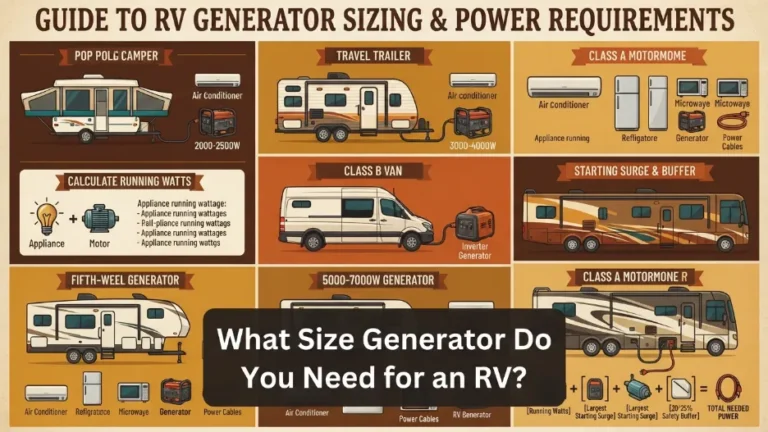
If you are unsure where your load lands, start with my guide to what size generator you need for your home. Oversizing wastes fuel, but undersizing causes overloads.
How Do You Connect a Generator for Long Runtime?
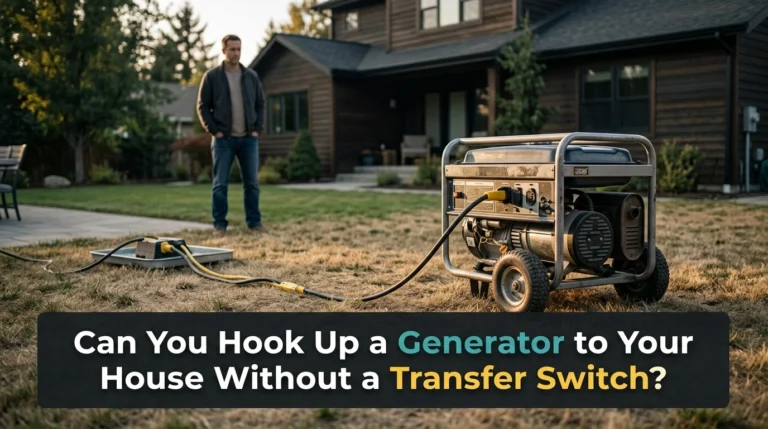
For a 24-hour outage, the safest connection is either direct appliance cords or a professionally installed transfer switch. Never backfeed a home through a dryer outlet or homemade cord.
OSHA’s portable generator safety guidance warns against connecting a generator directly to building wiring unless a qualified electrician has installed a transfer switch.
The National Fire Protection Association also explains that appliances should be plugged directly into the generator or into heavy-duty outdoor-rated cords in its generator safety tip sheet.
- Use rated cords: Match the cord gauge and wattage to the appliance load.
- Avoid cord tangles: Heat builds when cords are coiled under load.
- Keep connections dry: Use weather-aware covers made for running generators.
- Install a transfer switch: Use a qualified electrician for panel connections.
- Skip shortcuts: Double-male cords and backfeeding can kill utility workers.
I like transfer switches for long outages because they reduce cord clutter. They also make it easier to power only the circuits you planned.
What Happens If You Run a Portable Generator Too Long?
Running too long without checks can damage the generator and create safety risks. The usual problems are low oil, dirty air filters, overheating, fuel contamination, and electrical overload.
The engine rarely fails because it ran one long day. It fails because something basic was ignored during that day.
- Low oil: The engine can wear quickly or shut itself down.
- Dirty air filter: Restricted airflow can increase fuel use and heat.
- Overload: Breakers may trip, voltage may sag, and appliances may struggle.
- Heat soak: Heavy loads in hot weather reduce comfort margin.
- Exhaust drift: Changing wind can move carbon monoxide toward the home.
- Fuel mistakes: Dirty, stale, or spilled fuel creates avoidable trouble.
My own rule is simple. If I would not walk away from a lawn mower for 12 hours, I will not ignore a generator doing harder work.
A Safe 24-Hour Portable Generator Schedule
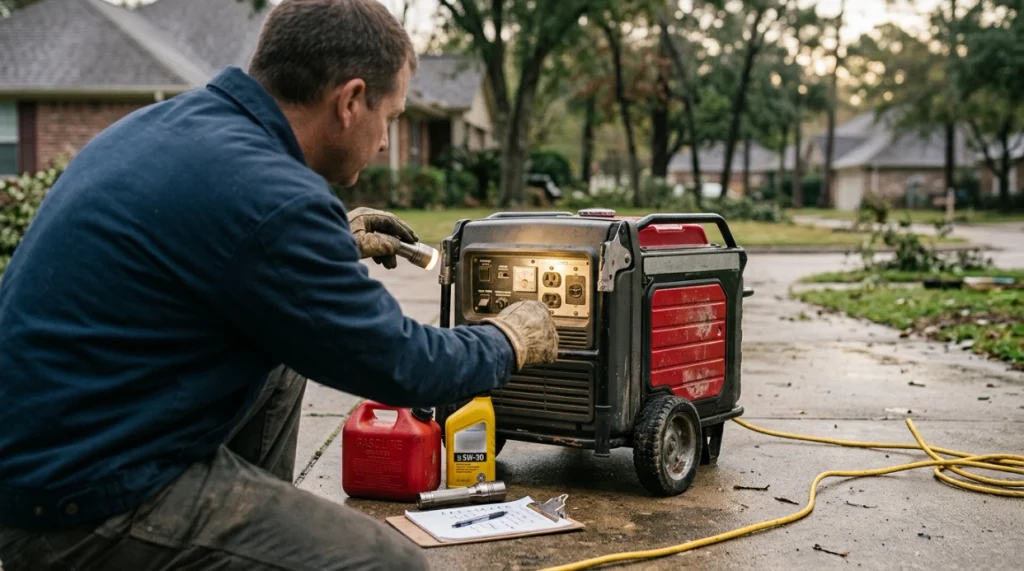
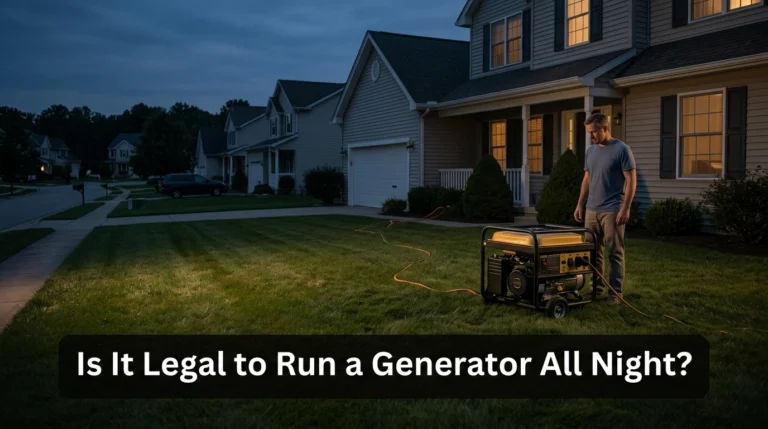
A 24-hour plan should protect the engine, the fuel supply, and the people in the house. It should also make space for quiet hours if your neighborhood allows it.
Here is a realistic schedule I would use during a storm outage.
| Time | Action | Why It Matters |
|---|---|---|
| 6:00 a.m. | Check oil, cords, fuel, and CO alarms | Catches overnight issues before heavy use |
| Midday | Shut down, cool, refuel, and inspect airflow | Prevents hot refueling and debris buildup |
| Evening | Run high-priority loads before bedtime | Lets freezers, batteries, and pumps catch up |
| Overnight | Run only critical loads if safe and allowed | Reduces fuel use, noise, and engine stress |
This schedule is not a substitute for your manual. It is a planning framework.
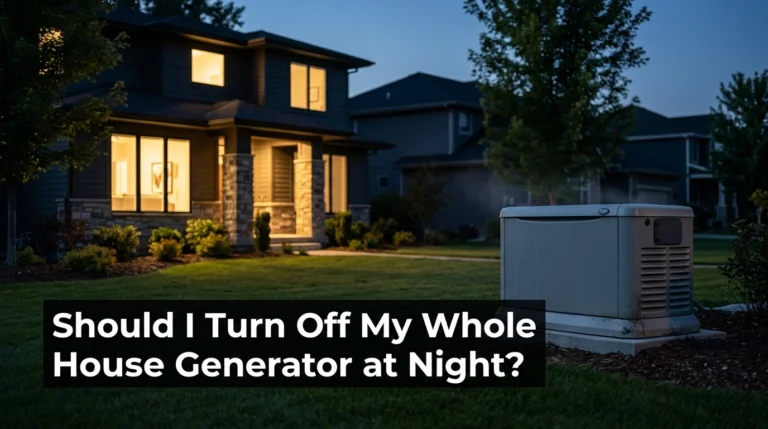
Some owners run the generator continuously overnight for medical equipment, heat, or sump pump protection. In that case, I want extra fuel margin, working CO alarms, and a morning inspection before anything else.
Portable Generator vs Standby Generator for 24-Hour Power
A portable generator can cover emergency loads for 24 hours. A standby generator is the better tool for automatic, long-duration whole-house backup.
Portable units win on cost and flexibility. Standby systems win on convenience, fuel supply, weather protection, and automatic transfer.
- Choose portable: You want lower upfront cost and can manage fuel by hand.
- Choose standby: You need automatic power while away or asleep.
- Choose dual-fuel: You want gasoline output plus propane storage.
- Choose tri-fuel: You have natural gas access and want longer runtime options.
If outages in your area last only a few hours, a portable generator may be plenty. If you lose power for days every season, the convenience gap becomes obvious.
Generators I’d Pick for Long Outages
If you are ready to pick one, here is what I would actually compare for long-runtime backup. These are search links, not guessed product-page URLs.
🏆 Best Overall
Champion 4650W Dual Fuel Inverter with CO Shield
★★★★☆
This class gives you inverter efficiency, dual-fuel flexibility, and carbon monoxide shutoff technology. I like it for people who need more than a tiny inverter but still care about fuel use and noise.
🔇 Best Quiet Essentials
Honda EU2200i
★★★★★
This compact inverter is a strong fit for refrigerators, lights, chargers, and sensitive electronics. I would not choose it for a whole house, but I trust this size for efficient overnight essential loads.
🏠 Best Heavy Backup
Westinghouse WGen9500DFc
★★★★☆
This dual-fuel model is built for bigger home-backup loads and includes a carbon monoxide sensor. I would consider it when pumps, refrigerators, and multiple circuits matter more than quiet camping-style operation.
Frequently Asked Questions
Can you run a portable generator overnight?
Yes, you can run a portable generator overnight if it is outdoors, safely spaced from the home, protected from weather, and powering only appropriate loads. Check fuel, oil, cords, and CO alarms before bedtime. Never run it in a garage, shed, porch, or near open windows.
How many hours can a portable generator run continuously?
Many portable generators run 8 to 12 hours on a tank at partial load, while some models run longer with larger tanks or lighter loads. The safe limit depends on your manual, oil interval, fuel supply, cooling, and load. Plan inspections instead of chasing maximum runtime.
Will running a generator 24 hours damage it?
One 24-hour outage will not usually ruin a healthy generator if you manage oil, fuel, cooling, and load correctly. Damage becomes more likely when the generator runs low on oil, overheats, works near maximum output, or skips service during multi-day use.
Should I turn my generator off at night?
Turn it off at night if you do not need critical power, local noise rules require quiet hours, or you cannot confirm safe placement. Keep it running only when the load matters, such as medical equipment, sump pumps, heat, refrigeration, or security needs.
Is a standby generator better for 24-hour use?
Yes, a standby generator is usually better for long, automatic 24-hour use because it is installed permanently, connected through transfer equipment, and often supplied by natural gas or a large propane tank. A portable generator can still work, but it needs more hands-on management.
Final Takeaway: Running 24 Hours Is Possible, but It Needs a Plan
You can run a portable generator 24 hours a day during an outage, but you should treat it like a small engine under load. It needs fuel breaks, oil checks, airflow, safe wiring, and constant respect for carbon monoxide.
My best advice is to write your 24-hour plan before the storm hits. Know what you will power, how much fuel you need, when you will refuel, and where the generator will sit.
Do that, and a portable generator can carry you through a long outage safely. Skip the planning, and the same machine can become a fire, carbon monoxide, or engine-failure problem fast.

Hi, I’m Michael Turner. I own a generator workshop in the United States and founded HomeGeneratorBlog to share practical, hands-on guidance about generator installation, maintenance, troubleshooting, safety, and backup power solutions. My goal is to help homeowners make smarter, more confident decisions through clear and reliable information