Where to Place a Generator in Rain: Safe Setup Rules
Quick Answer
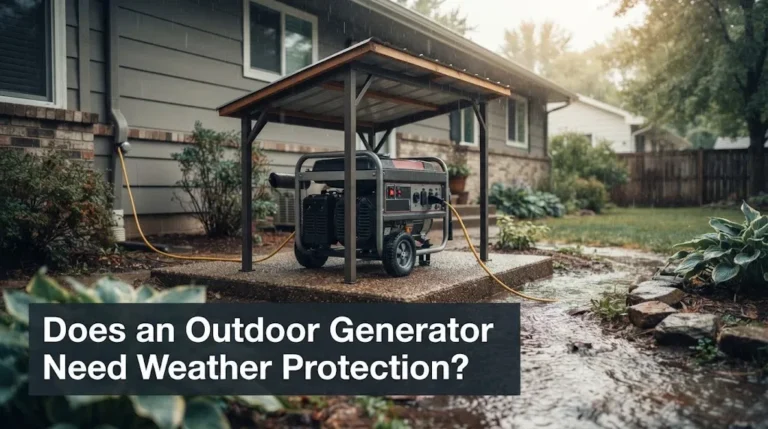
Place the generator outdoors on a dry, elevated surface at least 20 feet from your home, with the exhaust pointed away from doors, windows, and vents. Never run it in a garage, shed, or carport, even with the door open. If you must run it while it is raining, use only an open, canopy-style cover that lets air circulate freely and does not enclose the unit or block the exhaust. If your generator’s manual says to wait until rain passes, follow that instruction.
Running a generator in the rain creates a conflict between two hazards: carbon monoxide and electricity. The placement decisions you make determine which risk you are actually managing. Getting the location wrong does not just risk a wet generator. It risks the people inside the house.
The Non-Negotiable Rule: Outdoors, Far From the House, Exhaust Pointed Away
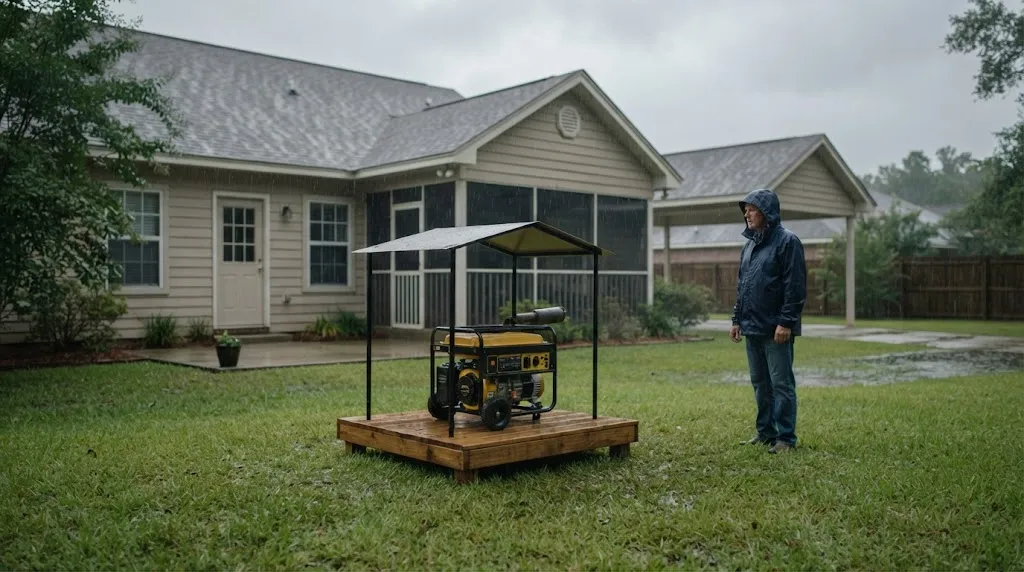
The first placement decision is distance. The U.S. Consumer Product Safety Commission advises operating portable generators outside only, at least 20 feet away from the house, and directing the exhaust away from the home and any other building someone could enter. A porch or carport is too close.
This rule does not change because it is raining. Rain does not make it safer to move the generator closer to the house, into a garage, or under a carport. Carbon monoxide is colorless and odorless, and portable generator CO poisoning can incapacitate people before they recognize symptoms like nausea or dizziness. Opening a garage door does not provide enough ventilation to prevent lethal buildup.
The practical placement checklist is short:
- Distance: At least 20 feet from the house and any occupied building.
- Exhaust direction: Pointed away from doors, windows, soffit vents, dryer vents, and any other opening where exhaust could enter.
- Surface: A dry, level surface where water will not puddle or drain under the generator.
- Openness: No roof overhead that traps exhaust, and no walls close enough to concentrate fumes.
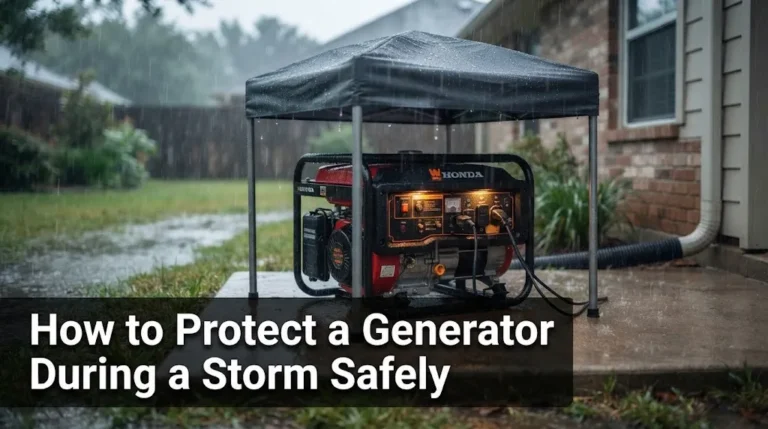
A dry spot under an open-sided canopy or a raised, level platform can satisfy these conditions. A garage, shed, basement, crawlspace, or enclosed porch cannot.
Why Rain Changes the Electrical Risk, Not the CO Risk
The rain-specific problem is electrical shock. Generators pose a shock and electrocution risk in wet conditions, and that risk comes from water reaching the generator’s electrical components, outlets, and connections while the unit is running. This is why the placement itself matters: water should not be able to pool under the generator or blow directly onto the control panel.
The Maine Emergency Management Agency offers a useful rule for this exact situation: if you must use a generator when it is wet outside, protect it from moisture without operating it indoors or near openings to an occupied building, and operate it under an open, canopy-like structure on a dry surface where water cannot reach it or puddle or drain under it.
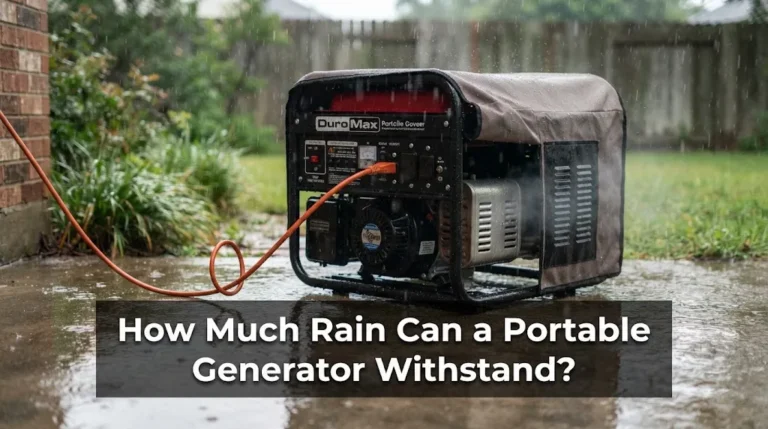
Notice what that rule does not say. It does not say to wrap the generator, box it in, or cover it with a tarp. A cover that restricts airflow creates a different problem: heat buildup. Generators are designed and tested with free airflow around the unit. Trapping heat at the top of the generator can damage the inverter or control circuitry, and the damage may not show up until you need the generator most.
Warning
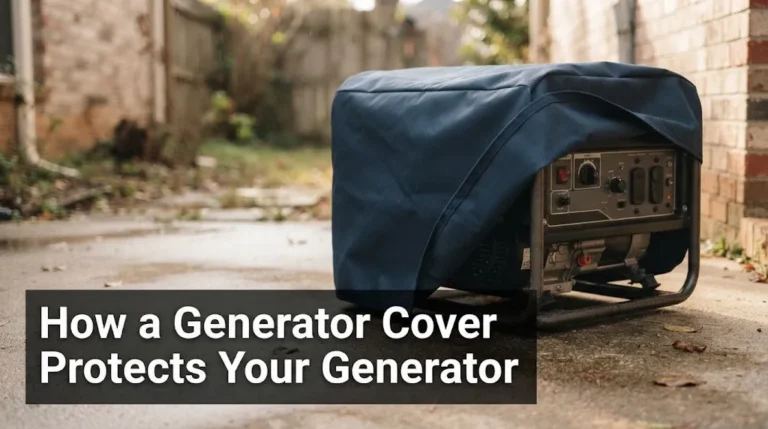
A tarp, plastic storage tote, or any cover that encloses the generator or blocks airflow can cause overheating and can also trap carbon monoxide around the unit. Do not use a cover that rests on the generator or extends down over the vents and exhaust. An open canopy above the unit is not the same thing as an enclosing cover.
What a Safe Rain Cover Looks Like (and What It Does Not)
The distinction that matters is between a roof and an enclosure. A safe rain setup gives the generator overhead protection while leaving the sides open so heat and exhaust can escape.
A safe cover:
- Sits above the generator without touching it.
- Has open sides on all or most of the unit.
- Does not block the exhaust outlet.
- Does not cover the air intake or cooling vents.
- Allows you to see the control panel and reach the outlets without reaching under a wet cover.
An unsafe cover:
- Rests on top of the generator.
- Wraps around the sides.
- Covers the exhaust or vents.
- Creates a small, enclosed space around the unit.
- Requires you to lift or move it while the generator is running.
Some generator manufacturers sell weatherproof covers or tents designed for running the unit in rain. The CPSC notes that manufacturer instructions may include use of an NFPA-rated non-combustible generator tent, or may advise waiting until rain or snow passes. The key word is rated. A generic tarp or a plastic box is not the same thing as a cover designed and tested for a running generator.
If your manual says to wait until the rain stops, that instruction overrides any improvised cover idea. Manufacturer instructions are the starting point, not a suggestion.
How to Set Up the Placement Before the Rain Starts
The best time to solve the placement problem is before the storm arrives. Moving a generator in the dark, in standing water, or in heavy rain increases both the electrical risk and the chance of a poor setup.
A practical sequence:
- Pick the spot in dry conditions. Walk the exterior of your home and identify a location at least 20 feet from the house, away from doors, windows, and vents, with a surface that drains. Check where the exhaust will point.
- Elevate the generator if the ground can flood. A dry, raised surface keeps water from reaching the base of the unit. The surface needs to be stable enough that the generator will not shift or tip.
- Set up the cover before starting the generator. If you are using a canopy or a rated generator tent, position it first. Do not start the generator and then try to build a shelter around it.
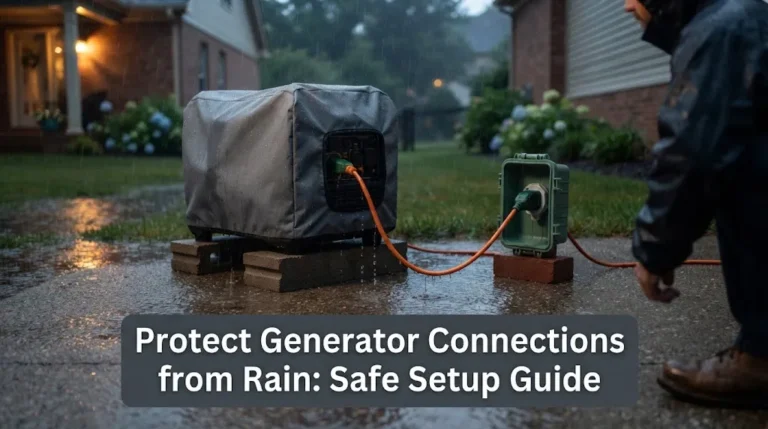
- Connect cords before the rain gets heavy. Use heavy-duty, outdoor-rated extension cords with all three prongs intact. Keep connections off the ground and out of puddles. Dry your hands before touching the generator.
- Start the generator and confirm exhaust direction. Check that exhaust is flowing away from the house and not toward any opening. If the wind shifts, monitor the direction.
- Keep the area clear. Do not stack fuel cans, tools, or other objects near the generator. Keep children and pets away from the setup.
If the rain becomes a downpour with standing water or flooding, the balance of risk may change. Water rising around the generator is an electrocution hazard. In that situation, shutting down the generator and waiting for the water to recede may be the safer choice.
The Placement Mistake That Kills: Garage, Shed, or Carport “Just for the Rain”
The most dangerous placement decision is the one made for convenience: moving the generator into the garage, a shed, or under a carport because it is raining and the generator is getting wet. This is the scenario that CPSC warnings target directly. Portable generators must never be operated inside a home, garage, basement, crawlspace, shed, or other enclosed space, and opening doors or windows does not provide enough ventilation.
A carport is not enclosed in the same way, but the CPSC specifically lists it as too close to the home: “Don’t operate a generator on a porch or in a carport. It’s too close to the home and puts your family at risk.” The exhaust can enter the house through doors, windows, or vents even if the generator is technically outdoors.
The rain makes this mistake feel reasonable. The generator is expensive, it is getting wet, and the garage is right there. But the CO risk from a generator in a garage is not a moderate risk that can be managed with a cracked door. It is a risk of rapid incapacitation and death. The placement rule does not have a rain exception.
Key Insight
The rain does not create a new placement rule. It adds a second hazard to the same placement decision. The generator still needs to be outside, away from the house, and open to airflow. The rain only changes how carefully you need to protect the electrical components from water—without enclosing the unit.
What to Do If the Generator Gets Wet While Running
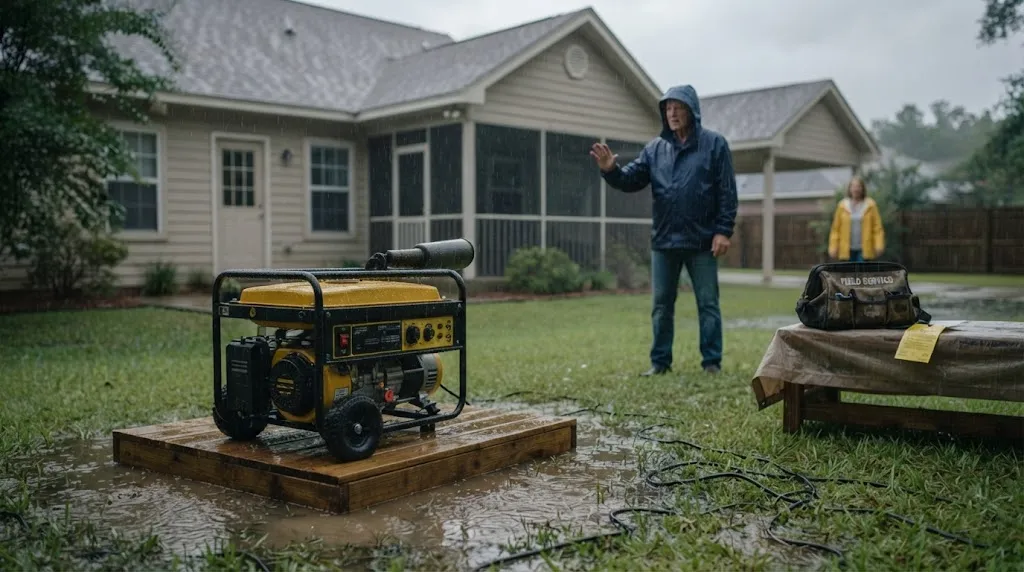
If water reaches the generator while it is running, the first action is to stop touching it. Do not reach for the control panel, outlets, or cords with wet hands or while standing in water. If it is safe to do so, shut the generator down using the switch or remote stop, and do not restart it until the unit and the area around it are dry.
A generator that has been rained on while running is not automatically ruined, but the electrical components and connections should be inspected before the next use. If the unit was partially submerged or water entered the housing, do not start it. Have it checked by a qualified technician. The cost of an inspection is small compared with the cost of a shock or a fire.
For the next outage, use the experience to improve the setup. A dedicated dry spot, a rated cover, and a shorter distance between the generator and the house’s inlet (while still maintaining the 20-foot separation) can make the rain setup more manageable.
Frequently Asked Questions
Can I run a generator in the rain if it is under a tarp?
No. A tarp that covers the generator or blocks airflow can cause overheating and can trap exhaust around the unit. Use only an open canopy or a manufacturer-rated generator tent that leaves the sides open and does not block vents or the exhaust. If you cannot set up an open cover safely, wait for the rain to pass.
Is it safe to run a generator on a covered porch in the rain?
No. The CPSC specifically warns against operating a generator on a porch or in a carport because it is too close to the home. Exhaust can enter the house through doors, windows, and vents. Keep the generator at least 20 feet away, even if that means it gets wet.
What if my generator manual says not to run it in rain?
Follow the manual. The CPSC notes that manufacturer instructions may advise waiting until rain or snow passes, or may specify an NFPA-rated non-combustible generator tent. The manual is the authority for your specific unit. Do not improvise a cover that the manufacturer has not approved for running use.
Can I put the generator in my garage if I leave the door open?
No. Opening a garage door does not provide enough ventilation to prevent lethal carbon monoxide buildup. The CPSC states that generators must never be operated inside a garage, and opening doors or windows will not make it safe.
Will rain damage my generator if it runs uncovered?
Rain can pose an electrical shock risk and may damage components over time, which is why an open canopy on a dry surface is preferred. However, the greater immediate danger is moving the generator indoors or into an enclosed space to keep it dry. A wet generator on a safe outdoor surface is less dangerous than a dry generator in a garage.
How far should the generator be from the house in rain?
At least 20 feet, according to the CPSC, with the exhaust pointed away from the home and any other building someone could enter. Some state agencies recommend 15 feet or more, but 20 feet provides a safer margin. Do not reduce the distance because of rain.
Conclusion
The safe placement for a generator in rain is the same placement that is safe in dry weather: outdoors, at least 20 feet from the house, exhaust pointed away, and open to airflow. Rain adds an electrical hazard, but it does not justify moving the generator into a garage, shed, or carport. Use an open canopy or a rated generator tent if you need overhead protection, and follow the manufacturer’s instructions if they say to wait. The inconvenience of a wet generator is temporary. The consequences of carbon monoxide in an enclosed space are not.

Hi, I’m Michael Turner. I own a generator workshop in the United States and founded HomeGeneratorBlog to share practical, hands-on guidance about generator installation, maintenance, troubleshooting, safety, and backup power solutions. My goal is to help homeowners make smarter, more confident decisions through clear and reliable information