Keep Rainwater Out of Generator Outlets — Safe Setup Guide
Quick Answer
Keep rainwater out of generator outlets by using a purpose-built running cover that shields the panel without blocking airflow, positioning the generator on elevated dry ground, and creating drip loops in all cords so water cannot travel toward the receptacle. Never run a portable generator in direct rain without these protections, and never drape a tarp over a running unit.
Why Generator Outlets Are Vulnerable in Rain
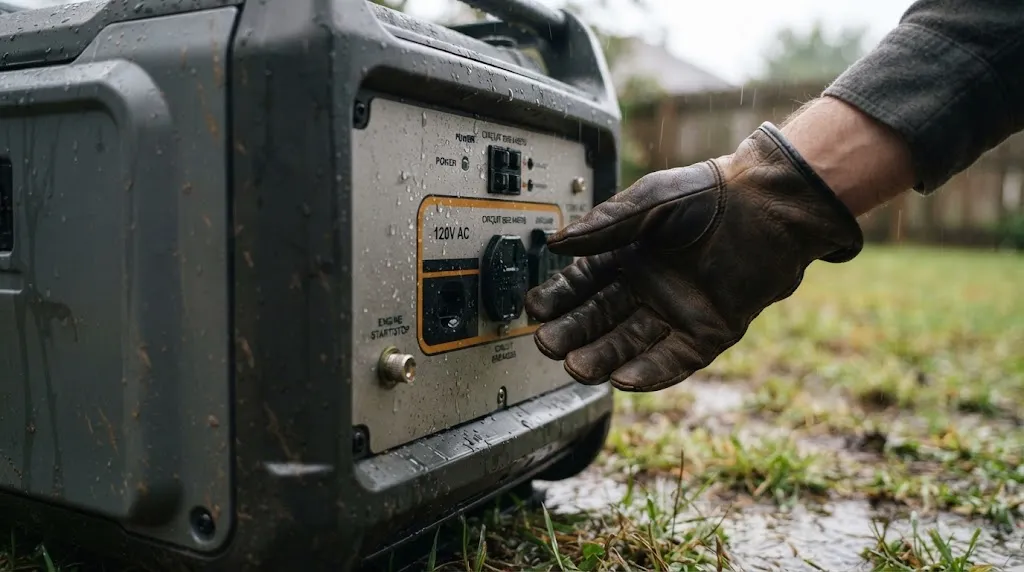
A portable generator’s outlets and control panel are exposed electrical components. When rainwater reaches them, it can bridge the contacts inside the receptacle or pool around the plug connection. The result is not just a tripped breaker. It is a shock hazard for anyone standing on wet ground and reaching for a cord.
Water damage extends beyond immediate safety. Moisture that enters the outlet housing corrodes terminals over time. In inverter generators, where sensitive electronics sit close to the power panel, a small amount of water intrusion can lead to costly circuit board failure .
Manufacturers generally do not rate portable generators for wet-weather operation. The manual for at least one common Ryobi model explicitly prohibits use in wet conditions . This means the responsibility for keeping outlets dry falls on the operator, not on the machine’s design.
The Right Way to Shield the Outlet Area
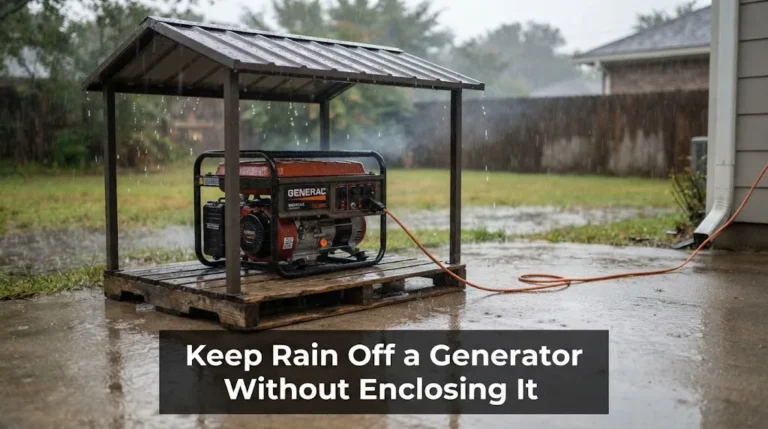
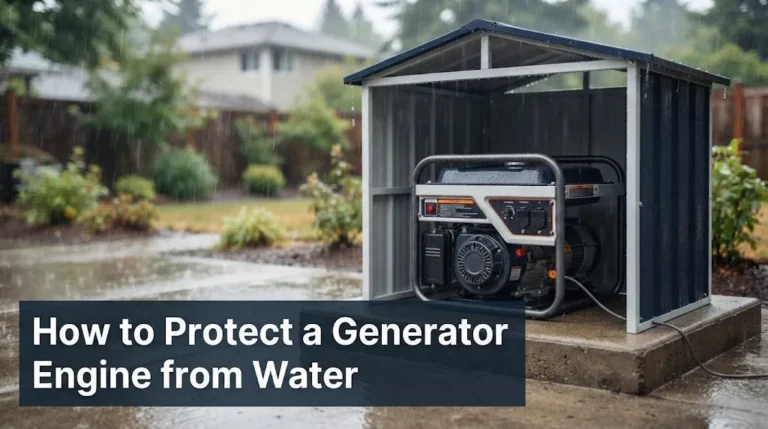
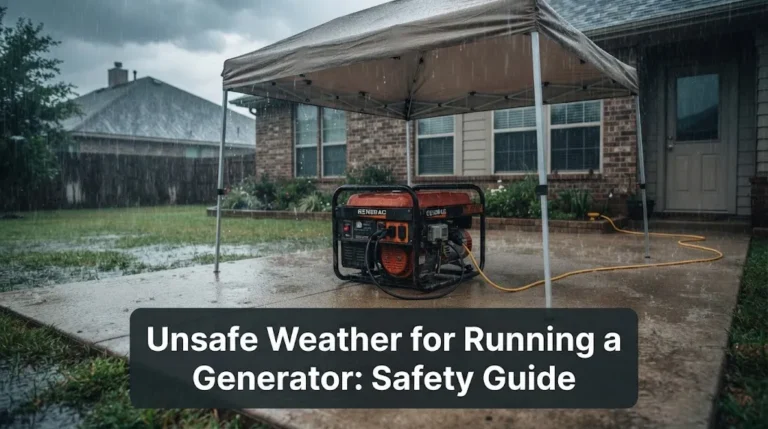
A generator running cover is the only cover type designed to be used while the unit operates. These covers use a rigid frame or canopy structure that sits above the generator, shedding rain away from the panel while leaving the sides open for ventilation and exhaust clearance .
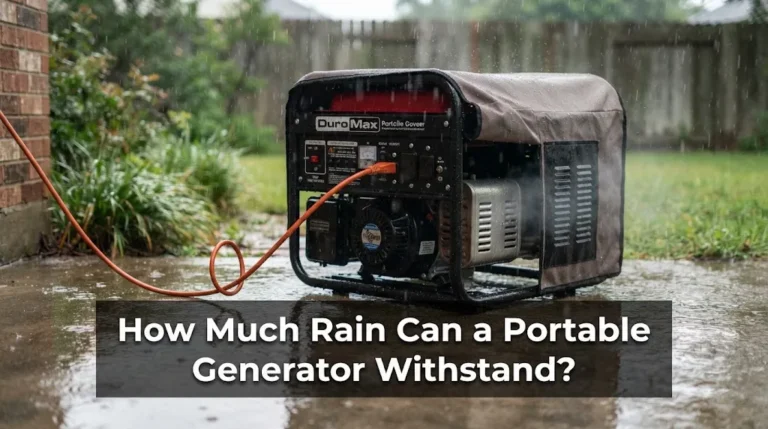
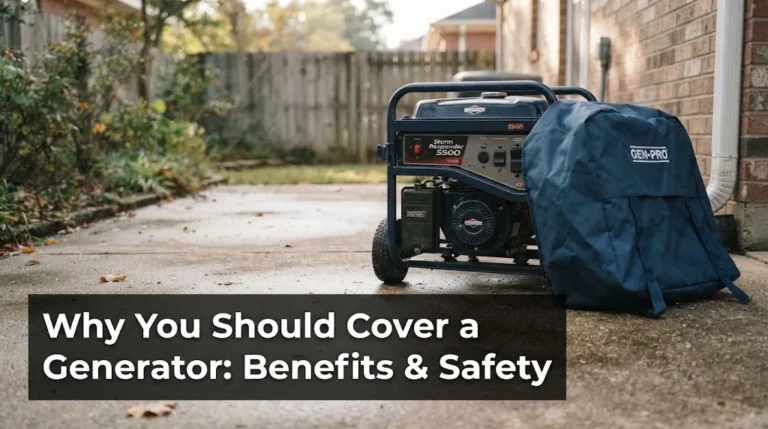
Fabric-only covers sold as “generator covers” are for storage, not operation. They trap heat against the muffler and block the airflow the engine needs. A tarp is worse: it creates a fire risk and can funnel exhaust fumes back toward the unit .
Warning
Never operate a portable generator inside a garage, shed, or any enclosed space, even with the door open. Carbon monoxide builds up rapidly and has killed people during storm-related outages. The cover protects the outlets; it does not make an indoor space safe.
Positioning the Generator So Water Cannot Reach the Outlets
The ground beneath and around the generator matters as much as the cover above it. Choose a spot that sits higher than the surrounding yard, driveway, or patio. Low spots collect runoff, and a generator sitting in a puddle defeats every other protection measure.
Elevate the unit on concrete blocks, a stable wooden platform, or a raised pad. The goal is to keep the bottom of the generator and the lowest cord connections above any standing water. This also reduces splash reaching the outlet panel from below.
Aim the exhaust away from the house, and keep the generator at least 20 feet from doors, windows, and vents . Rain often arrives with shifting wind. A position that was safe an hour ago can send exhaust toward an open window when the breeze changes.
Cord Connections: The Overlooked Water Path
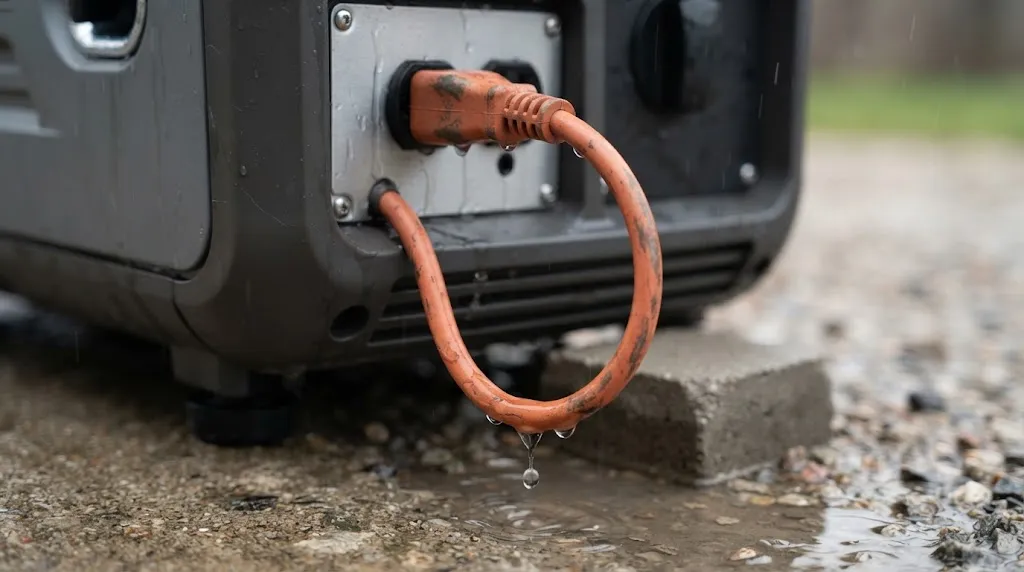
Most guides focus on the generator itself, but the cord connection at the outlet is where rainwater often finds its way in. A plug seated in a receptacle creates a small gap. Water running down the cord can enter that gap and reach the live contacts.
Build a drip loop at every connection. Let the cord dip below the outlet before running upward or outward. Water traveling down the cord will gather at the low point and drip off rather than continuing into the receptacle .
Use only outdoor-rated extension cords with undamaged jackets. Keep the connection point itself off the ground, resting on a dry block or hanging clear of puddled areas. If a cord end feels wet, do not plug it in. Power down, disconnect, and dry the components fully before restarting.
Tip
If your generator has worn or missing outlet covers, replace them before storm season. OEM replacement covers are inexpensive and designed to fit the specific receptacle, restoring the barrier that keeps rain and debris out when the outlet is not in use .
What to Do If the Outlets Get Wet
If rain reaches the panel or a cord connection despite your precautions, stop using the generator. Shut it down, disconnect all cords, and do not restart until the affected components are fully dry.
Do not wipe the panel with a damp cloth and call it dry. Water can remain inside the receptacle housing or behind the faceplate. Allow airflow through the area for several hours. If the generator was significantly exposed or sat in water, have it inspected before the next use. Moisture inside the alternator or control circuitry can cause failures that are not immediately obvious.
For a generator that was running when water contacted the outlets, treat the event as a near-miss. Check the cord ends for corrosion, inspect the receptacle for discoloration or a burning smell, and test the GFCI function if the unit has one. Any sign of damage means the outlet assembly should be replaced rather than trusted.
When a Storm Is Too Severe for Any Cover
Running covers handle steady rain and moderate wind. They are not designed for driving sideways rain, flying debris, or gusts that can lift the canopy. In those conditions, the safest choice is to shut the generator down until the worst passes.
This is a hard tradeoff during an outage. But a generator that tips, floods, or arcs in a severe storm creates a worse problem than a few hours without power. If you must keep critical loads running, plan for a weather window rather than assuming the cover makes the unit invincible.
Frequently Asked Questions
Can I just put a plastic storage bin over the generator to keep rain off the outlets?
No. Plastic bins and similar improvised covers trap heat against the engine and exhaust, creating a fire risk. They also restrict airflow, which can cause overheating. Use a cover designed for running operation, or do not run the generator in the rain.
Are GFCI outlets on a generator safe to use in wet weather?
GFCI protection reduces shock risk but does not make a wet outlet safe. The outlet still must be shielded from rainwater. GFCI is a backup layer, not a substitute for keeping water out of the receptacle.
How do I know if my generator’s outlet cover is damaged enough to replace?
Check for cracks, missing spring tension on flip covers, or a cover that no longer seats flush against the panel. If the cover flaps loosely or lets daylight through when closed, it will let rain in. Replacement covers are specific to the outlet type and are inexpensive.
Can rainwater get into the generator through the exhaust or air intake?
Yes, and that is a separate problem from the outlets. Rain entering the air intake can reach the cylinder; water in the fuel system stops the engine from running properly. A running cover that shields the top of the unit while leaving the exhaust clear addresses both the outlet and intake risks.
What should I do if the generator was running and the outlets got splashed?
Shut it down immediately. Disconnect cords and do not restart until the outlet area is fully dry. Inspect for corrosion or discoloration before the next use. If the unit sat in water or took a direct spray into the panel, have it checked by a service technician.
Is it safe to run a generator on a covered porch or under a carport?
No. A covered porch or carport is still an enclosed or semi-enclosed space where carbon monoxide can accumulate. Generators must run outdoors in a location with open airflow, away from walls, doors, and windows, even if the area stays dry.
Conclusion
Keeping rainwater out of generator outlets comes down to three layers: a cover that shields the panel without smothering the engine, ground positioning that keeps the unit above standing water, and cord connections that shed water away from the receptacle. No single measure is enough on its own.
The most common mistakes are the ones that feel like shortcuts: a tarp thrown over the unit, a generator moved into the garage, a cord plugged in without a drip loop. Each of these turns a manageable rain problem into a safety emergency. Set up the right cover and connections before the storm arrives, and shut the unit down if conditions exceed what the cover can handle.

Hi, I’m Michael Turner. I own a generator workshop in the United States and founded HomeGeneratorBlog to share practical, hands-on guidance about generator installation, maintenance, troubleshooting, safety, and backup power solutions. My goal is to help homeowners make smarter, more confident decisions through clear and reliable information