Portable Generator Frequency: What’s Normal (and What Isn’t)
Quick answer: A healthy portable generator should output 60 Hz in the U.S. (50 Hz in most other countries), holding steady within about 59–61 Hz under normal load. Readings that drift outside that band, or bounce around while a load is running, usually point to an overload, a dirty air filter, or a governor that needs adjusting — not a dead generator.
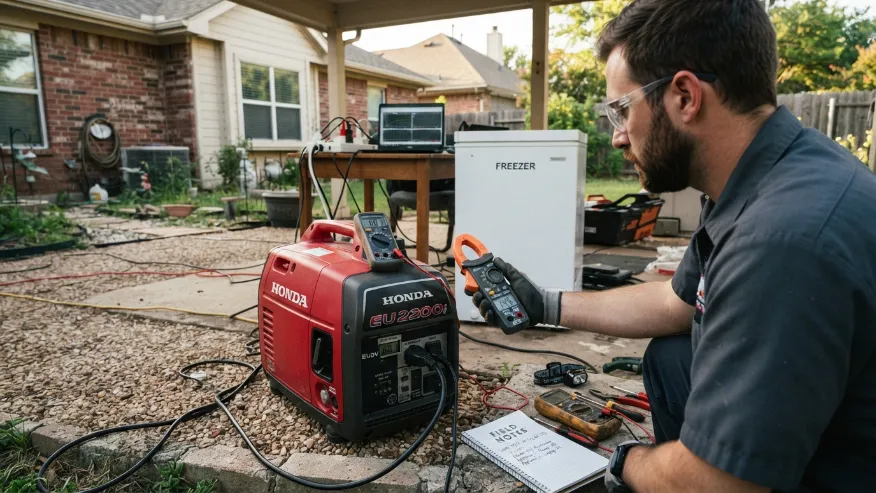
The first time I hooked a clamp meter with a frequency function up to a 7,500-watt dual-fuel unit during a five-day outage, the number I didn’t expect was how much frequency moved the second I switched on the chest freezer’s compressor. Voltage barely blinked. Frequency dipped almost a full hertz. That’s normal — but it’s also exactly the kind of thing that makes people think their generator is failing when it isn’t.
What Generator Frequency Actually Means
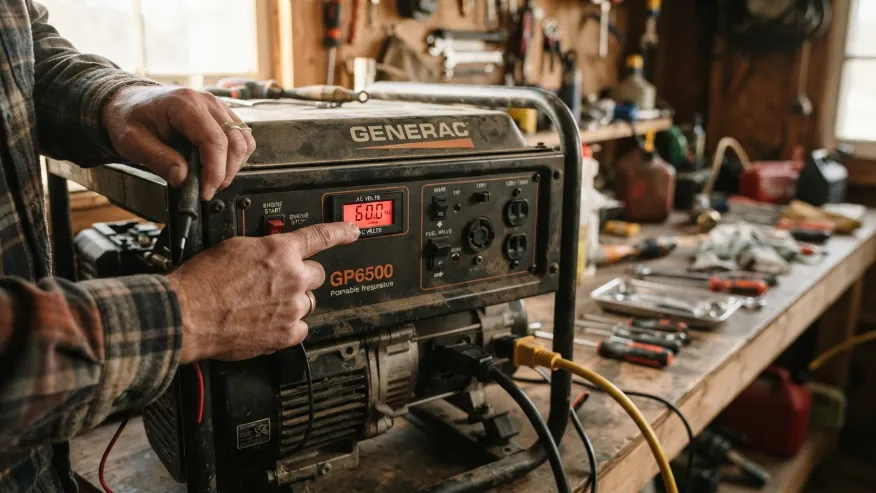
Frequency is how many times per second the electrical current switches direction — measured in hertz (Hz). In the U.S., the grid and every appliance in your house is built around 60 Hz. Most of Europe, Asia, and Africa run on 50 Hz instead.
Unlike voltage, which a generator’s AVR (automatic voltage regulator) can fine-tune electronically, frequency on a standard portable generator is tied directly to how fast the engine is spinning. Change the engine speed, and you change the frequency — there’s no separate dial for it.
Why 60 Hz? The RPM-to-Frequency Math
Frequency on a conventional (non-inverter) generator is set by engine RPM and the number of magnetic poles in the alternator, using this relationship:
Frequency (Hz) = (RPM × Number of poles) ÷ 120
Here’s what that looks like in practice: a standard 2-pole portable generator has to spin at exactly 3,600 RPM to produce 60 Hz. A 4-pole unit (common on larger, quieter machines) only needs to turn at 1,800 RPM for the same 60 Hz output. For 50 Hz markets, those same designs run at 3,000 RPM and 1,500 RPM respectively.
That’s why frequency and engine speed are locked together — you can’t touch one without moving the other, which matters once you start troubleshooting.
Diagnosing Frequency Problems: Symptom, Cause, Fix
| Symptom | Likely Cause | Fix |
|---|---|---|
| Frequency drops sharply when a device turns on | Momentary overload from motor starting surge | Normal within 1–2 seconds; if it doesn’t recover, reduce total connected load |
| Frequency runs consistently low (below 58 Hz) under steady load | Generator is overloaded past its rated capacity | Unplug items until load drops to 80% or less of rated wattage |
| Frequency high or unstable even with light load | Dirty air filter or clogged carburetor restricting airflow | Clean or replace air filter; clean carburetor jets |
| Frequency “hunts” — climbs and falls in a slow cycle | Governor calibration is off or governor spring/linkage worn | Adjust governor per manual, or replace worn linkage |
| Frequency erratic, engine surges audibly | Stale fuel, water in the tank, or worn spark plug | Drain and replace fuel, clean fuel system, swap spark plug |
| Frequency reads normal, but sensitive electronics still glitch | High THD (dirty power waveform) rather than a frequency issue | Switch to an inverter generator for that equipment |
Overload: The Most Common Cause, by Far
Most “frequency problem” calls I’ve walked people through turn out to be simple overload. Every generator has a running-watts rating and a much lower continuous-duty comfort zone — usually around 80% of that number. Push past it, and the engine can’t maintain 3,600 RPM under the extra electrical drag, so frequency sags along with it.
The fix isn’t mechanical. Add up your connected wattage, including the starting surge of anything with a motor or compressor, and trim the load.
Governor and Engine-Condition Causes
If frequency is off even with a light, stable load, the problem usually lives in the engine’s ability to hold a steady speed — not the electrical side at all.
A clogged air filter starves the engine of the airflow it needs to maintain RPM, which shows up as high or unstable frequency. A dirty carburetor or old fuel does the same thing by disrupting combustion. And a governor that’s out of calibration — the component responsible for automatically adjusting throttle to hold RPM steady as load changes — will cause frequency to “hunt,” slowly climbing and falling instead of settling.
None of these are exotic repairs. Basic maintenance resolves the majority of them.
How to Actually Measure It
A multimeter with a frequency (Hz) function or a dedicated clamp meter is the only reliable way to check this yourself — don’t guess from how the engine sounds. Test with no load first to confirm baseline, then again with your typical outage load connected. A clamp meter with a Hz reading costs less than most people spend on gas for one outage, and it turns “is my generator okay?” into a five-second answer instead of a guessing game.
Inverter Generators and Why THD Matters More Than Raw Hz
This is the part most articles on this topic skip entirely. A conventional portable generator can read a perfectly normal 60 Hz on a meter and still produce a rougher underlying waveform — measured as Total Harmonic Distortion (THD). Inverter generators convert power electronically instead of relying purely on raw engine RPM, which keeps both frequency and waveform shape far more stable, typically under 6% THD.
If you’re running laptops, CPAP machines, smart TVs, or anything with a sensitive switching power supply, that distortion matters more than the frequency number alone. A quiet inverter generator is the more forgiving choice for electronics-heavy households, even though it costs more upfront than a comparable open-frame unit.
50 Hz vs. 60 Hz: What Happens If They’re Mismatched
If you’ve bought a generator overseas, or you’re running 50 Hz equipment on a U.S. 60 Hz unit, know that this isn’t a simple settings tweak. Motors designed for 50 Hz will run roughly 20% faster on 60 Hz power, which shortens their lifespan and can overheat transformers. It’s a hardware mismatch, not a fix-it-in-software problem — don’t mix the two without a frequency converter built for that purpose.
When to Stop Troubleshooting and Call a Pro
DIY diagnosis covers filters, fuel, spark plugs, and basic governor adjustment. Beyond that, you’re into internal alternator and winding issues that need a small-engine technician. Also stop and call someone if you notice burning smells, visible arcing, or the generator running hot with no clear load explanation — those are electrical fire and shock risks, not tuning problems. Whatever the cause, never troubleshoot or run a generator indoors or in a garage; carbon monoxide from generator exhaust can be fatal within minutes, according to the U.S. Consumer Product Safety Commission.
Preventing Frequency Problems Before They Start
- Never run continuous load above 80% of rated wattage
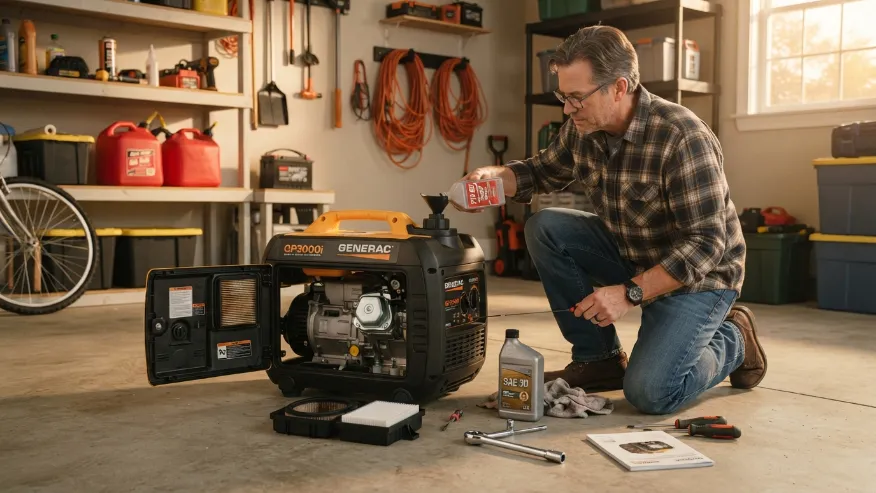
- Replace or clean the air filter every 50 hours of use, more often in dusty conditions
- Use fresh, ethanol-free fuel with a stabilizer for stored generators
- Have the governor checked annually if the unit sees regular heavy use
- Start big-draw appliances one at a time instead of all at once
Conclusion
Frequency drift almost always traces back to load, airflow, or fuel — not a failing generator. Check those three before you assume the worst. Test with a meter instead of guessing from sound, and keep your generator under 80% load and you’ll rarely see a real problem. As I tell people every hurricane season: the generator usually isn’t lying to you, it’s just telling you it’s working too hard.
If your generator’s frequency keeps drifting under load and you don’t already own a way to check it, a clamp meter with a Hz reading pays for itself the first time it saves you a needless repair call.
Is 59–61 Hz normal for a portable generator?
Yes. Brief dips or rises within that range, especially when a motor-driven appliance starts up, are normal. Sustained readings outside 58–62 Hz under steady load point to an overload or engine issue worth investigating.
Can low generator frequency damage my appliances?
It can, especially for transformers and motors, which overheat when frequency runs consistently low. Sensitive electronics are more affected by voltage spikes and high THD than by frequency alone, but sustained low frequency isn’t something to ignore.
Why does my generator’s frequency drop when I plug something in?
That’s the engine momentarily struggling to supply the extra load, particularly the starting surge of motors and compressors. It should recover within a second or two; if it doesn’t, you’re likely near or over the generator’s rated capacity.
Do inverter generators have more stable frequency than conventional ones?
Generally, yes. Inverter generators regulate output electronically rather than relying purely on raw engine speed, which keeps both frequency and waveform quality (THD) more consistent under changing loads.
Can I adjust generator frequency myself?
On a conventional generator, frequency is set by engine RPM through the governor, so a basic governor adjustment per the owner’s manual is usually within reach for a comfortable DIYer. Anything beyond that — internal alternator issues — should go to a small-engine technician.
Hi, I’m Michael Turner. I own a generator workshop in the United States and founded HomeGeneratorBlog to share practical, hands-on guidance about generator installation, maintenance, troubleshooting, safety, and backup power solutions. My goal is to help homeowners make smarter, more confident decisions through clear and reliable information