Portable Generator Disadvantages: What to Know First
Quick answer: Portable generators are loud, need manual starting and refueling every few hours, can’t power a whole house, and produce deadly carbon monoxide if used too close to the home. They’re also exposed to weather, vulnerable to theft, and can damage sensitive electronics with dirty power — trade-offs worth weighing before you buy.
A portable generator will get your fridge and a few lamps through a blackout. It won’t do it quietly, automatically, or without some babysitting. Before you spend $600–$2,000, it helps to know exactly where these machines fall short — because most of the disappointment I hear about from homeowners comes from expectations, not defects.
| Disadvantage | Why It Matters | How Serious |
|---|---|---|
| Noise (60–90 dBA) | Disturbs neighbors, can violate local noise ordinances | Moderate |
| Carbon monoxide emissions | Can be fatal in minutes if run too close to the house | Severe |
| Manual start/refuel | No auto power-on; tanks need topping off every 6–10 hours | Moderate |
| Limited wattage | Can’t run a whole house or central AC | Moderate |
| Extension cord hazards | Tripping, cord damage, fire risk if cords are undersized | Moderate |
| Weather exposure | Runs outdoors, unprotected from rain and snow | Low-Moderate |
| Dirty power (high THD) | Non-inverter models can damage sensitive electronics | Low-Moderate |
| Theft risk | Sits outside unattended, easy target during outages | Low |
It’s Loud — Louder Than You’re Picturing
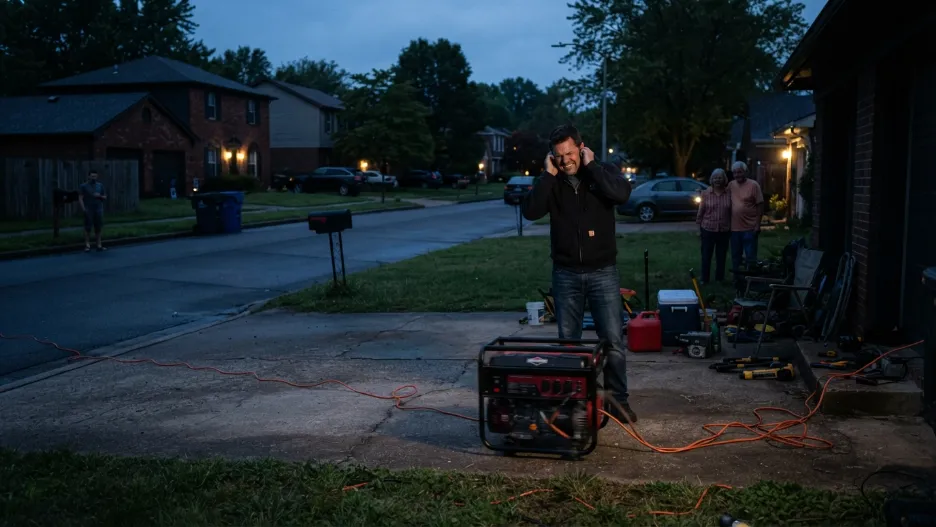
Standard open-frame portable generators run 60 to 90 decibels at full load — somewhere between a vacuum cleaner and a gas-powered lawn mower, and it doesn’t stop for eight hours straight. Inverter models are quieter, often in the 52–60 dBA range, but “quiet” is relative.
Run one in a tight neighborhood during a multi-day outage and you’ll hear about it — from your neighbors, and possibly from a noise ordinance. Some HOAs and municipalities cap allowable decibel levels or restrict generator hours entirely, so it’s worth a five-minute check of local rules before you’re mid-outage and stuck.
Carbon Monoxide Is the Real Danger
Safety note: Never run a portable generator inside a garage, basement, shed, or within 20 feet of doors, windows, or vents — even with them open. CO builds to lethal concentrations in minutes and can’t be smelled or seen.
This is the disadvantage that actually kills people. The CDC’s generator safety fact sheet is blunt about it: CO from a generator is colorless, odorless, and can incapacitate someone before they notice symptoms. The Consumer Product Safety Commission puts the annual U.S. death toll from generator-related CO poisoning at around 100 people a year.
Newer models with a built-in CO shutoff sensor cut that risk dramatically — CPSC-cited testing suggests compliant units could prevent nearly all of these deaths — but plenty of older and budget units on the market still don’t have one. That’s a real design gap, not just a user-error problem.
Pair any generator with a battery-backed CO detector inside the home. It’s cheap insurance against the one failure mode that can’t be undone.
You’ll Be Refueling It Constantly
A mid-size portable generator burns through a tank in 6 to 10 hours under moderate load. During a five-day outage, that means waking up at 2 a.m. to top off the tank, in the rain, in the dark, possibly in freezing temperatures. Gasoline also degrades in storage — untreated fuel left in the tank or carburetor for months is one of the top reasons generators won’t start when finally needed.
Dual-fuel and propane-capable units ease this somewhat, since propane stores indefinitely and doesn’t gum up a carburetor. But you’re still trading one hassle (refueling frequency) for another (bulkier, heavier propane tanks to store and haul).
It Can’t Power Your Whole House
Most portable generators put out between 3,000 and 10,000 running watts. That’s enough for a fridge, some lights, a window AC unit, and a phone charger or two — not a central HVAC system, an electric range, and a well pump running simultaneously. Add up your must-run appliances’ running and starting watts before you buy; undersizing is the single most common regret I hear about.
If your goal is whole-home coverage without juggling extension cords and prioritizing circuits, that’s really a standby generator conversation, not a portable one.
Extension Cords Create Their Own Hazards
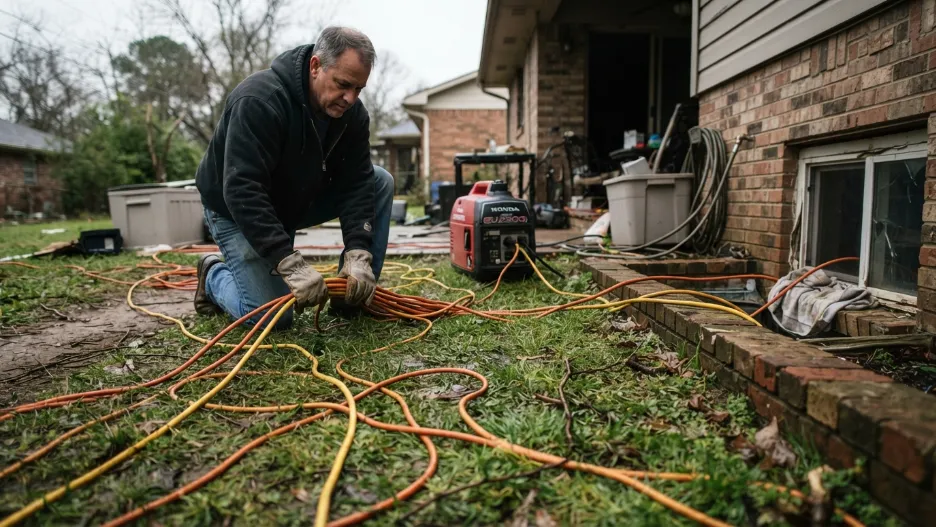
Unless you’ve had a transfer switch or interlock kit professionally installed, a portable generator powers your home through extension cords run from outside to whatever needs power. That means cords across doorways, through cracked windows, or snaking through the yard — tripping hazards, and a real fire risk if the cord isn’t rated for the load it’s carrying.
Never use a “suicide cord” (a cord with male plugs on both ends) to backfeed a house through an outlet — it’s illegal in most areas and can electrocute utility workers. For anything beyond a few lamps and a fridge, invest in a properly rated outdoor extension cord and, ideally, a licensed electrician to install a transfer switch.
Dirty Power Can Damage Electronics
This is the disadvantage most buying guides skip. Standard open-frame generators produce power with higher total harmonic distortion (THD) — meaning the electrical waveform isn’t as clean as what comes from the grid. For a space heater or an old refrigerator, that’s irrelevant. For a laptop, a modern smart TV, a CPAP machine, or anything with sensitive circuit boards, rough power can cause glitches or, over repeated use, shortened equipment lifespan.
Inverter generators solve this — their THD is typically under 3%, comparable to utility power — but they cost more per watt than open-frame models and often top out at lower wattages.
It Sits Outside, Exposed to Weather and Theft
A portable generator has to run outdoors, which means it’s exposed to rain, snow, and wind during the exact weather event that knocked your power out in the first place. Generator tents and covers help, but they’re one more thing to buy and manage. And because it’s sitting outside, unattended, during a widespread outage — when everyone’s stressed and some people are desperate — theft is a real, if smaller, risk. A cable lock through the frame is a cheap deterrent.
Common Buyer Mistakes to Avoid
- Buying on price alone. The cheapest unit often lacks a CO shutoff sensor and has a shorter engine life.
- Skipping the wattage math. Add up running watts plus the single highest starting-watt appliance — most people size for running watts only, then wonder why the AC won’t start.
- Never testing it before the outage. Start it monthly and run it under load for 20–30 minutes; stale fuel and dead batteries are the top reasons generators fail exactly when needed.
- Storing fuel without a stabilizer. Gasoline left untreated for more than a month starts breaking down and can gum up the carburetor.
When a Portable Generator Isn’t the Right Fit
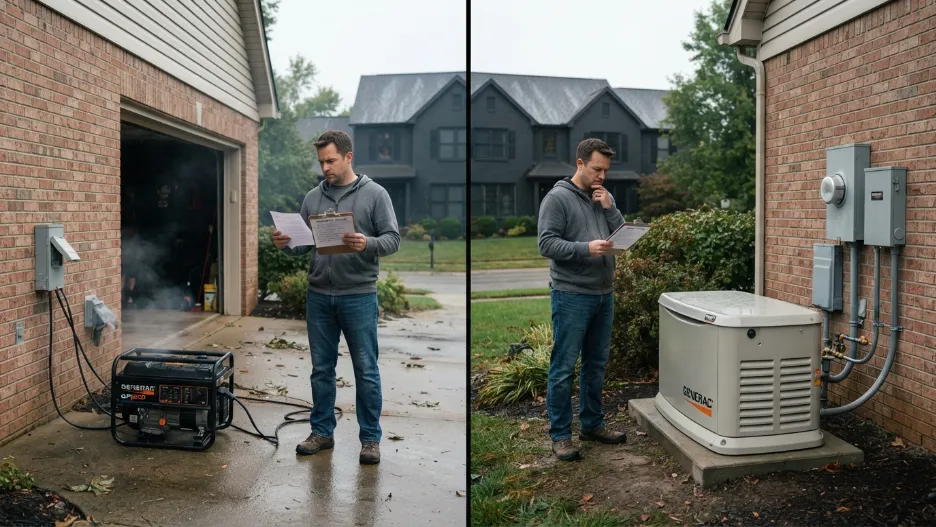
If you live somewhere with frequent, multi-day outages, need to run medical equipment continuously, or simply don’t want to be outside in a storm refueling a machine every eight hours, a standby (whole-house) generator with an automatic transfer switch solves nearly every disadvantage on this list — at a much higher upfront cost, professional installation, and a permit in most jurisdictions.
Conclusion
None of these downsides make a portable generator a bad purchase — they make it a tool with real limits. Buy for your actual wattage needs, never skip the CO precautions, and test the thing before you’re standing in the dark depending on it. That’s the difference between a generator that saves your week and one that just sits in the garage. — Michael Turner
If you’re shopping with these disadvantages in mind, look for a dual-fuel model with a built-in CO shutoff sensor — it solves the two biggest complaints (fuel flexibility and CO risk) in one unit without a huge price jump over a basic gasoline-only model.
FAQ
What is the biggest disadvantage of a portable generator?
Carbon monoxide poisoning risk is the most serious disadvantage, since it can be fatal within minutes if the generator is run indoors or too close to the home. Noise and limited wattage are the most common everyday annoyances.
Can a portable generator run a whole house?
Generally no. Most portable units produce 3,000–10,000 watts, enough for essential circuits like a fridge, some lights, and a window AC — not central heating/cooling, an electric range, and a well pump at the same time.
Is it safe to run a portable generator in the rain?
Not without protection. Water and electrical components don’t mix; use a generator tent or purpose-built cover rated for ventilation, and never run it in standing water or directly under an open sky in heavy rain.
How often do you need to refuel a portable generator?
Most mid-size units need refueling every 6 to 10 hours under moderate load. Propane and dual-fuel models can stretch this out somewhat, since propane tanks store longer without degrading.
Do portable generators damage electronics?
Standard open-frame generators can, because their power has higher harmonic distortion than utility power. Sensitive electronics like laptops or CPAP machines are safer run on an inverter generator, which produces cleaner power closer to grid quality.

Hi, I’m Michael Turner. I own a generator workshop in the United States and founded HomeGeneratorBlog to share practical, hands-on guidance about generator installation, maintenance, troubleshooting, safety, and backup power solutions. My goal is to help homeowners make smarter, more confident decisions through clear and reliable information