Tri-Fuel Portable Generator: Is It Worth the Extra Cost?
Quick answer: A tri-fuel portable generator runs on gasoline, propane, or natural gas — you pick whichever is available during an outage. It costs $300–$800 more than a gasoline-only model, but if you have a natural gas line or want backup fuel options, that premium usually pays for itself the first time gas stations run dry.
Most people typing “tri-fuel portable generator” into Google aren’t shopping for a specific model yet. They’re trying to figure out if the extra cost is worth it, or if a regular dual-fuel unit does the same job for less. I’ve run both, and the honest answer depends entirely on what fuel you already have access to.
What Is a Tri-Fuel Portable Generator (and How Does It Work)?
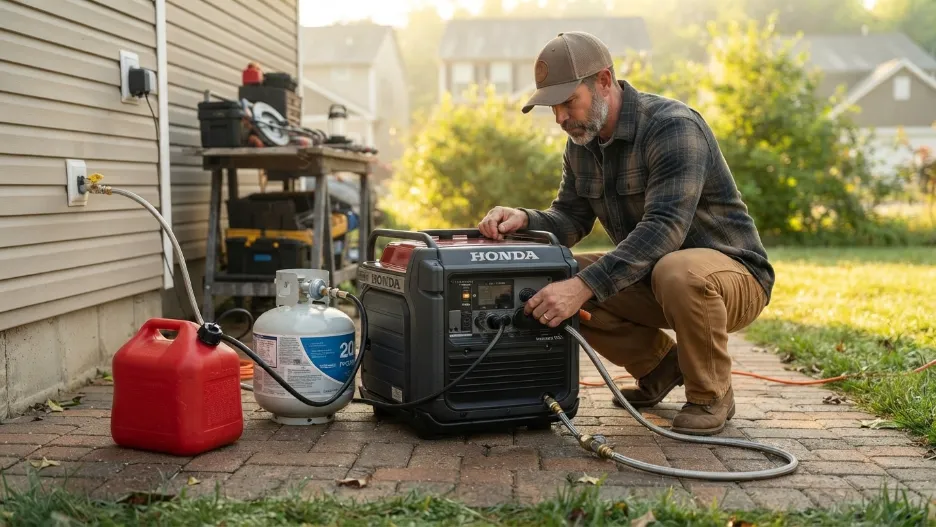
A tri-fuel generator is a portable generator built to run on three separate fuel sources: gasoline, liquid propane (LP), and natural gas. You don’t blend the fuels or run them together — you choose one at a time, usually with a selector valve or a swap of the fuel line.
Mechanically, it’s the same engine as a standard generator, just fitted with a carburetor and fuel system designed to accept all three. Gasoline runs through the tank like normal. Propane connects through a regulator hose to an LP tank. Natural gas connects through a hose to your home’s gas line or meter, giving you a supply that, practically speaking, never runs out.
The idea is redundancy. If gas stations are empty after a storm, you switch to propane. If your propane tank runs dry mid-outage, you tap the natural gas line instead. No single point of failure.
| Your Situation | Recommended Setup |
|---|---|
| Whole-home backup, natural gas line already at the house | Large tri-fuel (10,000W+), wired through a transfer switch, run mainly on NG |
| Backup for fridge, well pump, and a few circuits only | Mid-size tri-fuel or dual-fuel, 5,000–7,500W |
| No natural gas hookup, propane tank on the property | Dual-fuel is usually the smarter buy — you’re paying for a third fuel option you’ll never use |
| RV, camping, tailgating | Small dual-fuel inverter generator — tri-fuel adds weight and cost you don’t need on the road |
| Rural property, frequent multi-day outages, big propane tank on site | Tri-fuel — propane plus NG flexibility covers you even if one supply runs low |
Tri-Fuel vs Dual-Fuel: The Real Differences
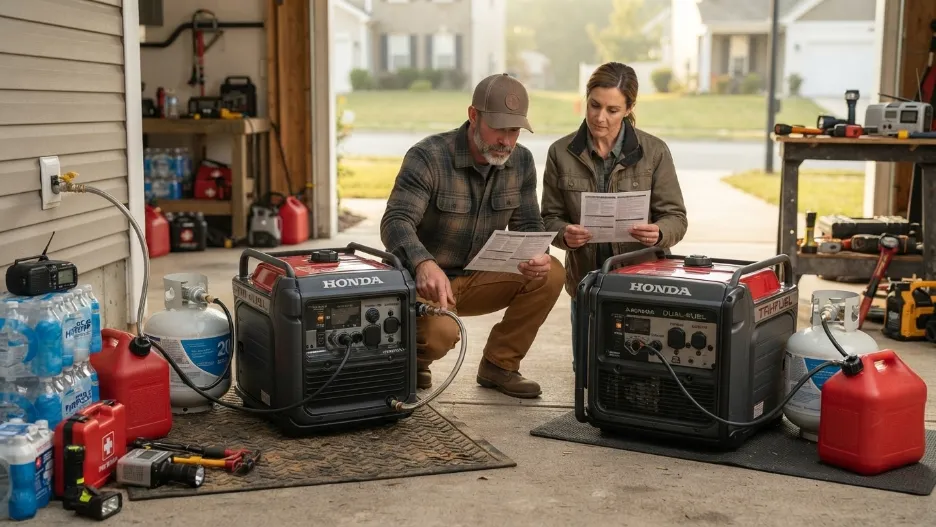
Dual-fuel generators run on gasoline and propane. Tri-fuel generators add natural gas on top of that. That’s the entire mechanical difference — same engine platform, one extra fuel inlet and regulator.
Where it actually matters is in what happens on day four of an outage. Propane tanks run out. Gas station lines get long. A natural gas line, if you have one, doesn’t stop flowing because the power went out.
| Factor | Dual-Fuel | Tri-Fuel |
|---|---|---|
| Fuel sources | Gasoline, propane | Gasoline, propane, natural gas |
| Typical price premium over gas-only | $100–$300 | $300–$800 |
| Longest possible runtime | Limited to propane tank size on hand | Effectively unlimited on a home NG line |
| Output on alternate fuel | Propane derates output roughly 10–15% | NG derates further than propane, usually the weakest of the three |
| Best fit | RV owners, no NG access, portability priority | Homeowners with a gas line who want a set-and-forget backup |
If you don’t have a natural gas line and never plan to install one, you’re paying extra for a fuel option that just sits there unused. That’s the single most common wasted purchase I see in reader questions.
What a Tri-Fuel Generator Actually Costs to Run
Nobody selling you a generator wants to talk about this part, so here’s a real worked example. Take a 7,500-running-watt tri-fuel unit at roughly 50% load — enough for a fridge, well pump, some lights, and a window AC unit.
| Fuel | Approx. Consumption | Fuel Price Used | Est. Cost/Hour |
|---|---|---|---|
| Gasoline | ~0.8 gal/hr | $3.85/gal (national avg, July 2026) | ~$3.08/hr |
| Propane (LP) | ~1.0 gal-equivalent/hr | $2.67/gal (residential avg) | ~$2.67/hr |
| Natural gas | ~65 cu ft/hr | ~$1.20/therm (100 cu ft) | ~$0.78/hr |
These are estimates — your generator’s actual burn rate, local utility rates, and load will move the numbers. But the pattern holds across almost every model I’ve tested: natural gas is consistently the cheapest to run, propane sits in the middle, and gasoline costs the most per hour despite being the easiest to find on short notice. Over a five-day outage running 10 hours a day, that gap between gasoline and natural gas alone is well over $100.
Sizing: How Much Power Do You Actually Need?
Tri-fuel doesn’t change your wattage math — it changes your fuel options. You still need to add up the running watts of everything you want powered, then add the single highest starting-watt appliance on top (usually a fridge or well pump motor kicking on).
A fridge, some lights, a modem/router, and a well pump typically lands you in the 3,500–5,000 running watt range. Add central AC or a sump pump and you’re looking at 7,500W or more. This guide focuses on the fuel-type decision — for the full appliance-by-appliance breakdown, see our full generator sizing guide.
One thing worth remembering: whichever fuel you run, plan for at least a 20–25% safety margin above your calculated load. Motors draw a surge on startup, and running a generator flat-out shortens its life.
Noise, Portability, and Runtime — What Changes With Tri-Fuel
Adding the extra fuel system does add some weight — usually 10–30 lbs over an equivalent gasoline-only model, mostly from the additional regulator and fuel lines. Noise output doesn’t change meaningfully by fuel type; it’s driven by the engine and muffler design, not what’s burning.
Runtime is where fuel choice matters most. On gasoline, most 7,500W-class units run 8–10 hours per tank at 50% load. Switch to a 20 lb propane tank and you’ll typically get 4–5 hours — smaller tank, shorter runtime, though a 100 lb tank stretches that to a couple of days. On natural gas, runtime is only limited by your home supply, which for most practical purposes is unlimited.
Budget: Is the Tri-Fuel Premium Worth It?
Here’s where I’ll be blunt. If you don’t have natural gas at your house and have no plans to run a line, skip tri-fuel. You’re paying $300–$800 more for a fuel port you’ll never use. A dual-fuel generator gets you the same gasoline-or-propane flexibility for less.
If you do have a gas line, the math flips fast. The first time propane trucks can’t get down your road or gas stations post “no fuel” signs, the natural gas hookup pays for the price difference in a single outage — and every outage after that runs at the lowest cost per hour of the three fuels.
The first time I ran a 7,500-watt tri-fuel unit through a five-day ice storm outage, the thing that surprised me wasn’t the power output — it was how much less I thought about fuel. No trips to a gas station with a five-gallon jug in the trunk, no watching a propane gauge drop. I just left it on the house gas line and checked the oil once a day. That peace of mind is real, but it’s only worth paying for if the gas line is already there.
Common Mistakes Buyers Make With Tri-Fuel Generators
- Buying tri-fuel without checking for a natural gas line. No NG hookup means you bought a dual-fuel generator with an unused third port.
- Assuming full rated wattage on every fuel. Gasoline output is the baseline; propane and natural gas both derate power, sometimes significantly on NG.
- Undersizing the propane tank. A 20 lb tank sounds fine until you realize it only lasts a few hours at real load — budget for a 40 lb or 100 lb tank if propane is your main fuel.
- Skipping the transfer switch. Running extension cords through a window works in a pinch, but a transfer switch or interlock kit is safer and lets you power hardwired circuits like a well pump or furnace blower.
- Storing gasoline for months without a stabilizer. Even on a tri-fuel unit, old gasoline gums up the carburetor — treat it or run the tank dry between uses.
Safety Essentials Before You Hook Up Natural Gas or Propane
Safety note: Portable generators produce carbon monoxide (CO), an odorless gas that can be fatal within minutes. Run any generator outdoors only, at least 20 feet from windows, doors, and vents, with the exhaust pointed away from the house.
Never backfeed power into your home’s wiring through an outlet. Use a properly installed transfer switch or interlock kit, and have a licensed electrician handle any permanent natural gas or hardwired electrical connection. Requirements vary by city and utility, so check local code before connecting to a gas line.
The Centers for Disease Control tracks generator-related CO deaths every year, and the pattern is almost always the same: the unit was running too close to the house, or indoors in a garage with the door “cracked open.” A battery-backed CO alarm inside the house is cheap insurance on top of proper outdoor placement, according to the CDC’s generator safety guidance.
Conclusion
A tri-fuel portable generator earns its extra cost in one specific scenario: you have a natural gas line and want a backup source that effectively never runs dry. Outside that, a dual-fuel unit usually covers the same ground for less money. Size it to your real load, respect the CO clearance distance, and — as I tell most homeowners who ask — buy based on the fuel you actually have, not the fuel you might someday have. — Michael Turner
If a natural gas line runs to your house, a 9,000–13,000 watt tri-fuel generator is the setup that lets you stop thinking about fuel altogether during an outage — just hook it to the line and go.
FAQ
Is a tri-fuel generator worth the extra money over dual-fuel?
Only if you have a natural gas line at your home. Without one, you’re paying $300–$800 more for a fuel port you’ll never use, and a dual-fuel generator covers gasoline and propane for less.
Does a tri-fuel generator lose power on propane or natural gas?
Yes. Gasoline gives the highest rated output. Propane typically derates output by 10–15%, and natural gas usually derates it further, so size the generator to your gasoline rating plus a margin if you’ll run it mostly on NG.
Can I run a tri-fuel generator directly off my home’s gas line?
Yes, but the connection should be installed by a licensed professional and meet local code — it’s not a DIY hose-and-fitting job like propane. Check with your utility and a licensed electrician or plumber before connecting.
How long will a tri-fuel generator run on a 20 lb propane tank?
Roughly 4–5 hours at 50% load on a typical 7,500-watt unit. For longer runtimes, a 40 lb or 100 lb tank is a better match, especially if propane will be your primary fuel during an outage.
Is it safe to store gasoline, propane, and natural gas hookups on the same generator?
The generator itself is designed and tested to switch between fuels safely, one at a time. The bigger safety concerns are the same as any generator: keep it outdoors, at least 20 feet from the house, and never run it in a garage or near windows and vents.

Hi, I’m Michael Turner. I own a generator workshop in the United States and founded HomeGeneratorBlog to share practical, hands-on guidance about generator installation, maintenance, troubleshooting, safety, and backup power solutions. My goal is to help homeowners make smarter, more confident decisions through clear and reliable information