
Portable Generator Keeps Stalling? Causes, Tests, and Fixes
Quick Answer
A portable generator that keeps stalling usually has restricted fuel flow, stale gasoline, a dirty carburetor, low engine oil, excessive electrical load, or an incorrect choke setting. If it only dies when appliances are connected, suspect overload or fuel delivery first. Generac’s portable generator troubleshooting guidance also identifies overload, fuel restrictions, and low oil as common shutdown causes.
Check These First
- Remove the load: Disconnect appliances and see whether the engine stays running by itself.
- Check the oil: Low oil can trigger an automatic engine shutdown on many generators.
- Use fresh fuel: Old gasoline can leave deposits that restrict carburetor jets.
- Open the fuel vent: A closed or blocked tank vent can gradually starve the carburetor.
- Set the choke correctly: A warm engine should normally run with the choke in the RUN position.
- Watch warning lights: Oil, overload, temperature, or carbon monoxide indicators can reveal an automatic shutdown.
Best Verification Test
- Run the generator outdoors with every appliance disconnected. If it stays running, reconnect loads one at a time while watching for the stall.
When a portable generator starts normally and then suddenly dies, the timing of the stall tells me more than the shutdown itself. A generator that quits after ten minutes has a different likely problem from one that dies when a refrigerator starts.
This guide walks through those patterns in the order I would check them in 2026. Start with the simple tests before taking apart the carburetor or replacing ignition parts.
What Does It Mean When a Portable Generator Keeps Stalling?
Portable generator stalling means the engine starts and runs but unexpectedly slows, sputters, or shuts off instead of maintaining normal operation. The problem may happen at idle, after warming up, or only after an electrical load is connected.
The key is identifying exactly when the engine quits.
- Dies within seconds: Check the choke, fuel valve, oil level, and automatic shutdown indicators.
- Dies after several minutes: Check the tank vent, fuel flow, carburetor, and ignition system.
- Dies when a load starts: Check wattage demand, starting surge, fuel delivery, and engine performance.
- Only runs with choke partly closed: Suspect a lean fuel mixture caused by restricted fuel delivery.
- Runs until hot, then quits: Check fuel venting, oil level, airflow, and ignition components.
Why Does My Portable Generator Keep Stalling?
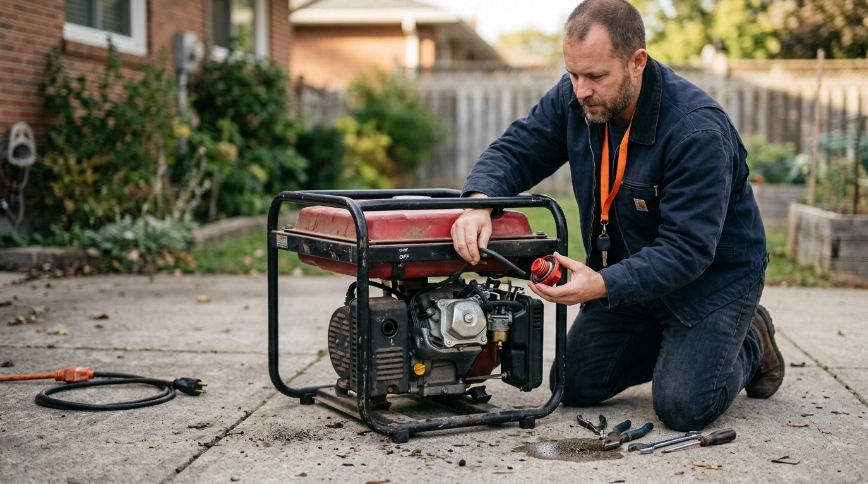
The most common causes are fuel starvation, carburetor deposits, low oil protection, overload, incorrect choke use, restricted airflow, and weak ignition. Start with the symptom pattern instead of replacing parts randomly.
| Stalling Pattern | Likely Cause | First Check |
|---|---|---|
| Starts, then dies quickly | Low oil, choke error, fuel valve | Oil level and control positions |
| Runs 5–20 minutes, then stalls | Tank vent or restricted fuel flow | Fuel cap vent, filter, and line |
| Dies when appliance starts | Overload or weak engine output | Running and starting watts |
| Only runs with choke on | Lean mixture or dirty carburetor | Fresh fuel and carburetor passages |
| Sputters before stopping | Fuel, airflow, or ignition problem | Air filter, plug, and fuel quality |
1. The Generator Is Running Out of Fuel Flow
A tank can contain gasoline while the carburetor still receives too little fuel. A clogged filter, pinched line, partly closed fuel valve, or blocked tank vent can slowly empty the carburetor bowl.
This often creates a generator that runs normally for several minutes and then sputters to a stop.
- Confirm the fuel valve is completely open.
- Check the line for kinks, cracks, or obvious blockage.
- Inspect the fuel filter if your model uses one.
- Make sure the fuel-cap vent is placed in its RUN or ON position when required.
2. Stale Gasoline Has Restricted the Carburetor
Old gasoline can oxidize and leave sticky deposits inside tiny carburetor passages. The engine may still start because the choke enriches the mixture, then stall when the choke opens.
Honda’s generator fuel recommendations warn that deteriorated fuel can cause starting and running problems. Fuel stabilizer can slow deterioration, but it cannot turn badly stale gasoline back into fresh fuel.
- Drain questionable fuel according to your owner’s manual.
- Refill with fresh gasoline of the grade specified for your generator.
- Check the carburetor bowl for contamination if the problem remains.
- Clean restricted jets only when you can do so safely and correctly.
3. Low Oil Is Triggering the Shutdown System
Many portable generators automatically stop the engine when oil falls below a safe level. The shutdown can look exactly like a fuel or ignition failure.
Check the generator while it sits on a level surface. Follow your specific manual because dipstick procedures and oil capacities differ between engines.
- Shut the engine down and let it settle.
- Check the oil using the manufacturer’s procedure.
- Add the specified oil if needed.
- Inspect for leaks if the level keeps dropping.
4. The Generator Is Overloaded
If the generator runs fine with nothing connected but stalls when equipment starts, calculate the electrical load. Motors in refrigerators, pumps, compressors, and power tools can demand extra wattage during startup.
My rule is simple: if no-load operation is smooth but one motor load makes the engine collapse, I check load demand before touching the ignition system.
| 120-Volt Load | Calculated Running Watts | On a 3,000-Watt Generator |
|---|---|---|
| 5 amps | 600 watts | 20% of running capacity |
| 12 amps | 1,440 watts | 48% of running capacity |
| 20 amps | 2,400 watts | 80% of running capacity |
These examples use the basic formula watts = volts × amps. Always account for motor starting requirements and the generator’s separate running and starting watt ratings.
5. The Choke Is in the Wrong Position
The choke restricts incoming air so a cold engine receives a richer air-fuel mixture. After warm-up, most carbureted generators should operate with the choke in RUN or OPEN.
If the generator stalls every time you move the choke fully to RUN, normal fuel flow may be too lean.
- Start the engine using the manual’s recommended choke position.
- Let the engine stabilize.
- Move the choke gradually toward RUN.
- If it only survives on partial choke, inspect the fuel system rather than leaving the choke partly closed indefinitely.
6. A Dirty Air Filter Is Restricting Airflow
A badly clogged air filter can upset the air-fuel mixture and reduce engine power. That loss may become obvious when the generator takes on a heavier electrical load.
Remove and inspect the filter only with the engine off. Clean or replace it using the exact procedure specified by the manufacturer.
7. The Spark Plug or Ignition System Is Weak
A worn, fouled, damaged, or incorrectly gapped spark plug can cause misfiring and stalling. Ignition problems sometimes become more noticeable after the engine heats up.
- Inspect the plug for heavy carbon, fuel wetting, or damage.
- Check the gap against the owner’s manual.
- Replace a worn plug with the specified type.
- Use a proper spark tester if the plug looks normal but ignition remains suspect.
How Do I Troubleshoot a Generator That Keeps Stalling?
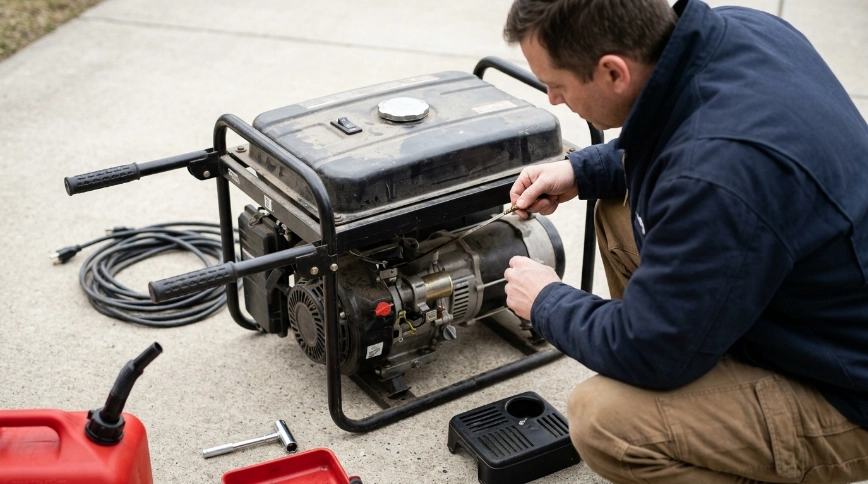
Work from the safest and easiest checks toward fuel-system or ignition work. Don’t start by adjusting the carburetor when a closed vent or overloaded outlet could explain the entire problem.
- Move the generator to a safe outdoor location. Keep it away from buildings, doors, windows, and vents.
- Disconnect every electrical load. Start the engine and determine whether it can run normally by itself.
- Check oil on level ground. Correct the level before continuing.
- Inspect the fuel supply. Confirm fresh fuel, an open valve, and an open tank vent where required.
- Check the choke. Make sure a warmed engine can operate in RUN.
- Inspect the air filter. Replace or service a dirty filter according to the manual.
- Check the spark plug. Look for fouling, wear, damage, and incorrect gap.
- Reconnect loads individually. Start with small loads and watch exactly which device triggers the problem.
Why Does My Generator Stall When I Plug Something In?
A generator that only stalls under load is usually being overloaded or the engine cannot produce enough power under demand. Restricted fuel flow, a dirty carburetor, or poor airflow can make an otherwise acceptable electrical load too difficult for the engine.
Test the generator with one modest resistive load before adding motor-driven equipment.
- Compare total running watts with the generator’s running-watt rating.
- Check starting watts for refrigerators, pumps, compressors, and similar motors.
- Disconnect unnecessary equipment.
- Allow the generator to warm and stabilize before applying large loads.
- Stop testing if the engine repeatedly bogs, surges, or shuts down.
Do not assume a tripped breaker and an engine stall mean the same thing. A breaker protects the electrical output, while an engine shutdown can come from fuel, oil, overload controls, or another protection system.
Can a Carbon Monoxide Sensor Make a Generator Shut Off?
Yes. Some newer portable generators have carbon monoxide detection systems that automatically shut the engine down when unsafe CO conditions are detected near the generator.
Never bypass a CO shutdown system just to keep the engine running.
- Move the generator to a properly ventilated outdoor location.
- Point the exhaust away from occupied buildings.
- Check the generator’s warning indicator or display.
- Follow its manual before attempting another start.
The U.S. Consumer Product Safety Commission recommends operating portable generators outdoors at least 20 feet from homes, with exhaust directed away from the building. Review the CPSC’s carbon monoxide safety guidance before running any fuel-powered generator.
When Should I Stop Troubleshooting and Call a Technician?
Basic checks are reasonable for many owners, but some faults need diagnostic equipment and engine experience. Stop if the repair would require unsafe electrical testing, major disassembly, or bypassing a protection device.
- The generator stalls despite fresh fuel, correct oil, and no electrical load.
- Fuel leaks appear around the tank, valve, line, or carburetor.
- The engine has abnormal knocking, metallic noise, or heavy smoke.
- Ignition disappears after the engine warms up.
- Voltage behaves abnormally while engine speed sounds normal.
- A CO, oil, overload, or temperature warning keeps returning.
- The carburetor or governor needs internal adjustment.
Never backfeed a home through a receptacle or improvised cord. OSHA maintains generator and electrical safety resources covering shock, fire, grounding, and carbon monoxide hazards.
How Can I Prevent a Portable Generator From Stalling Again?
Most repeat stalling problems become less likely when fuel stays fresh and routine maintenance is done before an outage. Storage practices matter because a generator may sit unused for months.
- Follow the maintenance schedule: Change oil, service filters, and inspect the plug at the intervals in your manual.
- Manage gasoline carefully: Buy manageable quantities and avoid leaving untreated fuel in the carburetor for long storage periods.
- Use stabilizer correctly: Add it to fresh gasoline according to the product and generator instructions.
- Exercise the generator properly: Follow the manufacturer’s storage and periodic-use procedure.
- Track your loads: Know both running watts and starting watts before an emergency.
- Keep cooling areas clean: Never block engine or alternator ventilation openings.
If you’re maintaining or diagnosing a generator yourself, these are three products I’d consider for common fuel and ignition problems:
⛽ BEST FOR FUEL STORAGE
STA-BIL Storage Fuel Stabilizer
★★★★☆ 4.8/5 editor rating
The manufacturer specifies one ounce for up to 2.5 gallons and markets it for long-term gasoline storage. I pick it for generators that may sit between outages, but it should be added to fresh fuel rather than used as a cure for already stale gasoline.
⚡ BEST FOR SPARK CHECKS
Lisle 20610 Inline Spark Tester
★★★★☆ 4.7/5 editor rating
This inline tester connects between the spark plug and plug wire and gives a visible indication of ignition spark. I prefer a dedicated tester over improvised spark checks because it gives a clearer diagnostic clue when a generator quits after warming up.
🧰 BEST FOR CARB CLEANUP
Gumout Jet Spray Carb/Choke & Parts Cleaner
★★★★☆ 4.6/5 editor rating
This aerosol cleaner is designed to remove gum, varnish, and dirt from carburetor and choke components. I consider it useful when deposits are visible, but use it only according to the label and with the engine cool and away from ignition sources.
Frequently Asked Questions
Why does my portable generator run for 10 minutes and then shut off?
A generator that runs for several minutes before stopping may have a blocked fuel-tank vent, restricted fuel line, dirty carburetor, low oil shutdown, or heat-related ignition problem. Start by running it without electrical loads, then check the oil, fresh fuel, tank vent, fuel valve, and warning indicators.
Why does my generator stall when I turn the choke off?
If the engine only runs with the choke partly closed, it may not be receiving enough fuel for normal operation. Fresh fuel should be your first check. A restricted carburetor jet, clogged filter, blocked fuel line, or tank-vent problem can also create a lean mixture.
Can too much electrical load make a generator stall?
Yes. An electrical load that exceeds the generator’s capacity can make the engine bog, trip overload protection, or shut down. Motor-driven equipment also needs extra starting power, so compare both running and starting watts with the ratings printed on your generator.
Can low oil make a portable generator keep shutting off?
Yes. Many portable generators use a low-oil protection system that stops the engine before inadequate lubrication causes serious damage. Place the generator on level ground, check the oil using the owner’s manual procedure, and investigate leaks if the oil level repeatedly falls.
Should I clean the carburetor if my generator keeps stalling?
Clean the carburetor only after simpler checks rule out low oil, overload, stale fuel, a closed fuel valve, blocked tank vent, and incorrect choke position. If the generator only runs with partial choke after fresh fuel is added, a restricted carburetor becomes much more likely.
Final Takeaway
If your portable generator keeps stalling, diagnose the shutdown pattern before replacing anything. Fuel problems, low oil, overload, choke position, restricted airflow, and ignition faults account for many cases.
Start with the generator unloaded, outdoors, and filled with the correct oil and fresh fuel. If those checks don’t reveal the problem, move carefully into fuel-system and ignition diagnosis or have a qualified service technician inspect the unit.

Hi, I’m Michael Turner. I own a generator workshop in the United States and founded HomeGeneratorBlog to share practical, hands-on guidance about generator installation, maintenance, troubleshooting, safety, and backup power solutions. My goal is to help homeowners make smarter, more confident decisions through clear and reliable information

One Comment