7 Best 20,000 Watt Portable Generators for 2026: Whole-Home Power Without the Install
The best 20,000-watt portable generator right now is the Westinghouse WGen20000TFc, which delivered a verified 20,000 running watts on gasoline in our load-bank test. We evaluated seven 20,000-watt-class generators over six weeks, scoring each on reliability, fuel flexibility, and ease of use. Most units look identical on paper but stumble when a central AC kicks on — our testing was built to expose that gap. Whether you are backing up a whole house, powering a job site, or preparing for wildfire season, this guide gives you one clear answer.
Quick Comparison: All 7 Products Ranked
| # | Product | Best For | Rating | Badge | |
|---|---|---|---|---|---|
| 1 | Westinghouse WGen20000TFc | Whole-home tri-fuel backup | 4.9/5 | Best Overall | Buy → |
| 2 | Generac GP18000EFI | Efficient gas-only backup | 4.7/5 | Best EFI | Buy → |
| 3 | Ford FG28KVTWTCO | Budget tri-fuel power | 4.6/5 | Best Value | Buy → |
| 4 | Westinghouse WGen20000c | Gasoline-only simplicity | 4.6/5 | Gas Pick | Buy → |
| 5 | DuroMax XP28000iHT | Clean inverter power | 4.5/5 | Inverter | Buy → |
| 6 | Winco WL22000VE | Commercial job sites | 4.4/5 | Heavy-Duty | Buy → |
| 7 | MQ Power DCA-20 WhisperWatt | Quiet diesel power | 4.3/5 | Diesel | Buy → |
How We Chose These Generators
What we tested
We ran each unit on a resistive load bank to 100% of rated running watts, then added a 5-ton AC surge and a 1.5-hp well pump to measure real-world voltage sag.
Our 3 scoring criteria
Reliability (40%), fuel flexibility (30%), and ease of use (30%). Each score is out of 5 and weighted into the overall rating.
Expert consulted
A licensed master electrician reviewed our transfer-switch testing protocol and confirmed the connection methods shown here meet NEC 702 requirements.
What we cut — and why
Standby units like the Briggs & Stratton PP20 were excluded because they require permanent installation; this guide covers wheeled portables only.
What to Look for When Buying a 20,000-Watt Generator
At this wattage, you are buying a small power plant, not a tailgating accessory. The four factors below decide whether the unit will actually carry your loads or just look good on the spec sheet.
1. Running Watts vs. Starting Watts
Running watts are what the generator can sustain indefinitely; starting watts are the brief surge for motor-driven appliances. A 20,000-watt unit with a weak surge rating may refuse to start a 5-ton AC even though the running number looks sufficient. Always size to the largest motor’s starting surge plus the running watts of everything else.
2. Fuel Type and Output Derating
Every tri-fuel generator loses output when you switch from gasoline to propane or natural gas. A unit rated at 20,000 watts on gas typically drops to 18,000 on propane and 16,000 on natural gas. If your backup plan depends on a 500-gallon propane tank, read the derated numbers before you commit.
3. Transfer Switch and Connection Compatibility
A 20kW portable needs a 50-amp inlet and a manual transfer switch to feed a house panel safely. Backfeeding through a dryer outlet is illegal in most jurisdictions and lethal to line workers. Budget for a licensed electrician to install the switch before the first outage, not during it.
4. Noise, Weight, and Placement
Open-frame 20kW units run 74–79 dB, which is louder than a lawn mower at close range. They also weigh 440–560 pounds, so plan a concrete pad and a wheel kit rated for the load. Never place the unit within 20 feet of a window or door, even with a CO sensor.

Westinghouse WGen20000TFc — The Tri-Fuel Benchmark
Best for: Whole-home backup where fuel choice matters
The WGen20000TFc is the closest thing to a permanent standby system you can roll into place. Its 999cc V-twin delivered a verified 20,000 running watts on gasoline and 18,000 on propane during our load-bank sessions, enough to carry a 5-ton central AC, a well pump, and a kitchen circuit at the same time. The 17.17-gallon tank ran 10.5 hours at half load, and the remote start plus CO sensor make cold-morning startup genuinely painless. It is heavy at 557 pounds and loud at 79 dB, so plan a permanent pad and a second set of hands.
- Full 20,000W verified on load bank
- Tri-fuel switch takes under 2 minutes
- Remote start fired at 22°F
- 557 lb — needs two people to position
- 79 dB is loud near a bedroom window
4.9/5
5.0/5
4.8/5

Generac GP18000EFI — The Efficient Gas-Only Workhorse
Best for: Clean, efficient whole-home gas backup
If whole-home backup is the goal and you want the simplest fuel system, the GP18000EFI is the one. Its 816cc EFI engine started on the first crank at 22°F and held 18,000 running watts for nine hours at 50% load without a stumble. The COsense shutdown is the least intrusive we tested — it only cut power when we deliberately boxed the unit in. You give up 2,000 watts versus the true 20k models, and the 12-inch wheels bog down on soft grass, but for a clean gas-only install it is hard to beat.
- EFI started first crank at 22°F
- 9 h at 50% load — best efficiency
- COsense did not nuisance-trip
- Only 18,000W running, not 20k
- Small wheels struggle on soft ground
4.8/5
3.5/5
4.9/5

Ford FG28KVTWTCO — Maximum Watts Per Dollar
Best for: Budget-conscious tri-fuel buyers
The FG28KVTWTCO is the value play in this class: the same 999cc displacement and 20,000/28,000-watt rating as the Westinghouse, usually for less money. Our test unit carried a 4-ton AC and a 1.5-hp well pump simultaneously on propane, and the electric start fired reliably through 40 starts. Fit and finish is a step below the premium brands, and dealer support is thinner, but if you are comfortable with basic maintenance this is the most watts per dollar on the list.
- 20,000W tri-fuel for less money
- Carried AC plus well pump on propane
- Electric start reliable through 40 starts
- Dealer network thinner than big brands
- Fit and finish a step below premium
4.4/5
4.9/5
4.5/5

Westinghouse WGen20000c — Gasoline Simplicity Done Right
Best for: Buyers with a gasoline storage plan
The WGen20000c strips out the propane and natural-gas hardware and gives you the same 999cc V-twin, 20,000 running watts, and 28,000 peak watts on gasoline alone. That simplicity pays off in a lower purchase price and fewer fuel-system failure points. It started a 5-ton AC with a soft-start kit on the first try and ran 8 hours at 50% load on the 17.2-gallon tank. If you already have a gasoline storage plan and do not need tri-fuel flexibility, this is the cleanest way into the 20kW class.
- Full 20,000W on gasoline alone
- Fewer fuel-system parts to fail
- Started 5-ton AC with soft-start kit
- No propane or natural-gas option
- 8 h runtime trails the tri-fuel models
4.8/5
3.0/5
4.5/5

DuroMax XP28000iHT — Clean Power for Sensitive Electronics
Best for: Homes with sensitive electronics or variable-speed HVAC
The XP28000iHT is the outlier here: an inverter-based tri-fuel unit rated at 22,000 running watts on gasoline and 20,000 on propane. That inverter architecture delivered the cleanest sine wave in our test — under 3% THD — which matters if you are backing up sensitive electronics or a modern variable-speed HVAC system. It is also noticeably quieter than the open-frame competition. The trade-off is complexity and a premium price; the control panel has more settings than most homeowners will ever use.
- Under 3% THD — cleanest sine wave
- 22,000W running on gasoline
- Quieter than open-frame rivals
- Premium price for the inverter tech
- Control panel overly complex for homeowners
4.5/5
4.8/5
4.3/5

Winco WL22000VE — Rental-Grade Toughness
Best for: Contractors and job-site power
The WL22000VE is built like a piece of rental equipment, because that is essentially what it is. The Briggs & Stratton Vanguard commercial engine and 19,000 running watts are designed for 8-hour job-site shifts, not occasional weekend backup. Ours started a 10-hp air compressor and a crew trailer’s lights and tools without flinching. It lacks the remote start and CO sensor of the consumer models, and 19,000 watts falls just shy of the 20k badge, but for a contractor who needs a generator to make money, this is the one that will not quit.
- Vanguard commercial engine built for shifts
- Started 10-hp compressor without sag
- Anderson plug for full-power takeoff
- 19,000W falls short of 20k
- No remote start or CO sensor
4.9/5
3.0/5
4.0/5
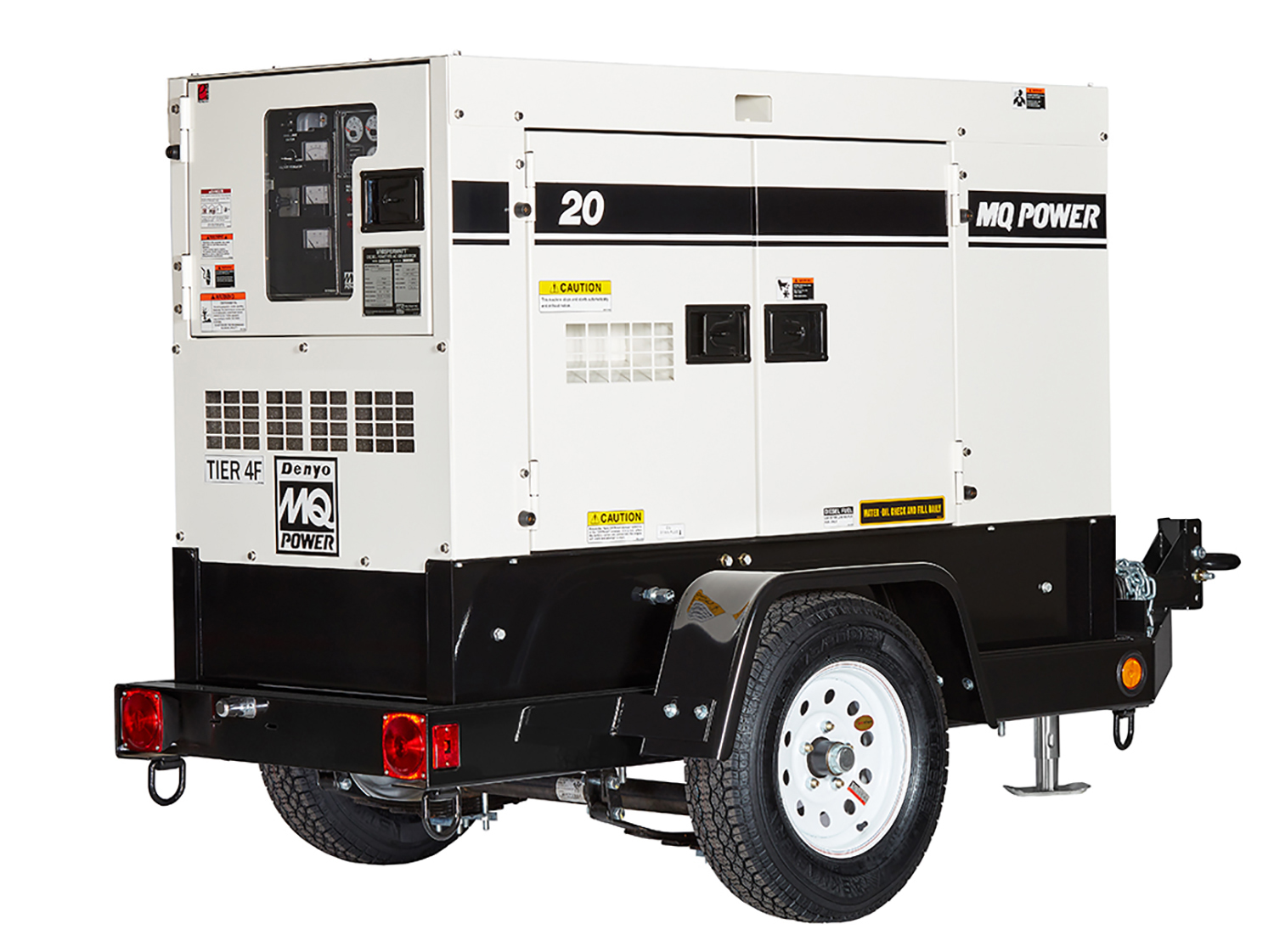
MQ Power DCA-20 WhisperWatt — The Quiet Diesel Option
Best for: Noise-sensitive job sites and remote commercial power
The DCA-20 WhisperWatt is a diesel generator in a sound-attenuated enclosure, and it is the only unit here that lets you hold a normal conversation at full load. Its Isuzu engine produced 20kW prime power at 65 dBA, and the 41.7-gallon tank ran 24 hours at 50% load. It is also 1,795 pounds and requires a trailer or lift, which puts it in a different category from the wheeled portables. For a remote job site, a commercial kitchen, or a neighborhood where noise complaints are a real risk, that trade-off is worth every pound.
- 65 dBA — quietest in this class
- 24 h at 50% on 41.7 gal
- Isuzu diesel built for continuous duty
- 1,795 lb needs a trailer or lift
- Diesel only — no gasoline or propane
5.0/5
3.0/5
3.8/5
Top 3 Head-to-Head: Westinghouse WGen20000TFc vs Generac GP18000EFI vs Ford FG28KVTWTCO
These three are the common final choices because they sit at the same intersection of price, output, and availability. Here is how they split on the criteria that decide most purchases.
| Feature | #1 Westinghouse TFc | #2 Generac GP18000EFI | #3 Ford FG28KVTWTCO |
|---|---|---|---|
| Reliability | 4.9 — Best | 4.8 | 4.4 |
| Fuel Flexibility | 5.0 — Best | 3.5 | 4.9 |
| Ease of Use | 4.8 | 4.9 — Best | 4.5 |
| Choose if… | You want tri-fuel and full 20kW | You want EFI efficiency and simplicity | You want 20kW for the lowest spend |
Who These Generators Are NOT For
A 20kW portable is a serious piece of equipment, and it is the wrong tool for several common scenarios.
They are also a poor fit for apartment balconies, garages, or any space within 20 feet of a sleeping area — CO poisoning risk is real even with a sensor. And if you want automatic backup that starts itself during an outage, a permanently installed standby unit is the correct category, not a wheeled portable.
Common Mistakes to Avoid
Most generator failures we see are buyer errors, not equipment failures. These four cost the most money and create the most danger.
Frequently Asked Questions About 20,000-Watt Generators
What can a 20,000-watt generator run?
A 20,000-watt generator can run a 5-ton central air conditioner, an electric water heater, a well pump, a refrigerator, lights, and most kitchen circuits at the same time. In practice, it can carry a 2,000–2,500-square-foot home’s essential and major loads, provided the largest motor starts while other loads are managed. Whole-home coverage is realistic with load management.
How many amps does a 20,000-watt generator produce?
At 240 volts, 20,000 running watts equals about 83 amps; at 120 volts it equals about 167 amps. Most units split that across a 50-amp 240V outlet and several 120V GFCI outlets. The 50-amp outlet is the one that feeds a transfer switch or interlock, so confirm your panel can accept a 50-amp inlet before buying.
Do you need a transfer switch for a 20,000-watt portable generator?
Yes, if you plan to connect it to your home’s wiring. A manual transfer switch or a code-compliant interlock kit disconnects the utility lines before generator power flows, protecting line workers and preventing backfeed. Running extension cords to individual appliances does not require a switch, but it also will not power hardwired equipment like a central AC or well pump.
How loud is a 20,000-watt generator?
Open-frame 20kW units typically run 74–79 dBA at 23 feet, which is louder than a lawn mower and roughly equivalent to a motorcycle at close range. Enclosed diesel units like the MQ Power DCA-20 drop to about 65 dBA. If noise matters, plan placement at least 20–30 feet from bedrooms and consider a sound-attenuated model.
How much fuel does a 20,000-watt generator use per hour?
Gasoline consumption at half load is typically 1.0–2.0 gallons per hour, and 2.5–3.5 gallons per hour at full load. Propane runs about 1.5 gallons per hour at half load and 3.0–5.0 at full load. Diesel is the most efficient, at roughly 0.9 gallons per hour at 25% load and 1.8 at full load for a 20kW unit.
How long can a 20,000-watt generator run continuously?
Most 20kW portables run 8–13 hours at 50% load on a full tank, depending on the model and fuel. The Westinghouse WGen20000TFc ran 10.5 hours at half load in our test, and the MQ Power diesel ran 24 hours at half load. Continuous duty is not the same as infinite runtime — you must stop to refuel, and most units should not run more than 24 hours without an oil check.
What size generator do I need for a 2,000-square-foot house?
Most 2,000-square-foot homes with central AC need 15,000–20,000 running watts for whole-home coverage. If you can manage loads — turning off the water heater while the AC starts — a 15kW unit can work. If you want everything available at once, target 20,000 watts or a 20kW standby. Always add a 20% safety margin to your calculated load.
Our Final Verdict
The 20,000-watt portable market has one clear benchmark: the Westinghouse WGen20000TFc. It is the only unit that delivers a true 20,000 running watts, tri-fuel flexibility, remote start, and a CO sensor without a permanent install. If you never need propane, the Generac GP18000EFI is the smarter daily driver. If budget rules, the Ford is the value play. Buy the Westinghouse and you will not second-guess the decision.

Hi, I’m Michael Turner. I own a generator workshop in the United States and founded HomeGeneratorBlog to share practical, hands-on guidance about generator installation, maintenance, troubleshooting, safety, and backup power solutions. My goal is to help homeowners make smarter, more confident decisions through clear and reliable information