Portable Generator Transfer Switch: Complete 2026 Guide
Quick Answer
A portable generator transfer switch safely connects a generator to selected circuits in your home’s electrical system while isolating those circuits from utility power. For most portable generators, a manual 30-amp or 50-amp switch is the practical choice, but you should first size your generator correctly and have the system matched and installed by a qualified electrician.
What matters most
- Prevents backfeed: The switch keeps generator power from being sent into utility lines.
- Manual works well: Portable generators usually pair best with a manual transfer switch.
- Match amperage: Common portable-generator systems use 30-amp or 50-amp connections.
- Choose circuits first: Decide which refrigerator, furnace, pump, lighting, and outlet circuits actually need backup power.
- Check compatibility: Generator receptacle, voltage, neutral configuration, inlet, cord, conductors, and switch must work together.
- Use an electrician: Transfer-switch installation involves your home’s electrical panel and must meet locally adopted electrical codes.
Simple rule
- If you want a portable generator to power hardwired household circuits, use approved transfer equipment rather than backfeeding through an outlet.
I like portable generators because they give homeowners plenty of flexibility during an outage. Connecting one safely to household wiring, though, takes more than a heavy-duty cord.
A transfer switch is the part that makes that connection controlled and predictable. In this guide, I’ll explain how it works, which type makes sense, how to size one, and what I look for before buying.
What Is a Portable Generator Transfer Switch?
A portable generator transfer switch is an electrical device that lets selected household circuits receive power from either the utility or a generator without connecting both sources together. It creates a controlled changeover between the two power sources.
That isolation is the important part. It prevents generator electricity from accidentally feeding backward through the utility connection.
Definition: A transfer switch is source-selection equipment that transfers an electrical load between normal utility power and an alternate source such as a generator.
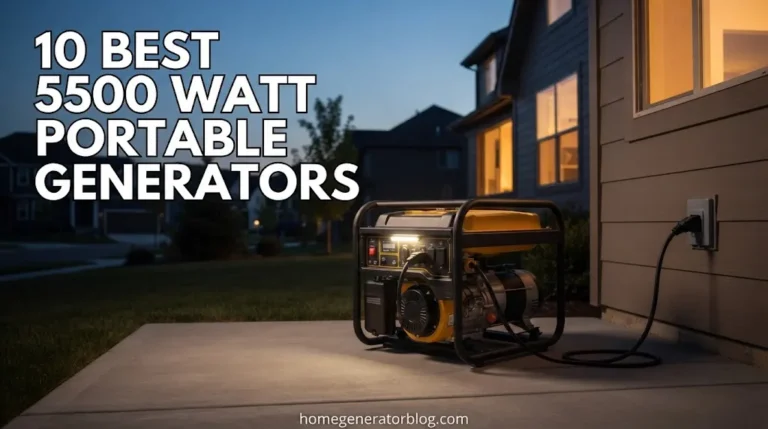
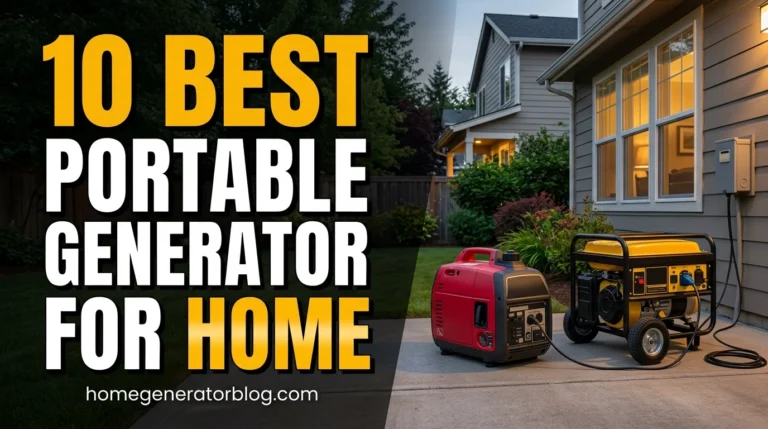
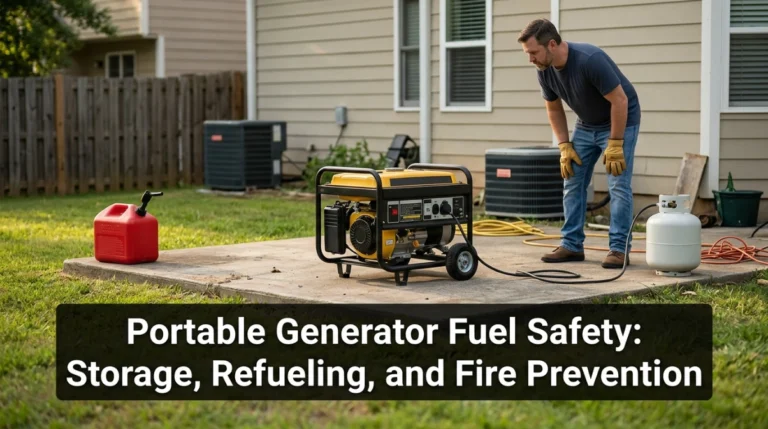
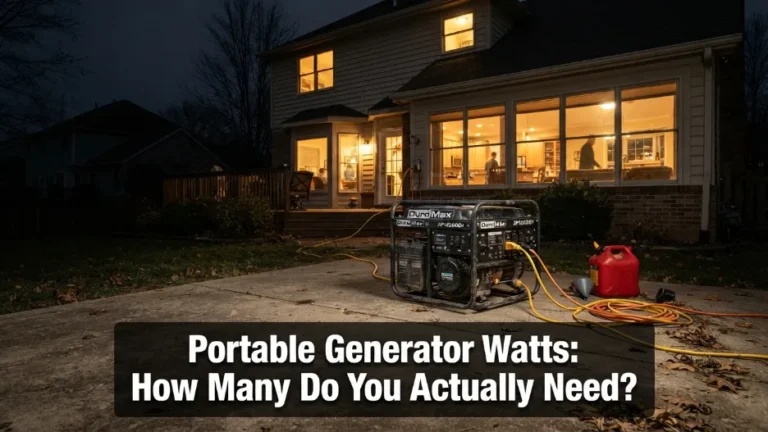
In a typical portable-generator setup, the generator sits outdoors and connects to an exterior power inlet. That inlet feeds the transfer-switch system inside the home.
The switch then supplies only the circuits selected during installation. Those might include:
- Refrigerator or freezer
- Gas furnace blower
- Well or sump pump
- Kitchen outlets
- Lighting circuits
- Internet equipment
- Selected 240-volt equipment when the system supports it
Transfer equipment sold for this purpose is commonly evaluated to standards such as UL 1008 for transfer switch equipment.
Do You Need a Transfer Switch for a Portable Generator?
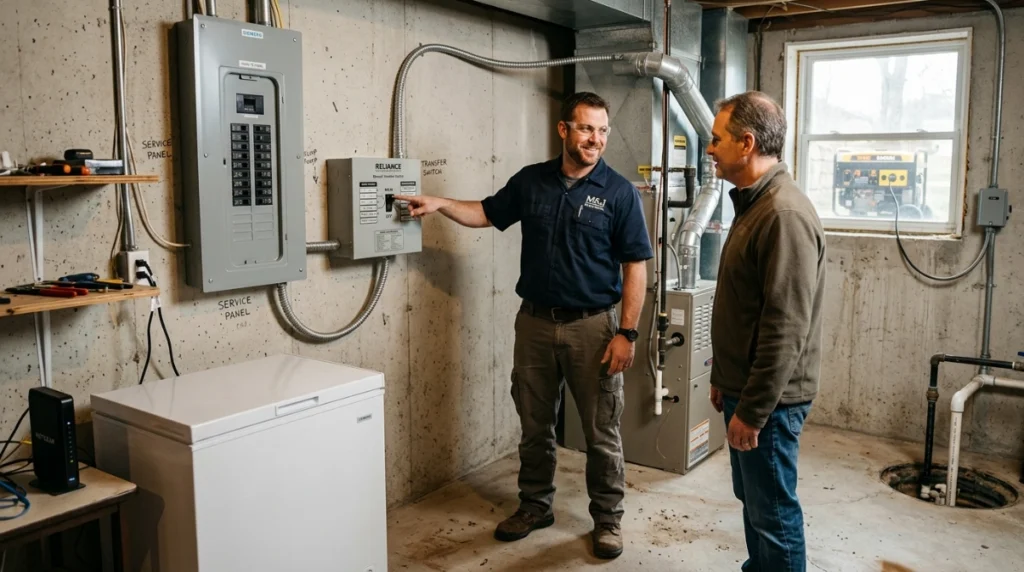
You need approved transfer equipment when you want a portable generator to supply your home’s permanent wiring. You don’t normally need one when appliances are connected directly to generator receptacles with properly rated extension cords.
OSHA warns against connecting a generator directly to a building’s electrical system unless a qualified electrician has installed a transfer switch. An improper connection can energize utility wiring and expose workers or other people to electrocution hazards.
You can review OSHA’s generator and electrical safety guidance for the underlying backfeed warning.
The unsafe shortcut I never recommend is a homemade male-to-male cord connected to a household receptacle. It bypasses the proper isolation equipment and creates serious shock, fire, and backfeed hazards.
When extension cords may be enough
If you only need a refrigerator, lamp, charger, or another cord-and-plug appliance, direct generator connections may be simpler. Use outdoor-rated cords with the correct amperage and wire size.
A transfer switch becomes much more useful when you want hardwired equipment. Furnaces, well pumps, lighting circuits, and ordinary wall receptacles are easier to manage through permanent transfer equipment.
Manual vs Automatic Transfer Switch: Which Is Better?
A manual transfer switch is usually the best match for a portable generator. You are already moving, fueling, starting, and stopping the generator manually, so manual circuit transfer fits that workflow.
Automatic transfer switches make more sense with permanently installed standby generators designed to start themselves when utility power fails.
| Option | How It Works | Best Use | Main Advantage | Main Limitation |
|---|---|---|---|---|
| Manual transfer switch | You manually select generator or utility power. | Portable generators | Simple control of selected circuits | Requires someone to operate it |
| Automatic transfer switch | Detects utility loss and transfers automatically with a compatible system. | Permanent standby generators | Hands-off outage response | More complex and usually unnecessary for a basic portable setup |
| Panel interlock | Mechanically prevents the main and generator breakers from being on together. | Compatible panels where locally permitted | Can provide access to more panel circuits | Requires careful load management and panel-specific approved hardware |
I prefer dedicated circuit transfer switches for homeowners who want a simple outage routine. Labels make it obvious which circuits are available and help prevent someone from trying to run the entire house.
How Do I Choose the Correct Transfer Switch Size?
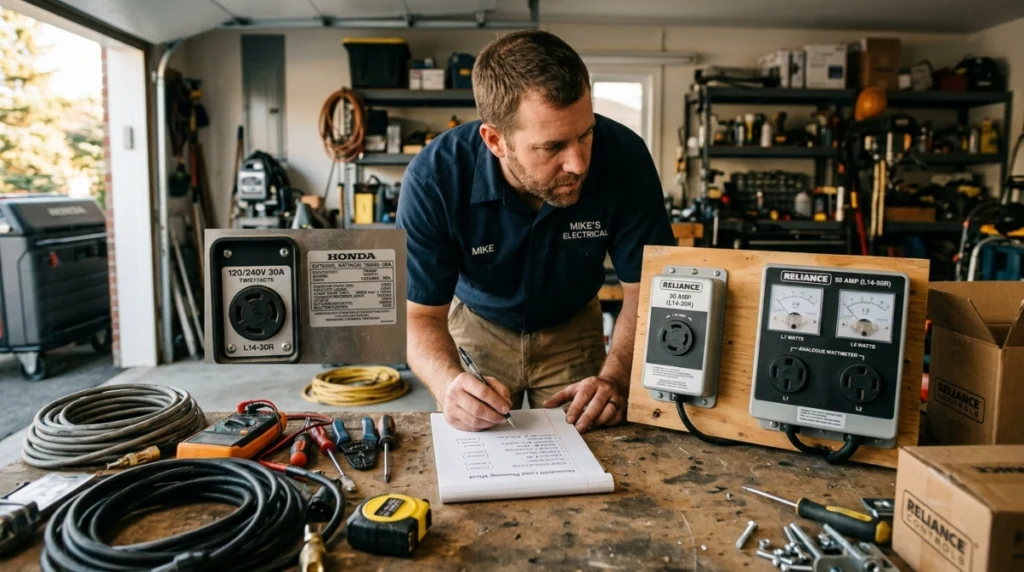
Match the transfer equipment to your generator’s voltage, receptacle, amperage, running output, and the circuits you intend to power. Don’t choose a switch simply because its advertised wattage looks close.
Start by checking the generator’s 120/240-volt outlet. Many home-backup portable generators use either a 30-amp or 50-amp connection.
- 30 amps at 240 volts: 7,200 watts of theoretical circuit capacity.
- 50 amps at 240 volts: 12,000 watts of theoretical circuit capacity.
Those numbers come from volts multiplied by amps. Your generator’s rated continuous output may be lower, so the generator rating remains the real operating limit.
How many circuits should the switch have?
Six circuits can be enough for a small essentials-only setup. Ten circuits give most homeowners more flexibility without turning a portable generator into an attempted whole-house system.
Before choosing the circuit count, list the loads that matter during an outage:
- Refrigerator
- Freezer
- Furnace blower
- Sump or well pump
- Several lighting areas
- Kitchen or living-room receptacles
- Garage door opener
- Internet and communication equipment
Then calculate both continuous demand and motor starting demand. My guide to running watts vs. starting watts explains why a pump or compressor can briefly demand much more power when it starts.
Don’t forget load balancing
A 120/240-volt portable generator supplies power across two legs. Large 120-volt loads should be distributed sensibly so one side isn’t heavily loaded while the other remains nearly idle.
Some manual transfer switches include wattmeters that make this easier. I’ve found those meters especially useful when a homeowner wants to rotate a microwave, pump, furnace, and other larger loads during an outage.
What Does Professional Transfer Switch Installation Involve?
A qualified electrician normally matches the equipment, identifies backup circuits, installs the transfer equipment and power inlet, verifies grounding and neutral requirements, and tests the finished system. This isn’t a good place for guesswork.
The exact design depends on the generator, service panel, local electrical code, and the equipment manufacturer’s instructions.
A typical project involves these broad stages:
- Load planning: Identify which circuits must operate during an outage.
- Compatibility check: Confirm generator voltage, outlet type, amperage, neutral configuration, panel type, and transfer equipment.
- Transfer equipment installation: Mount and integrate the approved switch or panel equipment.
- Power inlet installation: Place a suitable inlet where the generator can connect from a safe outdoor location.
- Circuit configuration: Assign the selected household loads to the transfer system.
- Testing and labeling: Verify generator operation, source isolation, circuit identification, and load balance.
Generator placement still matters after the electrical work is finished. I recommend reviewing my guide on where to place a portable generator before deciding where the inlet should go.
CPSC currently advises using a portable generator outdoors only, at least 20 feet from the home, with exhaust directed away from doors, windows, and vents. Its carbon monoxide safety guidance also recommends CO alarms on every level and outside sleeping areas.
How Much Does a Portable Generator Transfer Switch Cost?
A manual transfer-switch project can range from several hundred dollars to well over $1,000 depending on the equipment and electrical work. Complex panel changes, long inlet runs, permits, and higher-capacity equipment increase the total.
As of 2026, Angi’s transfer-switch cost data lists roughly $400 to $1,300 for manual transfer-switch installation, while more involved professional installations can cost more.
The quote usually depends on:
- 30-amp versus 50-amp equipment
- Number of backup circuits
- Power inlet location
- Distance between inlet and electrical panel
- Existing panel condition and available space
- Permit and inspection requirements
- Any required panel or circuit upgrades
I wouldn’t choose equipment solely to save $100 on the switch. Correct compatibility and a clean installation matter much more during a dark, wet outage.
What Are the Biggest Transfer Switch Mistakes?
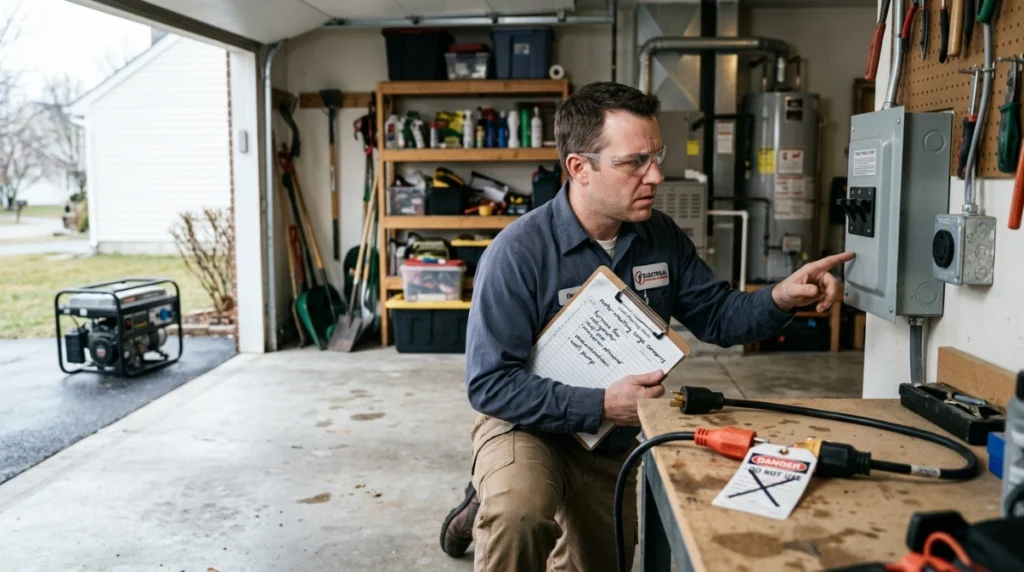
The biggest mistakes are incorrect sizing, unsafe generator placement, poor load planning, and assuming every generator works with every transfer switch. Most are preventable before installation.
- Backfeeding the house: Never substitute an improvised cord for proper transfer equipment.
- Ignoring generator receptacles: A 30-amp generator outlet doesn’t become a 50-amp source because a larger switch is installed.
- Overloading circuits: Transfer equipment doesn’t increase generator capacity.
- Forgetting motor surges: Pumps, refrigerators, furnaces, and compressors can draw much more power at startup.
- Ignoring neutral configuration: Generator bonding and transfer-switch design must be evaluated as one system.
- Poor generator placement: An inlet should not encourage generator operation near doors, windows, garages, or vents.
- Skipping testing: A backup system should be tested before the next outage.
Electrical safety isn’t the only concern. Portable generators also produce carbon monoxide, so read my portable generator carbon monoxide safety guide before putting any backup-power plan into service.
Portable Generator Transfer Switches I’d Consider
If you’re ready to narrow down the hardware, these are three established options I’d put on the comparison list. Final selection should still be confirmed by the electrician installing the system.
🏆 Best for Most Homes
Reliance Controls Pro/Tran 2 310CRK
★★★★☆ 4.7/5 editorial rating
This 30-amp, 10-circuit kit is designed for 125/250-volt portable-generator systems and supports generators up to about 7,500 running watts. I like the 10-circuit format because it gives a typical outage setup room for refrigeration, heating, pumps, lights, and selected outlets without overcomplicating load management.
⚡ Best 50-Amp Kit
Reliance Controls Pro/Tran 2 510CWK
★★★★☆ 4.6/5 editorial rating
The 510CWK combines a 50-amp, 10-circuit Pro/Tran 2 switch with a 50-amp power inlet and generator cord. I’d look at this class when the portable generator has a compatible 50-amp output and the planned emergency loads exceed what a 30-amp connection can comfortably serve.
🔄 Best Upgrade Path
Generac HomeLink 6852 30A Manual Transfer Switch
★★★★☆ 4.5/5 editorial rating
Generac’s 30-amp HomeLink system can serve roughly 8 to 10 essential circuits and works with compatible generators starting around 5 kW with an L14-30 connection. Its standout feature for me is the potential upgrade path to automatic operation with certain compatible Generac standby systems.
Frequently Asked Questions
Can I connect a portable generator to my house without a transfer switch?
You can power individual appliances directly from properly rated generator extension cords without connecting the generator to household wiring. If you want generator power supplied through your home’s permanent circuits, use approved transfer or interlock equipment installed according to local requirements.
Is a 30-amp transfer switch enough for a portable generator?
A 30-amp, 120/240-volt connection provides up to 7,200 watts of theoretical circuit capacity. It works well for many 5,000-to-7,500-watt home-backup generators, provided your actual running and starting loads remain within the generator’s ratings.
Can I use a 50-amp transfer switch with a 30-amp generator?
The overall system must be designed around the generator’s actual output, receptacle, overcurrent protection, conductors, inlet, and transfer equipment. A larger transfer-switch rating doesn’t increase generator output, so have an electrician verify the complete system rather than relying on adapters.
Can a transfer switch run my entire house?
Some systems can transfer an entire panel, but a portable generator may not have enough capacity to operate every load simultaneously. Most portable-generator owners get better results by prioritizing essential circuits and manually managing high-demand appliances.
Can I install a generator transfer switch myself?
Transfer-switch work involves a home’s electrical panel and potentially hazardous energized equipment, even when branch circuits appear switched off. I recommend using a qualified electrician who can verify local code requirements, permits, neutral and grounding configuration, conductor sizing, and final operation.
Final Takeaway
A portable generator transfer switch turns a standalone generator into a much more useful home-backup system. More importantly, properly selected transfer equipment isolates generator power from utility power and gives you controlled access to the circuits that matter.
For most homeowners, I’d start with a quality manual 30-amp or 50-amp transfer switch, choose essential circuits carefully, and have an electrician match the entire system. Then test it before storm season so the first real outage isn’t also your first practice run.

Hi, I’m Michael Turner. I own a generator workshop in the United States and founded HomeGeneratorBlog to share practical, hands-on guidance about generator installation, maintenance, troubleshooting, safety, and backup power solutions. My goal is to help homeowners make smarter, more confident decisions through clear and reliable information