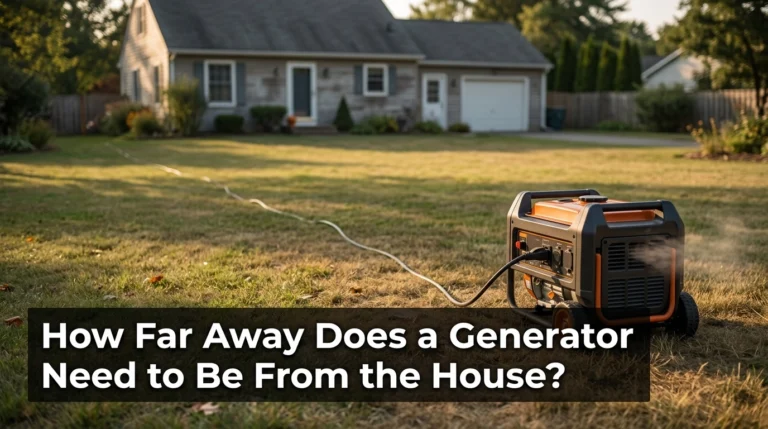
Can I Just Plug a Generator Into an Outlet?
Quick Answer
No. You should never plug a portable generator into a normal wall outlet, dryer outlet, or other household receptacle to power your home. This unsafe practice is called backfeeding and can send electricity toward utility lines, creating serious shock, electrocution, and fire hazards. If you want to power household circuits, use a properly installed portable generator transfer switch or another approved transfer method.
What should you do instead?
- Direct appliance connection: Plug suitable appliances into the generator using properly rated outdoor extension cords.
- Household circuits: Use approved transfer equipment installed for your electrical system.
- No male-to-male cords: Never use a cord with a male plug on both ends to backfeed a receptacle.
- Keep it outdoors: Operate fuel-powered generators outside and well away from doors, windows, and vents.
- Use qualified help: Have a qualified electrician handle any connection to permanent household wiring.
Simple rule
- If the generator is supplying your home’s permanent wiring, don’t improvise the connection through an outlet.
It’s easy to see why plugging a generator into an outlet sounds convenient during an outage. The outlet is already connected to your house, so the shortcut can appear logical.
The problem is what happens on the other side of that outlet. Electricity can travel through circuits in ways the system wasn’t designed to handle.
I’ve always treated the generator-to-house connection as part of the safety system itself. A good generator can still become dangerous when the connection method is wrong.
What Happens If You Plug a Generator Into a Wall Outlet?
Plugging a generator into a household receptacle can force electricity backward through your home’s wiring. This is commonly called generator backfeeding.
Normal household receptacles are designed to deliver power to appliances. They aren’t intended to become an improvised input for energizing the electrical panel.
Definition: Generator backfeeding means sending generator electricity into premises wiring through an improper connection that can energize circuits beyond the intended load.
- Utility-side wiring may become energized. A lineworker may expect damaged utility conductors to be de-energized.
- Household protection can be defeated. Electricity may flow through wiring in unintended directions.
- Fire risk can increase. Improvised cords, outlets, and connections may not be sized for the supplied current.
- Exposed energized prongs are possible. Male-to-male cords can leave live metal blades accessible.
The U.S. Consumer Product Safety Commission specifically warns consumers not to power house wiring by connecting a generator to a wall outlet. Its portable generator safety guidance also covers carbon monoxide and electrical hazards.
Is a Male-to-Male Generator Cord Safe?
No. A male-to-male cord is not a safe way to connect a portable generator to your house.
You’ll sometimes hear these cords called suicide cords. The nickname exists because one exposed male plug can become energized while the other end is connected to a power source.
- Exposed blades: The metal prongs can carry dangerous voltage.
- Backfeeding: The cord can energize household and utility-side wiring.
- Improvised protection: The connection isn’t a substitute for proper transfer equipment.
- Fire hazards: Receptacles and conductors may be used outside their intended design.
This isn’t just a theoretical concern. In March 2026, the CPSC again warned consumers to stop using male-to-male extension cords because of electrocution and fire risks.
If you already have one for generator backfeeding, I wouldn’t build an outage plan around it. Use an approved connection method instead.
What Is the Safe Way to Connect a Generator to a House?
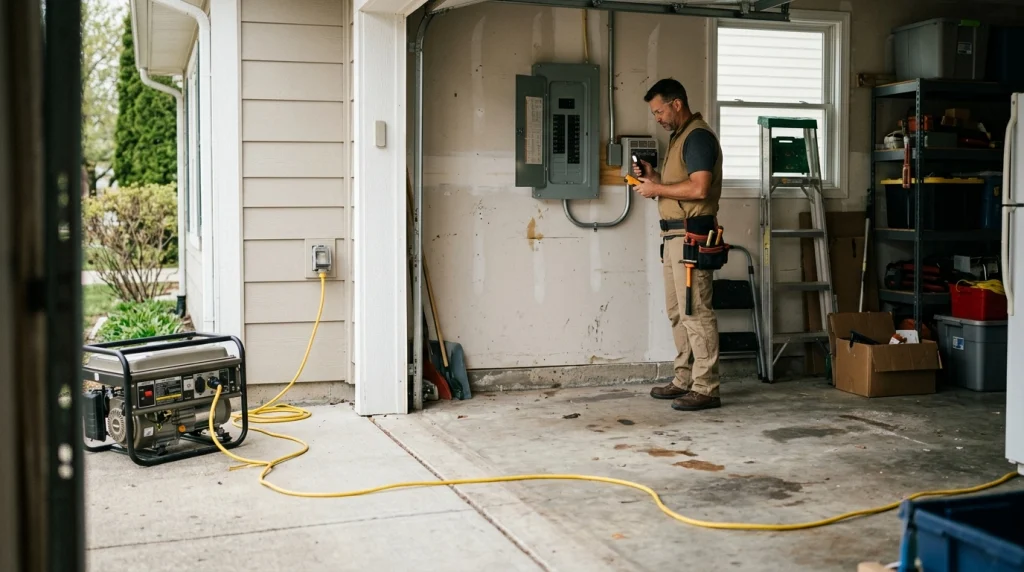
The correct method depends on whether you’re powering individual appliances or your home’s permanent circuits. Those are two different setups.
For refrigerators, lamps, chargers, and similar cord-connected loads, you can often connect them directly to the generator. Use suitable grounded extension cords and stay within the generator’s limits.
For permanent household wiring, use approved transfer equipment. OSHA warns against directly connecting a generator to a building electrical system unless properly installed transfer equipment is used.
| Connection Method | Appropriate? | Best Use | Main Concern |
|---|---|---|---|
| Appliance plugged directly into generator | Yes, when properly rated | A few essential appliances | Cord size and total load |
| Generator with transfer switch | Yes | Selected household circuits | Correct professional installation |
| Approved panel interlock system | Where permitted and correctly installed | Compatible electrical panels | Panel compatibility and load management |
| Generator plugged into wall/dryer outlet | No | None | Backfeed, shock, electrocution, fire |
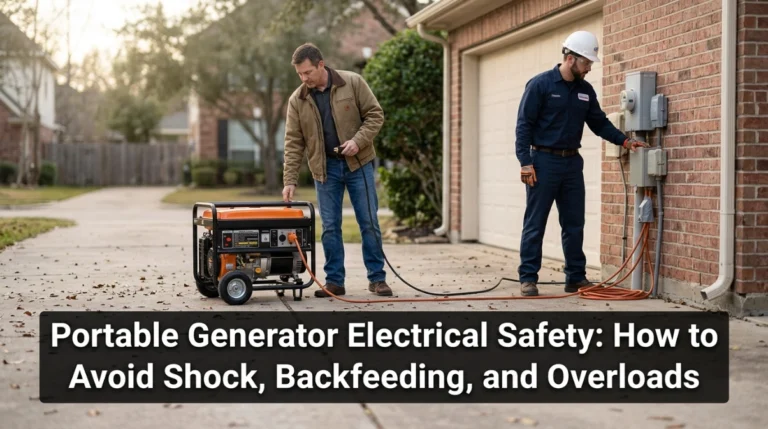
If you’re using a portable unit, my portable generator electrical safety guide covers cords, wet conditions, grounding, GFCI protection, and overloads in more detail.
Can I Just Turn Off the Main Breaker Before Backfeeding?
No. Turning off the main breaker doesn’t turn an improvised outlet connection into a properly designed generator connection.
A manually operated breaker can be switched incorrectly. Someone else could also change its position without understanding the generator setup.
Approved transfer equipment creates a deliberate mechanical or electrical arrangement between utility power and generator power. That source isolation is the important difference.
- Transfer switch: Selects utility or generator power for designated loads.
- Approved interlock: Mechanically prevents incompatible breaker positions when properly designed for the panel.
- Power inlet: Provides a purpose-built location for connecting the generator cord.
- Household outlet: Remains an output receptacle, not an improvised generator input.
The OSHA portable generator safety guidance states that generators shouldn’t be attached directly to a structure’s electrical system unless a qualified electrician has properly installed a transfer switch.
Can I Plug Appliances Directly Into the Generator?
Yes. Direct appliance connections are often the simplest solution when you only need a few essentials.
I’ve used this approach when the goal is keeping refrigeration, lights, communications gear, and a few low-demand devices running rather than energizing household circuits.
Use a heavy-duty, outdoor-rated extension cord suitable for the connected load. Check the cord before every use.
- Use grounded three-prong cords when the equipment requires grounding.
- Check the cord’s amp or watt rating.
- Avoid damaged, crushed, frayed, or overheated cords.
- Don’t exceed the generator receptacle rating.
- Account for motor starting wattage, not only running wattage.
For cord sizing and common mistakes, see my portable generator extension cord guide.
The U.S. Fire Administration also recommends using heavy-duty extension cords with portable generators.
Where Should the Generator Be While It’s Running?
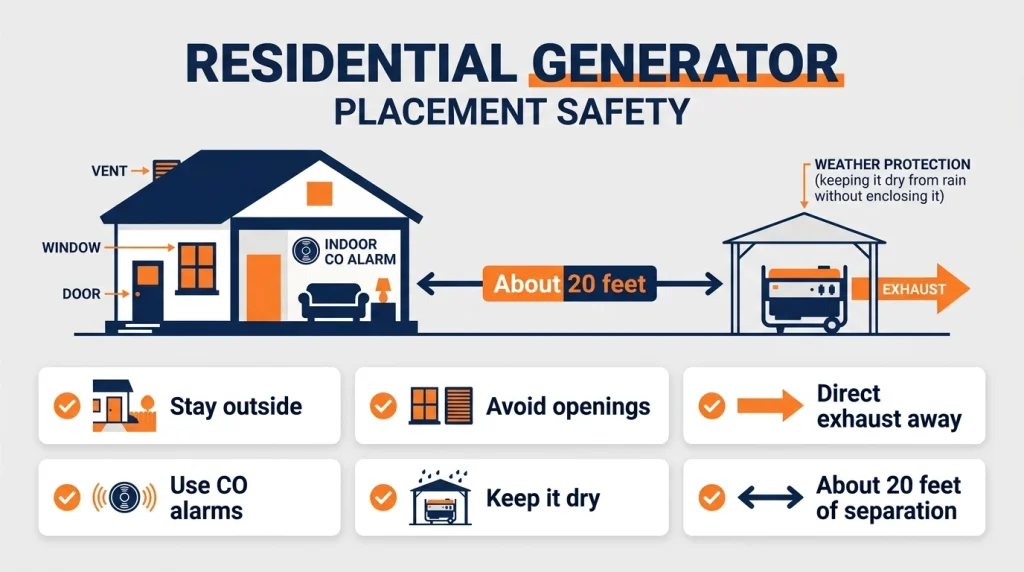
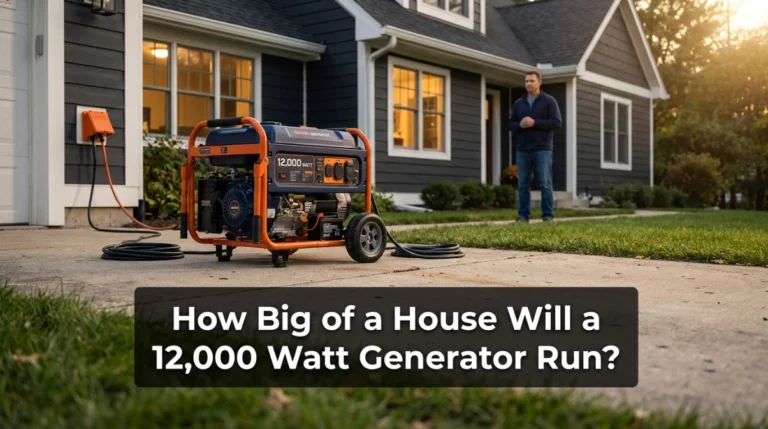
A fuel-powered portable generator belongs outside. Electrical connection safety doesn’t remove the carbon monoxide hazard.
Never operate one inside a house, basement, garage, crawlspace, shed, or another enclosed or partly enclosed location.
- Stay outside: Keep the generator away from occupied spaces.
- Avoid openings: Keep exhaust away from doors, windows, and vents.
- Direct exhaust away: Don’t point exhaust toward the building.
- Use CO alarms: Keep working carbon monoxide alarms inside the home.
- Keep it dry: Follow the manufacturer’s instructions for weather protection without enclosing the unit.
Current safety guidance commonly recommends about 20 feet of separation from the home for portable generators. Placement still needs to account for exhaust direction and surrounding openings.
I cover those details in my guide on where to place a portable generator.
The Electrical Safety Foundation International also advises keeping generators at least 20 feet from the home and using a transfer switch when powering household electrical systems. See its generator safety recommendations.
Transfer Switch vs Extension Cords: Which Should You Use?
Extension cords work well for a small number of portable loads. A transfer system becomes more useful when you need several household circuits or hardwired equipment.
Think about what must stay powered before buying hardware.
- Choose extension cords for a refrigerator, lamp, television, charger, or similar plug-in equipment.
- Choose transfer equipment for furnaces, well pumps, fixed lighting, household receptacle circuits, or other permanent wiring.
- Consider generator capacity before deciding how many circuits to transfer.
- Allow for starting loads from refrigerators, pumps, compressors, and motors.
A transfer switch doesn’t increase generator output. It simply gives you a controlled way to direct available generator power to selected circuits.
What Should You Do During an Outage?
A simple routine makes generator use safer and less stressful. I prefer deciding the connection method before bad weather arrives.
- Move the generator to its planned outdoor operating location. Keep exhaust away from the home and openings.
- Inspect the generator and cords. Look for damaged plugs, insulation, receptacles, or fuel leaks.
- Start with loads disconnected. Follow the generator manufacturer’s starting procedure.
- Connect loads using the approved method. Use direct cords or your professionally installed transfer system.
- Add loads gradually. Stay below the generator’s running and starting capacity.
- Monitor the setup. Stop if cords become unusually hot, breakers repeatedly trip, or the generator behaves abnormally.
- Shut down before refueling. Let the engine cool according to the manufacturer’s instructions.
Never let the urgency of an outage turn into improvised electrical work. Planning the setup ahead of time is much easier than troubleshooting it in the dark.
Generator Connection Equipment I’d Consider
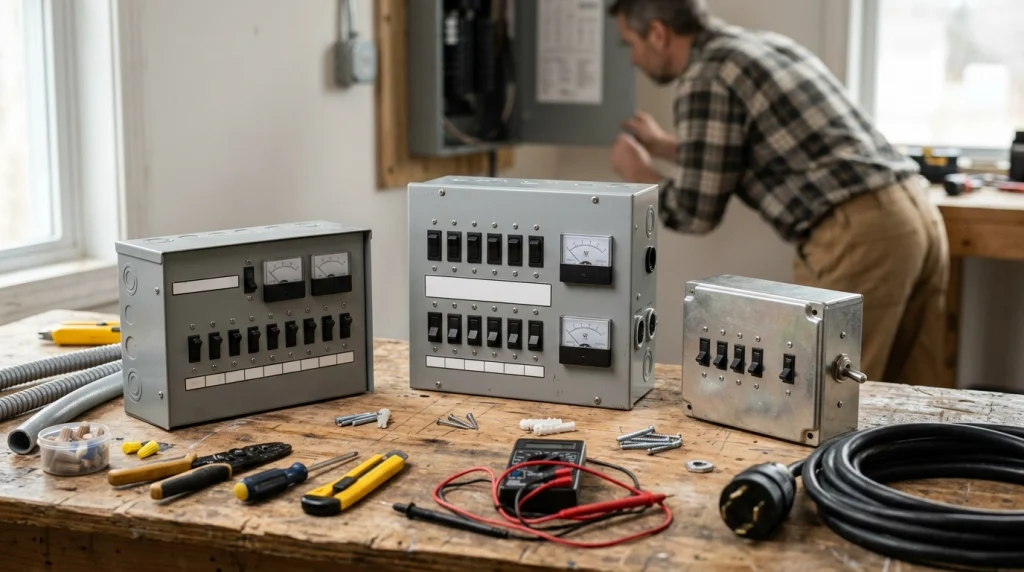
If you want household circuits powered from a portable generator, these are three established transfer-switch options I’d put on the comparison list. Have your electrician confirm compatibility before buying.
🏆 Best for Most Homes
Reliance Controls Pro/Tran 2 310CRK
★★★★☆ 4.7/5
This 30-amp, 10-circuit kit is designed for 125/250-volt portable-generator systems and supports roughly 7,500 running watts. I like this size for homeowners who want refrigeration, heating, pumps, lights, and selected outlets without trying to power everything at once.
⚡ Best 50-Amp Option
Reliance Controls Pro/Tran 2 510CWK
★★★★☆ 4.6/5
The 510CWK is a 50-amp, 10-circuit class system intended for larger compatible portable generators. I’d consider it when a 30-amp connection isn’t enough for the planned emergency loads and the generator provides a suitable 50-amp output.
🔄 Best Upgrade Path
Generac HomeLink 6852 30A
★★★★☆ 4.5/5
This 30-amp HomeLink system is designed around essential home circuits and compatible portable-generator connections. I like it for homeowners who may eventually move toward a more integrated Generac backup-power setup.
Frequently Asked Questions
Can I plug a generator into a dryer outlet?
No. A dryer receptacle shouldn’t be used as an improvised generator input. Feeding generator power through it can backfeed household and utility wiring. Use an approved transfer system or properly installed generator inlet instead.
Can I plug a generator into a 120-volt wall outlet?
No. A standard household receptacle is designed to supply electricity to a device, not accept generator power for the house. Plugging a generator into it can create backfeeding, shock, electrocution, and fire hazards.
Do I need a transfer switch if I only use extension cords?
Usually not when individual appliances are plugged directly into generator receptacles with properly rated cords. A transfer system becomes necessary when you want the generator to supply permanent household wiring or selected circuits through the electrical panel.
Can a generator damage appliances if connected incorrectly?
Yes. Incorrect voltage, overloaded circuits, poor connections, unstable generator output, or improper wiring can damage equipment. Check appliance requirements, generator ratings, receptacle voltage, cord capacity, and starting wattage before connecting loads.
Can I install a transfer switch myself?
Transfer equipment involves the home’s electrical panel, source isolation, conductor sizing, grounding, neutral configuration, and local electrical requirements. I recommend having a qualified electrician select, install, and test the system rather than treating it as a basic DIY wiring project.
Final Takeaway
You should never plug a generator into an ordinary household outlet to power your home. The shortcut can create dangerous backfeeding and expose you, utility workers, neighbors, and your electrical system to unnecessary risk.
For a few appliances, use correctly rated direct connections. For household circuits, install approved transfer equipment and have the system matched to your generator and electrical panel.
As of 2026, that basic rule hasn’t changed: generator power needs a controlled connection path. Set it up before the next outage so you don’t have to improvise when the lights go out.

Hi, I’m Michael Turner. I own a generator workshop in the United States and founded HomeGeneratorBlog to share practical, hands-on guidance about generator installation, maintenance, troubleshooting, safety, and backup power solutions. My goal is to help homeowners make smarter, more confident decisions through clear and reliable information