What Are the Cons of a Generator? 10 Drawbacks to Know
Quick Answer
The main cons of a generator are noise, fuel costs, maintenance, exhaust fumes, carbon monoxide risk, limited runtime, and the need for safe outdoor placement. Portable fuel generators also require hands-on setup and refueling, while larger standby systems can cost considerably more to buy and install. Safe operation matters most, so I recommend reviewing the CDC carbon monoxide guidance before using any fuel-powered generator.
The biggest generator disadvantages
- Noise: Engine-driven generators can be disruptive, especially during overnight outages.
- Fuel expense: Gasoline, propane, diesel, or natural gas adds ongoing operating cost.
- Maintenance: Engines need oil checks, filters, spark plugs, and periodic exercising.
- Safety risks: Fuel generators produce carbon monoxide and must operate outdoors.
- Limited runtime: Portable models eventually need refueling or a fresh fuel supply.
- Manual work: Portable generators usually require moving, connecting, starting, and monitoring.
Before buying
- Compare those drawbacks with how often you lose power, which appliances you must run, and whether a battery power station could cover smaller loads.
Generators can be invaluable during an outage, but they aren’t effortless backup power. The disadvantages become much more obvious once you factor in fuel, noise, storage, maintenance, and safe placement.
I look at a generator as an engine-driven tool rather than a magic emergency box. Understanding the downsides before buying usually leads to a better-sized and easier-to-live-with backup system.
What Are the Main Cons of Owning a Generator?
The biggest drawbacks are operating noise, fuel dependence, routine maintenance, carbon monoxide hazards, and the work involved in running the machine safely. Larger systems can also become expensive once installation and electrical equipment are included.
Not every disadvantage applies equally to every model. A small inverter generator behaves differently from a large open-frame generator or permanently installed standby unit.
- Noise: Combustion engines and cooling systems create sound and vibration.
- Fuel: You need gasoline, propane, diesel, or natural gas available during an outage.
- Maintenance: Oil, filters, batteries, plugs, and fuel systems require attention.
- Exhaust: Fuel-powered models produce dangerous combustion gases.
- Runtime: Portable generators cannot run forever without fuel and servicing.
- Weather exposure: The generator must stay outdoors yet protected from dangerous wet conditions.
- Electrical setup: Whole-home connections require proper equipment and professional installation.
- Storage: Portable units and their fuel take up space when they’re not being used.
1. Generators Can Be Noisy
Noise is one of the first disadvantages people notice. Engine speed, enclosure design, electrical load, and generator size all affect how loud a unit sounds.
Even models marketed as quiet aren’t silent. Generator noise becomes especially noticeable at night when surrounding background noise drops.
| Example Generator | Rated Output | Published Noise | Dry / Listed Weight |
|---|---|---|---|
| Honda EU2200i | 1,800W rated | 48 dB(A) at 1/4 load; 57 dB(A) at rated load | 47.4 lb |
| Champion 201531 Dual Fuel Inverter | 3,250W running on gasoline | 64 dB(A) from 23 ft | 51.8 lb |
| Westinghouse WGen9500DF | 9,500W running on gasoline | As low as 74 dBA | 211 lb |
Those numbers also show why “generator noise” isn’t one fixed figure. Compact enclosed inverter models can be much quieter than high-output open-frame equipment.
The CDC also warns that generator engines produce enough noise and vibration to create a potential hearing risk. Distance and hearing protection become worth considering when you’re working near a running unit for extended periods.
2. Fuel Can Become Expensive and Hard to Find
A fuel generator keeps making electricity only while its fuel supply continues. That becomes both a cost issue and a logistics problem during a long outage.
Gas stations may lose power themselves or develop long lines after storms. Storing large quantities of gasoline at home creates another set of safety and storage concerns.
Fuel type changes the tradeoff, which is why I don’t choose a generator based on wattage alone. Our guide to choosing the best generator fuel compares gasoline, propane, diesel, and natural gas in more detail.
- Gasoline: Widely available, but it degrades during storage and needs careful handling.
- Propane: Easier to store long term, but output can be lower on some dual-fuel models.
- Natural gas: Convenient for compatible standby equipment, but availability depends on the utility supply.
- Diesel: Common for heavy-duty equipment, though diesel generators may be larger and more expensive.
3. Generators Need Regular Maintenance
A combustion generator has an engine, which means it needs engine maintenance. Ignoring it for years and expecting instant emergency power is a common mistake.
Maintenance requirements vary by manufacturer. The owner’s manual should always control the actual service intervals.
- Check and change engine oil when required.
- Inspect or replace the air filter.
- Inspect the spark plug on gasoline and propane engines.
- Keep fuel fresh and manage stored gasoline correctly.
- Check starting batteries on electric-start models.
- Exercise standby equipment according to manufacturer instructions.
- Inspect cords, receptacles, and fuel connections.
This is one reason a generator that sits unused can still create work. Storage preparation matters just as much as maintenance during an outage.
If long storage periods concern you, see how extended generator operation affects maintenance and runtime before planning for multi-day outages.
4. Can a Generator Be Dangerous Because of Carbon Monoxide?
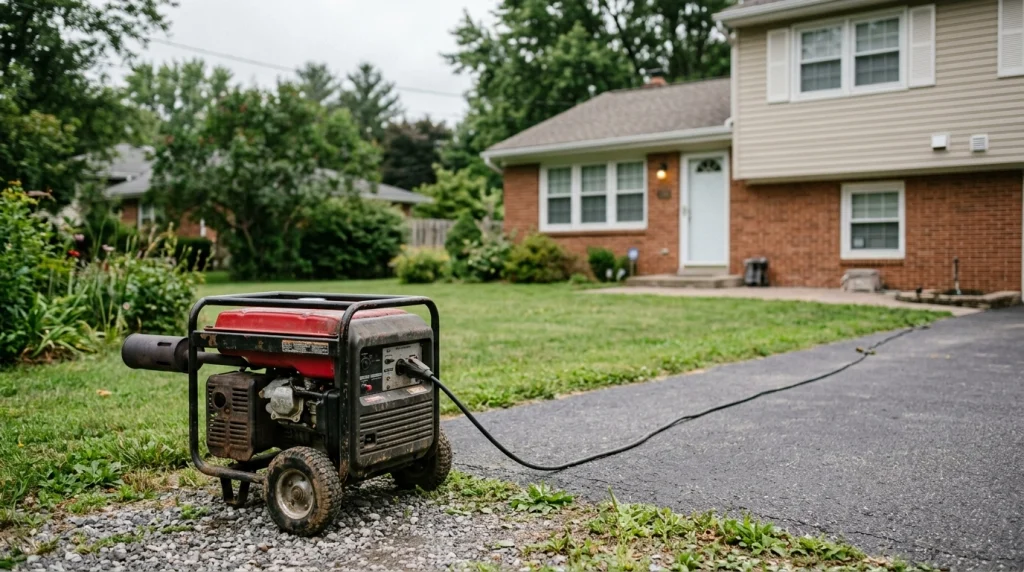
Yes. Fuel-powered generators produce carbon monoxide, an odorless and colorless poisonous gas that can cause severe illness or death.
This is the most serious disadvantage to understand. A generator should never be treated like an indoor appliance.
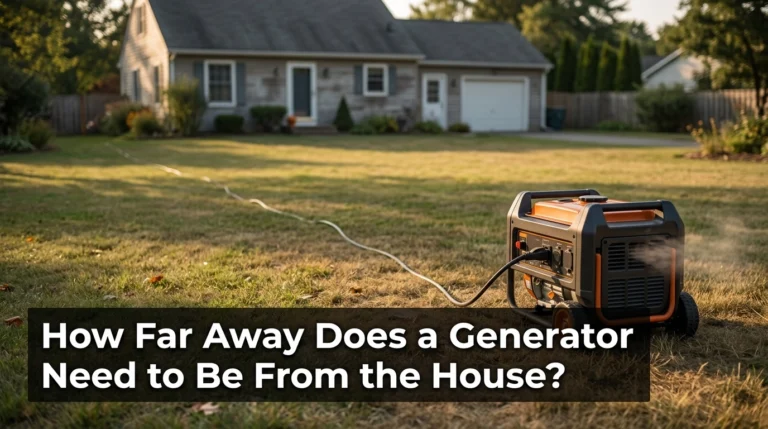
The U.S. Environmental Protection Agency advises operating fuel-powered portable generators outdoors and at least 20 feet from buildings. Exhaust should also stay away from doors, windows, and vents.
- Never run it inside a home.
- Never run it inside an attached garage.
- Do not place it beside an open window or door.
- Keep exhaust pointed away from occupied buildings.
- Use working carbon monoxide alarms inside the home.
A built-in carbon monoxide shutoff feature is useful, but it doesn’t replace correct generator placement. Safe operating distance remains essential.
5. Portable Generators Require More Hands-On Work
A portable generator is portable in the sense that it can be moved. That doesn’t mean every generator is easy to move.
Large home-backup models can weigh well over 100 pounds before you add fuel. You’ll also need to position the generator, connect loads, start it, monitor it, and eventually refuel it.
- Move the unit to a safe outdoor location.
- Check oil and fuel.
- Connect suitable outdoor-rated cords or an approved transfer system.
- Start the generator.
- Add appliances without exceeding capacity.
- Monitor fuel and operating condition.
- Shut down and cool the unit before refueling.
That amount of interaction isn’t always ideal for older homeowners or anyone who wants fully automatic backup. A standby generator is more convenient but adds installation cost.
6. Generator Runtime Is Limited
Portable generator runtime is constrained by tank capacity, electrical load, and fuel supply. Published runtime figures also commonly assume a partial load rather than maximum output.
For example, Champion lists up to 10 hours at 25% load on gasoline for its 201531 inverter. Westinghouse lists up to 12 hours at 25% load for the WGen9500DF’s gasoline tank.
That doesn’t mean either machine will run that long under every condition. Higher electrical demand usually increases fuel consumption.
If you’re deciding how much power you truly need, use our generator power capacity guide instead of buying the largest generator you can afford.
7. Safe Weather Protection Can Be Awkward
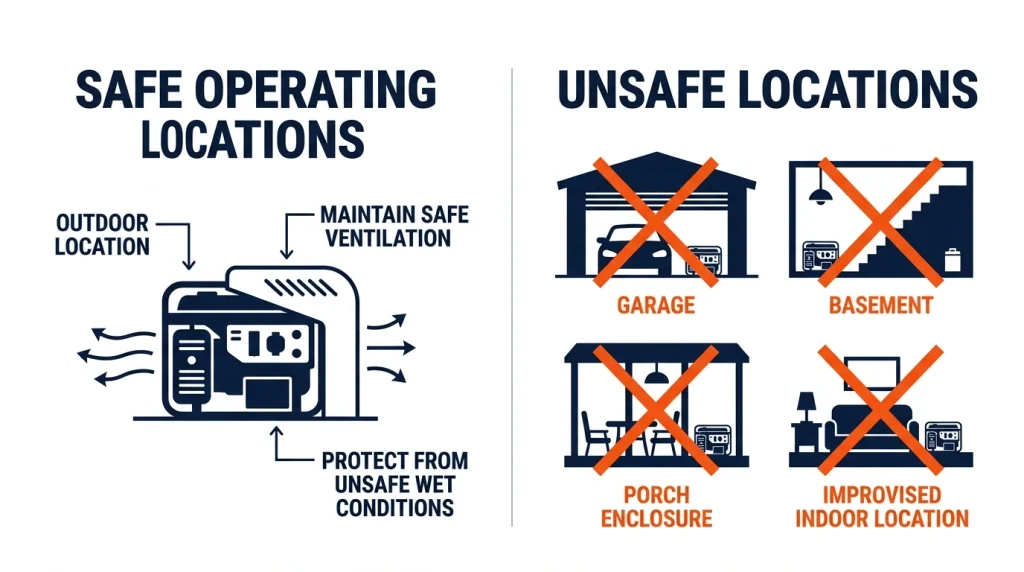
A portable generator belongs outdoors, but electricity and water are a dangerous combination. This creates a practical problem during the storms that often cause outages.
You need an operating location that maintains safe ventilation and keeps the equipment protected according to its manufacturer’s instructions. A garage, basement, porch enclosure, or improvised indoor location is not a safe shortcut.
The National Fire Protection Association generator safety guidance also stresses outdoor placement, safe refueling, suitable cords, and proper transfer equipment.
8. Connecting a Generator to a House Can Add Cost
Running a refrigerator through a suitable extension cord is different from powering household circuits. A proper whole-home or selected-circuit connection needs suitable electrical equipment.
A transfer switch or approved interlock arrangement helps prevent dangerous backfeeding into utility lines. Installation should comply with applicable electrical codes and local requirements.
This cost is easy to overlook when comparing generator prices. The generator itself may be only one part of the final backup-power budget.
9. Bigger Generators Take Up Space
Portable generators need storage space when the grid is working normally. Fuel cans, propane cylinders, cords, covers, and maintenance supplies can require additional room.
Permanent standby generators avoid garage storage but need an approved outdoor installation location. Clearance requirements can matter on smaller properties.
Weight matters too. A high-output portable unit may be technically movable while still being difficult for one person to handle.
10. A Generator May Be More Power Than You Actually Need
A generator isn’t automatically the best answer for every outage. People who only need lights, phones, internet equipment, and a few electronics may prefer battery backup.
Battery power stations avoid engine exhaust and fuel storage, and they operate quietly. Their major limitation is stored energy capacity.
Fuel generators make more sense when you need substantial output for long periods and can continue supplying fuel. Our power station vs. generator comparison explains where each option fits.
Generator vs. Battery Power Station: Which Has Fewer Drawbacks?
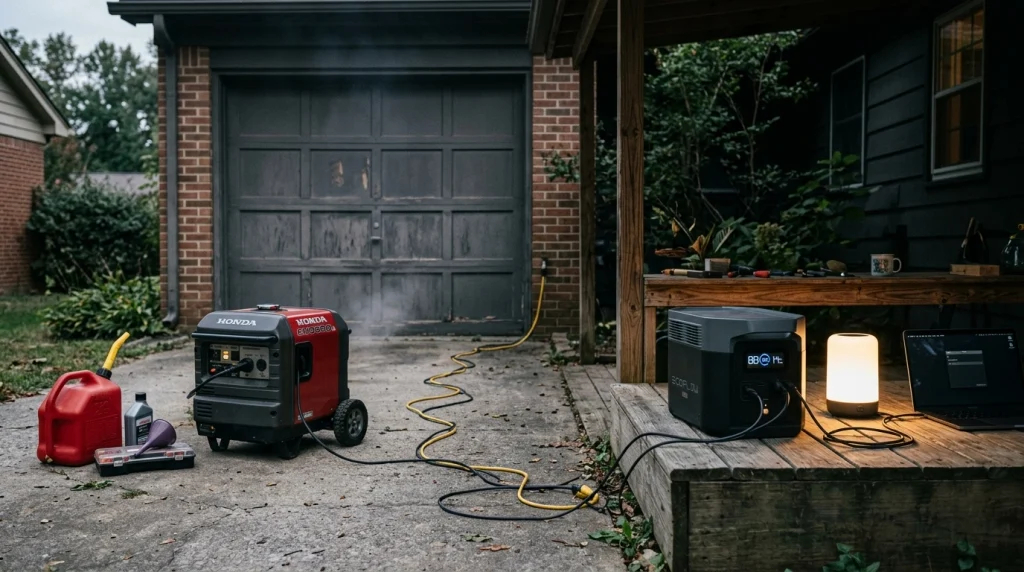
A battery power station has fewer engine-related disadvantages, but that doesn’t make it better for every outage. It trades fuel dependence for limited battery capacity.
| Factor | Fuel Generator | Battery Power Station |
|---|---|---|
| Noise | Engine noise | Usually quiet aside from cooling fans |
| Exhaust | Produces combustion exhaust | No engine exhaust during use |
| Energy supply | Can continue with more fuel | Must recharge when battery is depleted |
| Maintenance | Engine and fuel-system service | No oil or spark-plug service |
| High-power loads | Many high-output choices available | Depends heavily on inverter and battery size |
Are the Disadvantages of a Generator Worth It?
They can be, especially if outages threaten refrigeration, sump pumps, heating equipment, well pumps, or other essential loads. The real question is whether the benefits outweigh the maintenance and safety responsibilities for your household.
My approach is to buy enough generator for the loads that matter, not every electrical device in the house. That keeps fuel use, noise, weight, and purchase cost more manageable.
- Frequent long outages: A generator can provide valuable extended backup.
- Occasional short outages: A smaller inverter or battery system may be simpler.
- Whole-house convenience: A standby generator offers automation at a higher installed cost.
- Only electronics and lights: Battery power deserves serious consideration.
Generator Options I Would Consider
If the drawbacks still make sense for your situation, I’d focus on a generator that matches the load rather than simply chasing maximum wattage.
🏆 Quiet Portable Pick
Honda EU2200i
★★★★½
It provides 1,800 rated watts, weighs 47.4 pounds, and Honda publishes a 48–57 dB(A) operating range depending on load. I like this size when quiet operation and manageable portability matter more than whole-house output.
⛽ Fuel Flexibility
Champion 201531 4500W Dual Fuel Inverter
★★★★☆
This compact inverter runs on gasoline or propane and delivers 3,250 running watts on gasoline. The dual-fuel setup is appealing when I want to avoid depending on one fuel source during an outage.
🏠 Higher-Output Backup
Westinghouse WGen9500DF
★★★★☆
It delivers 9,500 running watts on gasoline and 8,500 on propane, with 120/240V output and transfer-switch-ready capability. I would consider this class when several larger household loads need backup and portability is less important.
Frequently Asked Questions
What is the biggest disadvantage of a generator?
For a fuel-powered portable generator, the biggest disadvantage is the combination of carbon monoxide risk and required outdoor operation. You must position it safely away from the home while also protecting the equipment from unsafe operating conditions.
Are generators expensive to run?
Operating cost depends on generator size, electrical load, runtime, and local fuel prices. Larger generators generally consume more fuel when carrying heavy loads, so choosing a properly sized model can reduce unnecessary fuel consumption.
Is it bad to run a generator every day?
Daily operation isn’t automatically harmful if the generator is designed for the duty cycle and you follow its maintenance schedule. Oil checks, cooling, load management, safe refueling, and manufacturer-specified service become increasingly important during extended operation.
Are generators bad for electronics?
Not every generator produces the same electrical output quality. Inverter generators are commonly chosen for sensitive electronics because their electronics regulate output differently, while conventional generators should still be operated within manufacturer specifications and proper load limits.
Is a generator better than a battery backup?
A generator is usually better for long-duration, high-wattage backup when fuel remains available. A battery power station is quieter, produces no engine exhaust during operation, and requires less routine maintenance, but its runtime is limited by stored battery capacity.
Final Takeaway
The cons of a generator are real: noise, fuel use, maintenance, exhaust, limited runtime, storage, weather concerns, and electrical setup all add responsibility. Those disadvantages shouldn’t be ignored just because a generator can keep the lights on.
For many homes, the solution is not avoiding generators altogether. It’s choosing the smallest practical system that safely powers the appliances you genuinely need during an outage.
Start with your essential loads, calculate their running and starting watts, and then compare portable generators, inverter models, standby systems, and battery power stations. That approach usually produces a backup system you’ll be happier to own when the next outage arrives.

Hi, I’m Michael Turner. I own a generator workshop in the United States and founded HomeGeneratorBlog to share practical, hands-on guidance about generator installation, maintenance, troubleshooting, safety, and backup power solutions. My goal is to help homeowners make smarter, more confident decisions through clear and reliable information