
Portable Generator Electrical Safety: How to Avoid Shock, Backfeeding, and Overloads
Quick Answer
Portable generator electrical safety starts with keeping the unit dry, preventing backfeeding, using properly rated three-prong cords, and following the manufacturer’s grounding instructions. Safe portable generator placement matters too, because the generator must stay outdoors without exposing electrical connections to water.
Electrical safety rules to follow
- Keep it dry: Never handle generator plugs, receptacles, or controls while your hands are wet or you’re standing in water.
- Never backfeed: Don’t connect a generator to a household wall outlet or use a male-to-male cord.
- Use proper cords: Choose heavy-duty, outdoor-rated, grounded extension cords sized for the connected load.
- Use GFCI protection: Follow the generator manufacturer’s instructions for ground-fault circuit interrupter protection.
- Check grounding: Don’t assume every portable generator needs a separate ground rod; the correct setup depends on how it’s connected.
- Avoid overloads: Keep the total running and starting load within the generator’s rated capacity.
Before you start
- Inspect every cord, plug, receptacle, and connection before applying power.
A portable generator can keep essential equipment running during an outage, but its receptacles deliver enough current to cause serious injury. Most electrical problems I’ve seen are easier to prevent than troubleshoot after something overheats or trips.
This guide focuses on the practical rules I use when thinking through a safe temporary-power setup. It covers cords, rain, GFCIs, grounding, transfer switches, backfeeding, loads, and the checks worth making before every start.
What Is Portable Generator Electrical Safety?
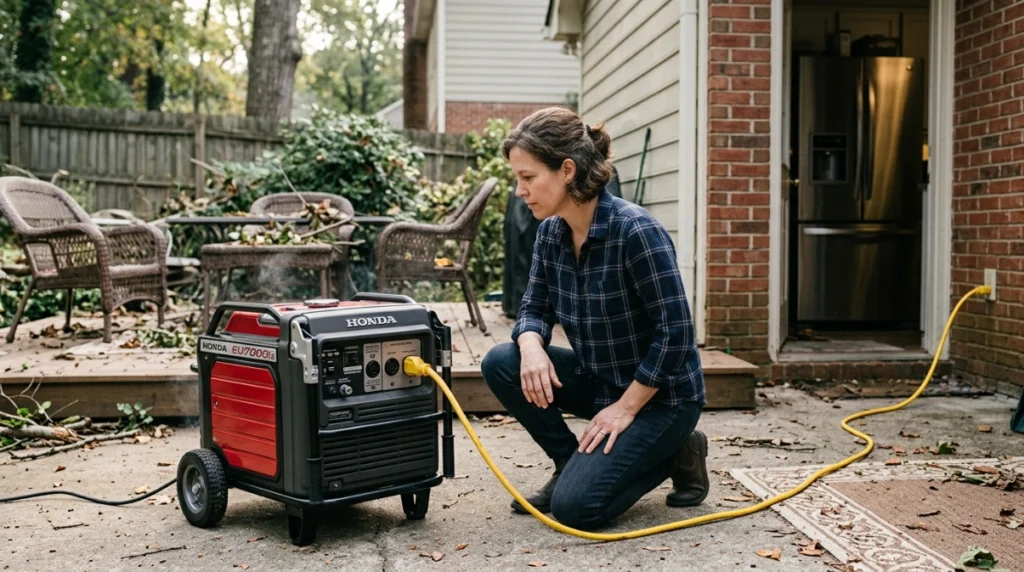
Portable generator electrical safety means controlling the shock, electrocution, overload, grounding, and backfeeding hazards created when a generator supplies electrical equipment. The goal is to give electricity one intended path while keeping people away from unintended current paths.
Simple definition: Safe generator use means correct connections, suitable cords, dry equipment, proper circuit protection, and a load that stays within the generator’s limits.
A generator engine turns mechanical energy into electricity through its alternator. If you want the full process, my guide to how a portable generator works explains what happens between the engine and the receptacles.
What Electrical Hazards Should You Watch for?
The main electrical hazards are shock, electrocution, damaged cords, overloaded circuits, incorrect grounding, and backfeeding into household wiring. Wet conditions can make several of those hazards worse.
- Electric shock: Current can pass through your body when you contact an energized part while providing a path to ground.
- Damaged insulation: Cuts, crushed sections, and exposed conductors can energize surfaces that shouldn’t carry current.
- Overloaded cords: An underrated extension cord can heat excessively under a heavy load.
- Overloaded generator: Excess demand can trip breakers, overheat equipment, or produce unstable output.
- Backfeeding: An improper household connection can energize utility-side wiring and endanger other people.
- Wet equipment: Water around plugs, receptacles, or damaged insulation increases electrical danger.
My practical rule is simple: I treat a missing ground pin, damaged jacket, loose receptacle, or wet connection as a stop sign. Saving ten minutes isn’t worth gambling with line voltage.
Can You Use a Portable Generator in Rain?
You shouldn’t expose a portable generator or its electrical connections directly to rain or standing water. Water and energized equipment are a dangerous combination.
The OSHA portable-generator safety guidance recommends keeping generators dry and avoiding electrical work while wet or standing in water.
- Operate the generator outdoors on a dry, stable surface.
- Keep plugs and receptacles protected from rain and runoff.
- Never place the generator where water can puddle underneath it.
- Dry your hands before touching the generator.
- Don’t use electrical equipment that has been submerged.
- Follow the generator manual for approved weather protection.
A weather cover must still allow safe engine ventilation and exhaust flow. Moving the generator into a garage, shed, porch, or house to keep it dry creates a separate carbon-monoxide hazard.
How Do You Prevent Generator Backfeeding?
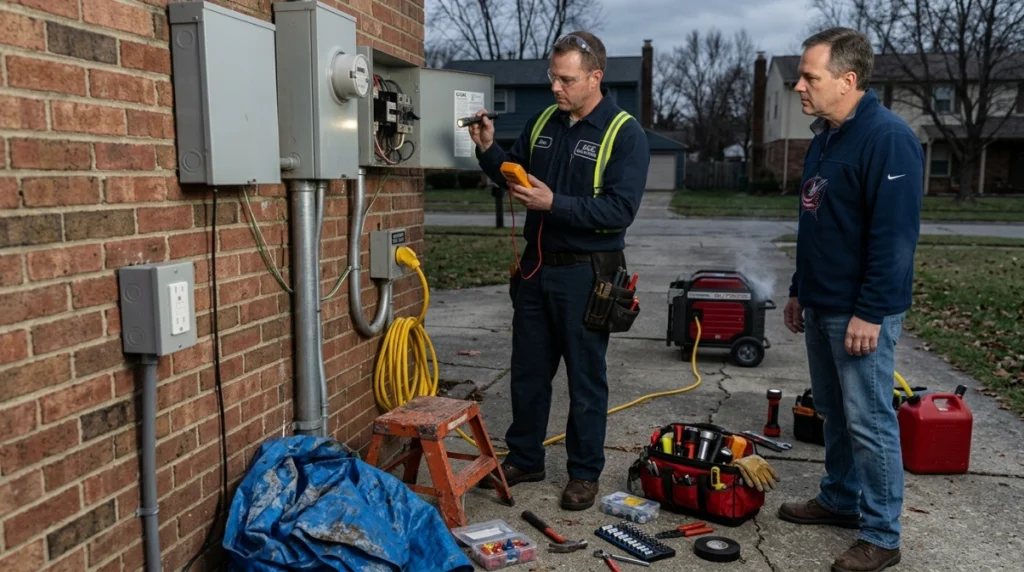
Never power household wiring by plugging a generator into a normal wall receptacle. This practice, called backfeeding, can energize wiring beyond your home and expose utility workers or neighbors to dangerous voltage.
For whole-home or selected-circuit power, use properly installed transfer equipment. The generator and utility supply must not be able to energize the home’s wiring at the same time.
| Connection method | Safety status | Main consideration | Professional needed? |
|---|---|---|---|
| Appliance plugged into generator | Appropriate when correctly rated | Use grounded, outdoor-rated cords and stay within receptacle ratings. | Usually no |
| Approved transfer equipment | Preferred for household circuits | Must isolate the generator source from utility power. | Yes |
| Generator plugged into wall outlet | Never safe | Can backfeed utility wiring and bypass intended protection. | Do not use |
The main breaker alone isn’t a substitute for properly designed transfer equipment. Have a qualified electrician install and verify any connection that feeds premises wiring.
Do You Need to Ground a Portable Generator?
Some portable-generator setups don’t require a separate ground rod, while others do. The answer depends on the generator’s bonding arrangement and whether it supplies cord-connected equipment or a building through transfer equipment.
OSHA explains that a generator frame can serve as the grounding reference under specific conditions when equipment is supplied through receptacles mounted on the generator. Its portable generator grounding guidance also explains when additional grounding becomes necessary.
- Read the grounding section in your generator owner’s manual.
- Don’t add or remove neutral-to-frame bonds without understanding the system.
- Don’t assume a driven ground rod automatically makes an installation safer.
- Have transfer-switch grounding and bonding checked by a qualified electrician.
- Never defeat a grounding pin on a plug to make it fit another receptacle.
Grounding and bonding sound similar, but they’re not identical. If the manual and your connection method don’t make the arrangement clear, that’s a good point to involve an electrician.
What Extension Cord Should You Use With a Portable Generator?
Use an intact, heavy-duty, outdoor-rated, three-wire extension cord whose electrical rating meets or exceeds the connected load. The plug should retain all three prongs.
Long, thin cords create more voltage drop than shorter, heavier conductors. That can become important with refrigerators, pumps, compressors, and other motor loads.
- Outdoor rating: Use a cord designed for outdoor exposure.
- Ground conductor: Choose three-wire cords for grounded appliances.
- Amp rating: Never exceed the cord’s listed amperage.
- Length: Use only as much cord as your safe generator placement requires.
- Condition: Reject cords with cuts, exposed wire, crushed insulation, or loose ends.
- Connections: Keep plug connections dry and protected from traffic.
Don’t choose a cord by thickness or appearance alone. Read the printed jacket markings and verify the actual conductor size and electrical rating.
Should You Use GFCI Protection With a Generator?
Ground-fault circuit interrupters can reduce electrocution risk by disconnecting power when current leaves its intended path. Follow the generator manufacturer’s instructions because generator receptacle and bonding designs differ.
A portable GFCI can be useful where compatible equipment doesn’t already provide that protection. A GFCI doesn’t replace correct grounding, intact insulation, dry working conditions, or safe generator placement.
- Test GFCI protection according to its instructions before use.
- Don’t bypass a GFCI because it repeatedly trips.
- Disconnect the load and identify the cause of repeated trips.
- Keep GFCI devices and connectors out of standing water.
How Do You Keep a Portable Generator From Overloading?
Add the running watts of the equipment you plan to operate, then allow for the highest starting surge that may occur. Motors can require substantially more power for a short period while starting.
My generator power capacity guide covers the sizing process in more detail. Don’t assume a generator’s largest advertised number represents continuous output.
- Check the generator’s rated running wattage.
- Identify appliances with motors or compressors.
- Check their running and starting requirements.
- Avoid starting several large loads simultaneously.
- Use separate generator circuits only within their individual ratings.
- Turn off nonessential loads if the generator begins struggling.
A breaker that repeatedly trips is giving you useful information. Don’t hold it on, defeat it, or replace it with a larger breaker unless the manufacturer specifically calls for that rating.
What Generator Voltage Is Safe?
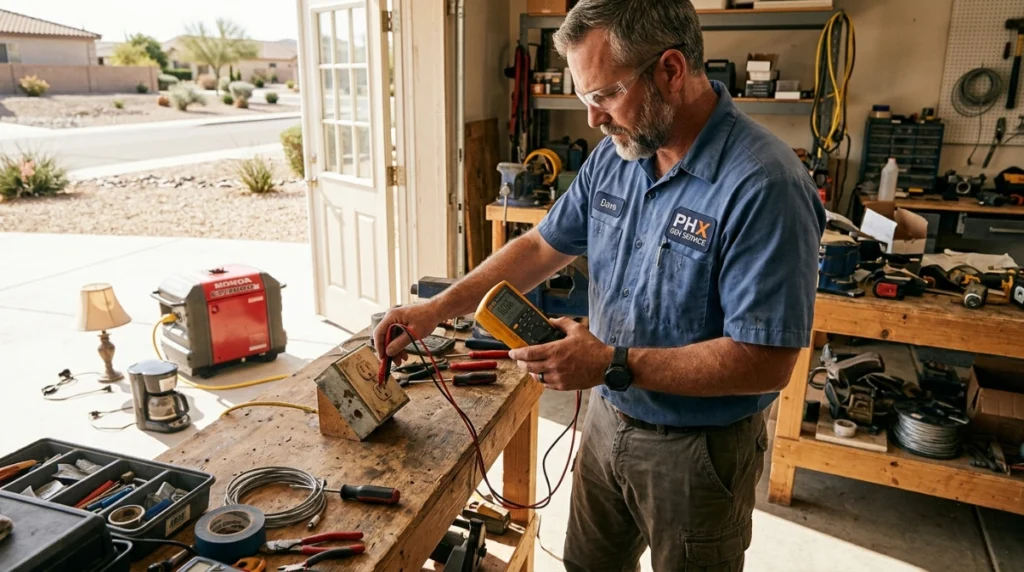
Your generator should supply voltage within the range intended by its manufacturer and connected equipment. Unstable or incorrect voltage can damage appliances even when the generator still appears to run normally.
If lights suddenly become unusually bright or dim, motors change speed, or electronics behave erratically, disconnect sensitive loads. My guide to portable generator voltage explains normal output and common voltage problems.
- Stop using the generator if receptacles show heat damage.
- Investigate repeated breaker trips before reconnecting equipment.
- Don’t open the alternator or control panel while the generator is running.
- Use suitable test equipment if voltage measurement is necessary.
- Get professional help when voltage remains unstable after the load is removed.
What Should You Check Before Starting a Generator?
A one-minute inspection can catch many electrical hazards before the engine starts. I prefer doing this inspection before an outage rather than trying to find damaged equipment in the dark.
- Inspect the generator: Look for damaged receptacles, broken covers, loose panels, or signs of overheating.
- Inspect every cord: Check the complete length rather than only the plug ends.
- Confirm placement: Put the generator outdoors, dry, stable, and away from the home.
- Check the load: Know what you’re going to power before plugging equipment in.
- Review grounding: Follow the owner’s manual and your connection method.
- Start unloaded: Let the engine stabilize before connecting major loads unless the manufacturer instructs otherwise.
- Add loads gradually: Connect essential equipment in a controlled sequence.
Electrical safety isn’t the only concern. Fuel-burning generators must also be kept far enough from occupied buildings to control carbon-monoxide exposure.
Review my portable generator carbon monoxide safety guide before planning an outage setup. Current CPSC generator guidance says portable generators belong outdoors at least 20 feet from homes, with exhaust directed away.
When Should You Call an Electrician?
Call a qualified electrician whenever the generator will connect to household wiring or when you’re unsure about grounding, bonding, transfer equipment, or damaged electrical components. Those aren’t good places to experiment.
- You want to power circuits through your electrical panel.
- You need a transfer switch or other approved transfer equipment installed.
- You don’t know whether the generator has a bonded or floating neutral.
- A breaker or GFCI keeps tripping without an obvious overload.
- You measure abnormal or unstable output voltage.
- A receptacle, cord, plug, or control panel shows burn or heat damage.
For outage planning, Ready.gov’s power-outage guidance is worth reviewing before severe weather arrives. A safe setup is much easier when the cords, fuel, alarms, and generator location are decided in advance.
Portable Generator Electrical Safety Gear I Recommend
If you’re building a safer temporary-power kit, I’d focus on equipment that addresses the most common weak points: cords, ground-fault protection, and carbon-monoxide detection.
🏆 Best Heavy-Duty Cord
Southwire 2588SW0002 12/3 SJTW 50-Foot Outdoor Extension Cord
★★★★☆ 4.8/5 safety-fit rating
This 12/3 outdoor-rated cord is listed for 15 amps, 125 volts, and 1,875 watts. I like the heavier conductor and bright jacket for temporary generator setups where visibility and durability matter.
⚡ Best GFCI Add-On
Southwire ShockShield 15A Inline GFCI 26020008-6
★★★★☆ 4.6/5 safety-fit rating
This model combines inline GFCI protection with a short 12/3 cord and multi-outlet end. I see it as supplemental protection, not a substitute for correct grounding, dry connections, or the generator manual.
🛡️ Best Backup Safety Device
Kidde C3010 10-Year Sealed Battery Carbon Monoxide Alarm
★★★★☆ 4.7/5 safety-fit rating
The C3010 uses an electrochemical CO sensor and a sealed 10-year battery. I consider a battery-powered alarm essential during an outage because household AC power may already be unavailable.
Frequently Asked Questions
Can a portable generator electrocute you?
Yes. A portable generator can cause electric shock or electrocution if energized components, damaged cords, incorrect connections, or wet conditions allow current to pass through a person. Keep equipment dry, use intact grounded cords, and follow the manufacturer’s electrical-safety instructions.
Can I plug my generator into a wall outlet during an outage?
No. Plugging a generator into a household wall outlet can backfeed electricity through the home’s wiring and toward utility lines. Use direct appliance connections or properly installed transfer equipment instead.
Does every portable generator need a ground rod?
No. A separate grounding electrode isn’t required for every generator configuration because the generator frame can serve as the grounding reference under certain conditions. Follow the manufacturer’s instructions and have an electrician evaluate any system connected to building wiring.
Should I use a GFCI with a portable generator?
GFCI protection can reduce electrocution risk by interrupting a ground-fault current. Use GFCI protection according to your generator manufacturer’s instructions, and remember that it doesn’t replace grounding, intact cords, weather protection, or proper equipment ratings.
What should I do if my generator breaker keeps tripping?
Disconnect loads and check for excessive wattage, damaged cords, faulty appliances, or an electrical problem before resetting it. If the breaker trips again with a reasonable load, stop using that circuit and have the generator inspected.
The Bottom Line
Portable generator electrical safety comes down to controlling connections, moisture, grounding, circuit protection, and load. Never backfeed a home, never use damaged cords, and don’t improvise around a problem you don’t understand.
As of 2026, I still consider preparation the most valuable safety step. Choose your generator location, inspect your cords, understand your power requirements, and arrange professional transfer equipment before the next outage starts.



One Comment