How to Clean a Portable Generator Safely: Step-by-Step Guide
Quick Answer
To clean a portable generator, shut it down, let it cool completely, and disconnect anything that could cause an accidental start. Remove loose dirt first, then wipe exterior surfaces with a damp cloth, clean the cooling openings, and service the air filter according to your model’s manual. Generac’s portable generator maintenance guidance also recommends using a damp cloth on exterior surfaces rather than soaking the machine.
Quick cleaning steps
- Shut it down: Turn off the generator, disconnect loads, close the fuel valve, and let the engine cool.
- Prevent starting: Follow your manual’s procedure for disconnecting the spark plug cap or battery when appropriate.
- Remove dry debris: Brush or vacuum away leaves, dust, grass, and loose dirt before using a damp cloth.
- Wipe the exterior: Use a barely damp cloth and mild cleaner on greasy frame surfaces when needed.
- Clear cooling vents: Remove dirt without forcing water or debris deeper into the generator.
- Check the air filter: Clean or replace it using the exact procedure specified for your filter type.
Most important rule
- Don’t hose down or pressure wash the generator, control panel, receptacles, engine openings, or electrical components.
A dirty portable generator doesn’t just look neglected. Dust, grass, oily residue, and blocked cooling openings can make routine inspection harder and may interfere with airflow.
When I clean generators, I start dry and use as little moisture as possible. This guide shows the same practical approach I use around small-engine equipment.
Definition: Cleaning a portable generator means removing dirt, oil residue, leaves, dust, and other contamination from accessible exterior and maintenance areas without allowing water or cleaner into its electrical or fuel-system components.
What Does Cleaning a Portable Generator Include?
Cleaning a portable generator involves more than wiping dust from the frame. You want to keep airflow passages open while protecting electrical and engine components from moisture.
The main areas I inspect are:
- Frame and handles: Remove mud, dust, grease, and dried debris.
- Engine exterior: Clear dirt around cooling fins and accessible surfaces.
- Cooling openings: Remove leaves, grass, insects, and packed dust.
- Control panel: Dust carefully without spraying liquid into switches or outlets.
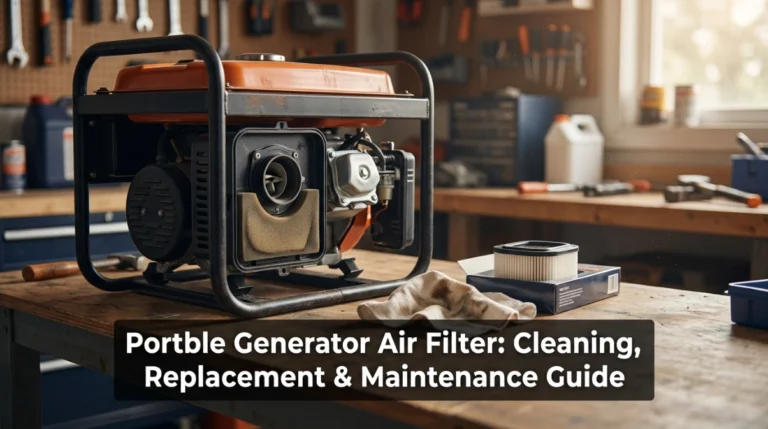
- Air filter: Inspect, clean, or replace it according to its type.
- Fuel area: Wipe spilled fuel residue only after the generator is cool and safely shut down.
- Wheels and base: Remove mud that can trap moisture against metal components.
Cleaning also gives you a chance to spot problems early. I look for loose hardware, damaged wiring, cracked fuel lines, oil leaks, and missing receptacle covers while working.
What Do You Need to Clean a Portable Generator?
You don’t need specialized equipment for routine cleaning. A small collection of soft, absorbent tools handles most jobs safely.
- Microfiber cloths or durable shop towels
- Soft detailing brush
- Small nylon brush for stubborn frame dirt
- Vacuum with a narrow attachment
- Bucket of clean water
- Mild cleaner or properly diluted degreaser
- Disposable gloves
- Replacement air filter if the existing filter is damaged
- Owner’s manual for your exact generator model
I avoid starting with strong solvents. They can damage labels, plastics, paint, rubber, or electrical insulation if used in the wrong place.
Which cleaning method is safest for each part?
| Generator Area | Preferred Method | Moisture | Avoid |
|---|---|---|---|
| Frame and handles | Brush, then damp cloth | Low | Flooding joints or electrical parts |
| Control panel | Dry microfiber or soft brush | Keep dry | Spray cleaners and water |
| Cooling openings | Soft brush or vacuum | Keep dry | Pressure washing |
| Foam air filter | Wash if your manual permits | Remove before washing | Installing while damp |
| Paper air filter | Inspect or replace per manual | Usually dry | Washing unless specifically allowed |
How Do You Clean a Portable Generator Step by Step?
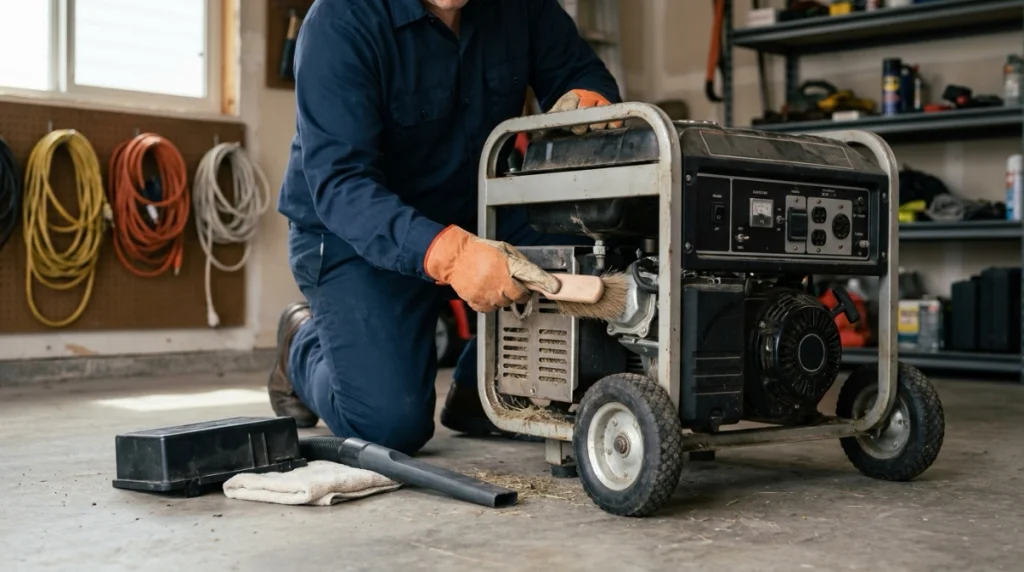
The safest process moves from dry cleaning to limited damp cleaning. That keeps loosened dirt from becoming muddy and reduces moisture around electrical equipment.
- Turn off every connected load. Disconnect extension cords and appliances before shutting down the generator according to its manual.
- Let the generator cool completely. The muffler, cylinder head, and exhaust area can remain hot after shutdown.
- Prevent an accidental start. Close the fuel valve when applicable and follow the manual’s spark-plug or battery-disconnection procedure.
- Brush away loose debris. Remove grass, leaves, dust, cobwebs, and dry mud with a soft brush or vacuum.
- Wipe exterior surfaces. Use a damp cloth on the frame, handles, housing, and other suitable exterior surfaces.
- Degrease only where necessary. Put diluted cleaner on the cloth instead of spraying the generator directly.
- Clear the cooling openings. Use a brush or vacuum to remove material that could restrict cooling airflow.
- Inspect the air filter. Clean washable foam filters or replace disposable filters according to the manufacturer’s instructions.
- Clean the control area dry. Use a soft brush around switches, receptacle covers, gauges, and panel edges.
- Let everything dry. Don’t reconnect the spark plug, battery, or electrical loads until cleaned areas are completely dry.
How should you clean oily generator surfaces?
Oily dirt usually needs more than plain water. I apply a diluted degreaser to a cloth and work on one small exterior area at a time.
Keep cleaner away from carburetor openings, wiring connectors, switches, receptacles, fuel caps, decals, and ventilation openings. Spot-test painted or plastic surfaces first.
- Light grime: Start with a damp microfiber cloth.
- Greasy metal: Use a diluted equipment-safe degreaser on the cloth.
- Heavy buildup: Repeat several light passes instead of soaking the surface.
- Fuel spill residue: Clean only after the machine is shut down, cool, and away from ignition sources.
How do you clean a portable generator air filter?
The correct method depends on whether your generator uses foam, paper, or a combination filter. Check the manual before putting any filter element in water.
Generac, for example, instructs owners of applicable models to wash foam filter elements in soapy water, squeeze them without twisting, and let them dry before installation.
- Foam filter: Wash only if the manufacturer specifies a washable element.
- Dry it fully: Never reinstall wet foam into the air-cleaner housing.
- Oil when required: Some foam elements require clean engine oil after washing.
- Paper element: Replace one that’s damaged, saturated, or excessively dirty rather than experimenting with water.
- Housing: Wipe dirt from the air-cleaner cover before reassembly.
For model-specific procedures, I always check the manufacturer’s documentation. Honda maintains a dedicated generator owner’s manual library covering its different generator series.
Can You Wash a Portable Generator With a Hose?
I don’t recommend washing a portable generator with a garden hose. A pressure washer is an even worse choice around outlets, switches, windings, connectors, and engine openings.
Portable generators combine fuel, ignition components, electrical windings, and exposed receptacles in one machine. Controlled cleaning with a damp cloth gives you far better control over where moisture goes.
- Don’t spray the control panel.
- Don’t direct water through ventilation openings.
- Don’t pressure wash the engine or alternator assembly.
- Don’t pour water over the generator enclosure.
- Don’t spray cleaner directly into electrical receptacles.
If a generator has been flooded or heavily soaked, ordinary cleaning isn’t enough. Have it properly inspected before attempting to run it.
What Parts of a Generator Should You Never Spray?
Keep liquids away from anything that carries electricity or opens into the engine. Even a cleaner marketed for machinery isn’t automatically suitable for every generator component.
- Electrical receptacles: Keep water and general-purpose cleaners out.
- Control switches: Clean around them with a dry cloth or brush.
- Alternator openings: Don’t direct liquid through ventilation slots.
- Carburetor intake: Prevent cleaner or debris from entering the intake.
- Fuel system openings: Don’t introduce water into the fuel tank or carburetor.
- Spark-plug opening: Clean around it before removing the plug.
- Battery terminals: Follow the manufacturer-approved battery maintenance procedure.
I treat the control panel as a dry-cleaning zone. A soft brush usually removes more dust than people expect.
How Often Should You Clean a Portable Generator?
There isn’t one cleaning interval that fits every generator. Usage hours, dust, rain exposure, storage conditions, and the manufacturer’s maintenance schedule all matter.
As of 2026, I still recommend letting the model-specific manual set the formal maintenance schedule. Cleaning should also happen whenever conditions make it necessary.
- After dusty operation: Inspect cooling openings and the air-filter area.
- After mowing or jobsite use: Remove grass, sawdust, soil, and construction debris.
- After a spill: Clean oil or fuel residue once the machine can be handled safely.
- Before storage: Remove accumulated dirt and inspect for leaks or damage.
- Before emergency season: Check the generator so dirt doesn’t hide developing problems.
Formal service involves more than cleaning. Oil, spark plugs, filters, valve clearance, batteries, and other items can have separate service intervals.
Does Cleaning a Portable Generator Improve Performance?
Cleaning can help when dirt restricts cooling airflow or an air filter becomes clogged. It also makes leaks, loose hardware, and damaged components easier to notice.
Cleaning won’t repair a mechanical fault. A generator that surges, stalls, produces unstable voltage, or refuses to start may need diagnosis beyond routine cleaning.
- Restricted airflow: Cleaning cooling passages may help the engine shed heat properly.
- Dirty air filter: Correct filter service helps the engine receive the airflow it was designed for.
- Oil buildup: Removing residue makes fresh leaks easier to identify.
- Blocked controls: Removing mud or debris keeps switches and covers accessible.
- Corrosion: Cleaning may expose it, but damaged electrical parts may require repair or replacement.
One workshop habit has saved me time repeatedly: clean the machine before troubleshooting it. Once the dirt is gone, damaged wiring and fresh fluid leaks become much easier to spot.
What Generator-Cleaning Mistakes Should You Avoid?
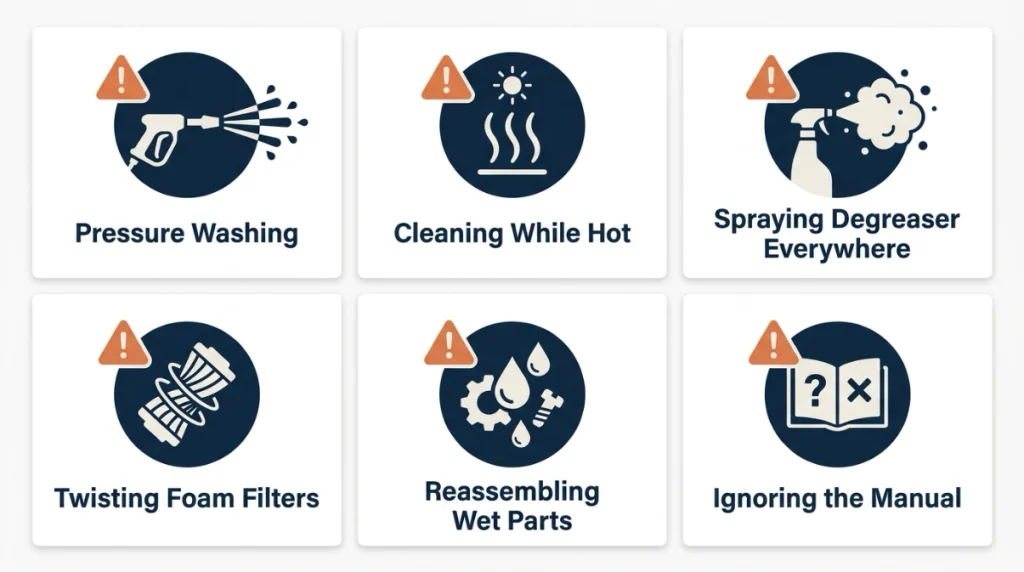
The biggest cleaning mistakes usually involve too much water, too much pressure, or cleaning while the machine is still hot. None of those risks are necessary.
- Pressure washing: Water can be driven into places a damp cloth would never reach.
- Cleaning while hot: Hot exhaust components create burn and ignition hazards.
- Spraying degreaser everywhere: Cleaner can reach electrical contacts, labels, plastics, and intake openings.
- Twisting foam filters: Follow the manufacturer’s method instead of aggressively wringing the material.
- Reassembling wet parts: Allow washable components to dry fully.
- Ignoring the manual: Filter types and maintenance procedures differ among generator models.
Also remember that cleaning doesn’t make indoor generator operation safe. OSHA publishes dedicated portable-generator safety guidance covering carbon monoxide and electrical hazards.
Should You Clean a Generator Before Storage?
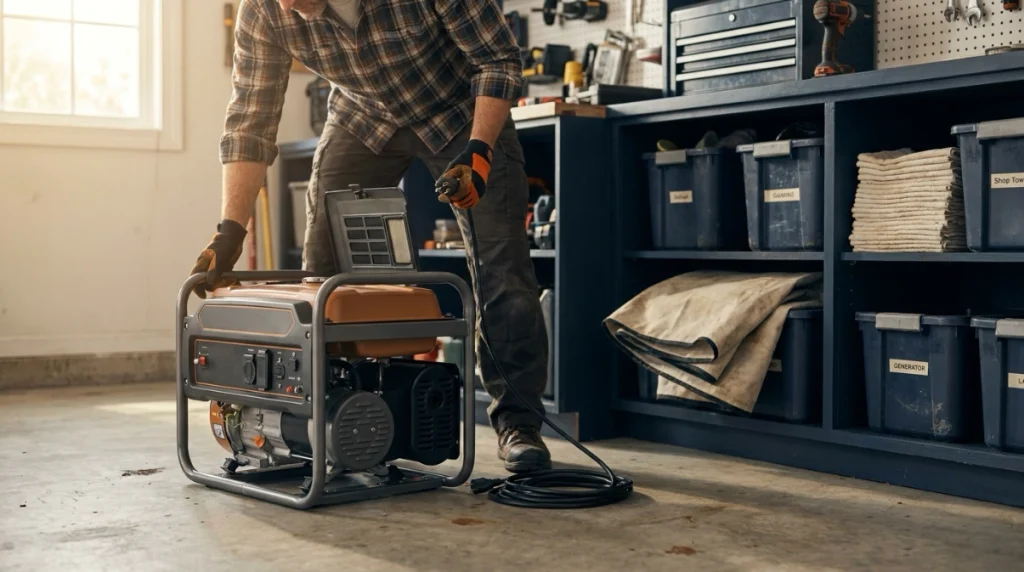
Yes. I prefer storing a generator clean because fresh oil leaks, damaged hoses, loose hardware, and corrosion are easier to identify before the next outage.
Cleaning is only one part of storage preparation. Fuel management and other storage procedures should follow your exact owner’s manual.
- Brush dirt from the frame and engine.
- Clear leaves from cooling openings.
- Wipe oily surfaces.
- Inspect the air filter.
- Look for fuel or oil leaks.
- Check cords, receptacles, and covers for damage.
- Let the generator dry completely before covering it.
When you eventually operate the generator, location matters just as much as maintenance. The U.S. Consumer Product Safety Commission says portable generators should operate outdoors at least 20 feet from the home, with exhaust directed away from the building; its carbon monoxide safety center explains the hazard in more detail.
Portable Generator Cleaning Supplies I Recommend
If you’re putting together a basic generator-cleaning kit, these are the types of products I’d keep within reach. The goal is controlled cleaning, not aggressive washing.
🏆 Best for Greasy Surfaces
Simple Green Pro HD Heavy-Duty Cleaner
★★★★☆ 4.7/5
This concentrated degreaser is designed for grime on engines, machinery, metal, and other equipment surfaces. I prefer putting diluted cleaner on a cloth rather than spraying it directly onto a generator.
💰 Best Everyday Supply
Scott Shop Original Towels
★★★★☆ 4.4/5
These absorbent shop towels work well for oil residue, damp wiping, and final drying. I like disposable towels around greasy equipment because they keep dirty residue away from my regular microfiber cloths.
🧹 Best for Tight Areas
Chemical Guys Boar’s Hair Detailing Brush
★★★★☆ 4.7/5
The soft bristles are useful for lifting dust from narrow gaps, vent edges, frame joints, and textured surfaces. A small brush gives me more control than compressed air around sensitive areas.
Frequently Asked Questions
Can I spray a portable generator with water?
No. Routine generator cleaning should use controlled methods such as a soft brush, vacuum, and damp cloth. Spraying water can carry moisture into switches, receptacles, alternator openings, wiring, and other electrical areas.
Can I use a pressure washer on my generator?
I wouldn’t use one. A pressure washer can force water and dirt through openings that normal rain or damp wiping may never reach, increasing the chance of contamination inside electrical or mechanical components.
What is the best cleaner for a portable generator?
For ordinary dirt, start with a damp cloth. For greasy exterior metal surfaces, use a mild equipment-safe degreaser diluted according to its label and applied to the cloth rather than sprayed directly onto the machine.
Can I clean a generator air filter with soap and water?
Some foam air filters can be washed in soapy water, but not every filter is washable. Remove the filter and follow the exact instructions for your generator because paper elements and certain specialty filters require different care.
Should I clean my portable generator after every use?
A full cleaning isn’t necessary after every light use. Inspect it after dusty, muddy, or wet conditions, remove debris when needed, and follow the manufacturer’s scheduled maintenance intervals for the air filter, oil, spark plug, and other service items.
Keep It Clean Without Getting It Wet
The safest way to clean a portable generator is simple: **start dry, use minimal moisture, and keep liquids away from electrical areas**. Most routine dirt comes off with a brush, vacuum, damp cloth, and a little patience.
Make cleaning part of your normal inspection routine. A clean generator is easier to inspect, easier to maintain, and much easier to prepare when the next outage arrives.

Hi, I’m Michael Turner. I own a generator workshop in the United States and founded HomeGeneratorBlog to share practical, hands-on guidance about generator installation, maintenance, troubleshooting, safety, and backup power solutions. My goal is to help homeowners make smarter, more confident decisions through clear and reliable information