
Portable Generator Air Filter: Cleaning, Replacement & Maintenance Guide
Quick Answer
A portable generator air filter keeps dust, grass, insects, and other debris from entering the engine with its intake air. Check it before heavy use and service it at the interval in your manual; understanding how the portable generator engine breathes and burns fuel makes it easier to see why a restricted filter can cause poor running.
Signs Your Air Filter Needs Attention
- Visible dirt: Dust, grass, or oily debris covers much of the filter surface.
- Rough running: The engine surges, sputters, or struggles after the choke is moved to run.
- Weak performance: The generator struggles with loads it normally handles.
- Dark exhaust: Restricted intake airflow can make some carbureted engines run too rich.
- Damaged element: Tears, holes, hardened foam, or broken seals mean replacement is due.
Before You Clean It
- Identify whether your generator uses foam, paper, or a dual-element filter and follow its model-specific manual.
A portable generator can have fresh fuel, good oil, and a healthy spark plug yet still run poorly because it cannot breathe. The air filter is one of the first items I check when an engine sounds loaded or unusually rich.
This guide explains what the filter does, how to inspect it, when to clean or replace it, and how to avoid buying the wrong replacement.
What Does a Portable Generator Air Filter Do?
A portable generator air filter is the barrier between outside air and the engine’s intake system. It traps abrasive dirt before that dirt can reach the carburetor and combustion chamber.
Definition: A generator air filter is a replaceable or serviceable filtering element that cleans intake air before the engine mixes that air with fuel for combustion.
A four-stroke generator engine needs a steady supply of clean air. Restrict that airflow, and the air-fuel mixture can become richer than intended on a carbureted engine.
- Clean filter: Allows the engine to receive the airflow its intake system was designed around.
- Clogged filter: Restricts incoming air and can contribute to rough operation or reduced performance.
- Missing filter: Allows abrasive dust and debris to enter the engine.
- Damaged filter: May look installed while still allowing unfiltered air around or through the element.
This small component matters because dirt ingestion can accelerate engine wear. Running without the correct filter is not a shortcut I recommend.
Where Is the Air Filter on a Portable Generator?
On most open-frame generators, the air cleaner sits beside the carburetor on the engine. Look for a small rectangular, round, or box-shaped plastic or metal cover.
Inverter generators may hide the filter behind an exterior maintenance panel. The exact access method depends on the model.
- Turn the generator off.
- Close the fuel valve if the model has one.
- Let the engine and muffler cool completely.
- Locate the carburetor side of the engine.
- Find the air-cleaner cover or service panel.
If you’re still learning the layout, my guide to portable generator parts and their functions can help you identify the intake, carburetor, fuel system, and other service items.
How Can You Tell If a Generator Air Filter Is Dirty?
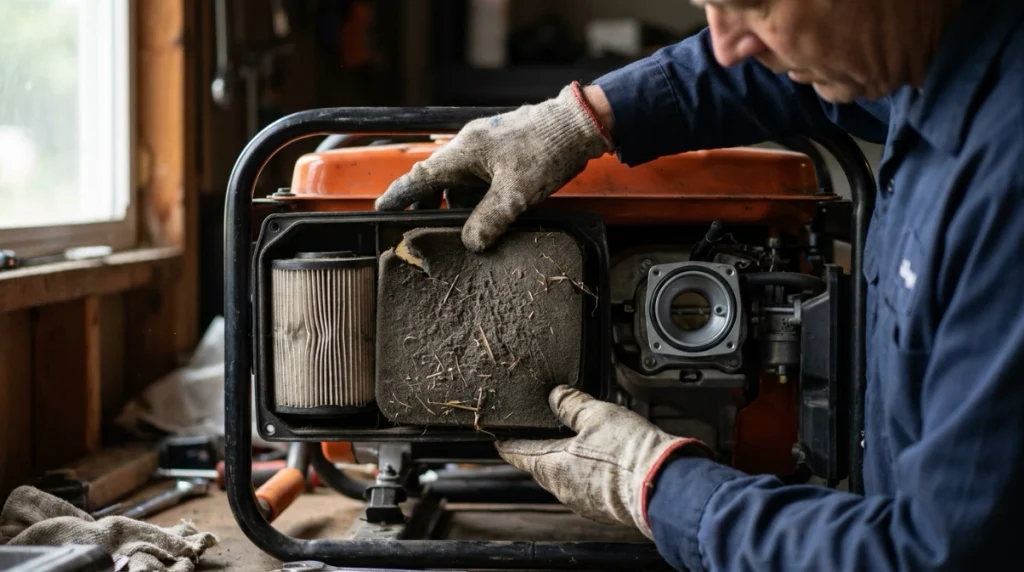
A dirty filter usually reveals itself through inspection before it causes an obvious engine problem. I prefer checking the element directly instead of diagnosing it from engine sound alone.
Remove the cover carefully so loose dirt does not fall into the clean side of the intake.
Common Signs of a Restricted Air Filter
- Heavy dust buildup: The exposed filter surface looks packed with fine dirt.
- Grass or insects: Outdoor debris is blocking sections of the element.
- Blackened foam: The foam remains heavily contaminated after normal cleaning.
- Hard or crumbling foam: Age has damaged the material and replacement is safer.
- Torn paper pleats: The element can no longer protect the engine correctly.
- Poor sealing: The filter does not sit firmly against its housing.
Can a Dirty Air Filter Make a Generator Run Rough?
Yes, a restricted air filter can contribute to rough running, weak performance, hard starting, or an overly rich mixture. It should not be blamed for every running problem, though.
Champion’s troubleshooting information, for example, includes a dirty air filter among possible causes when an engine runs roughly or cannot supply expected power.
- Check the choke position.
- Inspect the filter.
- Confirm the fuel is fresh.
- Check the spark plug.
- Verify the generator is not overloaded.
If cleaning the filter changes nothing, move on to the portable generator fuel system rather than repeatedly replacing intake parts.
How Often Should You Clean or Replace a Portable Generator Air Filter?
There is no single service interval that fits every portable generator. The correct schedule depends on the engine, filter design, operating hours, and how dusty the environment is.
As of 2026, manufacturer recommendations still vary widely. Dusty job sites and dry summer conditions can also require earlier inspection than the normal schedule.
| Manufacturer Example | Example Guidance | What It Shows |
|---|---|---|
| Generac portable generators | Clean or replace the air filter around every 200 hours or yearly in its general portable-generator schedule. | Some generators use relatively long scheduled intervals. |
| Champion Power Equipment | Foam filters may be washed, dried, and lightly oiled; paper elements should be replaced when they are loaded. | Filter material changes the correct service method. |
| Briggs & Stratton small engines | General guidance includes cleaning filters and pre-cleaners every 25 hours or annually and replacing them annually. | Some small engines need much more frequent air-filter service. |
| Briggs & Stratton filter service | Paper and foam elements use different replacement and servicing procedures. | Never assume every filter can be washed the same way. |
Your owner’s manual overrides these examples. I also shorten the inspection interval whenever a generator spends time around loose soil, sawdust, construction dust, or dry grass.
Air-filter care is a small part of the maintenance that affects how long a portable generator can last. Dirt prevention is cheaper than repairing wear caused by contaminated intake air.
Foam vs. Paper Generator Air Filters: What Is the Difference?
Foam filters are commonly serviceable, while many paper elements are designed for replacement. Dual-element systems combine both materials for extra dirt protection.
| Filter Type | Typical Service | Replace When | Main Caution |
|---|---|---|---|
| Foam | Wash and dry if the manual permits, then apply oil when specified. | Foam tears, hardens, shrinks, or crumbles. | Too much oil can restrict airflow. |
| Paper | Usually inspect and replace rather than wash. | Pleats are badly loaded, wet, torn, or damaged. | Water can damage filter media. |
| Dual element | Service the foam pre-cleaner and paper cartridge separately. | Either element reaches its service limit. | Do not reinstall the parts in the wrong order. |
How Do You Clean a Portable Generator Air Filter?
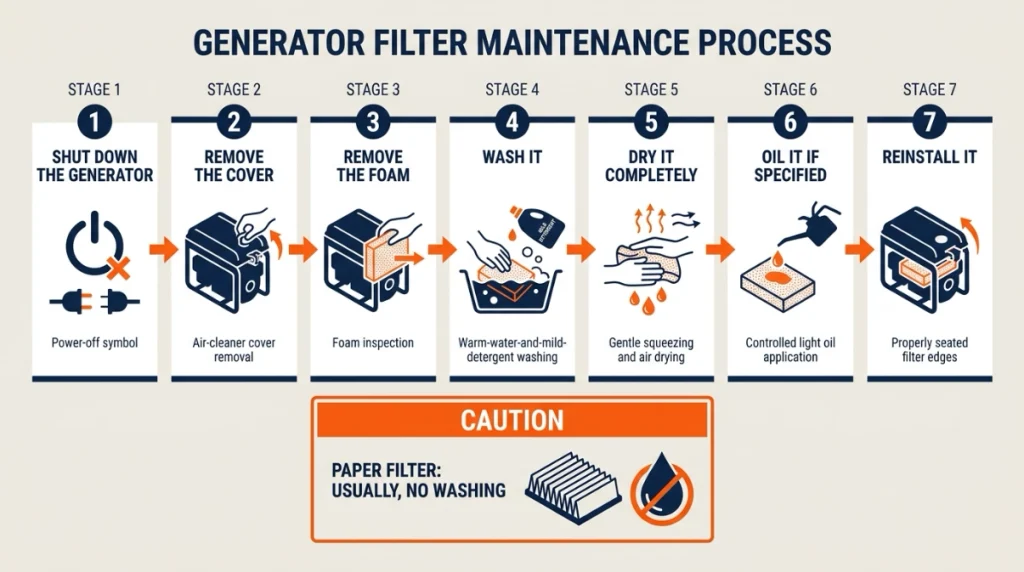
First identify the filter material. Never wash a paper element simply because a foam filter on another generator was washable.
How to Clean a Foam Generator Air Filter
- Shut down the generator. Disconnect loads, turn the engine off, and let it cool.
- Remove the cover. Keep loose dirt away from the carburetor opening.
- Remove the foam. Inspect it for holes, splits, shrinkage, or crumbling.
- Wash it. If your manual permits washing, use warm water and mild detergent.
- Dry it completely. Gently squeeze the foam rather than twisting it.
- Oil it if specified. Work clean engine oil through the foam and squeeze out all visible excess.
- Reinstall it. Make sure the filter sits flat and seals around its edges.
The oil step matters only when the manufacturer specifies an oiled-foam element. Some filter designs have different instructions.
Can You Wash a Paper Generator Air Filter?
Usually, no. Water can damage the structure and filtration properties of a paper element.
If the paper is heavily loaded, wet, oily, torn, or deformed, replacement is the safer choice. Follow the cleaning instructions in your manual if it explicitly provides another method.
How Do You Replace a Portable Generator Air Filter?
Replacing the filter is usually simple; matching the correct part is the more important job. Filters with similar dimensions can use different seals, thicknesses, or airflow characteristics.
- Record the generator model and serial number.
- Check the engine model if it has a separate identification label.
- Find the air-filter part number in the owner’s manual or parts diagram.
- Remove the old element without dropping debris into the intake.
- Wipe dirt from the housing with a clean cloth.
- Install the replacement in the correct orientation.
- Confirm the element seals around its entire edge.
- Reinstall the cover securely.
Generac specifically advises owners to use the air-filter part number listed for their generator. That’s a habit I follow with every brand because appearance alone is not a reliable fit check.
What Happens If You Run a Generator Without an Air Filter?
Do not operate a portable generator without its air filter. The engine may breathe more freely for the moment, but it also gains a direct path for abrasive dirt.
If removing a dirty filter suddenly makes an engine run better, treat that result as evidence that the filter needs service. It is not a reason to continue operating without one.
- Dust can enter the carburetor.
- Abrasive particles can reach the cylinder.
- Engine wear can accelerate.
- Debris can contaminate intake passages.
- Warranty coverage may be affected by improper maintenance.
Why Is My Generator Still Running Rough After I Cleaned the Filter?
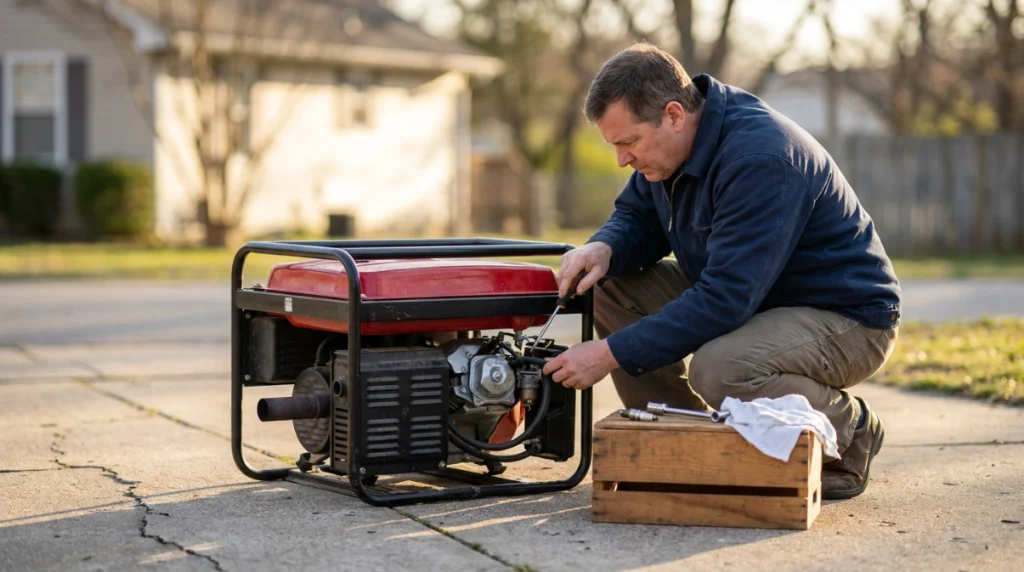
A clean filter eliminates one possible restriction, not every engine fault. If the problem remains, continue troubleshooting instead of modifying the intake.
- Choke: Confirm it moves fully to the run position after starting.
- Fuel: Replace stale or contaminated gasoline.
- Carburetor: Look for varnish or blocked passages after long storage.
- Spark plug: Inspect for heavy carbon deposits or damage.
- Load: Disconnect appliances and see whether the engine stabilizes unloaded.
- Spark arrester: Check it if your maintenance schedule calls for inspection.
Always perform test runs outdoors. The U.S. Consumer Product Safety Commission’s carbon monoxide guidance says portable generators should be operated outside and at least 20 feet from the home, with exhaust directed away.
Portable Generator Air Filters I Would Consider
Replacement filters are model-specific, so I would not buy one until I had the original part number in front of me. If your engine calls for one of these parts, these genuine replacements are sensible starting points.
🏆 Best for Compatible Honda Engines
Honda Genuine 17210-ZE1-517 Air Filter
★★★★☆ 4.7/5
Honda documentation identifies this genuine replacement as a paper-and-foam air-filter assembly for compatible equipment. I prefer an exact OEM-number match when the manual lists one because it removes guesswork over sealing and dimensions.
🔧 Best for Compatible Briggs Engines
Briggs & Stratton 491588S Air Cleaner Cartridge
★★★★☆ 4.6/5
This genuine flat-panel pleated-paper cartridge fits select Briggs & Stratton engine families. I would choose it only after confirming 491588S against the engine model or original filter number.
Frequently Asked Questions
How often should I change a portable generator air filter?
Follow the maintenance schedule for your exact generator or engine. Depending on the model, service intervals can range from a few dozen operating hours to around 200 hours or an annual interval, with more frequent inspection needed in dusty conditions.
Can I clean a generator air filter instead of replacing it?
Foam elements can often be washed, dried, and lightly oiled when the manufacturer specifies that procedure. Paper elements are commonly replaced once heavily loaded, wet, damaged, or contaminated, so identify the filter material before cleaning it.
Can a clogged air filter stop a generator from starting?
A severely restricted filter can contribute to difficult starting or an excessively rich air-fuel mixture. However, stale fuel, incorrect choke position, carburetor problems, low oil protection systems, and ignition faults can produce similar symptoms.
Is it safe to run my generator with the air filter removed?
No. Running without the filter allows dirt and abrasive debris to enter the intake and can accelerate engine wear. If the generator improves with the filter temporarily removed during diagnosis, replace or service the restricted filter before normal operation.
How do I know which replacement air filter my generator needs?
Use the part number listed in the generator owner’s manual, engine manual, or manufacturer parts diagram. Match the generator model, serial number, and engine model where required rather than relying only on the filter’s shape or measurements.
Final Takeaway
A portable generator air filter is inexpensive compared with the engine it protects. Inspect it regularly, service the correct filter type, and replace anything torn, hardened, badly clogged, or unable to seal properly.
Most importantly, don’t copy another generator’s maintenance interval or filter part number. Check your own manual now, keep a correct spare on the shelf, and your generator will have one less reason to let you down during the next outage.

Hi, I’m Michael Turner. I own a generator workshop in the United States and founded HomeGeneratorBlog to share practical, hands-on guidance about generator installation, maintenance, troubleshooting, safety, and backup power solutions. My goal is to help homeowners make smarter, more confident decisions through clear and reliable information

One Comment