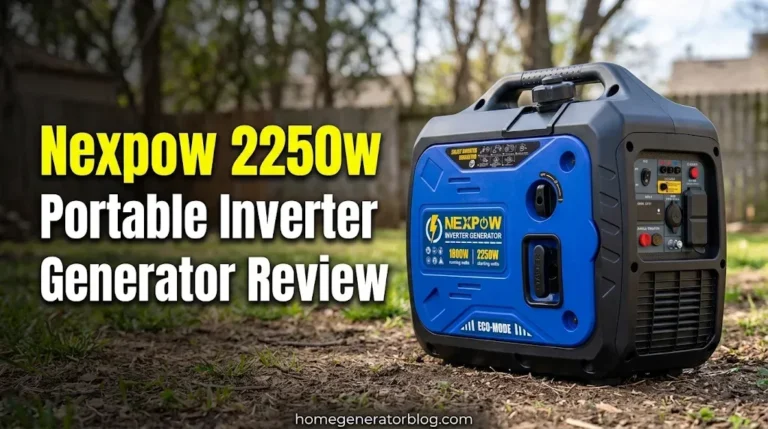
Nexpow 5000w Portable Inverter Generator Review: Specs, Pros & Cons
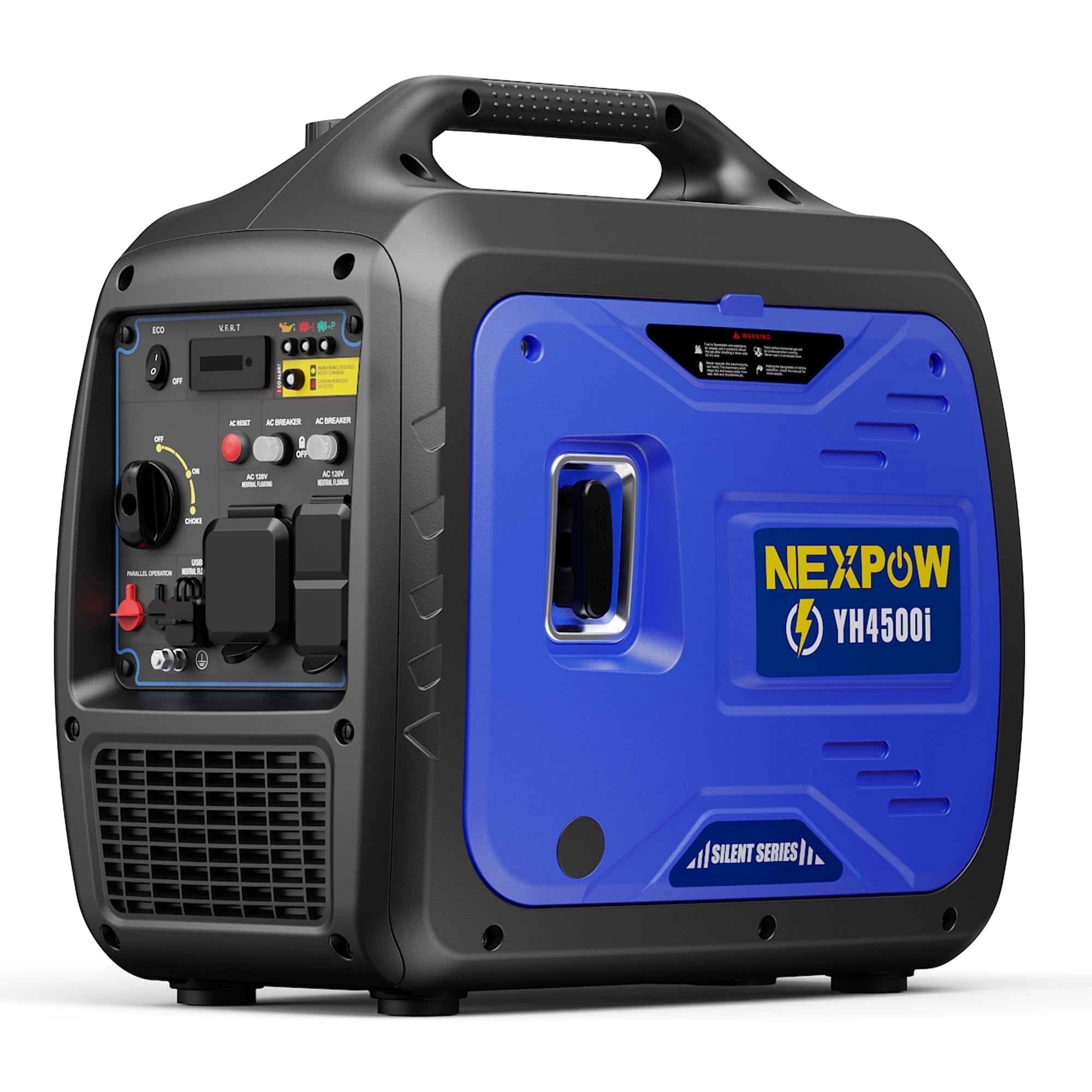
The NEXPOW 5000W portable inverter generator is a gasoline-powered inverter generator rated for 5,000 starting watts and 3,800 running watts. It is designed to supply selected home essentials, campsite equipment, and compatible RV appliances when utility power is unavailable.
Its appeal lies in a relatively portable 53-pound design, an RV outlet, USB connections, and an advertised carbon monoxide sensor. This review assesses published specifications and practical buying considerations; it is not a hands-on performance test.
🏆 My Quick Verdict
💡 Best For: RV owners, campers, and homeowners managing a limited emergency-power load.
⚡ Key Specs:
5,000 peak watts; 3,800 running watts; 174cc engine; 53 lb listed weight; 30A TT-30R RV outlet.
✅ Bottom Line: The published feature set suits mobile power and carefully selected backup circuits. Confirm support, warranty terms, and your actual appliance loads before ordering.
At a Glance
- Its 3,800-watt continuous rating matters more than the 5,000-watt starting figure.
- The listed 53-pound weight favors transport over heavy wheeled designs.
- A TT-30R receptacle makes compatible 30-amp RV connections more straightforward.
- Eco Mode offers variable engine operation under lighter loads.
- The advertised runtime is up to 10 hours at 25% load.
- The built-in CO sensor adds protection but never permits indoor operation.
NEXPOW 5000W Specifications
| Specification | Published detail |
|---|---|
| Generator type | Gasoline inverter |
| Starting / running output | 5,000W / 3,800W |
| Engine | 174cc, four-stroke OHV |
| Listed weight | 53 lb |
| Reported noise | 61 dB at 23 ft |
| Reported runtime | Up to 10 hours at 25% load |
| Connections | 5-20R duplex, TT-30R, USB-A, USB-C |
| Other listed features | CO sensor, Eco Mode, parallel capability |
Design & Build Quality
The NEXPOW combines an integrated carry handle with a 53-pound listed weight. That is manageable for some adults but still requires careful lifting, particularly over campsite steps or uneven ground.
Its manufacturer describes a four-stroke, single-cylinder engine and copper wiring. Those details identify its basic construction, but they do not establish long-term reliability without independent durability results.
The front-panel outlet selection is more useful than cosmetic styling. It lets users connect ordinary household loads, an appropriate RV cord, and small USB-powered devices without assuming every appliance uses the same plug.
Before purchase, inspect the current listing photographs and dimensions for your storage compartment. A 53-pound rating does not tell you whether the unit will fit beneath an RV bed or inside a vehicle cargo bay.
Setup, Installation & Ease of Use
- Unbox the unit, inspect shipping damage, and verify all accessories against its supplied manual.
- Set it upright outdoors on stable, level ground with ample ventilation.
- Add the engine oil and gasoline grades specified in the exact-model manual.
- Check the fuel cap, oil level, controls, outlet ratings, and warning labels.
- Start it using the manufacturer-approved sequence with electrical loads disconnected.
- Connect properly rated outdoor cords or an RV cable matching the TT-30R receptacle.
- Increase electrical demand gradually, watching for overload indications or unexpected shutdowns.
- Allow the engine to cool before refueling, transporting, or storing the generator.
Core Performance & Feature Breakdown
The central performance distinction is 3,800 running watts versus 5,000 starting watts. Running power supports sustained electrical demand; starting power provides a short surge for equipment such as refrigerators and pumps.
Consider a refrigerator, small lights, internet equipment, and charging devices as potential backup loads. Whether they work together depends on their nameplate wattages and the motors’ starting demands, not broad appliance-category estimates.
Expert Insight
Calculate the sum of simultaneous running loads, then separately account for the largest overlapping startup surge. Leave operating headroom rather than planning around the full advertised 3,800 watts.
For a tailored calculation, use this home generator sizing guide. It explains why the size of your house alone cannot determine whether a portable model is sufficient.
NEXPOW advertises 61 dB measured at 23 feet and a maximum ten-hour runtime at one-quarter load. Neither figure guarantees the same result at full output, near reflective walls, or with changing fuel and weather conditions.
Inverter technology is intended to provide a more controlled output than many conventional generators. Still, NEXPOW’s listing does not establish a verified total harmonic distortion figure for this exact unit, so ask the manufacturer before powering equipment with strict power-quality requirements.
Key Features Explained
RV-Ready TT-30R Outlet
The 30-amp TT-30R socket supports compatible RV shore-power connections at its specified rating. It does not mean every air conditioner, converter, and microwave can run simultaneously.
Eco Mode
Eco Mode adjusts engine operation to lighter demand, potentially saving fuel and reducing noise. For motor-heavy loads, consult the manual about when to disable it for smoother starting.
Carbon Monoxide Sensor
The listed CO sensor is an additional protective feature during operation. It cannot make an enclosed space safe or replace working household carbon monoxide alarms.
Parallel Connection
Parallel capability potentially links two compatible generators for additional output using approved equipment. Verify the permitted partner model, cable kit, and combined outlet limits before relying on it.
Real-World Usability & Maintenance
Ownership means checking oil, managing fresh gasoline, and following the maintenance schedule in the exact-model manual. These routine tasks are important even when a generator spends most months in storage.
For seasonal storage, use the manufacturer’s recommended fuel procedure rather than leaving untreated gasoline indefinitely. Our fuel stabilizer guide explains the trade-offs.
Keep the unit dry while stored, but never operate it inside a garage or shed. The U.S. Consumer Product Safety Commission recommends outdoor operation at least 20 feet from buildings, with exhaust directed away from openings.
Pros & Cons
Pros
- The 3,800-watt continuous rating can support carefully selected backup loads.
- The listed 53-pound weight improves portability compared with heavier alternatives.
- The TT-30R and USB connections broaden practical device compatibility.
- Eco Mode, a CO sensor, and parallel capability add useful flexibility.
Cons
- The 5,000-watt headline can mislead shoppers expecting continuous output.
- Published runtime and noise figures describe particular test conditions.
- Warranty coverage and independent long-term reliability need further confirmation.
Common Issues & Fixes
- Overload shutdown: Several appliances may exceed the rated output or motor-starting capacity; disconnect loads and restart following the manual.
- Unreliable starting after storage: Old fuel or neglected maintenance may contribute; follow the model-specific fuel and service instructions.
- Unexpected CO alert: Exhaust may be accumulating near the generator; stop operation, move to safety, and reassess outdoor placement before reuse.
If the housing becomes unusually hot or power drops repeatedly, stop and investigate instead of bypassing protections. See our generator overheating troubleshooting guide for general causes.
What to Know Before You Buy
Check whether 3,800 running watts meet your simultaneous appliance demands, including refrigerator or pump surge requirements. Home-panel connection requires a properly installed transfer switch or approved interlock, never a cord feeding a wall receptacle.
The TT-30R RV socket is not a universal household 240-volt output. Confirm voltage, amperage, connectors, and equipment requirements before buying any adapters.
Request written confirmation of warranty coverage, parts support, service contact details, and the applicable exact-model manual. Also confirm whether the seller includes a parallel kit or requires a separate purchase; the feature listing alone does not prove inclusion.
Who Should Buy It / Who Should Skip It
✅ Who Should Buy It
- RV users with a compatible 30-amp connection and calculated power budget.
- Campers wanting a carry-handle gasoline inverter rather than a large open-frame unit.
- Homeowners planning selective emergency loads instead of whole-house coverage.
✗ Who Should Skip It
- Buyers needing sustained power beyond 3,800 watts.
- Users requiring propane operation or assured indoor-safe backup power.
- Shoppers unwilling to verify service support and warranty before purchase.
Alternatives to Consider
Westinghouse iGen5000c
Best For: Buyers who prioritize longer advertised light-load runtime.
Main Advantage: Electric and remote starting with wheels and a telescoping handle.
Trade-off: Its published 105.8-pound dry weight substantially exceeds NEXPOW’s listing.
Key Spec: 5,000 peak watts and 3,900 running watts.
Champion 201050 4000W Dual-Fuel Inverter
Best For: Buyers who want the option of gasoline or propane.
Main Advantage: Dual-fuel operation plus manufacturer-listed CO Shield protection.
Trade-off: Its rated power is lower than the NEXPOW’s.
Key Spec: 4,000 starting watts and 3,000 running watts.
Is It Worth It?
The NEXPOW 5000W can be worth considering when you need portable, gasoline-powered electricity for limited home or RV loads. The decision should depend on total ownership value, not the prominent starting-watt number.
Compare the actual selling price with manufacturers offering documented support and published operating data. A lower upfront cost loses appeal when replacement parts, service options, or warranty handling are unclear.
Final Verdict
The NEXPOW 5000W portable inverter generator offers a competitive published combination of 3,800 running watts, RV connectivity, and carry-handle portability. It is a sensible candidate for carefully planned outdoor backup use, provided the seller confirms warranty support and the electrical ratings match your equipment.
Frequently Asked Questions
Can this generator power an RV air conditioner?
Possibly, if the air conditioner’s running and starting demands fit the generator’s limits. Check the appliance label and any soft-start system before connecting other RV loads.
Is the NEXPOW 5000W suitable for a whole house?
No, it should not be assumed to power an entire house. Its 3,800-watt running rating is better suited to a selected set of essentials.
How large and heavy is this generator?
NEXPOW lists the generator at 53 pounds. Confirm the latest physical dimensions with the seller to ensure it fits your intended storage area.
What warranty does NEXPOW provide?
Exact warranty terms for this configuration were not independently confirmed. Ask the seller for written coverage, exclusions, and service instructions before ordering.
How should I maintain it between outages?
Follow its specific oil, fuel, inspection, and storage schedule. Store it cool and dry only after shutdown, cooling, and any required fuel treatment.
Can I run the generator in a garage because it has a CO sensor?
No, gasoline generators must never operate inside garages or other enclosed spaces. Use it outdoors at least 20 feet from buildings, with exhaust facing away from openings.
Affiliate disclosure: HomeGeneratorBlog earns a small commission when you purchase through links on this page — at no extra cost to you. Our editorial process is independent: affiliate relationships never influence which products we recommend or how we rank them.

Hi, I’m Michael Turner. I own a generator workshop in the United States and founded HomeGeneratorBlog to share practical, hands-on guidance about generator installation, maintenance, troubleshooting, safety, and backup power solutions. My goal is to help homeowners make smarter, more confident decisions through clear and reliable information