
Portable Generator Storage: How to Store It Safely for Months
Quick Answer
For safe portable generator storage, let the unit cool, clean it, prepare the gasoline, check the oil, protect the battery, and keep the generator in a dry location. Gasoline-powered models need extra attention because stale fuel can clog the carburetor, so review your portable generator fuel system before long-term storage.
Quick storage checklist
- Cool it first: Shut the generator down and allow the engine and exhaust to cool completely.
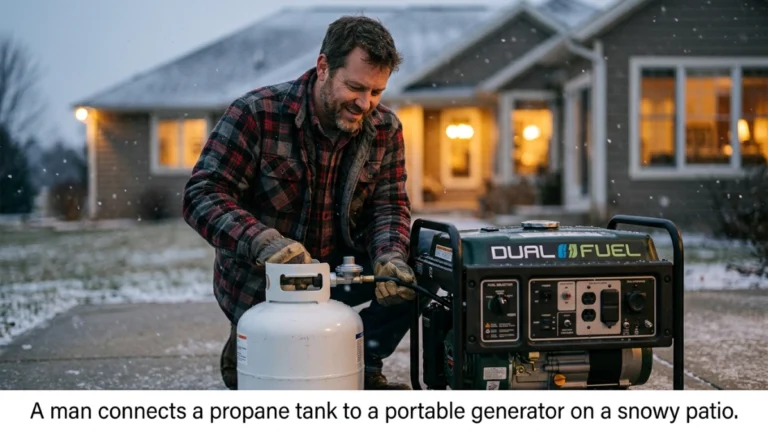
- Prepare the fuel: Treat fresh gasoline with stabilizer or drain it according to the owner’s manual.
- Check the oil: Verify the level and change dirty or overdue oil before extended storage.
- Protect the battery: Charge an electric-start battery and use a compatible maintainer when appropriate.
- Keep it dry: Choose a cool, dry, ventilated storage area away from moisture and ignition sources.
- Cover it correctly: Install a breathable or moisture-resistant storage cover only after the generator is cool and dry.
Before the next outage
- Inspect the unit, check fluids and battery condition, then test-start it outdoors before you depend on it.
Portable generator storage looks simple until a generator refuses to start after sitting for six months. Fuel, moisture, batteries, rodents, and neglected oil can all turn a ready backup unit into a repair project.
As of 2026, my approach is simple: storage isn’t just parking the generator. It’s preparing the machine so it can start safely when the next outage arrives.
Definition: Portable generator storage is the process of preparing and protecting a generator during periods when it won’t be used. Good storage protects the fuel system, engine, starter battery, wiring, frame, and electrical components from deterioration.
How Should You Store a Portable Generator?
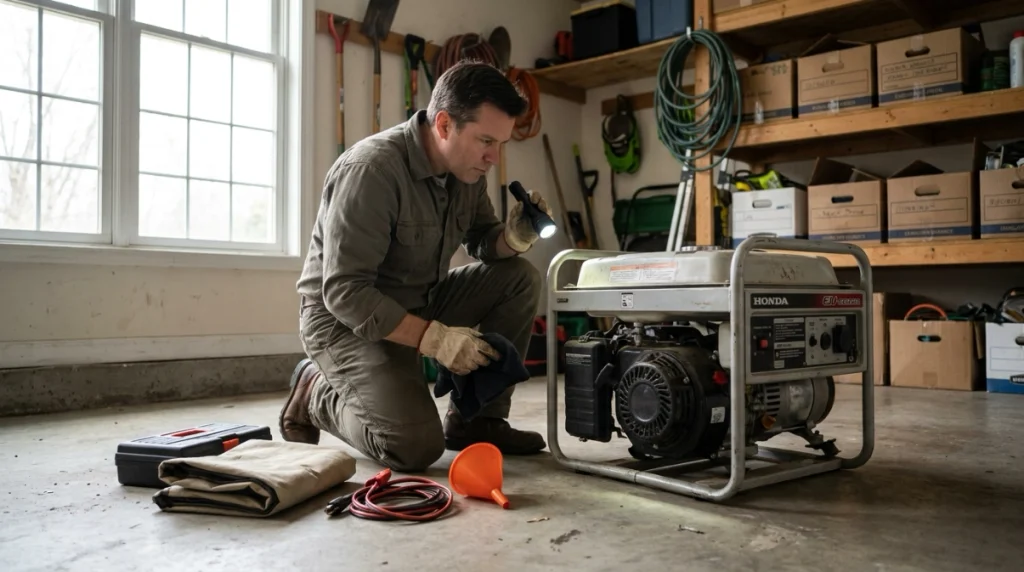
The safest method is to store a clean, cool, properly serviced generator in a dry location after dealing with its fuel and battery. Your owner’s manual should always take priority because storage procedures vary between engines.
I treat the job as a restart-preparation checklist. Every step should make the next start easier, not simply make the generator look tidy.
- Shut it down. Disconnect electrical loads and turn the engine off according to the manual.
- Let it cool. Never cover or move a generator while the muffler and engine remain hot.
- Clean the exterior. Remove dust, grass, leaves, oil residue, and debris around cooling openings.
- Prepare the gasoline. Stabilize fresh fuel or drain the system when the manufacturer recommends it.
- Inspect the oil. Replace old oil if you’re near the manufacturer’s service interval.
- Protect the battery. Charge or maintain electric-start batteries with the correct charger.
- Inspect for leaks. Check fuel lines, fittings, tank seams, and the carburetor area.
- Move it into storage. Choose a dry location protected from standing water and direct weather.
- Install the cover. Cover only a completely cool and dry generator.
Generac also recommends a protective, moisture-resistant cover when preparing portable generators for storage. Its portable generator storage guidance is useful even if you own another brand.
Should You Drain Gas Before Storing a Portable Generator?
You don’t always need to drain gasoline, but untreated fuel shouldn’t sit forgotten in the system for months. The right choice depends on storage length and your manufacturer’s instructions.
Gasoline ages during storage. The small passages in a carburetor are especially sensitive to gums and deposits left by deteriorating fuel.
Option 1: Store It With Stabilized Fuel
Start with fresh gasoline and add the stabilizer at the manufacturer’s specified ratio. Stabilizer doesn’t turn old gasoline back into fresh gasoline.
After treatment, run the generator for about five to ten minutes so treated fuel reaches the carburetor. Then shut it down using the procedure in your manual.
- Best for: Seasonal storage when the manufacturer permits fuel to remain in the system.
- Main advantage: Less draining and handling of gasoline.
- Main caution: Fuel stabilizer has its own dosage and storage-life instructions.
Option 2: Drain the Fuel System
Draining is often attractive for extended storage because no gasoline remains to deteriorate in the carburetor. Some generators provide a carburetor drain screw specifically for this job.
Don’t improvise the process. Follow the manual so you don’t create a spill, damage a fitting, or leave fuel trapped in part of the system.
Portable Generator Storage by Length of Time
Storage preparation should become more thorough as downtime increases. This table is a practical planning guide, not a replacement for your owner’s manual.
| Storage period | Fuel preparation | Battery | Other priorities |
|---|---|---|---|
| Under 30 days | Keep fuel fresh and follow normal fuel-valve procedures. | Check charge on electric-start units. | Clean, cool, dry, and cover. |
| 1–6 months | Use fresh stabilized gasoline or drain as the manual directs. | Charge periodically or use a compatible maintainer. | Inspect oil, air filter, wiring, and cover. |
| 6+ months | Follow the manufacturer’s long-term fuel procedure carefully. | Use proper maintenance charging or remove the battery if instructed. | Inspect for corrosion, pests, leaks, and moisture before restart. |
Can You Store a Portable Generator in a Garage?
A portable generator can often be stored in a dry garage when it’s completely off, cool, and properly prepared. Storage and operation are two completely different situations.
Never run the generator inside a garage, shed, basement, carport, or other enclosed or partly enclosed space. Review our portable generator carbon monoxide safety guide before the next outage.
The U.S. Consumer Product Safety Commission recommends operating portable generators outdoors, at least 20 feet from the home, with exhaust directed away from the building.
What Makes a Good Storage Location?
- Dry floor: Keep the generator away from standing water and roof leaks.
- Low humidity: Moisture encourages corrosion on terminals, fasteners, and electrical parts.
- No ignition sources: Keep gasoline and fuel vapors away from flames, heaters, sparks, and similar hazards.
- Pest protection: Rodents can damage wiring, insulation, filters, and air-intake components.
- Easy access: Don’t bury emergency equipment behind months of stored boxes.
If you’re planning where the generator will go once it leaves storage, our guide to safe portable generator placement covers exhaust direction, windows, doors, and outdoor positioning.
The CDC’s carbon monoxide guidance also recommends operating generators more than 20 feet from doors, windows, and vents.
What Should You Do With the Oil Before Storage?
Check the oil level and condition before putting the generator away. If the oil is due for replacement under the manufacturer’s schedule, storage is a convenient time to change it.
Fresh oil removes old combustion contaminants from the equation before months of downtime. Don’t guess the viscosity or capacity because engines differ.
- Check the dipstick on level ground according to the manual.
- Look for unusually dark, contaminated, or low oil.
- Use only the viscosity and specification listed for your engine.
- Inspect the drain plug and surrounding area for leakage.
- Record the operating hours and oil-change date.
Don’t pour used oil into soil, drains, or household plumbing. The EPA’s used-oil information explains why used lubricating oil needs proper handling and recycling.
How Do You Store an Electric-Start Generator Battery?
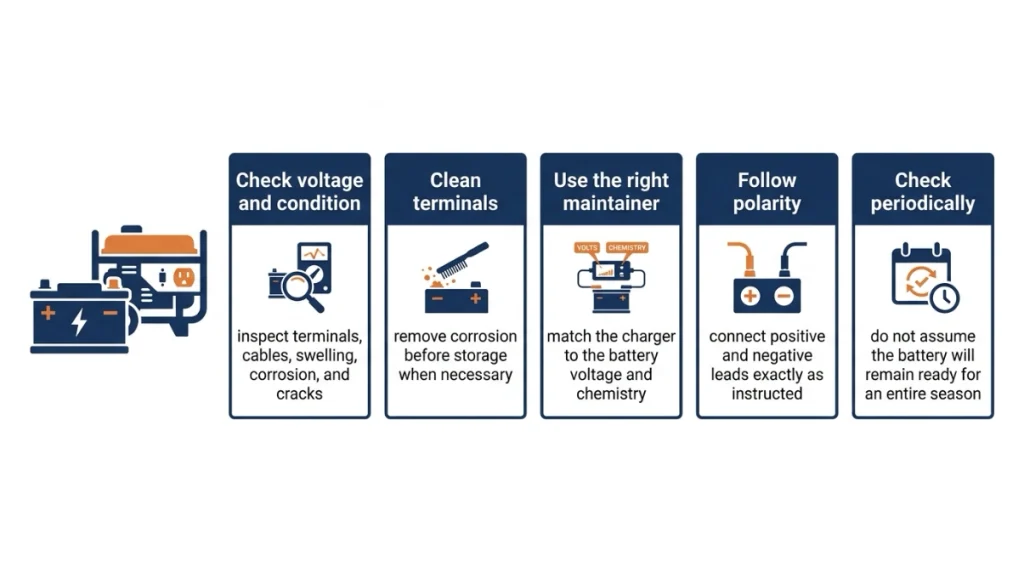
Keep the starter battery charged without overcharging it. A dead battery is one of the easiest ways for an electric-start generator to disappoint you after storage.
Small generator batteries naturally lose charge while sitting. Cold weather and long storage periods make the problem more noticeable.
- Check voltage and condition: Inspect terminals, cables, swelling, corrosion, and cracks.
- Clean terminals: Remove corrosion before storage when necessary.
- Use the right maintainer: Match the charger to the battery voltage and chemistry.
- Follow polarity: Connect positive and negative leads exactly as instructed.
- Check periodically: Don’t assume a battery will remain ready for an entire season.
If your unit uses a starter battery, our electric-start portable generator guide explains the starter system in more detail.
Should You Cover a Generator During Storage?
Yes, a storage cover helps control dust, moisture, sunlight, and debris. The generator must be completely cool before you put the cover on.
Fit matters too. A cover that’s too small can tear, while a loose cover can collect water or blow away.
How Long Can a Portable Generator Sit Unused?
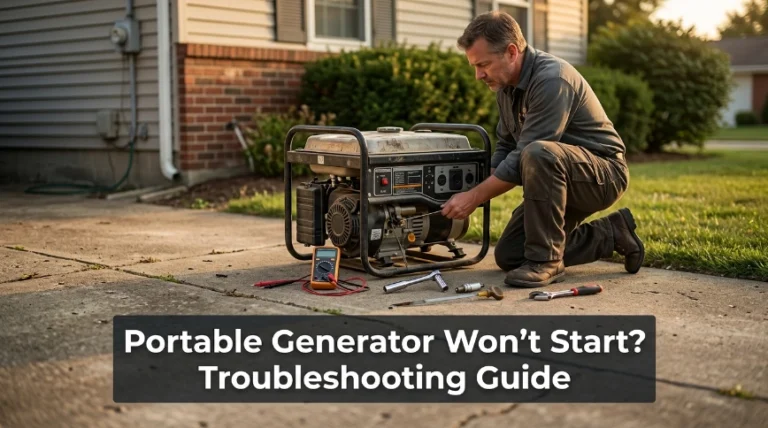
A generator can sit for months if you’ve prepared it correctly, but it shouldn’t disappear from your maintenance routine. Fuel condition, battery charge, corrosion, and pests can change while the engine isn’t running.
I prefer to think in terms of readiness rather than a fixed maximum storage time. A machine that gets periodic inspection is easier to trust than one untouched since the last storm.
Before You Start a Generator After Long Storage
- Move the generator outdoors before starting it.
- Remove the cover and inspect for nests, insects, or blocked cooling openings.
- Check the oil level and look underneath for leaks.
- Inspect fuel hoses and electrical wiring for cracking or damage.
- Confirm the gasoline is fresh enough to use.
- Check or charge the starter battery when equipped.
- Start the generator without connected household loads.
- Listen for surging, unusual noise, smoke, or unstable running.
For broader outage preparation, Ready.gov’s power-outage guidance is worth reviewing before severe weather arrives.
Portable Generator Storage Mistakes to Avoid
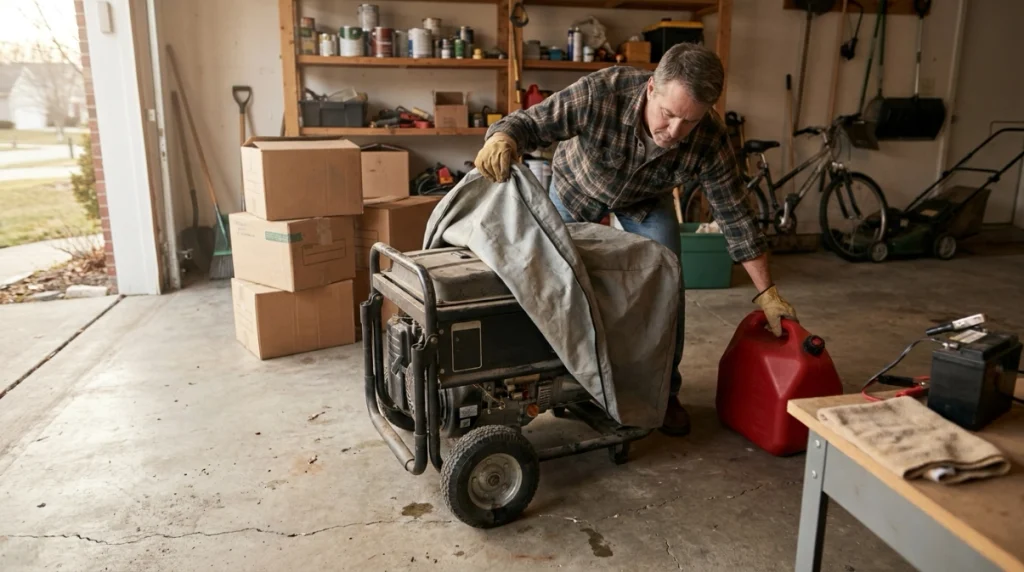
Most storage failures come from small skipped steps. Fuel and moisture cause many of the problems I would address first.
- Leaving untreated gasoline: Old fuel can create hard-start and carburetor problems.
- Using stabilizer on stale gas: Stabilizer protects fresh fuel; it doesn’t restore degraded gasoline.
- Covering a hot engine: Wait until the entire generator has cooled.
- Ignoring the battery: Electric-start batteries can discharge during long periods of inactivity.
- Storing it wet: Dry the unit before covering it to limit corrosion.
- Blocking access: Emergency equipment shouldn’t require moving half the garage to reach it.
- Confusing storage with operation: A garage may be a storage location, but it is never a safe running location.
Useful Products for Long-Term Generator Storage
If you’re setting up a proper storage routine, these are the three kinds of products I’d prioritize. Match every accessory to your specific generator, fuel system, and battery before buying.
🏆 Best for gasoline storage
STA-BIL Storage Fuel Stabilizer
★★★★★ 4.8/5
STA-BIL is formulated for gasoline-powered seasonal equipment and is designed to protect fresh fuel during storage. I like a measured stabilizer because it makes fuel preparation easier to repeat consistently.
🔋 Best for electric start
Battery Tender Junior 12V 750mA
★★★★½ 4.7/5
This automatic 12-volt maintainer supports common lead-acid, AGM, gel, and sealed batteries within its specified capacity range. It’s a practical option when a compatible electric-start battery spends months between outages.
🌧️ Best for covered storage
WEN 56310iC Generator Cover
★★★★½ 4.6/5
This weather-resistant cover is designed around midsize 3,800- to 4,500-watt closed-frame inverter generators. I’d choose a fitted cover only after measuring the generator carefully because one size won’t suit every frame.
Frequently Asked Questions About Portable Generator Storage
Can I leave gasoline in my generator over winter?
You can sometimes store a generator with gasoline if the manufacturer allows it and you treat fresh fuel correctly. For longer storage, some manufacturers recommend draining the tank or carburetor instead. Always follow the generator manual because fuel-system designs and storage procedures differ.
Is it better to store a generator with a full or empty gas tank?
There isn’t one rule for every portable generator. Some storage procedures call for fresh stabilized gasoline, while others recommend draining the fuel system. Use the method specified in your owner’s manual rather than mixing procedures from different generator brands.
Can I store a portable generator outside?
Outdoor storage is possible only when the generator is protected from rain, standing water, corrosion, and direct weather. A dry shed or protected enclosure is usually better than leaving the machine exposed. Never confuse a storage enclosure with a safe enclosure for generator operation.
How often should I start a stored portable generator?
Follow the manufacturer’s exercise or storage schedule rather than starting it randomly. If periodic running is recommended, operate the generator outdoors and follow the specified load, duration, and shutdown procedure. Battery and fuel maintenance may still be required between runs.
Should I disconnect the battery when storing a generator?
That depends on the generator and battery system. Some manufacturers recommend disconnecting or removing a battery during extended storage, while others allow maintenance charging in place. Check the manual and use only a charger compatible with the battery’s voltage and chemistry.
Final Takeaway
Good portable generator storage protects the machine before problems start. Fresh fuel management, correct oil service, battery care, moisture control, and a proper cover make the biggest difference.
Prepare the generator before you forget about it, then inspect it again before outage season. The goal isn’t simply to store a generator safely; it’s to have one that starts when you need power most.

Hi, I’m Michael Turner. I own a generator workshop in the United States and founded HomeGeneratorBlog to share practical, hands-on guidance about generator installation, maintenance, troubleshooting, safety, and backup power solutions. My goal is to help homeowners make smarter, more confident decisions through clear and reliable information
One Comment