10 Best Portable Generators for Cold Weather 2026: Reliable Winter Backup
The best portable generators for cold weather is the Champion 10000-Watt Wireless Remote Start Generator, with remote start for freezing mornings. We compared 10 portable generators on Cold-Weather Starting, Winter Output and Runtime, and Ease in Freezing Conditions. Most portable generators look identical on paper but fail to start in freezing temperatures. Whether you need whole-home winter backup, furnace power, or a quiet inverter for essentials, this guide gives you one clear answer.
Quick Comparison: All 10 Products Ranked
| # | Product | Best For | Rating | Badge | |
|---|---|---|---|---|---|
| 1 | Champion Power Equipment 10000-Watt Wireless Remote Start Portable Generator | Whole-home winter backup | 4.9/5 | Best Overall | Buy → |
| 2 | Westinghouse 12500-Watt Dual Fuel Home Backup Portable Generator | Dual-fuel home backup | 4.8/5 | Best Dual Fuel | Buy → |
| 3 | DuroMax XP13000EH 13000-Watt Dual Fuel Portable Generator | Maximum winter power | 4.7/5 | Best Maximum Power | Buy → |
| 4 | Generac GP8000E 8000-Watt Electric Start Portable Generator | Reliable home backup | 4.6/5 | Best Home Backup | Buy → |
| 5 | DuroMax XP10000E 10000-Watt Electric Start Portable Generator | Large winter loads | 4.5/5 | Best Large Value | Buy → |
| 6 | Westinghouse iGen4500 4500-Watt Dual Fuel Inverter Generator | Quiet essential loads | 4.4/5 | Best Quiet Inverter | Buy → |
| 7 | Predator 9500-Watt Super Quiet Inverter Generator | Large quiet inverter loads | 4.3/5 | Best Large Inverter | Buy → |
| 8 | Firman H08051 8000-Watt Dual Fuel Portable Generator | Dual-fuel backup | 4.2/5 | Best Budget Dual Fuel | Buy → |
| 9 | Champion 9000-Watt Dual Fuel Electric Start Portable Generator | Mid-size dual-fuel backup | 4.1/5 | Best Mid-Size Dual Fuel | Buy → |
| 10 | Honda EU2200i 2200-Watt Inverter Generator | Quiet light loads | 4.0/5 | Best Quiet Lightweight | Buy → |
How We Chose These Portable Generators
What we compared
10 models, 3 criteria, and cold-weather features including start type, fuel type, and CO protection, compared from published specifications.
Our 3 scoring criteria
Cold-Weather Starting, Winter Output and Runtime, and Ease in Freezing Conditions, applied identically to every model.
Limits of this comparison
This is a specification comparison, not a hands-on test. Check the exact variant, manual, and local rules before buying.
What we cut — and why
Very small recreational units were ranked below whole-home winter picks because they cannot cover a furnace plus a refrigerator together.
What to Look for When Buying Portable Generators for Cold Weather
Cold changes the job. Oil thickens, batteries weaken, and a generator that starts easily in summer may resist in freezing air.
1. Starting System in Cold
Electric start removes the hardest part of a cold morning: repeated pull starts with cold hands. Remote start goes further, letting you start from indoors while the unit stays outside in fresh air. Look at portable generators with electric start first if cold starts are your main worry.
2. Fuel Choice in Cold
Fresh gasoline with stabilizer is usually the safer winter default, because stale fuel gums up carburetors. Propane stores well, but tank pressure can fall sharply in extreme cold and reduce output. Dual-fuel models give you a second option when one fuel is hard to find during a storm.
3. Sizing for Winter Loads
List your must-run loads first: furnace, refrigerator, well pump if you have one, lights, and phone charging. Furnace motors need extra starting power, so size for starting watts, not just running watts. A generator for furnace power check helps you avoid buying a unit that stalls when heat matters most.
4. CO Safety and Outdoor Placement
Never run a fuel generator indoors, in a garage, or near an open window, even in a storm. Keep it outdoors, clear of snow buildup around exhaust and air intakes, and choose CO shutoff protection where available. For winter setup, read protecting a generator in winter before the first outage, not during it.

Champion Power Equipment 10000-Watt Wireless Remote Start Portable Generator — Easiest Cold Start
Best for: Whole-home winter backup
For a winter outage, starting from indoors matters more than raw wattage alone. This Champion model pairs wireless remote start with Cold Start Technology, so you can avoid a pull cord on a freezing morning. Its 10000 starting watts cover a furnace, refrigerator, lights, and smaller essentials together, while CO Shield adds automatic shutoff protection. The trade-off is size and weight: this is a home-backup unit, not a light camping generator. If your priority is dependable whole-home winter coverage with the easiest cold start in this list, it is the clearest first choice.
- Wireless remote start from indoors
- Cold Start Technology for freezing mornings
- 10000 starting watts for home essentials
- CO Shield automatic shutoff protection
- Heavy for one person to move
- Not suited for light camping use
5.0/5
4.9/5
4.8/5

Westinghouse 12500-Watt Dual Fuel Home Backup Portable Generator — Fuel Flexibility for Storms
Best for: Dual-fuel home backup
When fuel supply is uncertain during a winter storm, having two fuel options is a practical advantage. This Westinghouse model runs on gasoline or propane, with 12500 peak watts and 9500 running watts on gasoline for larger home loads. Remote start with a key fob helps on cold mornings, and automatic low-oil shutdown adds basic engine protection. The trade-off is bulk: this is a large home-backup generator that needs outdoor space and careful placement. If you want maximum fuel flexibility without dropping to a smaller inverter, this is the strongest dual-fuel choice here.
- Gasoline or propane fuel choice
- Remote start with key fob
- 9500 running watts on gasoline
- Automatic low-oil shutdown included
- Large and heavy to position
- Propane output falls in extreme cold
4.9/5
4.8/5
4.7/5

DuroMax XP13000EH 13000-Watt Dual Fuel Portable Generator — Power for Larger Homes
Best for: Maximum winter power
If your winter load list is long, headroom matters more than compact size. This DuroMax model offers 13000 peak watts with dual-fuel operation, so a furnace, refrigerator, well pump, and lights are less likely to compete for capacity at startup. Push-button electric start avoids a cold pull cord, and its all-metal frame suits heavy seasonal use. The trade-off is clear: fuel use, noise, and weight all rise with this power class. If you need to cover a larger home through a long outage, and you have outdoor space, this is the power-first pick.
- 13000 peak watts for larger homes
- Push-button electric start included
- Dual-fuel gasoline or propane
- All-metal frame for heavy use
- Heavy and hard to move
- Higher fuel use than smaller models
4.8/5
4.7/5
4.6/5

Generac GP8000E 8000-Watt Electric Start Portable Generator — Straightforward Home Backup
Best for: Reliable home backup
Some winter buyers want a familiar, no-fuss backup unit rather than the largest generator available. This Generac model offers 8000 starting watts with electric start, enough for a furnace, refrigerator, lights, and selected essentials in many homes. Its controls are straightforward, which matters when you are starting it in cold, dark conditions. The trade-off is fuel flexibility: unlike dual-fuel models, it does not give you a propane fallback. If gasoline supply is reliable for you and simplicity matters, this is a solid mid-large winter pick.
- 8000 starting watts for home essentials
- Electric start avoids cold pull starts
- Straightforward controls in dark conditions
- No propane fallback fuel option
- Less headroom than larger models
4.7/5
4.6/5
4.5/5

DuroMax XP10000E 10000-Watt Electric Start Portable Generator — Large Power, Simpler Choice
Best for: Large winter loads
This DuroMax model is a useful middle ground: large enough for serious winter backup, but simpler than the biggest dual-fuel units. With 10000 starting watts and electric start, it can handle a furnace, refrigerator, and lights together in many homes, without requiring propane setup. Its conventional design keeps operation straightforward, which helps during a stressful outage. The trade-off is that it lacks dual-fuel flexibility and remote start, so you still need to go outside to start it. If you want large gasoline power at a simpler specification, this fits well.
- 10000 starting watts for winter loads
- Electric start in cold weather
- Straightforward conventional generator design
- No remote start included
- Gasoline only, no propane option
4.6/5
4.5/5
4.4/5

Westinghouse iGen4500 4500-Watt Dual Fuel Inverter Generator — Quiet Power for Essentials
Best for: Quiet essential loads
Not every winter outage needs whole-home power, and noise matters when a generator runs near neighbours. This Westinghouse inverter offers 4500 peak watts with dual-fuel operation, remote start, and cleaner power for sensitive electronics. It can cover a refrigerator, lights, phones, and smaller essentials, while staying quieter than large conventional models. The trade-off is total capacity: it will not run a large furnace, well pump, and refrigerator all at once. If quiet essential backup matters more than maximum watts, this is a strong winter compromise.
- Quieter than large conventional models
- Dual-fuel gasoline or propane
- Remote start for cold mornings
- Cleaner power for sensitive electronics
- Limited total winter capacity
- Not for large furnace plus pump
4.5/5
4.4/5
4.3/5

Predator 9500-Watt Super Quiet Inverter Generator — Large Inverter Power
Best for: Large quiet inverter loads
This Predator inverter bridges two winter needs: larger capacity and quieter, cleaner power for electronics. With 9500 peak watts and electric start, it can support a refrigerator, lights, communications, and selected larger loads without the roughness of a conventional unit of similar size. Its enclosed design also helps with noise, which matters during overnight outages. The trade-off is weight and size for an inverter, plus a higher specification than many households need for essentials alone. If you want large inverter power, this is the practical choice.
- 9500 peak watts as inverter
- Electric start for cold mornings
- Cleaner power for sensitive electronics
- Quieter enclosed inverter design
- Heavy for an inverter model
- More capacity than essentials need
4.4/5
4.3/5
4.2/5
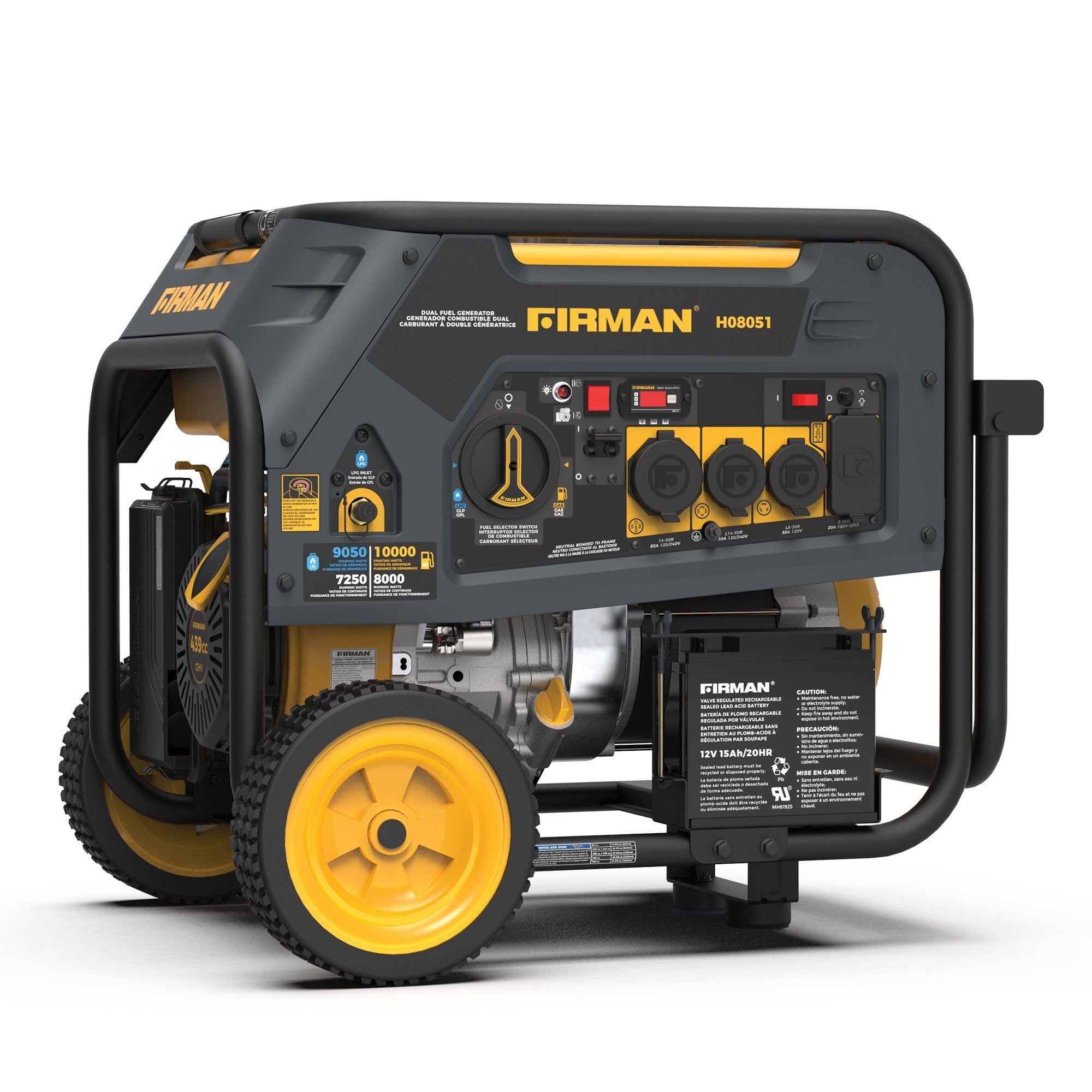
Firman H08051 8000-Watt Dual Fuel Portable Generator — Dual Fuel Without Maximum Size
Best for: Dual-fuel backup
If you want dual-fuel flexibility but do not need the largest home-backup size, this Firman model is a balanced middle option. With 8000 peak watts, electric start, and gasoline or propane operation, it covers a furnace, refrigerator, lights, and smaller essentials in many homes. It is easier to place than the biggest dual-fuel units, while still giving a second fuel choice during a storm. The trade-off is headroom: very large simultaneous loads may still need staging. If fuel flexibility at a mid-large size is your priority, this is a sensible pick.
- Dual-fuel gasoline or propane
- 8000 peak watts for home essentials
- Electric start in cold weather
- Less headroom than larger models
- Large loads need careful staging
4.3/5
4.2/5
4.1/5
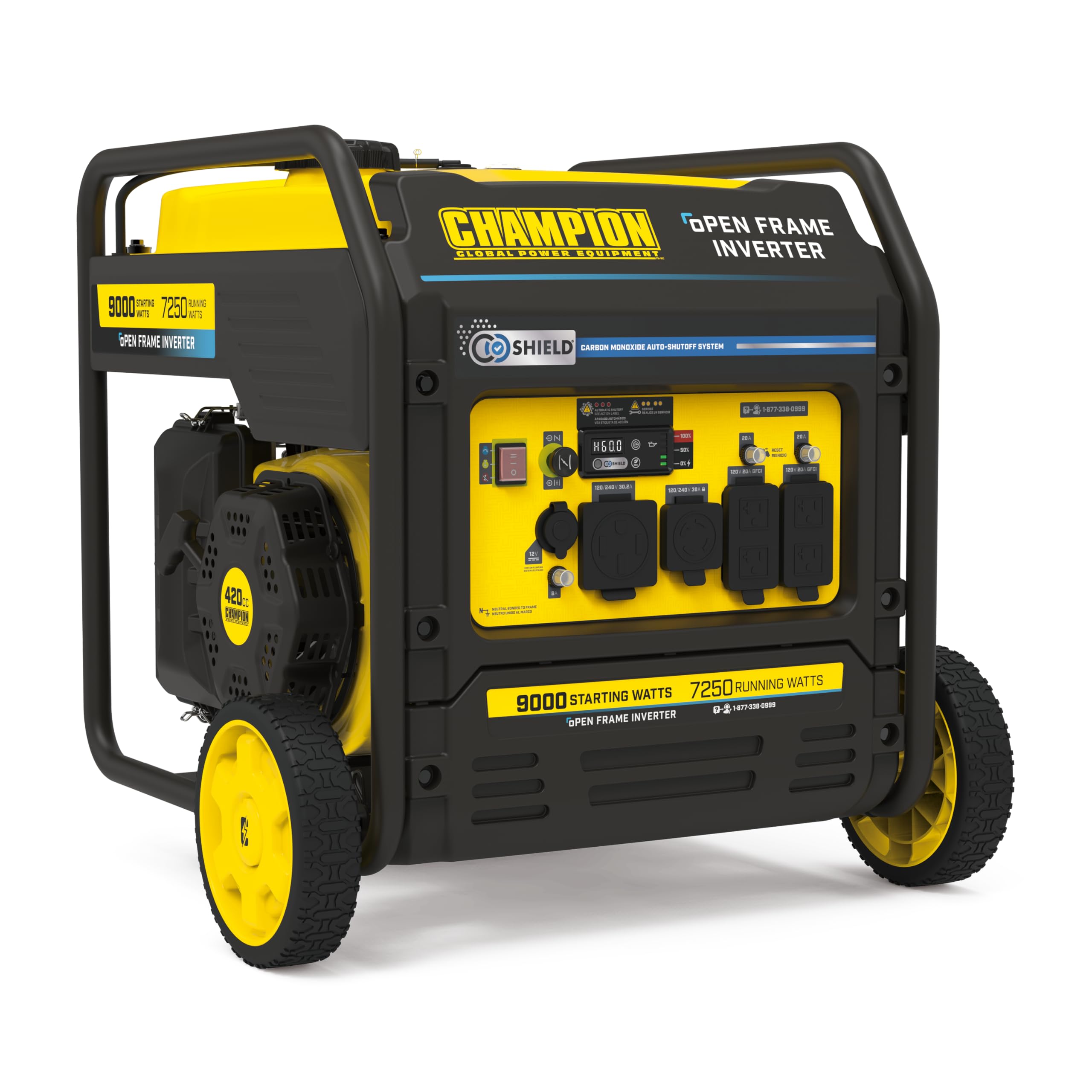
Champion 9000-Watt Dual Fuel Electric Start Portable Generator — Mid-Size Winter Backup
Best for: Mid-size dual-fuel backup
This Champion model sits between small inverters and large home-backup units, which makes it useful for homes with a focused essential-load list. With 9000 peak watts, dual-fuel operation, and electric start, it can cover a furnace, refrigerator, and lights together in many cases, while keeping the unit more manageable than the largest models. Its dual-fuel choice also helps when gasoline is scarce during a storm. The trade-off is that it still needs load staging for very large motors, and it lacks remote start. If mid-size dual-fuel backup is enough, this is a balanced option.
- 9000 peak watts for essentials
- Dual-fuel gasoline or propane
- Electric start in cold weather
- No remote start included
- Large motors need load staging
4.2/5
4.1/5
4.0/5

Honda EU2200i 2200-Watt Inverter Generator — Quiet Light Loads Only
Best for: Quiet light loads
This Honda inverter is included for a narrow winter job, not for whole-home backup. With 2200 peak watts, it is quiet, light, and well suited to lights, phones, and smaller electronics during a short outage. Its inverter output is also kind to sensitive devices. The winter trade-offs are large: it uses recoil start, so cold starts need physical effort, and it cannot run a furnace and refrigerator together. If your winter plan is light, portable power rather than home heating, it earns its place; otherwise, choose a larger model above.
- Very quiet for an inverter
- Light and easy to carry
- Clean power for sensitive electronics
- Recoil start only, hard in cold
- Cannot run furnace plus fridge
4.1/5
4.0/5
3.9/5
Top 3 Head-to-Head: Champion vs Westinghouse vs DuroMax
These three are the common final choices for whole-home winter backup, because each pairs large power with electric or remote starting.
| Feature | #1 Champion | #2 Westinghouse | #3 DuroMax |
|---|---|---|---|
| Cold-Weather Starting | 5.0/5 — Best | 4.9/5 | 4.8/5 |
| Winter Output and Runtime | 4.9/5 | 4.8/5 | 4.7/5 — Best in this row for peak power |
| Ease in Freezing Conditions | 4.8/5 — Best | 4.7/5 | 4.6/5 |
| Choose if… | You want the easiest cold start | You want dual-fuel flexibility | You want maximum peak power |
Who These Portable Generators Are NOT For
A portable generator is not the right answer for every winter power problem.
If you need automatic, hands-free whole-home backup, a permanently installed standby system with a transfer switch is a better fit than a portable unit you must start and refuel yourself.
Common Mistakes to Avoid
Most winter generator failures are preparation failures, not power failures.
Frequently Asked Questions About Portable Generators for Cold Weather
Can a portable generator run a furnace in winter?
Yes, if it has enough starting watts for the furnace motor and you connect it safely. Check the furnace nameplate and manual, size for starting watts rather than running watts, and use a proper transfer switch or interlock where required. Do not backfeed through a household outlet, and keep the generator outdoors at all times.
What is the best way to start a generator in cold weather?
Use electric or remote start where available, keep the starter battery charged, and use fresh fuel with the oil grade your manual recommends for low temperatures. Warm the unit only outdoors, clear snow from intakes and exhaust, and follow the manual choke procedure. For models that allow it, see portable generator with remote start options for starting from indoors.
Should I use gasoline or propane in extreme cold?
Fresh gasoline with stabilizer is usually more reliable in extreme cold, because propane tank pressure can fall sharply below freezing and reduce output. Propane still stores well and works in moderate cold, so dual-fuel models give you a useful fallback. Whichever fuel you choose, test the generator before a storm and keep spare fuel stored safely outdoors.
How do I size a generator for a winter power outage?
List must-run loads first, then add their starting watts, not just running watts. Furnace motors, well pumps, and refrigerators need extra power at startup, so stage large motors instead of starting them together. A unit that covers furnace, refrigerator, lights, and charging is a practical winter minimum for many homes, while larger homes need more headroom.
Can I run a portable generator in my garage during a snowstorm?
No. Never run a fuel generator in a garage, even with the door open, because carbon monoxide can build up quickly. Run it outdoors, away from windows, doors, and vents, with snow cleared from exhaust and air intakes. Use CO shutoff protection where available and keep working CO alarms inside your home.
What should I do to prepare a generator before winter?
Change oil to the manual-recommended cold-weather grade, replace stale fuel, check the battery and starter, and run the unit briefly outdoors before the first storm. Store fuel safely, keep extension cords rated for outdoor use, and write down your load list and connection plan. Test everything in daylight, not during an outage.
Is an inverter generator good for cold weather?
Yes, for quiet essential loads and sensitive electronics, because inverters provide cleaner power and often run quieter. Their limit is total capacity: most inverters in this list cannot run a large furnace, well pump, and refrigerator together. Choose an inverter when essentials matter most, and a larger conventional or dual-fuel model when whole-home heating is the priority.
Our Final Verdict
Cold weather rewards easy starting and honest sizing above all else. The Champion remote-start model is the clearest whole-home winter pick, while dual-fuel models add fuel flexibility and inverters suit quiet essential loads. Choose by your must-run loads first, then by start type, and keep the unit outdoors with CO protection.

Hi, I’m Michael Turner. I own a generator workshop in the United States and founded HomeGeneratorBlog to share practical, hands-on guidance about generator installation, maintenance, troubleshooting, safety, and backup power solutions. My goal is to help homeowners make smarter, more confident decisions through clear and reliable information