10 Best Generator for Furnace 2026: Keep Heat Running in a Winter Outage
The best generator for furnace backup right now is the Westinghouse WGen7500DF — 7,500 running watts cover a furnace plus essentials. We compared 10 generators on published specifications, scoring each on Furnace Starting Power, Runtime and Fuel Flexibility, and Ease of Use and Safety. Most generators look identical on paper but fail on blower surge — that gap is what this comparison checks. Whether you need furnace-only backup, furnace plus essentials, or whole-home power, this guide gives you one clear answer.
Quick Comparison: All 10 Products Ranked
| # | Product | Best For | Rating | Badge | |
|---|---|---|---|---|---|
| 1 | Westinghouse WGen7500DF Dual Fuel Portable Generator | Most homes needing furnace plus essentials | 4.9/5 | Best Overall | Buy → |
| 2 | Honda EU7000iS 7000 Watt Inverter Generator | Sensitive furnace control boards and quiet neighbourhoods | 4.8/5 | Best Premium Quiet | Buy → |
| 3 | Champion Power Equipment 100520 8750-Watt Open Frame Inverter Generator | Clean power without a premium price | 4.8/5 | Best Inverter Value | Buy → |
| 4 | DuroMax XP12000EH Dual Fuel Portable Generator | Furnace plus many other home circuits | 4.7/5 | Best Whole-Home Power | Buy → |
| 5 | Predator 9500 Super Quiet Inverter Generator | Large, quiet inverter backup | 4.7/5 | Best Large Inverter | Buy → |
| 6 | Generac GP8000E Portable Generator | Furnace, fridge, and lights together | 4.6/5 | Best Furnace Plus Essentials | Buy → |
| 7 | Generac GP6500 Portable Generator | Budget-conscious furnace backup | 4.5/5 | Best Budget Mid-Size | Buy → |
| 8 | Westinghouse iGen4500DF Dual Fuel Inverter Generator | Furnace-only backup in a compact unit | 4.5/5 | Best Compact Dual-Fuel | Buy → |
| 9 | Champion Power Equipment 200988 4500-Watt Dual Fuel Inverter Generator | Quiet furnace-only backup | 4.4/5 | Best Quiet Small | Buy → |
| 10 | Pulsar G12KBN Dual Fuel Portable Generator | High output on a tighter budget | 4.4/5 | Best High-Output Value | Buy → |
How We Chose These Generators
What we checked
Published running and starting watts, fuel type, tank size, stated runtime, distortion rating, outlets, weight, noise, and warranty for 10 models.
Our 3 scoring criteria
Furnace Starting Power, Runtime and Fuel Flexibility, and Ease of Use and Safety, applied identically to every model.
Important limit
This is a specification comparison, not hands-on testing. Scores are editorial judgment from published specifications, not laboratory results.
What we cut — and why
Electric furnaces and whole-home electric heat were excluded as a separate sizing problem, and furnace-only models were kept only where their surge could plausibly cover a typical gas blower.
What to Look for When Buying a Generator for Your Furnace
A gas furnace does not need a huge generator for heat alone, but it does need the right surge, the right connection, and a fuel plan that survives a cold night. Start with your blower nameplate, then work outward to the other loads you actually want on.
1. Sizing for blower surge, not just running watts
A typical gas furnace blower may run at 600 to 1,200 watts but start at 1,500 to 2,500 watts, depending on motor size. A generator that only just covers running watts can stall or trip when the blower starts. Add your running loads, then add the single largest starting surge, and keep headroom. This is also why a furnace-only pick and a furnace-plus-essentials pick can be thousands of watts apart.
For a fuller sizing walkthrough, see sizing a generator for your home.
2. Power quality for furnace control boards
Modern furnaces use electronic controls that prefer clean, stable power. Inverter models with under 3% total harmonic distortion are the safer default for a sensitive board. Conventional open-frame models with automatic voltage regulation can still work, but they are a weaker match where the manufacturer warns about power quality. If your furnace maker specifies clean power, follow that guidance.
If clean power is your priority, compare best inverter generators for clean power before choosing an open-frame model.
3. Safe connection: transfer switch or interlock
Never backfeed a furnace through a makeshift cord into a panel. The safe routes are a manual transfer switch, a listed interlock kit, or a furnace transfer switch installed by a qualified electrician, with the generator outdoors and exhaust away from the house. A 30-amp twist-lock outlet makes this plan easier, but the outlet alone does not make an unsafe connection safe.
4. Fuel and runtime in winter
Gasoline is widely available but goes stale and needs safe storage. Propane stores longer and starts well in cold weather, but most dual-fuel models produce fewer watts on propane, so size on the propane rating if propane is your winter plan. Check stated runtime at a stated load, not just tank size, and plan refuelling before an overnight run.
5. Noise, weight, and cold-weather starting
A generator that runs all night should not keep the household awake, and one that weighs over 200 pounds should not be a solo lift in snow. Electric or remote start, cold-start help, and a battery kept charged all matter more in January than in a showroom. Test the start procedure before the first outage, not during it.

Westinghouse WGen7500DF Dual Fuel Portable Generator — Best all-round furnace backup
For most homes, this is the practical middle ground between a small furnace-only inverter and a whole-home standby unit. Its 7,500 running watts on gasoline leave room for a gas furnace blower, a refrigerator, lights, and a few small circuits, while propane gives a second fuel option when gasoline is hard to find in a storm. Remote and electric start help on cold mornings, and the 30-amp twist-lock outlet suits a manual transfer switch. The trade-off is noise and power quality, so it is best for furnace heating first, not for sensitive electronics alone.
- 7,500 running watts cover furnace plus essentials
- Dual fuel adds propane backup option
- Remote start helps in cold weather
- 72 dBA is loud overnight
- Heavy at about 201 pounds
- High THD for sensitive boards
4.9/5
4.8/5
4.8/5
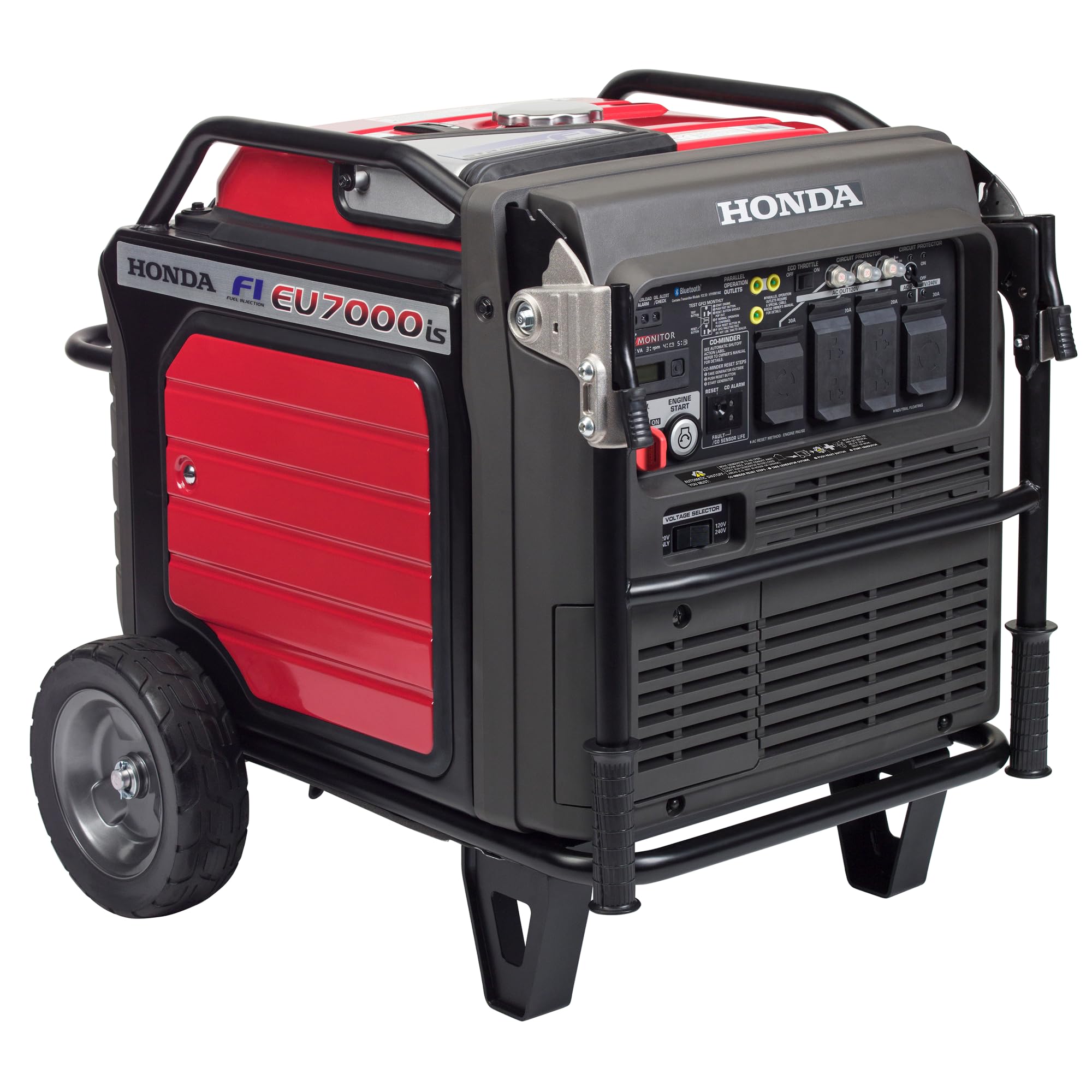
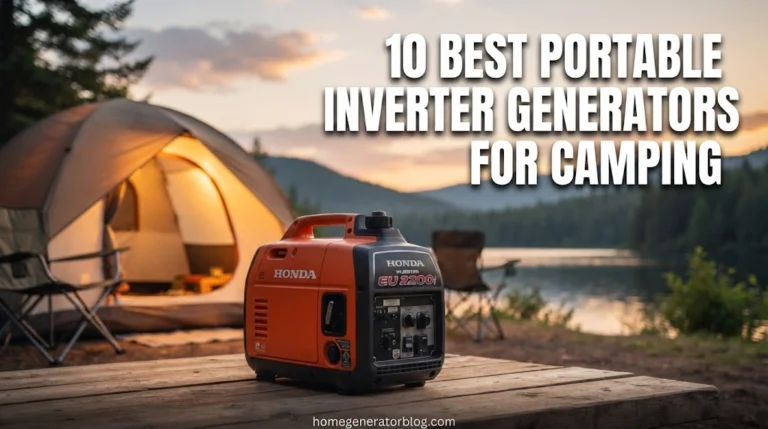
Honda EU7000iS 7000 Watt Inverter Generator — Quietest clean-power furnace pick
If your furnace has a modern control board, clean power matters as much as raw watts. This Honda inverter delivers 5,500 running watts with under 3% total harmonic distortion, so it is a safer match for sensitive electronics and furnace controls than many open-frame models. It is also notably quiet at 52 dBA, which helps during overnight outages. The compromise is weight and cost: at about 263 pounds it is hard to move alone, and its gasoline-only design gives no propane backup. Choose it when quiet, clean power matters more than maximum output.
- 5,500 running watts handle larger blowers
- Under 3% THD protects control boards
- 52 dBA is notably quiet
- Premium cost for its wattage
- 263 lb is very heavy
- Gasoline only, no propane
4.7/5
4.6/5
4.9/5

Champion Power Equipment 100520 8750-Watt Open Frame Inverter Generator — Strong clean-power value pick
This open-frame inverter is a useful compromise for readers who want clean power for a furnace control board but do not want to pay a premium-brand price. It provides 7,000 running watts and 8,750 starting watts, which is ample surge headroom for a typical gas furnace blower plus a refrigerator and lights. Its under 3% distortion rating is the key advantage over conventional open-frame generators. The downsides are familiar for this class: it is loud at 72 dBA, the tank is relatively small, and at well over 100 pounds it still needs care when moving.
- 7,000 running watts, strong surge headroom
- Under 3% THD protects control boards
- Electric start with cold-start help
- 72 dBA is loud overnight
- 4.2-gallon tank is relatively small
- Heavy to move alone
4.8/5
4.6/5
4.7/5

DuroMax XP12000EH Dual Fuel Portable Generator — Maximum headroom for larger homes
When the outage plan is furnace plus a well pump, refrigerator, lights, and other essentials, headroom matters. This DuroMax provides 9,500 running watts and 12,000 starting watts on gasoline, with propane as a second fuel, and a 50-amp outlet for larger transfer-switch setups. That capacity reduces the need to switch loads off when the blower starts. The trade-offs are size, noise, and power quality: it weighs about 224 pounds, runs at 74 dBA, and its higher distortion makes it a weaker choice for the most sensitive furnace controls.
- 9,500 running watts, huge surge headroom
- Dual fuel with 50-amp outlet
- Transfer-switch ready design
- 224 lb is very heavy
- 74 dBA is loud
- Higher THD for sensitive boards
4.9/5
4.7/5
4.5/5

Predator 9500 Super Quiet Inverter Generator — Large inverter with long runtime
This closed-frame inverter pairs large output with quieter operation than most open-frame models in its class. It delivers 7,600 running watts and 9,500 starting watts, enough for a furnace, refrigerator, and several other essentials, with pure sine-wave output for electronics and furnace controls. Runtime up to 18.5 hours at 25% load is a real advantage in a long outage. That combination is useful when outages last overnight. The main limits are weight at about 257 pounds, gasoline-only fuel, and a service network that is less established than the largest generator brands.
- 7,600 running watts for furnace plus essentials
- Pure sine-wave inverter output
- 18.5 hours at 25% load
- 257 lb is very heavy
- Gasoline only, no propane
- Smaller dealer service network
4.8/5
4.7/5
4.6/5

Generac GP8000E Portable Generator — Solid mid-large home backup
This Generac is a straightforward mid-large portable for a furnace plus the usual outage essentials. It provides 8,000 running watts and 10,000 starting watts, electric start, and a transfer-switch-ready twist-lock outlet, which makes the furnace connection plan simpler than with a small portable. A 7.9-gallon tank supports long runs at partial load. It is not the best choice for sensitive control boards, because its distortion is higher than an inverter, and at about 198 pounds it is not a one-person lift. For heating plus essentials, however, the capacity is well judged.
- 8,000 running watts, strong surge
- Electric start with recoil backup
- Transfer-switch ready outlet
- Higher THD for sensitive boards
- About 198 lb, heavy
- Gasoline only, no propane
4.8/5
4.6/5
4.5/5

Generac GP6500 Portable Generator — Capable budget furnace backup
For a gas furnace and a small set of essentials, this is a sensible budget step up from a furnace-only inverter. It provides 6,500 running watts and 8,125 starting watts, with PowerRush technology intended to help motor starts, plus COsense shutdown and a transfer-switch-ready outlet. A 6.9-gallon tank gives about 10.5 hours at 50% load. The limits are clear: many versions are recoil-start only, distortion is higher than an inverter, and there is no 50-amp outlet. Check the exact version before buying if electric start matters to you.
- 6,500 running watts, good surge
- COsense carbon monoxide shutdown
- Transfer-switch ready outlet
- Recoil start on many versions
- Higher THD for sensitive boards
- No 50-amp outlet
4.6/5
4.5/5
4.4/5

Westinghouse iGen4500DF Dual Fuel Inverter Generator — Compact furnace-only dual-fuel pick
This is a furnace-first pick, not a whole-home pick. Its 3,700 running watts and 4,500 starting watts on gasoline are enough for many gas furnace blowers with controls, with propane as a useful second fuel, and its under 3% distortion suits modern control boards. At about 98 pounds and with remote start, it is also easier to manage than the large portables. The important limit is headroom: add a refrigerator, well pump, or other motor at the same time and the margin disappears. Size it from your blower nameplate, not from hope.
- 3,700 running watts for many blowers
- Under 3% THD protects controls
- Dual fuel in compact size
- Limited headroom beyond furnace alone
- 120V only, no 240V
- Small tank needs refills
4.3/5
4.7/5
4.6/5

Champion Power Equipment 200988 4500-Watt Dual Fuel Inverter Generator — Quietest small furnace backup
If the goal is simply to keep a gas furnace running overnight, and noise matters, this small dual-fuel inverter deserves a shortlist place. It provides 3,500 running watts and 4,500 starting watts on gasoline, with propane giving 3,150 running watts and long runtime at light load, and it runs at 61 dBA. Clean power under 3% distortion is another advantage for control boards. The limit is the same as with other small inverters: it is a furnace-plus-lights pick, not a furnace-plus-everything pick, and it has no 240-volt output.
- 3,500 running watts, quiet 61 dBA
- Under 3% THD protects controls
- Long propane runtime at light load
- Limited headroom beyond furnace alone
- 120V only, no 240V
- Propane running watts are lower
4.2/5
4.7/5
4.6/5

Pulsar G12KBN Dual Fuel Portable Generator — High output, leaner warranty
This Pulsar offers the same headline class as the largest models here, 9,500 running watts and 12,000 starting watts on gasoline, with propane as a second fuel and a 50-amp outlet. For a large home where furnace, pump, and other essentials must run together, that capacity is the attraction. The compromises are also clear: it is loud at 74 dBA, power quality for sensitive boards is not its strength, and the base warranty is shorter than the 3-year cover common elsewhere. Register it promptly and check the current warranty terms before buying.
- 9,500 running watts, huge surge
- Dual fuel with 50-amp outlet
- Strong capacity for its class
- 74 dBA is loud
- Shorter base warranty
- THD not ideal for boards
4.9/5
4.5/5
4.2/5
Top 3 Head-to-Head: Westinghouse WGen7500DF vs Honda EU7000iS vs Champion 100520
These three cover the most common final choice: a balanced dual-fuel portable, a quiet clean-power inverter, and a clean-power inverter at a lower price point.
| Feature | #1 Westinghouse | #2 Honda | #3 Champion |
|---|---|---|---|
| Furnace Starting Power | 7,500 running / 9,500 starting — Best | 5,500 running / 7,000 starting | 7,000 running / 8,750 starting |
| Runtime and Fuel Flexibility | Dual fuel, 11 hours at 50% load | Gasoline, 16 hours at 25% load — Best | Gasoline, 10.5 hours at 25% load |
| Ease of Use and Safety | Remote start, transfer-switch ready | Quietest, cleanest power — Best | Electric start, clean power |
| Choose if… | You want furnace plus essentials and fuel choice | You want the quietest, cleanest power | You want clean power at better value |
Who These Generators Are NOT For
Portable generators are a strong answer for a gas or oil furnace, but they are not a universal heating solution.
They are also not for readers who need automatic, hands-free backup. A portable still needs outdoor placement, fuel, and a manual connection step. If no one will be home to start it, a standby system is the honest alternative.
Common Mistakes to Avoid
Most furnace-generator failures are sizing or connection mistakes, not brand mistakes.
Frequently Asked Questions About Generators for Furnaces
What size generator do I need to run a furnace?
A gas furnace alone usually needs 2,000 to 3,000 watts, because the blower may run at 600 to 1,200 watts and start at 1,500 to 2,500 watts. Add other loads you want at the same time, then add the largest starting surge. For a furnace plus a refrigerator and lights, a 5,000 to 7,500 running-watt portable is a more realistic target. Always check your blower nameplate first.
Can a portable generator run a gas furnace?
Yes, if it has enough starting watts for the blower and a safe connection method. Gas heat comes from fuel, so the generator only powers the blower, igniter, controls, and thermostat. Use a transfer switch, interlock, or furnace transfer switch, and never backfeed through a makeshift cord. An electrician should set up the connection if you are unsure.
Can a generator damage a furnace control board?
It can if power quality is poor, especially with a sensitive modern control board. Inverter generators with under 3% total harmonic distortion are the safer default. Conventional generators with voltage regulation may still work, but check your furnace maker guidance. If the board is a known concern, prioritise an inverter over raw wattage.
How do I connect a generator to a furnace safely?
The safe options are a manual transfer switch, a listed interlock kit, or a dedicated furnace transfer switch, installed or checked by a qualified electrician. Run the generator outdoors, away from windows, doors, and vents, and use the correct outdoor-rated cord and twist-lock connection. Never run a generator indoors, in a garage, or with exhaust pointed at the house.
Will a 3,500-watt generator run a furnace?
It can run many gas furnaces alone, if the blower starting surge fits within the generator starting watts and no other large motor starts at the same time. It leaves little headroom for a refrigerator, well pump, or other essentials. For furnace-only backup in a small home it can work; for furnace plus essentials, choose a larger model.
Can a generator run an electric furnace?
Generally not with a portable on this list, because electric furnaces can draw 10,000 to 25,000 watts. That load needs a large standby generator, load management, or a different heating plan. If your home uses electric heat, do not size from gas-furnace figures. Get a load calculation from a qualified electrician before buying.
How long can a generator run a furnace during an outage?
It depends on tank size, load, and fuel. A furnace alone is a light load for a mid-size portable, so runtime at partial load is often longer than the headline full-load figure. Dual-fuel models help because propane stores well, but check propane runtime separately. Plan refuelling, oil checks, and overnight noise before a long outage, and keep spare fuel safely stored.
If you are still choosing between portable and whole-home options, compare best generator to buy for home before deciding on capacity.
Our Final Verdict
For most homes, the Westinghouse WGen7500DF is the balanced furnace pick: enough surge for a blower plus essentials, dual fuel, and a transfer-switch-ready outlet. Choose an inverter instead if a sensitive control board or overnight noise decides the purchase for you.

Hi, I’m Michael Turner. I own a generator workshop in the United States and founded HomeGeneratorBlog to share practical, hands-on guidance about generator installation, maintenance, troubleshooting, safety, and backup power solutions. My goal is to help homeowners make smarter, more confident decisions through clear and reliable information