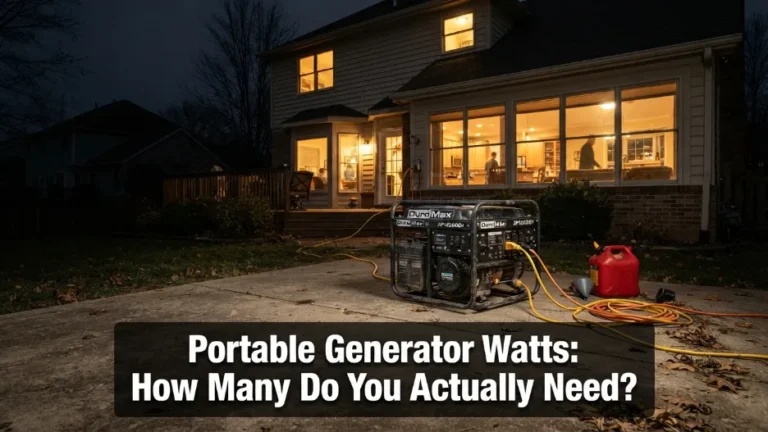
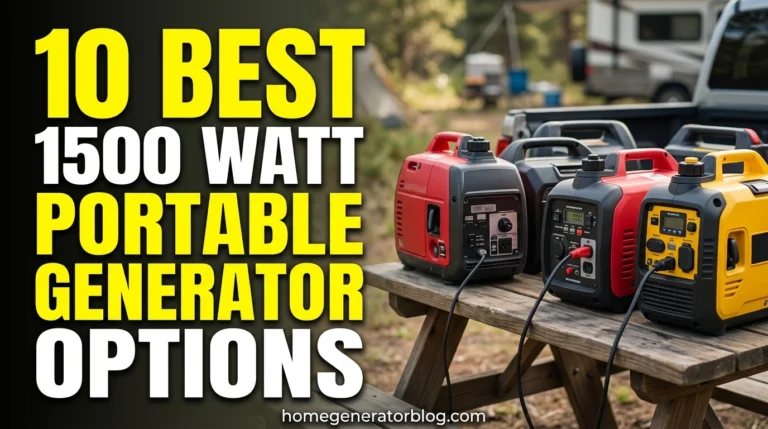
10 Best 3000 Watt Portable Generator Picks for 2026: Quiet, Reliable Power
The best 3000 watt portable generator right now is the Honda EU3000iS, pairing 2,800 running watts with Eco-Throttle and a 50-57 dBA sound rating. We evaluated 10 generators by comparing published specs and owner feedback, scoring each on power output, noise level, and value. Most 3000 watt generators look identical on paper but diverge sharply in noise, surge handling, and fuel flexibility. Whether you need home backup, RV power, or job-site tools, this guide gives you one clear answer.
Quick Comparison: All 10 Products Ranked
| # | Product | Best For | Rating | Badge | |
|---|---|---|---|---|---|
| 1 | Honda EU3000iS | Quiet home backup and RV use | 4.6/5 | Best Overall | Buy → |
| 2 | Yamaha EF3000iSEB | Buyers wanting a Honda rival | 4.5/5 | Best Quiet Alternative | Buy → |
| 3 | Champion 3400 DF | Outages where fuel may be scarce | 4.4/5 | Best Dual Fuel | Buy → |
| 4 | Generac iQ3500 | Home backup with extra headroom | 4.4/5 | Best Mid-Range | Buy → |
| 5 | Predator 3500 | Budget-minded home backup | 4.4/5 | Best Budget | Buy → |
| 6 | Champion 3100 | Campsites and tailgating | 4.3/5 | Best for Camping | Buy → |
| 7 | WEN 56351i | Light-duty backup on a budget | 4.2/5 | Best Value | Buy → |
| 8 | Westinghouse WGen3600v | Tools and rough-use backup | 4.1/5 | Best for Job Sites | Buy → |
| 9 | Briggs P3000 | Occasional home backup | 4.1/5 | Solid Runner-Up | Buy → |
| 10 | Jackery 3000 Pro | Indoor-safe, silent backup | 4.0/5 | Best Fuel-Free | Buy → |
How We Chose These Generators
What we evaluated
We compared running and starting watts, rated noise, fuel type, start method, and outlet layout for 10 models using manufacturer specifications and owner manuals.
Our 3 scoring criteria
Power Output, Noise Level, and Value, each scored out of 5. The overall rating is the average of the three.
Sources we used
Manufacturer spec sheets, owner manuals, and patterns in verified owner reviews. We favored documented ratings over marketing claims.
What we cut, and why
Models rated below 2,500 running watts and units without a published running-watt rating, since starting watts alone overstate real capacity.
What to Look for When Buying a 3000 Watt Portable Generator
A 3000 watt label tells you very little until you know how the generator behaves under real loads. These four factors separate a dependable outage companion from a noisy disappointment.
1. Running Watts vs. Starting Watts
Running watts are what the generator can supply continuously, while starting watts cover brief surges when motors kick on. Many 3000 watt models only deliver 2,600 to 3,000 running watts. Learn the difference between running watts versus starting watts before you add up your loads.
2. Inverter vs. Open-Frame Design
Inverter models produce stable, clean power that protects laptops, CPAP machines, and TVs, and they run quieter and sip fuel at low loads. Open-frame units usually cost less per watt and handle tools well. Our inverter portable generator buying guide explains which suits your use.
3. Fuel Type and Runtime
Gasoline is easy to find but degrades in storage, while propane keeps for years and burns cleaner. Dual-fuel models give you both, with a modest output drop on propane. Check rated runtime at half load, because that is closer to real use than the best-case number.
4. Noise, Weight, and Start Features
Quiet inverters sit around the 50 to 60 dBA range, noticeably calmer than open-frame models. Weight matters if you move it often, and electric start helps in cold weather or if pulling a cord is difficult. Safety features like low-oil shutoff and CO sensors add real protection.
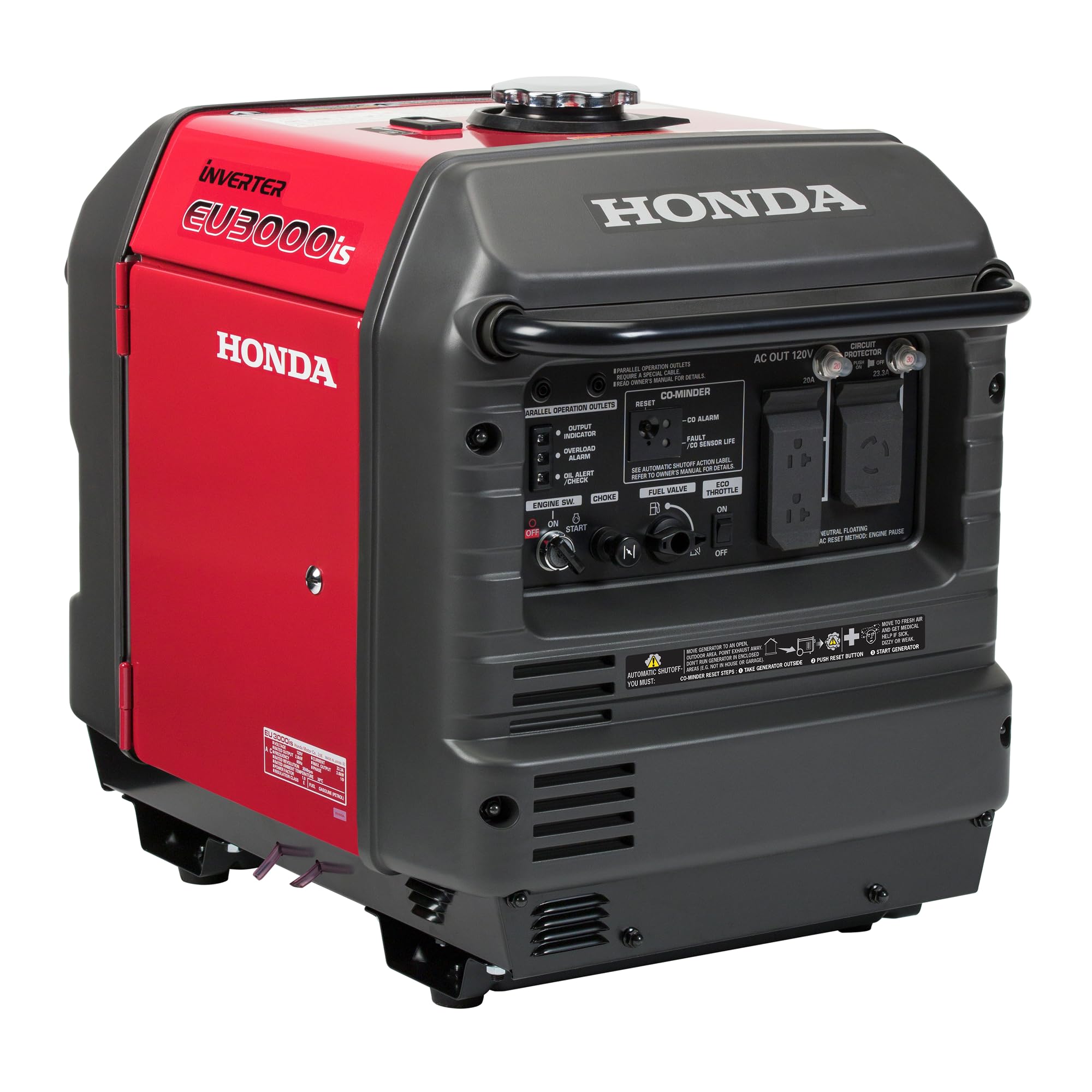
Honda EU3000iS: The quiet benchmark
Best for: Quiet home backup and RV use
If you want one 3000 watt inverter that quietly keeps a fridge, lights, and electronics alive through a multi-day outage, start here. Honda rates it at 2,800 running watts, and Eco-Throttle lowers engine speed at light loads to stretch each tank. Electric start means no yanking a cord at midnight. It also parallels with a second unit for extra capacity. The trade-off is weight and a premium cost, so it makes sense only if you value long service life over upfront savings. It will not run central air, but a window unit plus essentials is realistic.
- Rated 50-57 dBA with Eco-Throttle
- Electric start plus recoil backup
- Parallel-ready for extra capacity
- Strong reputation for long service life
- Heavy at roughly 130 pounds
- Premium cost versus similar inverters
4.7/5
4.9/5
4.1/5

Yamaha EF3000iSEB: Quiet, refined, and dependable
Best for: Buyers wanting a Honda rival
Shoppers cross-shopping the Honda will find the Yamaha nearly a mirror image, and that is a compliment. It delivers 2,800 running watts from a clean inverter, so laptops, CPAP machines, and TVs run safely. Electric start and a 12V DC outlet add convenience for campsites and boats. Yamaha’s smart throttle trims engine speed when demand falls, saving fuel. Availability and dealer support vary by region, which can matter when you need service. If a nearby Yamaha dealer exists, this is a very capable alternative. Like its rival, it carries a premium cost.
- Clean inverter output for electronics
- Electric start with recoil backup
- 12V DC outlet included
- Parallel capability with optional cable
- Premium cost for a 3000W class
- Dealer network thinner than rivals
4.7/5
4.8/5
4.0/5

Champion 3400-Watt Dual Fuel Inverter Generator: Flexible fuel, strong output
Best for: Outages where fuel may be scarce
Fuel lines during storms are the real enemy, and this Champion lets you switch between gasoline and propane to dodge them. On gasoline it is rated at 3,100 running watts, with a modest drop on propane, which stores for years without going stale. Electric start and a built-in CO shutoff sensor add everyday safety. It is louder than the Honda and Yamaha, so neighbors may notice during long nights. Still, that extra headroom over 2,800 watts helps when a fridge compressor and a window unit start close together. A strong choice for outage-prone regions.
- 3,100 running watts on gasoline
- Switches between gasoline and propane
- Electric start included
- Built-in CO shutoff sensor
- Noisier than Honda and Yamaha
- Output drops on propane
4.6/5
4.0/5
4.6/5

Generac iQ3500 Portable Inverter Generator: Extra headroom, solid features
Best for: Home backup with extra headroom
Needing a little more cushion than a 2,800-watt unit is common, and the iQ3500 answers with 3,500 starting watts and 3,000 running watts. That extra margin helps when a sump pump or refrigerator kicks on. Its inverter engine produces clean power for sensitive electronics, and the unit parallels with a second generator for larger loads. Sound output is moderate rather than whisper quiet, so place it well away from sleeping areas. Generac’s wide service network is a real advantage when parts or repairs are needed. Expect more bulk than compact campsite models.
- 3,000 running watts for extra margin
- Clean inverter power for electronics
- Wide dealer and service network
- Parallel-ready for larger loads
- Bulkier than compact inverter rivals
- Not as quiet as Honda
4.7/5
4.3/5
4.1/5

Predator 3500 Super Quiet Inverter Generator: Big output, small spend
Best for: Budget-minded home backup
Tight budgets rarely allow a premium badge on the engine, and this Harbor Freight Predator is the reason many buyers skip one. It offers 3,500 starting watts and 3,000 running watts from an inverter design, which is more headroom than several pricier competitors list. Owners often pair two units through the parallel kit for larger jobs. Noise is acceptable but not Honda-level, and long-term durability depends on regular oil changes and fuel care. Harbor Freight’s return policy and low cost make it a low-risk first generator for occasional outages and tailgating.
- 3,000 running watts at budget cost
- Inverter output safe for electronics
- Parallel kit supported
- Easy to buy and return
- Louder than premium inverters
- Long-term durability less proven
4.5/5
3.9/5
4.7/5

Champion 3100-Watt Portable Inverter Generator: Compact, quiet, and capable
Best for: Campsites and tailgating
Weekend campers want enough power for a coffee maker and lights without hauling a refrigerator-sized machine. This Champion inverter provides 3,100 starting watts and 2,800 running watts, which covers an RV air conditioner only if you manage other loads carefully. Its Quiet Technology design keeps noise campground-friendly, and parallel-ready outlets let you add a second unit later. Recoil start keeps the weight and complexity down. Home users should note there is no electric start, which matters if you have limited hand strength or plan to run it often in cold weather.
- Campground-friendly noise level
- 2,800 running watts in compact body
- Parallel-ready for future expansion
- Clean power for electronics
- Recoil start only
- Tight margin for RV air conditioners
4.3/5
4.2/5
4.4/5

WEN 56351i Super Quiet Portable Inverter Generator: Capable power without the markup
Best for: Light-duty backup on a budget
Looking for a no-frills inverter that handles a fridge, router, and a few lights without a premium bill? The WEN 56351i is rated at 3,500 surge watts and 2,900 running watts, putting it in the top tier of this class for output. Its inverter design keeps voltage stable for laptops and phones, and parallel outlets allow expansion. WEN supports its products with a phone-based customer service team and a multi-year warranty. Do not expect Honda-level sound control or a long reliability record, but for infrequent outages the value is hard to dismiss.
- 2,900 running watts for the money
- Stable inverter power for electronics
- Parallel outlets for expansion
- Responsive manufacturer support
- Louder than premium competitors
- Shorter reliability track record
4.3/5
3.9/5
4.5/5

Westinghouse WGen3600v Portable Generator: Raw power for tough jobs
Best for: Tools and rough-use backup
Job-site crews and DIY builders care more about raw watts than whisper-quiet operation, and this open-frame Westinghouse delivers 3,600 running watts and 4,650 peak watts. That headroom starts a circular saw, a small compressor, or a well pump that would trip a 2,800-watt inverter. It is noticeably louder and less fuel-efficient than inverter models, and the output is less suited to sensitive electronics without a surge protector. Expect a heavier, more rugged build, which tolerates dust and bumps better. A practical pick when power matters more than polish.
- 3,600 running watts, highest here
- Starts tools inverters struggle with
- Rugged open-frame construction
- Large output for the class
- Loud open-frame operation
- Less ideal for sensitive electronics
4.8/5
3.3/5
4.3/5

Briggs & Stratton P3000 PowerSmart Series Inverter Generator: Familiar brand, modest output
Best for: Occasional home backup
Backed by one of the best-known small-engine names, the P3000 suits homeowners who want a familiar service network without paying for a Honda. It is rated at 3,000 starting watts and 2,600 running watts, which is lower than most rivals here, so plan your loads with care. Inverter power keeps phones and laptops safe. The PowerSmart design trims engine speed when demand drops, saving fuel and noise. Its smaller running capacity makes it best for essentials like a refrigerator, lights, and chargers rather than a full list of kitchen appliances.
- Familiar brand and service network
- Inverter power safe for electronics
- Throttle trims fuel use at low load
- Compact for storage
- 2,600 running watts trails rivals
- Limited headroom for big loads
4.1/5
4.0/5
4.1/5

Jackery Explorer 3000 Pro Portable Power Station: Silent power with no exhaust
Best for: Indoor-safe, silent backup
Anyone worried about carbon monoxide, fumes, or noise should consider a battery power station instead of an engine. The Jackery Explorer 3000 Pro provides 3,000 watts of AC output and a 3,024Wh battery, with no exhaust and almost no sound. It can run a fridge, router, and lights quietly indoors, and it recharges from the wall or solar panels. The limit is capacity: heavy loads drain the battery in hours, and it cannot refuel from a gas can mid-outage. Treat it as a silent short-term backup rather than a multi-day workhorse.
- Zero exhaust, safe to use indoors
- Near-silent operation
- Recharges from wall or solar
- 3,000W AC output, 6,000W surge
- Finite battery, no refuel option
- Higher cost per watt-hour than engines
4.2/5
5.0/5
2.9/5
Top 3 Head-to-Head: Honda EU3000iS vs Yamaha EF3000iSEB vs Champion 3400 DF
These three are the most common final choices: two quiet premium inverters and one flexible dual-fuel option with extra output.
| Feature | #1 Honda EU3000iS | #2 Yamaha EF3000iSEB | #3 Champion 3400 DF |
|---|---|---|---|
| Running watts | 2,800W | 2,800W | 3,100W on gas — Best |
| Noise level | 50-57 dBA, quietest — Best | Quiet inverter | Louder under load |
| Fuel options | Gasoline only | Gasoline only | Gasoline or propane — Best |
| Choose if… | You want the quietest, proven all-rounder | You prefer Yamaha and have a nearby dealer | You want propane backup and extra headroom |
Who These Generators Are NOT For
A 3000 watt generator is a partial-home solution, and being honest about that saves frustration.
They are also not for anyone planning to run an engine indoors, in a garage, or near open windows. Read our guide to portable generator carbon monoxide safety before your first startup, and never skip a battery-powered CO alarm.
Common Mistakes to Avoid
Most generator problems come from setup and habits rather than the machine itself.
Frequently Asked Questions About 3000 Watt Portable Generators
What can a 3000 watt portable generator run?
A 3000 watt generator typically runs a refrigerator, lights, a router, a TV, phone chargers, and a microwave or coffee maker, though not all at once. Add up the running watts of everything you plan to use together and keep the total under the rated running wattage. A clamp meter or wattage label on each appliance makes this quick.
Can a 3000 watt generator run a whole house?
No, not a whole house. It can power essentials such as a refrigerator, lights, and electronics, but not central air, an electric range, or a water heater together. To feed home circuits safely, you need a proper connection, so review portable generator transfer switch options first. Treat the generator as a partial-home solution and prioritize the circuits you truly need.
Can a 3000 watt generator run an air conditioner?
It can run a window or small portable air conditioner, but usually not central air. Window units often need a startup surge well above their running draw, so keep other loads off. A soft-start kit can reduce the surge, and larger systems need a bigger generator. Always stage startup: run the largest motor first, then connect smaller loads one by one.
How long will a 3000 watt generator run on a tank of gas?
Runtime depends on tank size and load. Many 3000 watt inverter models run roughly 7 to 20 hours per tank, with the longest times at light loads. Open-frame units burn fuel faster. Check the manufacturer’s rated runtime at half load for a realistic estimate. Using Eco mode on inverter models can extend those hours further when demand stays low.
Is an inverter generator better than a conventional one at 3000 watts?
For most home users, yes. Inverter models deliver cleaner power for electronics, run quieter, and use less fuel at light loads. Conventional open-frame units cost less per watt and handle heavy tools well. Choose an inverter for backup and camping, and open-frame for job sites. Whichever type you choose, buy from a seller that publishes real running-watt and noise ratings.
How far should a portable generator be from a house?
Keep it outdoors and well away from doors, windows, and vents, with the exhaust pointed away from the home. Many safety agencies advise at least 20 feet. For layout tips and common errors, see where to place a portable generator. Never run a generator in a garage, even with the door open, because carbon monoxide builds quickly.
How loud is a 3000 watt generator?
Inverter models are typically rated in the 50 to 60 dBA range, similar to a normal conversation. Open-frame units are noticeably louder, often above 70 dBA. Ratings are measured at set distances and loads, so expect more noise when running near full capacity. Place it on level ground and keep it dry, since wind and rain change both performance and perceived noise.
Our Final Verdict
For most households, a 3000 watt inverter is the sweet spot: enough for a fridge, lights, and a window unit, yet quiet and portable. The Honda EU3000iS is the safest overall choice, while dual-fuel and budget models trade refinement for flexibility and savings. Match running watts to your essential loads first.

Hi, I’m Michael Turner. I own a generator workshop in the United States and founded HomeGeneratorBlog to share practical, hands-on guidance about generator installation, maintenance, troubleshooting, safety, and backup power solutions. My goal is to help homeowners make smarter, more confident decisions through clear and reliable information