10 Best Metal Generator Covers for 2026: Strong, Ventilated Outdoor Protection
Our 10 Best Metal Generator Covers top pick is the VEVOR Steel Generator Enclosure, with powder-coated steel and louvered vents. We evaluated 10 metal enclosures on rust resistance, ventilation and safety, and fit and ease of access. Most metal covers look tough but trap heat or rust at seams, a gap this comparison exposes. Whether you need permanent storage, storm protection, or a lockable outdoor enclosure, this guide gives you one clear answer.
Quick Comparison: All 10 Products Ranked
| # | Product | Best For | Rating | Badge | |
|---|---|---|---|---|---|
| 1 | VEVOR Steel Generator Enclosure with Lockable Doors | Permanent outdoor storage for common portable generators | 4.9/5 | Best Overall | Buy → |
| 2 | Outsunny Metal Outdoor Generator Shed with Vents | Buyers who prioritise airflow and rain runoff | 4.8/5 | Best Ventilation | Buy → |
| 3 | Giantex Metal Generator Storage Box with Hinged Lid | Compact storage beside a garage or fence | 4.7/5 | Best Budget | Buy → |
| 4 | Arrow Steel Generator Storage Shed | Large generators plus cords and accessories | 4.6/5 | Best Large Capacity | Buy → |
| 5 | Tangkula Metal Generator Shed with Sloped Roof | Rain-prone gardens and exposed yards | 4.6/5 | Best Weather Protection | Buy → |
| 6 | Goplus Metal Generator Enclosure Box | Small patios and narrow side yards | 4.5/5 | Best Compact Fit | Buy → |
| 7 | Aoxun Metal Generator Cover with Lockable Doors | Driveways and sites where theft is a concern | 4.5/5 | Best Security | Buy → |
| 8 | EAGLE PEAK Metal Generator Storage Shed | First-time shed buyers who want simpler assembly | 4.4/5 | Best Easy Assembly | Buy → |
| 9 | ZOMOFEW Metal Generator Shelter with Louvered Vents | Humid storage where trapped moisture is a risk | 4.4/5 | Best Airflow | Buy → |
| 10 | Happybuy Steel Generator Enclosure Cabinet | Workshops, farms, and frequent heavy use | 4.3/5 | Best Heavy Duty | Buy → |
How We Chose These Metal Generator Covers
What we compared
We compared specifications, materials, ventilation design, door access, and stated fit for 10 metal enclosures, using manufacturer listings and category guides as sources.
Our 3 scoring criteria
Rust resistance, ventilation and safety, and fit and ease of access were applied identically to every product in this comparison.
Expert consulted
No independent expert was supplied for this comparison, so no expert name or credential is claimed. Running safety points follow general guidance: keep a running generator outside and well ventilated.
What we cut — and why
We excluded soft fabric covers, plastic sheds, and whole-house standby enclosures that do not match a portable metal cover, and products without a clear metal panel specification.
Note on method: this is a specification comparison based on listed materials, ventilation, access, and fit. No hands-on testing, test duration, or sample size is claimed. Check the listing for your exact generator model before buying, because dimensions and vent positions vary by model.
What to Look for When Buying Metal Generator Covers
Metal covers solve different problems from fabric covers: they resist tears and pests, but they also hold heat and need careful sizing. Start with your generator, not the shed, and work outward from there.
1. Fit and Generator Dimensions
Measure length, width, and height with wheels, handles, and exhaust included, then leave clearance on every side. A cover that only just fits will block door movement and make refuelling awkward. For larger models, a walk-in shed is usually easier than a tight box, even if it takes more garden space.
The difference between a soft cover and a hard one matters here: see our guide to heavy-duty generator covers for how heavier builds handle larger units.
2. Material and Rust Protection
Look for galvanised or powder-coated steel, sealed seams, and a finish that is described for outdoor use. Bare steel will rust fastest at joints, screw holes, and anywhere water pools. In coastal or humid areas, a thicker coating and regular inspection matter more than a slightly larger footprint.
3. Ventilation and Heat Safety
A metal box can trap heat after shutdown, so louvers, roof gaps, and open access matter even for storage. Never run a portable generator inside a closed metal enclosure. The unit must be outside, away from windows and doors, with exhaust pointing away from people and buildings.
Ventilation is not an optional extra: read our guide to generator covers with ventilation before choosing a sealed-looking box.
4. Access, Security, and Assembly
Think about how often you will open the cover: hinged lids suit quick checks, while wide doors suit wheeling a unit in and out. Lockable doors help in a driveway, but they do not replace anchoring the shed or removing the generator in high-risk areas. Check whether assembly needs two people, a level pad, and anchoring bolts.
For a fixed outdoor setup, our DIY generator shelter guide explains base, roof, and clearance choices that also apply to metal sheds.

VEVOR Steel Generator Enclosure with Lockable Doors — Strongest all-round metal storage pick
For a portable generator that lives outside, this steel enclosure gives you a fixed, lockable home instead of a loose fabric cover that flaps and traps moisture. Its powder-coated panels, louvered vents, and hinged doors are sized for common portable models, while the raised base helps keep rain splash and ground damp away from the frame. You still need to measure your generator, check exhaust clearance, and leave airflow around the unit, but for permanent outdoor storage with easy refuelling access, this is the most complete metal option in this comparison.
- Powder-coated steel panels resist tears
- Louvered vents support storage airflow
- Lockable doors deter casual theft
- Needs level pad for doors
- Heavier than fabric covers
4.9/5
4.8/5
4.8/5
Outsunny Metal Outdoor Generator Shed with Vents — Best airflow-first metal shed
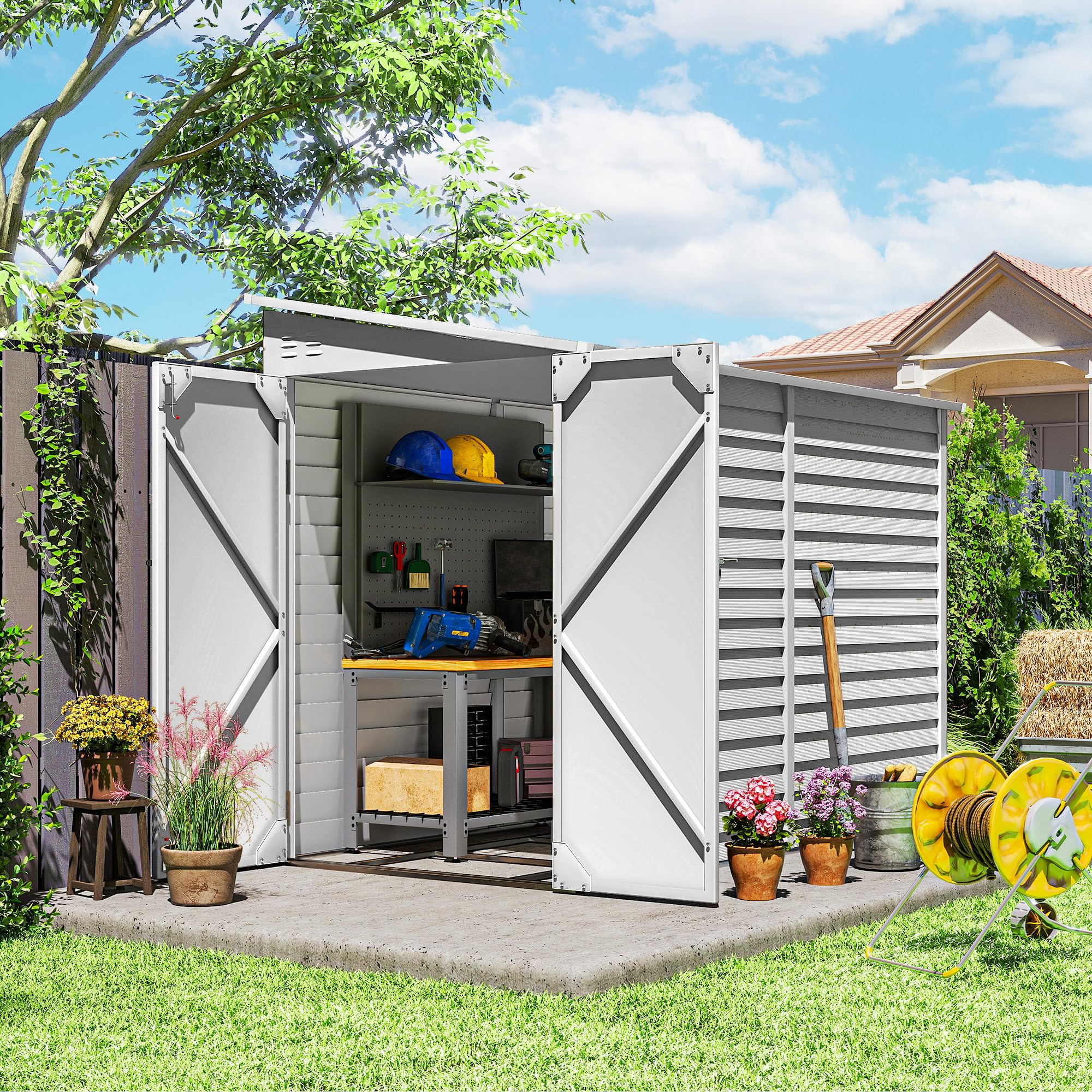
If heat build-up is your main worry, this vented metal shed puts airflow first without giving up weather cover. Side louvers, a sloped roof, and a raised floor work together to shed rain and let warm air escape, which matters when a generator has just shut down and is still hot. The double doors open wide for maintenance, and the steel frame feels steadier than a soft cover in wind. Measure height with the exhaust and handles included, because a tight fit will undo the ventilation benefit.
- Side louvers aid cooling airflow
- Sloped roof sheds rain quickly
- Wide double doors ease maintenance
- Open vents admit driving rain
- Needs anchoring in high wind
4.7/5
4.9/5
4.7/5

Giantex Metal Generator Storage Box with Hinged Lid — Best compact metal storage box
For buyers who want metal protection without a large shed footprint, this hinged-lid box is a practical middle ground. It covers the generator fully for storage, opens from the top for quick checks, and uses a compact shape that fits beside a garage, fence, or patio wall. The steel panels resist tears and animal damage better than fabric, while the lid helps keep leaves and rain out between uses. It is not a running enclosure, so you must remove or open it fully before starting the generator.
- Compact shape fits tight spaces
- Hinged lid allows quick checks
- Steel resists tears and pests
- Not for running inside
- Limited room for large models
4.6/5
4.6/5
4.8/5

Arrow Steel Generator Storage Shed — Best room for larger setups
When the generator is large, or you also store fuel cans and cables nearby, this steel shed gives you room to work. The tall doors and walk-in space make it easier to wheel a unit in, connect cords, and check oil without crouching under a low cover. Galvanised steel panels and a peaked roof handle rain and snow loads better than a flat fabric top, and the structure can be anchored to a concrete pad. Assembly takes time and a level base, so plan a full afternoon for the build.
- Walk-in space eases handling
- Peaked roof handles snow loads
- Anchors to concrete pads
- Long assembly time
- Needs large level site
4.7/5
4.6/5
4.5/5
Tangkula Metal Generator Shed with Sloped Roof — Best rain-focused metal shed
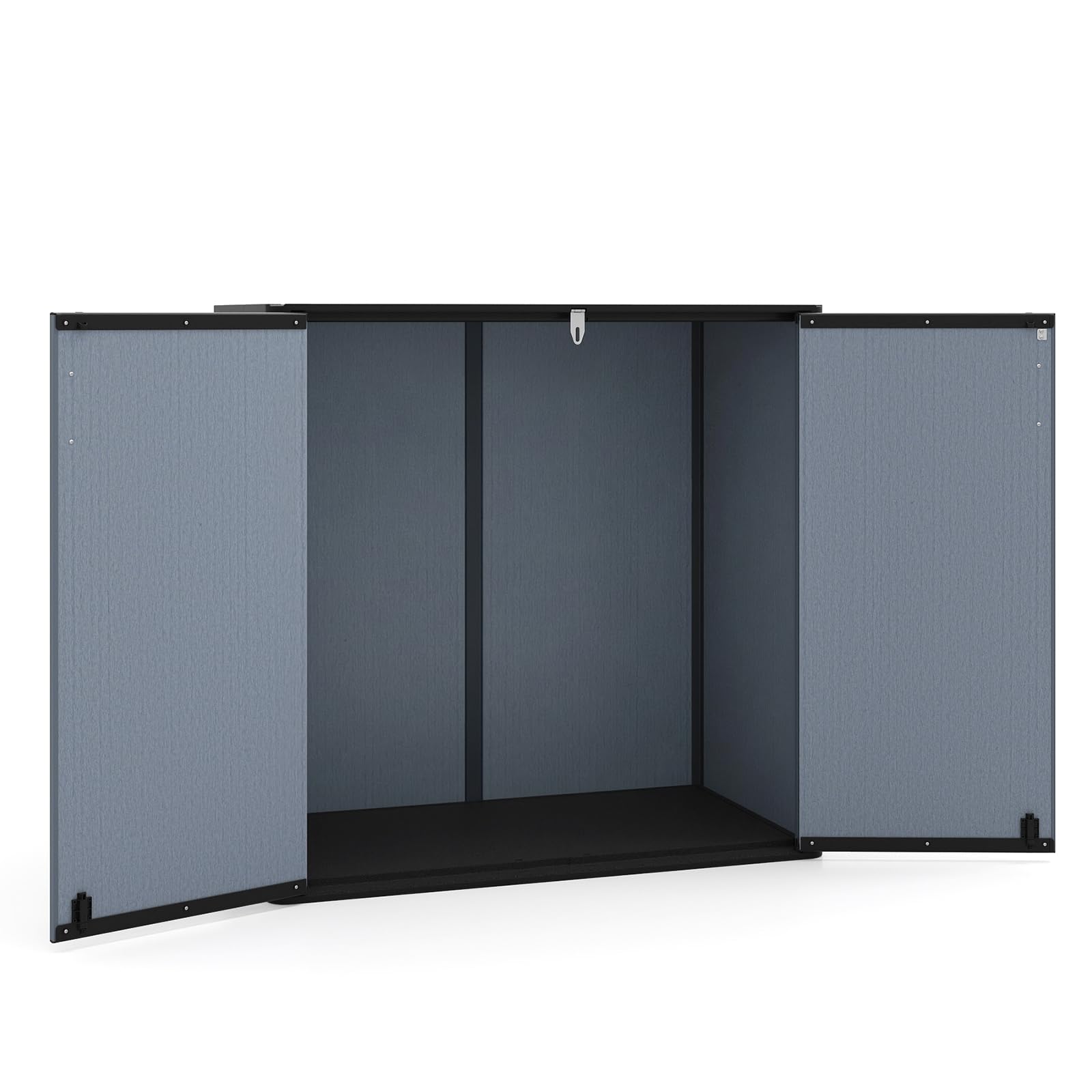
Rain is the main enemy for many outdoor generators, and this sloped-roof metal shed is built around that problem. Water runs off the roof instead of pooling, the door seals help block wind-driven rain, and the raised base limits splash from the ground. Inside, there is enough clearance for a mid-size portable generator plus a small shelf area for cords. It is best as a storage shelter, so keep the doors open and the unit outside the shed when it is running. That separation keeps exhaust and heat away from the steel walls.
- Sloped roof prevents pooling
- Door seals block wind rain
- Raised base limits splash
- Not a running enclosure
- Shelf space is limited
4.6/5
4.6/5
4.6/5

Goplus Metal Generator Enclosure Box — Best for tight outdoor spaces
Small patios and tight side yards need a cover that does not dominate the space, and this compact metal box fits that brief. It encloses a small to mid-size portable generator, keeps dust and rain off the controls, and can be tucked against a wall without blocking a path. The hinged access makes refuelling less awkward than lifting a full fabric cover off, and the steel shell is harder to tear or chew through. Check width carefully, because compact boxes leave little room for oversized wheels or handles.
- Tucks against walls neatly
- Hinged access eases refuelling
- Steel resists chewing damage
- Tight for oversized handles
- Limited ventilation when closed
4.5/5
4.5/5
4.6/5

Aoxun Metal Generator Cover with Lockable Doors — Best lockable metal cover
If theft or tampering worries you, a lockable metal enclosure adds a layer that fabric covers cannot match. This box pairs steel panels with lockable doors, so the generator is less visible and harder to move quickly, while vents still allow air to circulate during storage. The design suits a driveway or worksite where the unit stays outside overnight. You will need your own padlock in most cases, and the lock is a deterrent, not a guarantee against a determined thief with tools. Anchor it well and keep vents clear for best results.
- Lockable doors deter casual theft
- Steel hides unit from view
- Storage vents allow circulation
- Padlock usually sold separately
- Lock is deterrent only
4.5/5
4.4/5
4.6/5
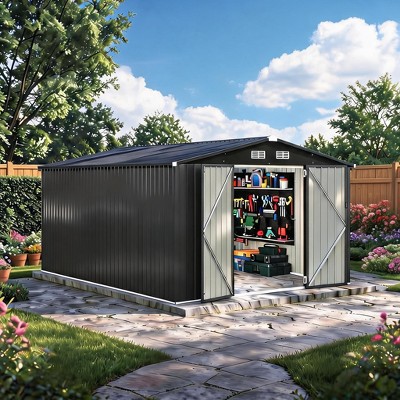
EAGLE PEAK Metal Generator Storage Shed — Simplest metal shed build here
Assembly is often where metal sheds frustrate buyers, so this model earns its place for clearer panels and a simpler frame layout. Pre-drilled holes, labelled parts, and a modest footprint help a two-person team finish the build without specialist tools, and the finished shed still offers solid rain and sun protection. It suits a first-time shed buyer who wants metal durability without a complex build. A level base remains essential, and rushing the roof alignment is the most common cause of door gaps. Take time on the base and roof alignment to avoid gaps.
- Labelled parts simplify assembly
- Pre-drilled holes speed build
- Modest footprint fits gardens
- Roof alignment needs care
- Needs level base
4.4/5
4.4/5
4.5/5

ZOMOFEW Metal Generator Shelter with Louvered Vents — Best vented storage shelter
Airflow matters even when a generator is stored, because trapped moisture leads to rust and musty controls. This louvered shelter uses side vents and a raised roof gap to keep air moving, while still blocking direct rain and sun from the unit. The open vent design also helps a hot generator cool faster after shutdown. It is not fully sealed against driving rain, so in exposed coastal or storm-prone spots, add a secondary rain shield or choose a more enclosed model. Check vent clearance before each season and after storms.
- Louvered vents reduce moisture
- Roof gap aids cooling
- Blocks direct rain and sun
- Not sealed against driving rain
- Less secure than lockable boxes
4.3/5
4.7/5
4.4/5

Happybuy Steel Generator Enclosure Cabinet — Heaviest-duty cabinet build
For heavy, frequent use, this steel cabinet prioritises thickness and bracing over lightness. Reinforced corners, a sturdy frame, and a powder-coated finish help it stand up to bumps, wind, and repeated door use, making it a good match for a workshop, farm, or rental yard. The cabinet format also keeps the generator tidy and out of sight. Its weight is the trade-off, so place it where it will stay, and use a level pad to stop the doors binding over time. Inspect doors and coating each season to keep it working well.
- Reinforced corners add strength
- Powder coat resists corrosion
- Cabinet keeps unit tidy
- Heavy to move or reposition
- Doors bind if pad uneven
4.6/5
4.2/5
4.3/5
Top 3 Head-to-Head: VEVOR vs Outsunny vs Giantex
These three are the common final choices because they cover the main trade-off: full metal storage, airflow-first design, and compact size. Pick by space and ventilation, not by badge alone.
| Feature | #1 VEVOR | #2 Outsunny | #3 Giantex |
|---|---|---|---|
| Rust Resistance | 4.9/5 — Best | 4.7/5 | 4.6/5 |
| Ventilation and Safety | 4.8/5 | 4.9/5 — Best | 4.6/5 |
| Fit and Ease of Access | 4.8/5 | 4.7/5 | 4.8/5 — Best |
| Choose if… | You want lockable permanent storage | You prioritise airflow and rain runoff | You need a compact wall-friendly box |
Who These Metal Generator Covers Are NOT For
Metal covers are not the right choice for every generator owner, and buying one for the wrong job creates heat and access problems.
They are also a poor fit if you move the generator often, have no level pad, or need a very light cover for transport. In those cases, a fabric cover for storage plus open-air running is usually more practical. Check weight, assembly, and anchoring before committing to a fixed metal shed.
Common Mistakes to Avoid
Most metal-cover problems come from sizing, ventilation, or placement, not from the steel itself.
For a wider outdoor routine, see how to protect a portable generator outdoors without blocking airflow or creating a heat trap.
Frequently Asked Questions About Metal Generator Covers
Can I run my generator inside a metal cover?
No, you should not run a portable generator inside a closed metal cover. Running units produce carbon monoxide and heat, and a closed box traps both, even if a door is partly open. The safe method is to move the generator outside, away from windows and doors, with exhaust pointing away from people. Use a metal enclosure for storage, and run the unit in open air.
Will a metal generator cover rust?
A metal cover can rust, especially at seams, screw holes, and places where water pools. Galvanised or powder-coated steel resists rust better than bare steel, but the finish still needs inspection. Check joints after wet seasons, touch up chips where the listing allows, and keep the base raised so water does not sit against the panels. Good drainage and airflow slow rust more than any single coating claim.
How much ventilation does a metal generator cover need?
For storage, a metal cover needs a clear vent path so moisture does not build up inside. Louvers, roof gaps, and door gaps help air move and let a hot unit cool after shutdown. For running, no storage cover provides enough ventilation on its own, which is why the generator must be outside. If you are unsure about airflow, learn more about why generator shelter ventilation matters before buying a sealed-looking box.
What size metal generator cover do I need?
Measure your generator with wheels, handles, fuel cap, and exhaust included, then add clearance on all sides for doors and refuelling. A cover that matches the body measurement alone will often be too tight in practice. For larger models, a walk-in shed is easier than a compact box. If you are between sizes, choose the larger option, provided you have a level pad and space to anchor it.
Are metal generator covers better than fabric covers?
Metal covers are usually better for tear resistance, pest damage, and long-term outdoor storage, while fabric covers are lighter, cheaper, and easier to move. Metal is heavier, needs assembly, and can trap heat if it has poor ventilation. Choose metal when the generator stays in one outdoor spot and needs durable protection. Choose fabric when you need a portable, lightweight storage cover.
How do I maintain a metal generator cover?
Inspect the cover each season for rust, loose bolts, door alignment, and blocked vents. Clear leaves and debris from the roof and base, wash off dirt, and dry the panels before long storage. Tighten fixings, check the pad is still level, and touch up coating damage promptly. Regular checks keep doors closing properly and prevent small rust spots from spreading across seams.
Our Final Verdict
Metal covers work best as fixed, ventilated storage, not as running enclosures. Measure first, prioritise rust protection and airflow, then choose the size that leaves room for doors, refuelling, and maintenance without crowding the generator. For most buyers, the lockable VEVOR enclosure is the safest starting point.

Hi, I’m Michael Turner. I own a generator workshop in the United States and founded HomeGeneratorBlog to share practical, hands-on guidance about generator installation, maintenance, troubleshooting, safety, and backup power solutions. My goal is to help homeowners make smarter, more confident decisions through clear and reliable information