How to Run a Generator Safely During Rain (2026 Guide)
Quick Answer
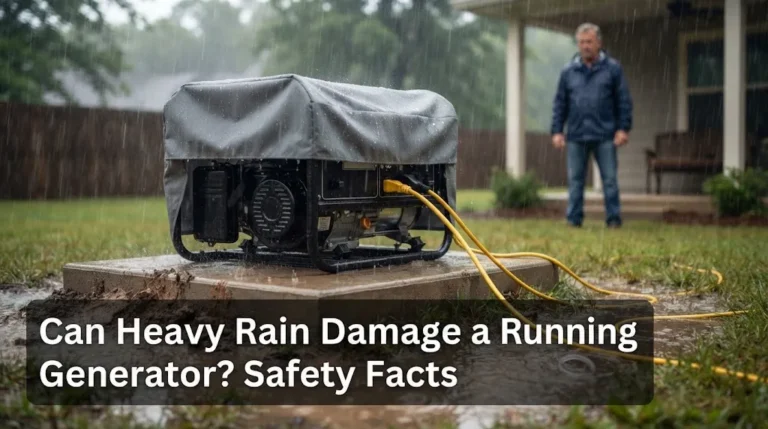
Do not run a standard portable generator in direct rain. It is not weatherproof, and water entering the outlets or control panel can cause electrocution or short circuits. If you must run one in wet weather, use a purpose-built running cover that allows ventilation, elevate the generator above standing water, keep all cords and connections dry, and maintain at least 20 feet of distance from your home to prevent carbon monoxide buildup.
Why Rain Creates a Serious Risk for Portable Generators
Consumer-grade portable generators are designed for outdoor use, but “outdoor” does not mean “weatherproof.” The electrical outlets, control panel, and alternator are not sealed against rain. When water enters these areas, it can create a conductive path between live components and the generator frame. Touching the frame or a connected cord in that condition can deliver a fatal shock.
Manufacturers are explicit about this limitation. Generac states that you should never operate a generator in rain or on a wet surface. The U.S. Consumer Product Safety Commission (CPSC) advises waiting for rain to pass before using a generator because these units are not weatherproof and can cause electrocution.
The risk is not limited to splashing. Moisture inside the unit can cause arcing, which may ignite fuel vapors. Water pooling around the base can also reach the fuel system or electrical connections from below. Both scenarios turn a power tool into a hazard.
How to Protect a Generator If You Must Run It in Wet Weather
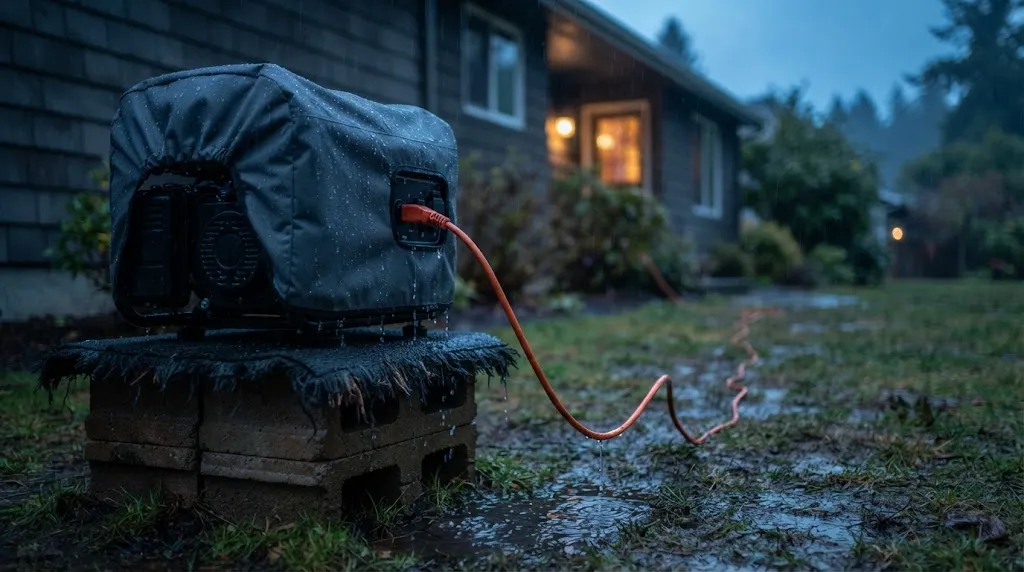
Sometimes waiting is not an option—for example, during a multi-day outage when medical equipment depends on power. In that situation, the setup must address three separate problems: water from above, water from below, and water traveling along cords.
Use a Running Cover, Not a Tarp
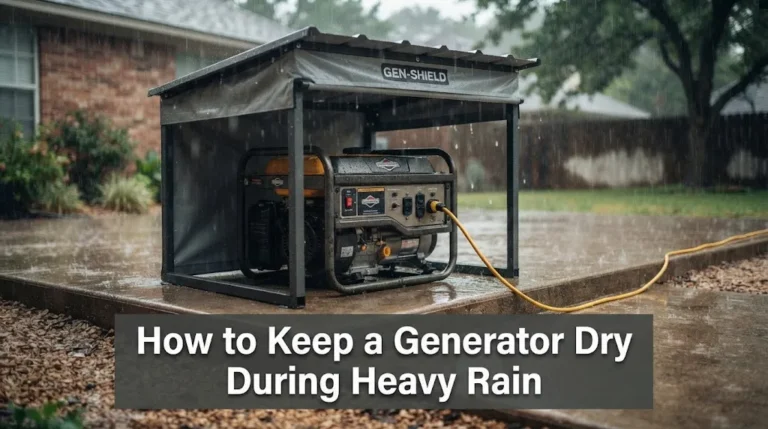
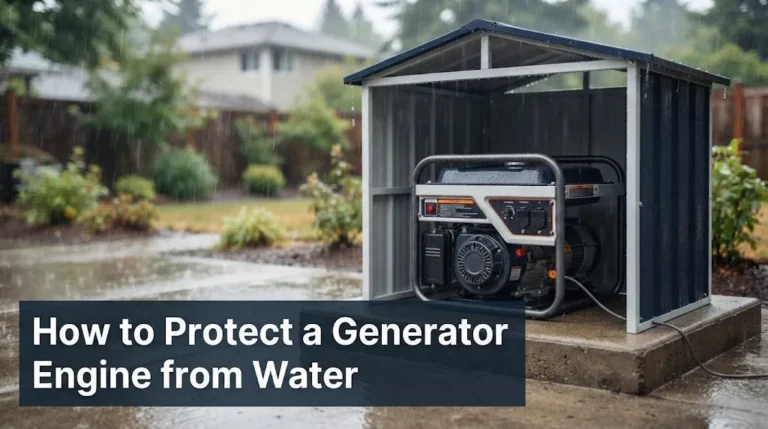
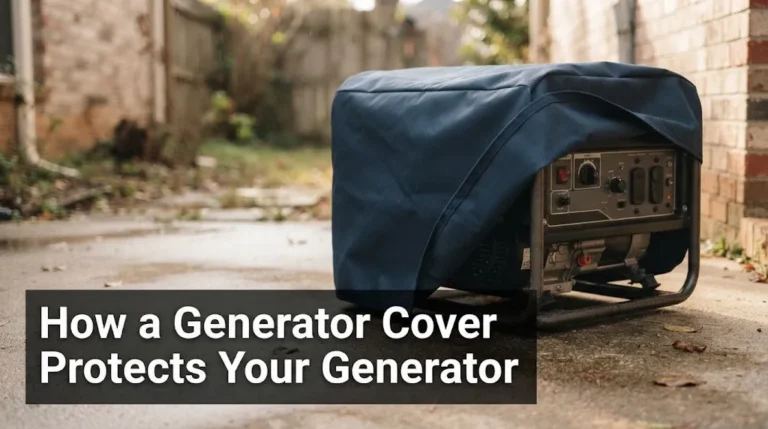
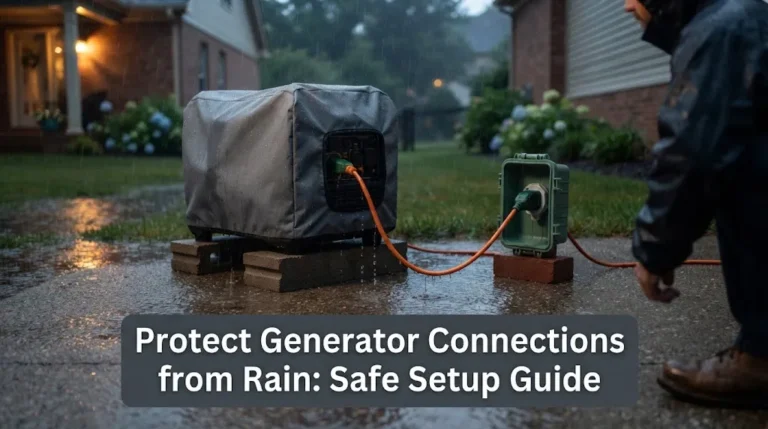
A standard storage cover or a plastic tarp will trap heat and block exhaust flow, creating a fire hazard. A purpose-built generator tent or running cover is designed to shield the electrical panel and outlets while allowing air to circulate around the engine. Champion Power Equipment, for example, offers a Storm Shield by GenTent that is rated to withstand heavy rain and wind while maintaining ventilation. These covers attach directly to the generator frame and have an apron that protects the outlet area.
Before buying any cover, confirm that it is specifically marketed as a “running cover” or “operating cover.” A cover that must be removed before starting the generator does not solve the problem.
Elevate the Generator Above Puddles
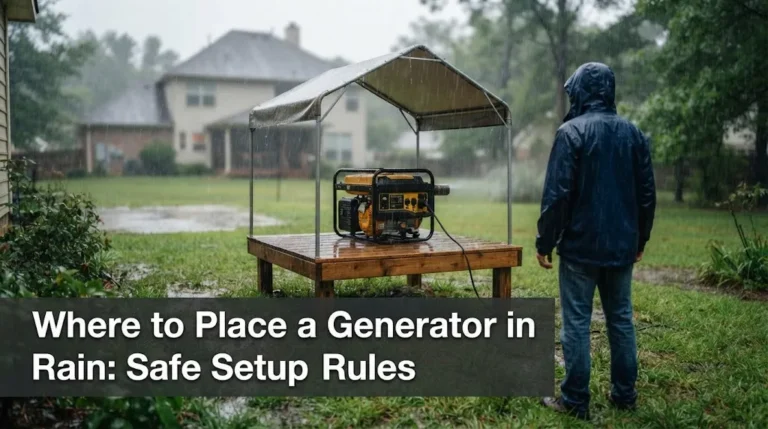
Place the generator on a stable, dry platform. Cinder blocks, wooden pallets, or a heavy rubber mat work well. The goal is to keep the unit out of standing water and away from splashing. Do not place it directly on wet grass, soil, or concrete where water can pool.
If the ground is already saturated and water is rising, elevation alone may not be enough. In that case, the generator should not be running.
Keep Cords and Connections Dry
Use heavy-duty, outdoor-rated extension cords. Route them so they run downhill from the generator toward the house. This creates a drip loop that prevents rainwater from traveling along the cord and into the outlets. If possible, plug appliances directly into the generator rather than daisy-chaining cords, which adds more exposed connections.
Inspect every cord before use. A frayed or cracked cord is a shock hazard in dry conditions and far worse in wet ones.
Carbon Monoxide: The Risk That Does Not Go Away in Rain
The temptation to move the generator under a porch, carport, or into a garage to keep it dry is extremely dangerous. Generators produce carbon monoxide (CO), a colorless, odorless gas that can incapacitate and kill within minutes. The CPSC warns that CO can build up to lethal levels even in partially enclosed spaces.
The generator must stay outdoors, at least 20 feet from the house, with the exhaust pointed away from windows, doors, and vents. A running cover does not change this rule. It protects the unit from rain; it does not make an enclosed space safe.
If you feel dizzy, weak, or nauseous while a generator is running, get to fresh air immediately and call for help. Do not re-enter the area until it has been ventilated and the generator has been moved.
What to Check Before Starting the Generator in Wet Conditions
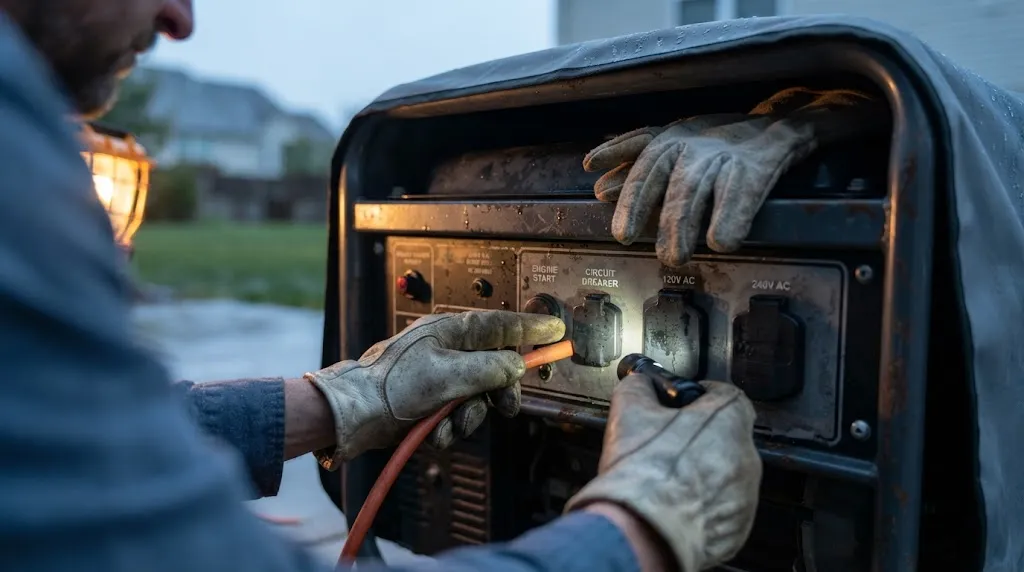
A quick inspection before pulling the starter cord can prevent a serious accident.
- Look for moisture: Check the outlets, control panel, and spark plug area. If you see water droplets or pooling inside the unit, do not start it. Move it to a dry area and let it dry completely.
- Dry your hands: Never touch the generator or its cords with wet hands. Insulated gloves add a layer of protection.
- Inspect cords for damage: Frayed or cracked cords are a shock hazard in dry conditions and far worse in wet ones.
- Confirm GFCI protection: If your generator has GFCI outlets, use them. A GFCI trips the circuit if current starts leaking to ground, which can happen when moisture enters a connection. If the generator lacks GFCI protection, use outdoor-rated cords with built-in GFCI breakers.
Warning
Never operate a generator with wet hands or while standing in water. Even a brief contact with a live connection can cause a fatal shock. Shut down and move the unit to dry ground before touching it.
When Waiting Is the Safer Choice
If the storm is severe—driving rain, high wind, or flooding—the safest option is often to wait. Generators can be started after the worst of the weather passes. Running one in a hurricane or a heavy downpour increases the chance that wind will compromise the cover, water will find a path into the unit, or you will be handling electrical equipment in dangerous conditions.
For shorter outages or lighter rain, a properly protected setup can work. But the margin for error is small. The priority is always to keep water away from live electrical parts and to keep exhaust away from enclosed spaces.
Frequently Asked Questions
Can I run a generator under a carport or open garage?
No. A carport or open garage is still an enclosed space where CO can accumulate. The generator must be outdoors, at least 20 feet from the house, with exhaust directed away from windows and doors.
Will a tarp work as a generator cover in rain?
No. A tarp traps heat and can block exhaust flow, creating a fire hazard. Use a purpose-built running cover that allows ventilation and protects the electrical panel.
What should I do if the generator gets wet while running?
Shut it down if it is safe to do so without touching wet components. Do not touch the generator or cords with wet hands. Let the unit dry completely before attempting to start it again.
How far should a generator be from the house in rain?
The CPSC recommends at least 20 feet from the home, with the exhaust pointed away from windows, doors, and vents. This distance applies regardless of weather.
Can I use a battery-powered power station instead of a gas generator in rain?
Some portable power stations are rated for outdoor use, but water resistance varies by model. Check the manufacturer’s IP rating and instructions. Many power stations should still be kept dry unless explicitly rated for rain exposure.
Is it safe to refuel a generator while it is running in wet weather?
No. Shut the generator down and let it cool completely before refueling. Fuel vapors can ignite on hot surfaces, and wet conditions make handling fuel more hazardous.
Conclusion
The safest approach to running a generator in rain is to avoid it if possible. If you must run one, use a purpose-built running cover, elevate the unit above wet ground, keep all connections dry, and maintain at least 20 feet of distance from your home. Never bring a generator into a garage or carport to keep it dry—carbon monoxide is a faster and deadlier risk than rain. Check the manufacturer’s manual for your specific model, and when conditions are severe, waiting for the storm to pass is the choice that protects both you and your equipment.

Hi, I’m Michael Turner. I own a generator workshop in the United States and founded HomeGeneratorBlog to share practical, hands-on guidance about generator installation, maintenance, troubleshooting, safety, and backup power solutions. My goal is to help homeowners make smarter, more confident decisions through clear and reliable information