How to Store a Generator Outdoors Long-Term
Quick Answer
To store a generator outdoors long-term, place it in a dry, sheltered, well-ventilated location on a raised, stable surface. Protect it from rain, snow, ground moisture, dust, and pests with a suitable weather-resistant shelter or generator cover that allows appropriate ventilation and prevents condensation.
Before storage, turn the generator off, let it cool completely, inspect it for damage, and prepare the fuel system according to the manufacturer’s instructions. For gasoline models, long-term storage may require draining the fuel tank and carburetor or using an approved fuel stabilizer, depending on the model and storage period. Check the generator periodically and never operate it inside a shed, garage, or other enclosed space.
Learning how to store a generator outdoors long-term helps protect its engine, electrical components, fuel system, and exterior from weather-related damage. Proper storage is particularly important when a portable generator will remain unused for several months between storms, outages, camping trips, or seasonal projects.
Outdoor storage can work when you control moisture, choose suitable protection, and follow the generator manufacturer’s storage instructions. However, a basic tarp or an exposed position beside the house may not provide enough protection against prolonged rain, humidity, temperature changes, and pests.
Can You Store a Generator Outdoors for Months?
Yes, many portable generators can be stored outdoors for months if the manufacturer permits it and the unit is protected from weather, moisture, and unauthorized access. The important distinction is between storing a generator outdoors and leaving it exposed to the elements.
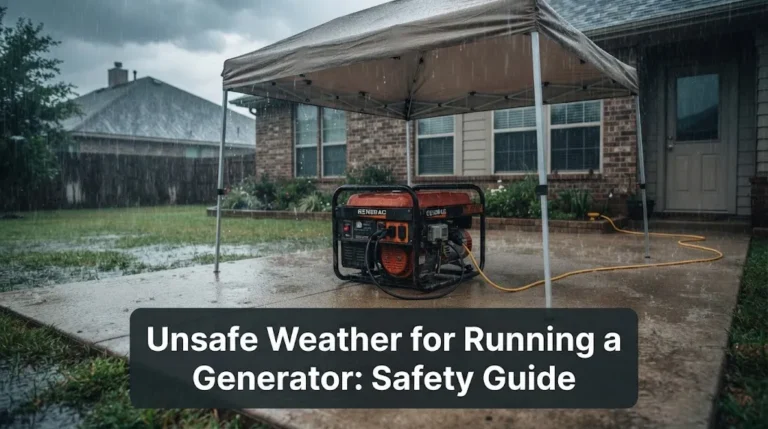
Rainwater can enter vulnerable areas, persistent humidity can encourage corrosion, and condensation may form when temperatures fluctuate. Dust, leaves, insects, and rodents can also affect air passages, wiring, and other components.
A generator’s enclosure is not necessarily waterproof, even if its exterior looks rugged. Weather resistance varies by model, so do not assume that a generator designed for outdoor operation can remain uncovered outdoors indefinitely.
Before selecting a storage location, review the owner’s manual for approved storage conditions, fuel preparation, battery care, and maintenance requirements. If the manufacturer specifies indoor storage in a dry area, follow that recommendation rather than relying on an improvised outdoor shelter.
When outdoor storage is a reasonable option
- The generator can be protected from direct rain, snow, and standing water.
- The storage location has good drainage and does not regularly flood.
- A suitable cover or shelter protects the unit without trapping excessive moisture.
- The generator is secured against theft, accidental impact, and animal interference.
- The fuel system and battery can be maintained according to the owner’s manual.
If these conditions cannot be achieved, a dry, secure, manufacturer-approved indoor storage location may be a better choice. Fuel must still be handled and stored according to applicable fire-safety requirements.
How Should You Prepare a Generator for Long-Term Outdoor Storage?
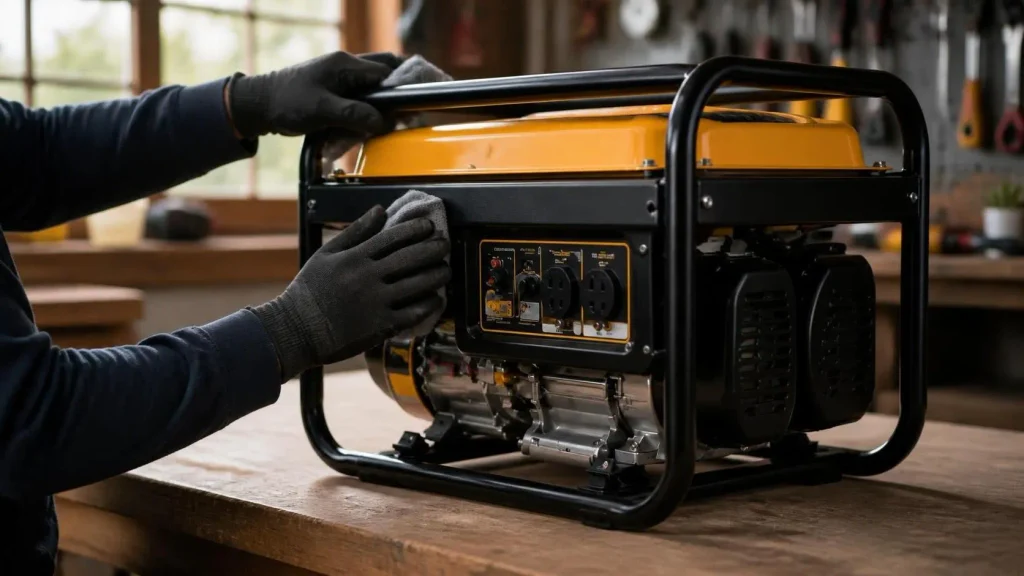
Preparation should begin before the generator is covered. A clean, inspected, properly maintained machine is easier to protect than one with leaking fluids, damaged wiring, or dirt trapped around its components.
Follow this preparation checklist before storing your generator for an extended period.
- Shut down the generator. Disconnect electrical loads and switch off the unit according to its operating instructions.
- Let it cool completely. The engine, exhaust, and surrounding components may remain hot after shutdown. Never handle fuel around hot surfaces.
- Inspect the exterior. Look for loose fasteners, cracked panels, damaged cables, fuel leaks, oil leaks, rust, and other visible problems.
- Clean the unit. Remove dust, leaves, mud, and debris using the method recommended by the manufacturer. Avoid spraying water into electrical components, air intakes, outlets, or the control panel.
- Check maintenance requirements. Review oil-change intervals, air-filter maintenance, spark-plug requirements, and other service items listed in the manual.
- Prepare the fuel system. Follow the model-specific procedure for draining fuel, using a stabilizer, or preparing the tank and carburetor for storage.
- Check the starting battery. For electric-start models, follow the specified battery storage, charging, or disconnection procedure.
- Protect the generator. Place it in the selected sheltered location and fit a suitable cover once the unit is clean and dry.
Do not perform maintenance on a running generator. If you find a fuel leak, damaged wiring, or a serious mechanical problem, have the unit inspected before storing or using it again.
What Is the Best Outdoor Shelter for a Stored Generator?
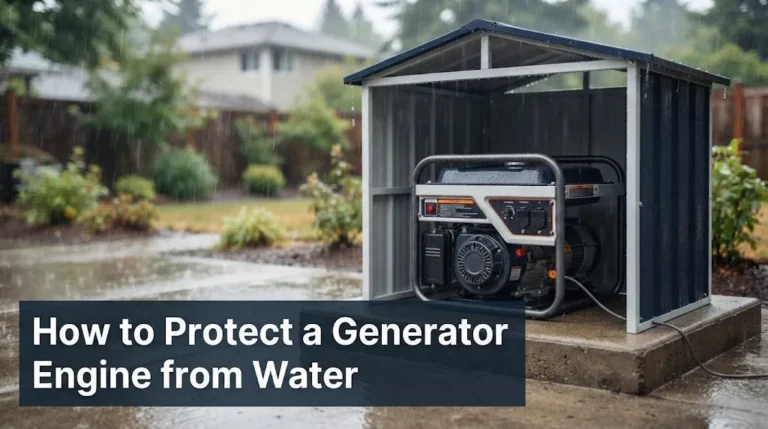
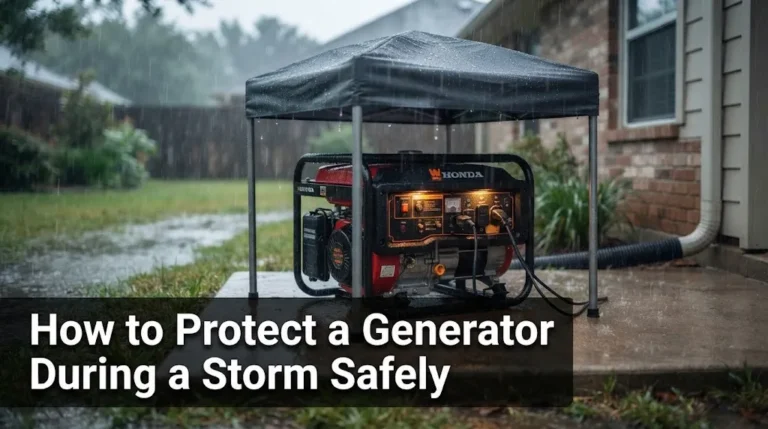
The best shelter protects the generator from direct precipitation while allowing moisture to escape. It should also be stable enough to withstand expected wind and weather without contacting the exhaust or damaging the machine.
Choose a shelter based on your climate, available space, and the generator manufacturer’s recommendations. The following comparison explains the practical differences between common options.
| Storage option | Advantages | Limitations |
|---|---|---|
| Purpose-built outdoor generator enclosure | Can offer durable weather protection and secure storage. | Must be suitable for the specific generator and storage purpose; ventilation and drainage need attention. |
| Roofed, open-sided shelter | Helps block overhead rain and provides airflow. | Wind-driven rain and blowing debris may still reach the generator. |
| Weather-resistant generator cover | Convenient protection against dust and limited weather exposure. | May not provide enough protection against flooding, persistent rain, or condensation. |
| Basic tarp | Inexpensive and easy to obtain. | Can trap moisture, flap in the wind, or allow water to collect if fitted poorly. |
For many households, a roofed, open-sided shelter combined with a suitable generator cover provides a practical balance of protection and airflow. In locations with heavy rain, frequent storms, or high humidity, a more durable shelter may be necessary.
Do not assume that an enclosure designed for storage is safe for operating a generator. An operating generator requires appropriate outdoor ventilation and exhaust clearance. Never run a portable generator in a shed, garage, or other enclosed or partially enclosed space because carbon monoxide can accumulate to dangerous levels.
How Do You Protect a Generator From Rain, Humidity, and Ground Moisture?
Moisture control is one of the most important parts of long-term outdoor generator storage. Direct rain is only one source of water; damp ground, humid air, condensation, and poor drainage can also cause problems.
Keep the generator off wet ground
Place the generator on a firm, level, stable surface that drains properly. A suitable raised platform or manufacturer-approved stand can help keep the base away from puddles and splashing water.
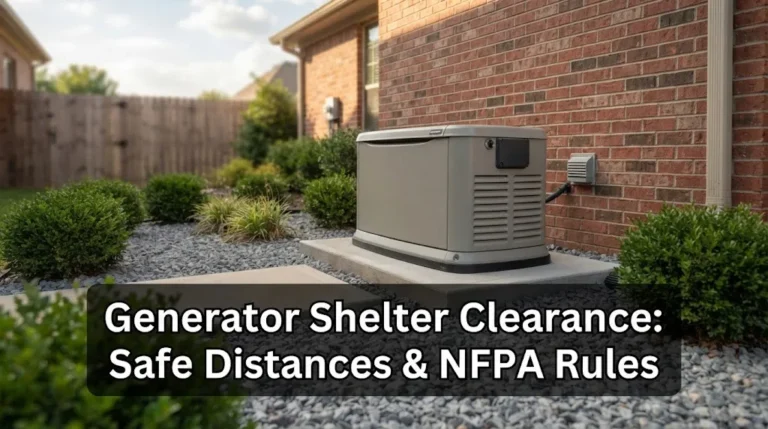
Concrete or another stable, noncombustible surface may be appropriate where permitted by the owner’s manual. Avoid locations where rainwater runs toward the generator or where soil stays saturated for long periods.
Use a cover that fits correctly
Choose a cover designed for your generator’s dimensions and storage conditions. It should shed water rather than collect it and should not press heavily against switches, cables, or other vulnerable parts.
Follow the cover manufacturer’s instructions for ventilation and fit. Do not wrap the generator in airtight plastic or seal it inside a damp enclosure, because trapped moisture can contribute to corrosion and condensation.
Reduce condensation and humidity exposure
Large temperature changes can cause moisture to form on cool surfaces. A cover alone does not eliminate condensation, particularly in humid climates or locations exposed to warm, moist air followed by cooler nights.
- Store the generator in the driest suitable sheltered location available.
- Make sure the unit is completely dry before covering it.
- Check the shelter roof, joints, and drainage after heavy rain.
- Inspect the generator for rust, water marks, and signs of persistent dampness.
- Remove leaves and other debris that could block drainage or hold moisture against the unit.
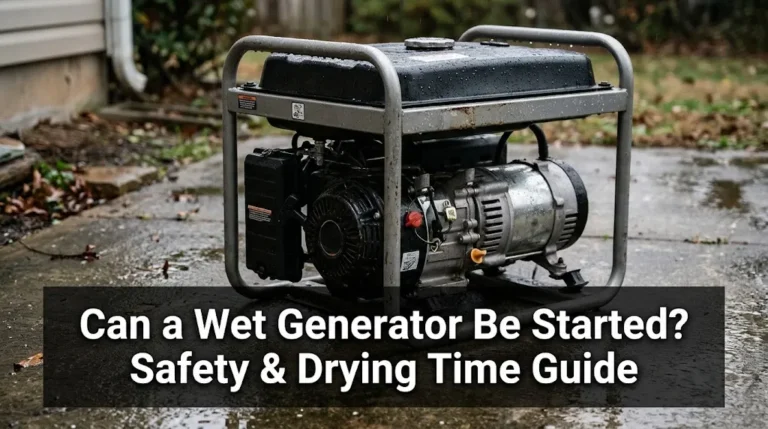
Never operate electrical equipment that has been submerged in water. If the generator has flooded or water has entered its electrical components, keep it switched off and arrange a qualified inspection before use.
Should You Drain the Fuel or Use a Stabilizer?
Fuel preparation depends on the generator’s engine type, the fuel used, and how long the unit will remain unused. Gasoline can deteriorate during storage, potentially contributing to deposits and starting problems in the fuel system.
Generac recommends draining the tank and running the carburetor dry for its portable generators when storing them for more than 30 days. It also notes that gasoline can begin to deteriorate in approximately a month. Other manufacturers specify different procedures, so the instructions for your particular model take priority.
Option 1: Drain the fuel system
Some gasoline-powered generators are intended to be stored with the fuel tank and carburetor drained. This can reduce the risk of old gasoline remaining in parts of the fuel system, but the exact procedure varies by model.
Use the manufacturer’s approved draining process, work in a well-ventilated area away from ignition sources, and collect fuel in an approved container. Never drain gasoline onto the ground, into a drain, or near a flame, spark, heater, or other ignition source.
Do not remove fuel lines or open components unless the manual specifically describes that procedure and you can perform it safely. Contact a qualified service technician if you are unsure how to drain the system.
Option 2: Use an approved fuel stabilizer
A suitable fuel stabilizer may be appropriate when the manufacturer permits storing stabilized fuel in the tank. Select a product compatible with the fuel and generator, add it at the specified ratio, and follow its instructions for mixing and circulation.
Fuel stabilizer does not make gasoline last indefinitely, and it does not override the generator manufacturer’s storage instructions. If the manual calls for draining the carburetor or tank, do not assume that adding stabilizer is an equivalent substitute.
What about propane and diesel generators?
Propane and diesel models require different storage considerations from gasoline-powered generators. Follow the manufacturer’s instructions for fuel shutoff, hoses, regulators, tanks, fuel quality, and long-term engine preservation.
For propane equipment, close the fuel supply and store cylinders in accordance with the cylinder manufacturer’s instructions and applicable local requirements. Do not store fuel cylinders in enclosed living areas or improvise connections.
For diesel models, use the specified fuel-storage and maintenance procedures. Fuel additives, tank preparation, and other requirements can differ by engine and operating environment.
For authoritative guidance, consult the Generac portable generator FAQ, the Generac fuel-draining instructions, and your generator’s own manual.
How Often Should You Inspect an Outdoor-Stored Generator?
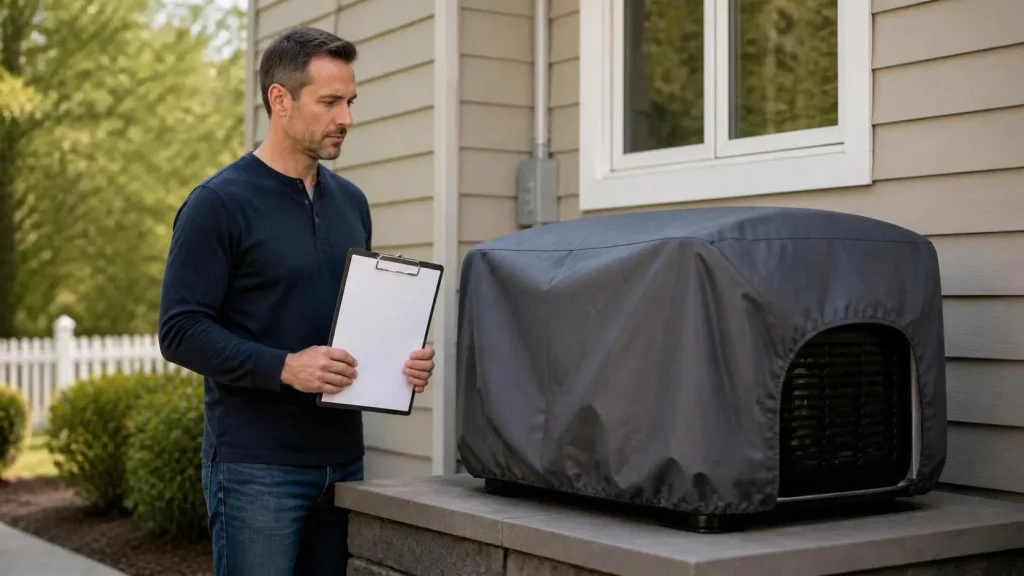
Inspect the generator periodically throughout storage rather than waiting until the next power outage. A practical schedule is to check it monthly and after severe weather, unless the manufacturer specifies a different interval.
During each inspection, check the following items:
- Cover and shelter: Look for tears, loose fasteners, roof damage, and water pooling.
- Ground and drainage: Confirm that the generator remains stable and that water cannot collect around its base.
- Exterior condition: Look for corrosion, cracks, damaged paint, and signs of impact.
- Leaks: Check for visible oil or fuel leaks and investigate unusual stains or odors.
- Wiring and connections: Look for chewed insulation, damaged cables, and signs of animal activity without touching unsafe electrical components.
- Air openings: Remove external debris from accessible openings in accordance with the manual.
- Battery: Check the battery’s condition and follow the specified charging or maintenance schedule.
Do not start a generator simply to exercise it unless the manufacturer recommends doing so and you can follow the prescribed procedure. If periodic operation is required, move the unit to a suitable outdoor operating location and follow all ventilation, weather, and maintenance instructions.
Keep a simple maintenance record with the inspection date, visible problems, fuel-system preparation, battery maintenance, and any servicing completed. This makes it easier to identify changes and prepare the unit before an emergency.
What Should You Do Before Using the Generator Again?
After several months of outdoor storage, inspect the generator carefully before starting it. A protective cover can reduce exposure, but it cannot guarantee that every component remains in working condition.
- Check the storage area. Look for standing water, fallen debris, damaged shelter materials, and signs of pests.
- Inspect the generator. Look for rust, cracked parts, damaged cables, loose connections, and signs of water intrusion.
- Check the fuel system. Follow the manual for refueling or preparing the tank and carburetor. Use the specified fresh fuel when required.
- Check the oil and filters. Confirm oil level and service condition, and inspect or maintain filters according to the manufacturer’s schedule.
- Check the battery. Follow the correct procedure for reconnecting, charging, or testing the starting battery.
- Choose a safe operating location. Set the generator outdoors on a dry, stable surface, away from doors, windows, and vents.
- Follow the startup procedure. Use the owner’s manual for the correct starting sequence and checks before connecting electrical loads.
Never run a portable generator indoors, in a garage, or inside a shed, even if doors or windows are open. Carbon monoxide is colorless and odorless, and dangerous concentrations can build up quickly.
The Occupational Safety and Health Administration’s portable generator safety guidance explains the risks associated with carbon monoxide, electrical hazards, wet conditions, and fuel handling.
If the generator was submerged, has water inside its electrical components, smells strongly of fuel, leaks, or shows signs of significant corrosion, do not start it. Have it evaluated by a qualified technician first.
Frequently Asked Questions
Can I leave a generator outside all winter?
Yes, if the manufacturer permits outdoor storage and the generator is protected from rain, snow, ice, ground moisture, and excessive condensation. Prepare the fuel system and battery according to the manual, and inspect the shelter during winter. A dry, secure, manufacturer-approved indoor location may be preferable in severe weather.
Can I cover a generator with a tarp for several months?
A tarp may provide limited protection from precipitation, but it is not always suitable for long-term storage. Poorly fitted tarps can trap moisture, collect water, or become loose in the wind. A purpose-built cover or roofed shelter that follows the manufacturer’s storage recommendations is generally a better choice.
Should a generator be stored with a full or empty gas tank?
The correct approach depends on the model and the expected storage period. Some manufacturers recommend draining the tank and carburetor for extended storage, while others allow stabilized fuel under specified conditions. Follow the owner’s manual instead of assuming that every generator should be stored with a full or empty tank.
Does a generator cover prevent rust?
A suitable cover helps reduce exposure to rain and debris, but it cannot guarantee rust prevention. Humidity, condensation, damaged paint, and water trapped underneath the cover can still cause corrosion. Store the generator dry, maintain good drainage, and inspect it regularly.
Can I store a generator in an outdoor shed?
A dry, secure shed may be suitable for storage if the manufacturer permits it and the location meets the applicable fuel-storage and fire-safety requirements. Keep fuel in approved containers and follow local rules. Never operate a portable generator inside a shed or any other enclosed or partially enclosed space because of carbon monoxide poisoning risk.
Do battery-powered portable power stations need the same storage preparation?
No. Battery-powered portable power stations do not use the same gasoline-engine or carburetor storage procedures as conventional generators. Their batteries have specific charging, temperature, and storage requirements, which vary by chemistry and model. Follow the manufacturer’s instructions for storage charge, periodic checks, moisture protection, and safe charging.
Conclusion
Storing a generator outdoors long-term is possible when you choose a suitable sheltered location, keep the unit dry, control ground moisture, and prepare its fuel system and battery correctly. A well-fitted cover helps, but regular inspections and proper maintenance are equally important.
Before storing or restarting your generator, consult the owner’s manual for model-specific instructions. Protect the equipment during storage, handle fuel safely, and remember that a portable generator must never be operated inside a shed, garage, or other enclosed space.

Hi, I’m Michael Turner. I own a generator workshop in the United States and founded HomeGeneratorBlog to share practical, hands-on guidance about generator installation, maintenance, troubleshooting, safety, and backup power solutions. My goal is to help homeowners make smarter, more confident decisions through clear and reliable information