Is a Tarp Safe for a Generator? Safety Risks & Proper Setup
Quick Answer
No, draping a standard plastic tarp directly over a running portable generator is unsafe. It traps lethal carbon monoxide gas, creates a serious fire hazard from hot exhaust components, and blocks essential airflow needed for engine cooling.
Why Draping a Tarp Directly Over a Generator Is Dangerous
When severe weather strikes during a power outage, keeping your portable generator dry is a natural priority. However, throwing a loose tarp over the machine or trapping it in an enclosed, unventilated space introduces major safety risks that can result in fire, equipment damage, or fatal carbon monoxide poisoning.
Portable generators produce immense amounts of heat and emit invisible, odorless exhaust containing high concentrations of carbon monoxide. Standard canvas or polyethylene tarps placed directly over the unit interfere with the machine’s basic physical requirements for safe operation: cooling airflow and exhaust clearance.
Warning
Running a generator too close to a home, window, or under a low-hanging makeshift cover can push carbon monoxide indoors, threatening the lives of everyone inside within minutes.
The Three Major Hazards of Using a Tarp Improperly
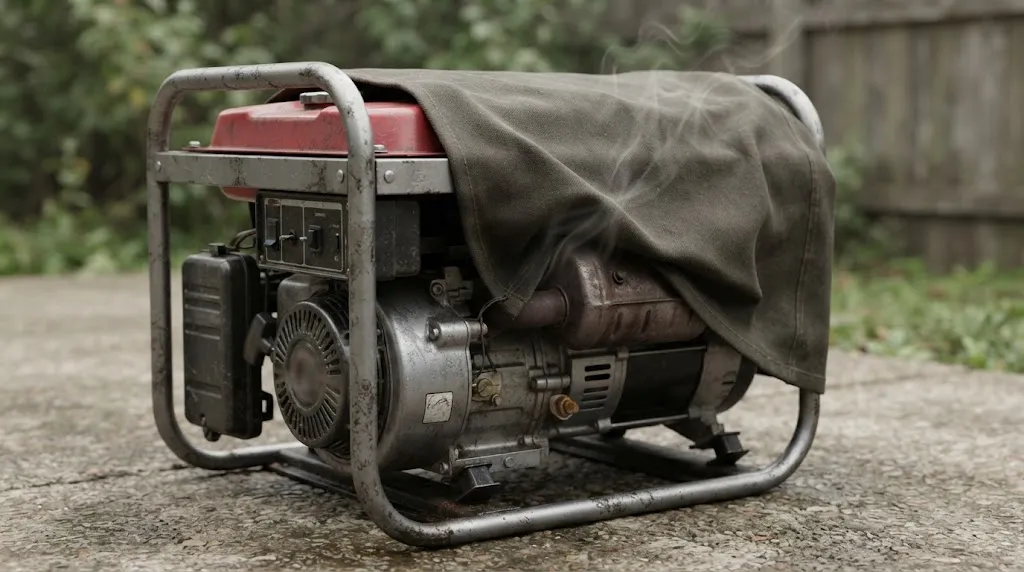
Understanding the mechanical and physical constraints of a portable generator clarifies why makeshift covers fail so quickly under load.
1. Extreme Fire Hazards
Generator mufflers and exhaust manifolds reach scorching temperatures during standard operation—frequently exceeding 500°F (260°C). If a lightweight plastic or fabric tarp sags or blows in the wind until it touches the hot exhaust pipe, it can melt instantly or catch fire. Operating fuel-powered equipment near flammable synthetic materials is a leading cause of accidental fire spread during power outages.
2. Carbon Monoxide Trapping
Generators must be operated outdoors in wide-open spaces, at least 15 to 20 feet away from doors, windows, and vents. If a tarp forms a tight pocket or envelope around the machine, it acts as a trap that forces exhaust gases to pool around the engine. This accumulation can stall the unit or seep into nearby living spaces.
3. Engine Overheating and Electrical Failure
Air-cooled engines rely on continuous cross-ventilation to prevent internal components from warping or seizing. Restricting airflow with a heavy wrap causes the engine temperature to spike rapidly. Overheating reduces fuel efficiency, damages the alternator windings, and can permanently ruin the generator.
How to Safely Protect Your Generator from Rain and Snow
Protecting electrical equipment from moisture is essential, but it must be accomplished without compromising ventilation or fire safety. Several purpose-built solutions keep electronics dry while maintaining safe operational clearance.
Manufacturers and safety organizations recommend specific structural alternatives:
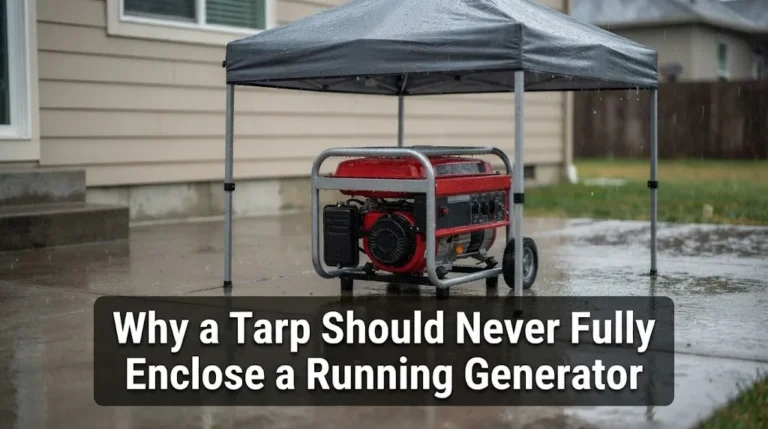
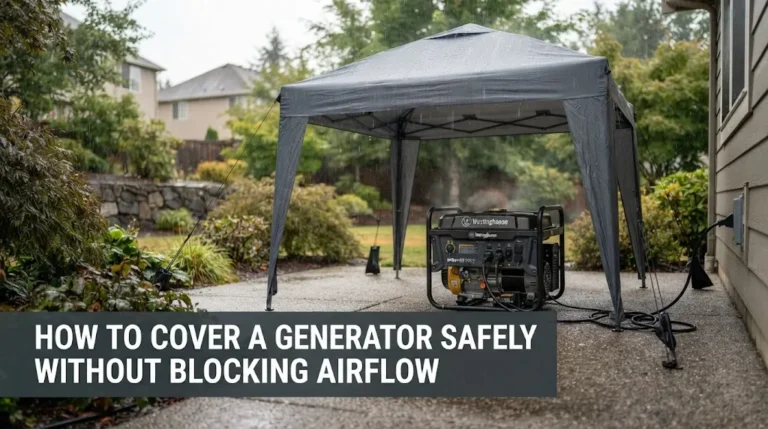
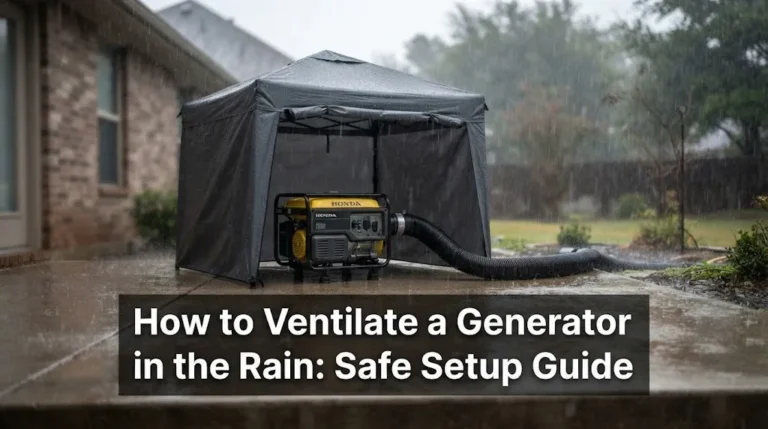
- Commercial Generator Tents and Canopies: Specially engineered fabric shelters use rigid metal frames to keep fabric away from hot engine parts while allowing open airflow on all sides.
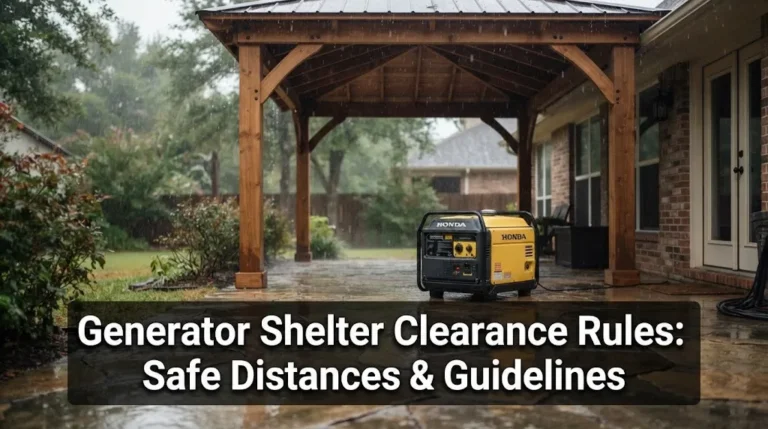
- Open-Sided Sheds or Porches: Operating a generator under a permanent, well-ventilated overhang with at least three completely open sides provides sturdy weather protection.
- Elevated Placement: Setting the unit on a flat, dry platform prevents pooling groundwater from flooding electrical outlets or the frame base.
Tip
Always position the exhaust side of the generator pointing completely away from your shelter, home, and any prevailing winds.
Can You Use a Tarp If the Generator Is Turned Off?
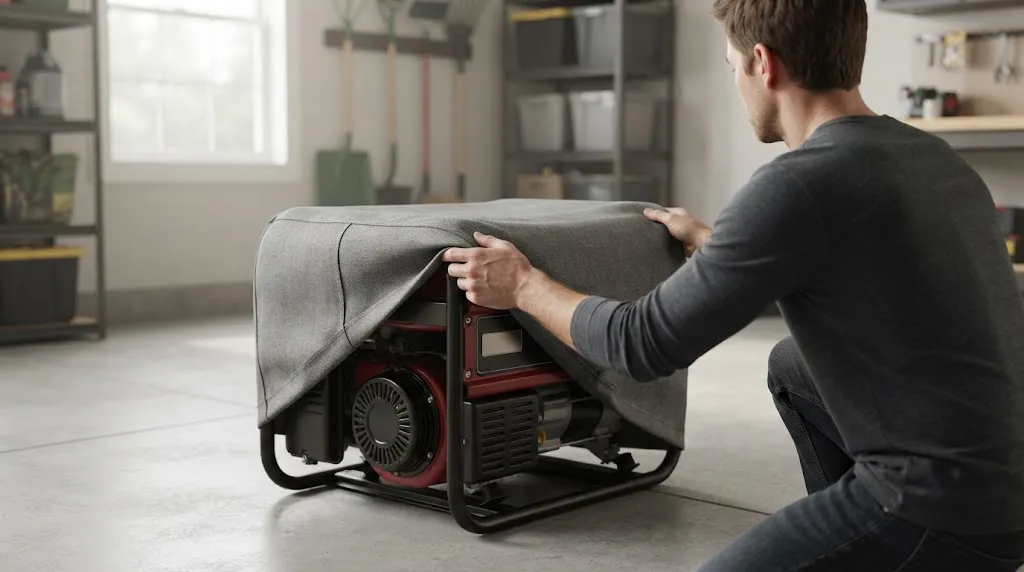
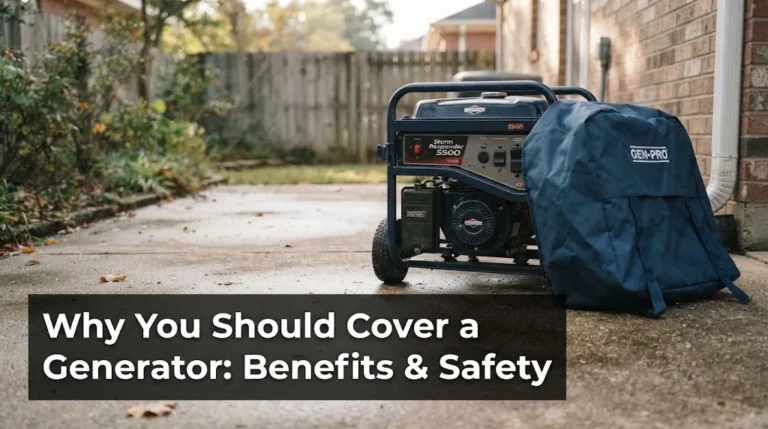
Covering a generator with a tarp is generally safe only when the engine is completely shut down and has cooled down to ambient temperature. Many owners use a fitted storage cover or a lightweight canvas tarp to protect their equipment from dust, UV degradation, and light moisture while stored in a garage or shed.
Before placing any cover over an idle unit, confirm that:
- The engine has been turned off for at least 30 minutes.
- The exhaust pipe is cool to the touch.
- Fuel valves are securely closed to prevent vapor leaks.
- The storage area remains dry to prevent metal corrosion beneath the fabric.
Alternative Safety Measures for Wet Weather Operation
Operating in heavy downpours or blizzards requires careful attention to electrical shock hazards. Water running into power panels or extension cord connections can trip breakers or cause severe short circuits.
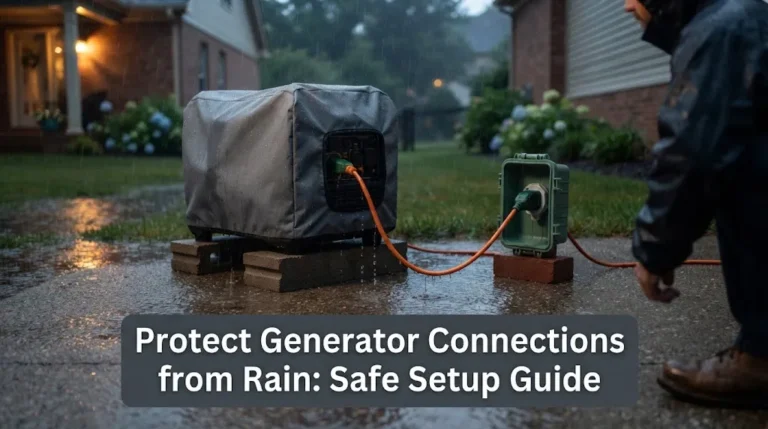
Inspecting cord insulation for cracks, plugging only into GFCI-protected outlets, and keeping connection points elevated off wet ground are essential practices. If precipitation is too intense for safe operation, it is safer to wait for a break in the weather rather than risking an electrical or fire mishap with a makeshift plastic enclosure.
Related Product
Generator Tent and Canopy Shelters
Keep your running portable generator protected from rain and snow while maintaining safe, unobstructed airflow.
As an Amazon Associate, we earn from qualifying purchases.
Frequently Asked Questions
Can I use a tarp if I leave the sides open?
Even with open sides, draping fabric directly over a hot frame risks melting or restricted exhaust clearance. If you use a canopy, ensure the frame holds the material well above the hot engine and muffler.
What is the safest distance to keep a generator from my house?
Safety organizations recommend placing portable generators at least 15 to 20 feet away from structures with the exhaust pointed away from windows, doors, and air intakes.
How do I protect electrical outlets from rain?
Use heavy-duty outdoor extension cords rated for wet locations, keep plug connections elevated off the ground, and ensure your generator features weatherproof outlet covers.
Can a generator run in the snow?
Yes, generators can run in cold weather, but snow accumulation can block vents or melt onto electrical components. Use an approved open-air canopy rather than a direct plastic wrap.
What causes a generator to overheat outdoors?
Overheating is usually caused by restricted airflow, running the unit beyond its rated wattage capacity, or operating in extreme ambient temperatures without adequate clearance.
When is it safe to put a storage cover on a generator?
Only place a fitted storage cover or tarp over the unit after the engine has completely cooled down, usually 30 to 45 minutes after shutdown.
Conclusion
Protecting your equipment from bad weather is important, but safety must always come first. Draping a standard tarp over a running generator creates severe fire, ventilation, and carbon monoxide risks. Instead, rely on proper placement, dedicated open-air generator canopies, and strict operational clearances to keep your equipment running safely during storms.

Hi, I’m Michael Turner. I own a generator workshop in the United States and founded HomeGeneratorBlog to share practical, hands-on guidance about generator installation, maintenance, troubleshooting, safety, and backup power solutions. My goal is to help homeowners make smarter, more confident decisions through clear and reliable information