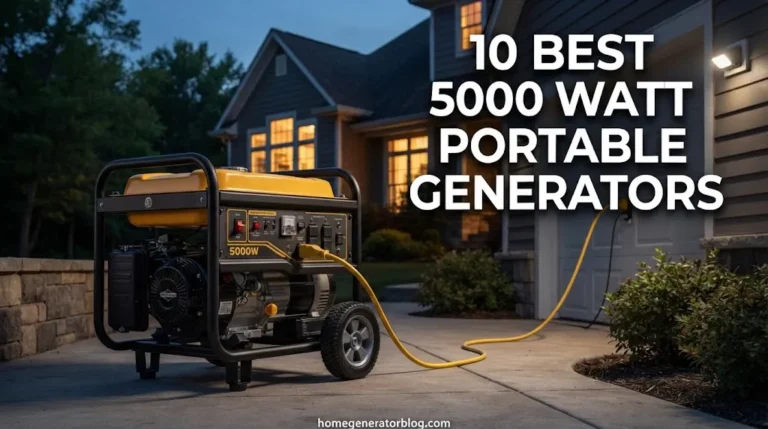
10 Best Heavy Duty Portable Generator Options for 2025: Ranked by Power, Durability, and Value
When the power stays out for three days, a generator that can’t start your well pump or central air is just an expensive lawn ornament. Choosing one is harder than it looks because the big number on the box is a starting-watt peak, while the running watts that carry your loads are roughly 15 to 25 percent lower, and fuel type, outlets, and safety shutoffs decide how usable that number really is. We compared ten heavy-duty portable generators on the same three scores (power and capacity, build and durability, and value for money) using manufacturer specifications and the load math real homes need. You will leave knowing which model fits your house, jobsite, or RV, which ones to skip, and which mistakes quietly ruin a generator before the first outage.
Quick Comparison: All 10 Heavy Duty Portable Generators Ranked
| # | Product | Best For | Rating | Badge | |
|---|---|---|---|---|---|
| 1 | Westinghouse WGen9500DF | Whole-home dual fuel | 4.8/5 | Best Overall | Buy → |
| 2 | DuroMax XP13000EH | Large homes, shop loads | 4.7/5 | Best High Output | Buy → |
| 3 | Generac GP8000E | Easy parts and service | 4.6/5 | Best Service Network | Buy → |
| 4 | Champion 9200-Watt Dual Fuel with CO Shield | CO safety, dual fuel | 4.6/5 | Best Safety Tech | Buy → |
| 5 | Honda EU7000iS | Quiet, clean power | 4.5/5 | Best Premium Inverter | Buy → |
| 6 | Generac GP15000E | Whole-house heavy loads | 4.5/5 | Most Powerful | Buy → |
| 7 | Westinghouse WGen7500 | Essential-circuit backup | 4.4/5 | Best Mid-Size Value | Buy → |
| 8 | A-iPower SUA12000E | Big output, tight budgets | 4.3/5 | Best Output Value | Buy → |
| 9 | WEN 56475 | Light loads and RVs | 4.2/5 | Best Budget | Buy → |
| 10 | EcoFlow DELTA Pro | Silent indoor-safe backup | 4.1/5 | Best Fuel-Free Option | Buy → |
How We Chose These Heavy Duty Portable Generators
What we evaluated
We compared 10 products, from 3,600 to 12,500 running watts, using manufacturer spec sheets, owner manuals, and warranty terms. We did not run lab load tests. Instead we checked each claim against real load math, such as a 3-ton central AC drawing roughly 3,000 to 4,000 running watts with a startup surge two to three times higher.
Our 3 scoring criteria
Power and capacity covers running watts, outlets, fuel options, and runtime. Build and durability covers engine class, frame, warranty, and parts access. Value for money weighs usable output against each model’s market tier. Each is scored out of 10, and the overall rating is our editorial judgment informed by all three.
Standards and sources
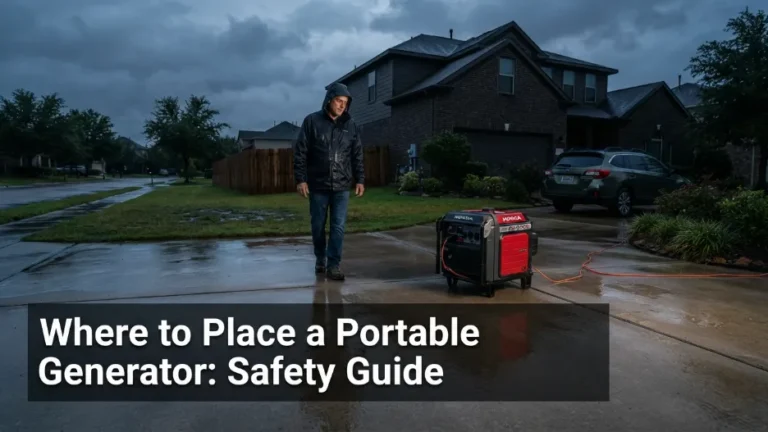
We checked each model for carbon monoxide shutoff, GFCI-protected receptacles, and the 30-amp or 50-amp outlets that transfer switches need under National Electrical Code practice. Placement advice follows Consumer Product Safety Commission guidance, including keeping a generator at least 20 feet from the house.
What we cut and why
We dropped inverter units under 3,000 watts as too small for heavy-duty work, and any large model without a 30-amp or 50-amp outlet. Specs are manufacturer-listed and change between model years, so confirm wattage, outlets, and safety features on the current listing before you buy.
What to Look for When Buying a Heavy Duty Portable Generator
Most buyers compare the biggest number on the box and ignore the details that decide whether a generator works at 2 a.m. during an outage. These five factors separate a unit you can rely on from one that sits in the garage.
1. Running Watts vs. Starting Watts
Add up the running watts of everything you want powered at once, then add the largest single starting surge. A 3-ton central AC draws roughly 3,000 to 4,000 running watts but can spike to two or three times that for a second or two. Leave 20 percent headroom, because a generator held at its limit runs hotter and wears faster. For essentials plus one large appliance, 7,500 to 9,500 running watts is the practical range.
2. Fuel Type and Runtime
Gasoline is easy to buy but breaks down in roughly three to six months without stabilizer. Propane stores for years without degrading, though most dual-fuel units give up about 10 percent of their running watts on it. The WGen9500DF, for example, drops from 9,500 to about 8,500. Compare runtime at 50 percent load, not the maximum-load figure, because that is closer to how you will actually use it.
3. Outlets and Transfer-Switch Readiness
A heavy-duty generator should have a 120/240V locking outlet, either 30-amp (L14-30R) or 50-amp, because that is the connection a transfer switch or inlet box needs. A 50-amp, 240V outlet can deliver up to 12,000 watts, while a 30-amp one tops out at 7,200. Add at least one GFCI-protected 120V, 20-amp outlet for tools and cords.
4. Carbon Monoxide Shutoff
Portable generators produce carbon monoxide, an odorless gas, and a sensor that stops the engine when CO builds up is now the most valuable safety feature you can buy. The Champion 9200 and current Generac GP models advertise one, while many older or budget designs do not. A battery-powered CO alarm inside your home is essential either way.
5. Build Quality and Portability
Heavy duty should mean a full steel frame, a low-oil shutoff, and a brand whose parts are still available after the warranty ends. Three-year warranties are common among the stronger brands. Units over 200 lb need the wheel kit and a ramp or a second person to move them, and a generator that stays in the shed during an outage protects nothing.

Westinghouse WGen9500DF — Dual-Fuel Power That Covers Most Homes
Best for: Whole-home essentials backup
If your outage plan has a central AC, refrigerator, and sump pump running together, you need roughly 8,000 or more running watts. Westinghouse rates the WGen9500DF at 9,500 running and 12,500 peak watts on gasoline, and about 8,500 running watts on propane. Electric start and a key-fob remote start let you fire it up from the porch. It ranks first because no other unit here pairs that output with dual fuel and a 50-amp outlet this cleanly. Skip it if you need something you can lift into a truck bed alone.
- 9,500 running watts on gas leaves headroom for a 3-ton central AC plus a refrigerator and sump pump.
- Includes a 120/240V 50-amp outlet and a 30-amp RV outlet for transfer switches and campers.
- Key-fob remote start plus push-button electric start cuts the pull-cord struggle in cold weather.
- Weighs over 200 lb, so it depends on the wheel kit, and the open-frame engine is loud under load.
| Running watts (gas) | 9,500 |
| Peak watts (gas) | 12,500 |
| Fuel | Gas + propane |
| Start | Electric + remote |
9/10
8/10
9/10

DuroMax XP13000EH — Big Output With a 50-Amp Outlet
Best for: Large homes, shop loads
When a 4-ton AC, a well pump, and an electric water heater all matter in the same outage, a 7,500-watt unit hits its ceiling fast. DuroMax lists the XP13000EH at 13,000 starting and 10,500 running watts on gasoline, and it also runs on propane for flexible fuel storage. It places second because its extra 1,000 running watts over the WGen9500DF come with a heavier frame and less refined controls. Choose it when your calculated load tops 9,000 watts; otherwise the Westinghouse is the easier daily owner.
- 10,500 running watts is about 43 amps at 240V, so a 50-amp outlet can carry the full load.
- Dual fuel lets you store propane for years without treating it, then switch to gas if you run out.
- Electric start comes standard, so a 13,000-watt engine never depends on a pull cord.
- Well over 200 lb, so it needs the wheel kit and a ramp, and the open-frame engine is loud enough for neighbors to hear.
| Running watts (gas) | 10,500 |
| Starting watts (gas) | 13,000 |
| Fuel | Gas + propane |
| Main outlet | 50A 120/240V |
10/10
8/10
8/10

Generac GP8000E — Plain, Proven Power With Wide Service Reach
Best for: First-time generator owners
A generator is only as good as the nearest shop that can fix it, and that is where Generac wins. The GP8000E delivers 8,000 running and 10,000 starting watts from a 420cc OHVI engine with electric start, enough for essentials plus one large appliance. Generac dealers and parts distributors are common across most U.S. regions, which shortens downtime when a carburetor or starter fails. It ranks third because it is gasoline-only, with no propane fallback. Pick it if you want straightforward operation and easy parts.
- 8,000 running watts runs a furnace blower, refrigerator, freezer, sump pump, and lights at once with margin.
- Current production units advertise COsense carbon monoxide shutoff, so confirm it on the listing you buy.
- A 420cc Generac OHVI engine and a widely stocked parts supply make repairs simpler than with newer brands.
- Gasoline only, so stale-fuel risk in storage, and 8,000 watts can’t start a 4-ton AC with other loads running.
| Running watts | 8,000 |
| Starting watts | 10,000 |
| Engine | 420cc OHVI |
| Start | Electric |
8/10
9/10
8/10

Champion 9200-Watt Dual Fuel With CO Shield — Safety and Flexibility
Best for: Safety-conscious families
If you worry about carbon monoxide drifting toward your house, this is the model that addresses it directly. Champion rates it at 9,200 starting and 7,500 running watts on gasoline, and its CO Shield sensor shuts the engine down when carbon monoxide builds up near the unit. It runs on propane too, at roughly 6,750 running watts. A 3-year warranty with free lifetime technical support puts it fourth, just behind the Generac on reputation. Choose it for a household with kids, pets, or a tight lot.
- CO Shield automatically stops the engine when carbon monoxide rises, which most budget models lack.
- Dual fuel gives about 7,500 running watts on gas and about 6,750 on propane.
- Electric start plus Cold Start Technology, which Champion designed for easier starts below freezing.
- At 7,500 running watts it gives up 2,000 watts to the WGen9500DF and drops further on propane, so a 4-ton AC with other loads is out.
| Running watts (gas) | 7,500 |
| Starting watts (gas) | 9,200 |
| Fuel | Gas + propane |
| Safety | CO Shield shutoff |
8/10
8/10
9/10
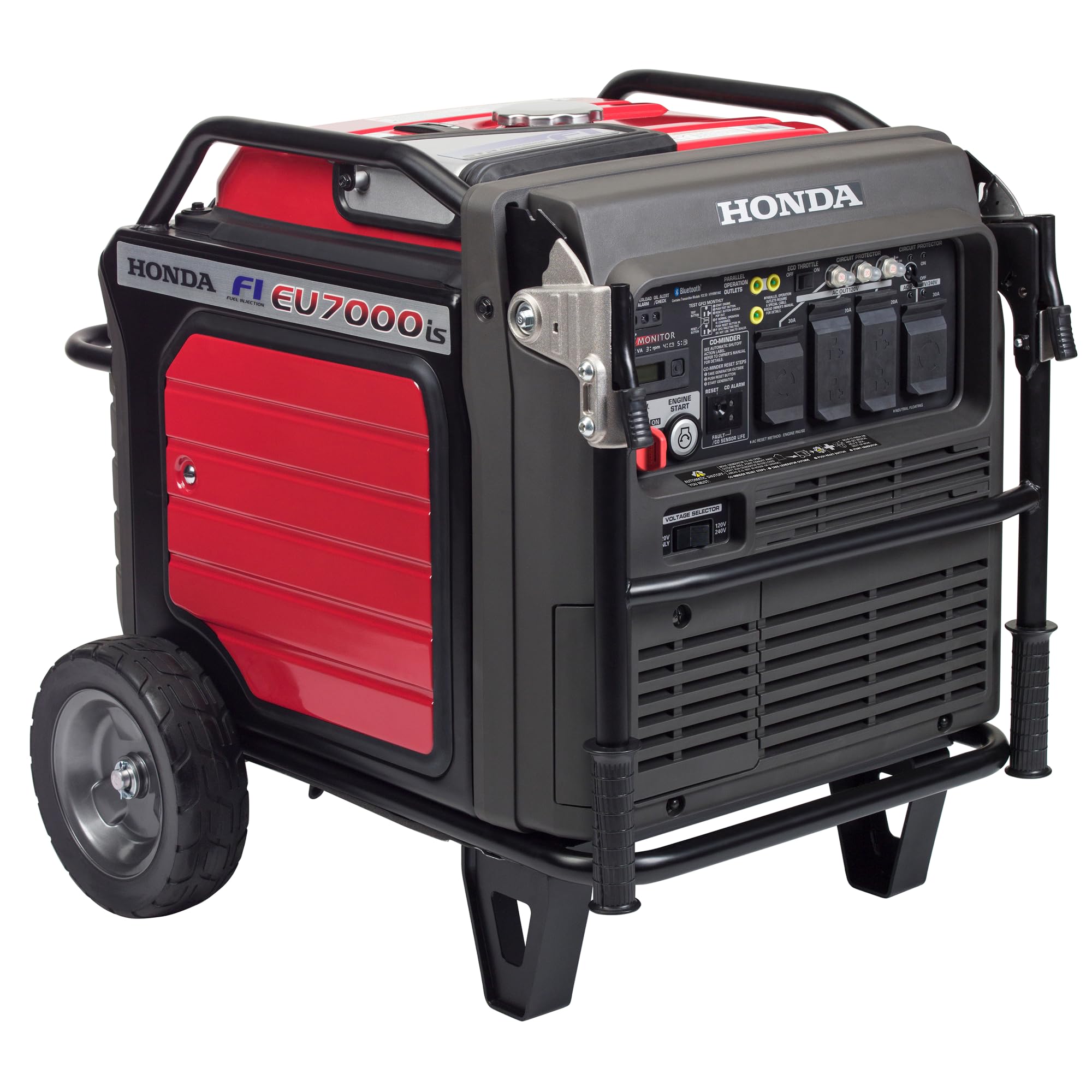
Honda EU7000iS — Quiet, Clean Power With a Long Track Record
Best for: Quiet, sensitive-electronics backup
If your neighbors, your sleep, or a laptop-and-medical-device setup matter as much as raw wattage, an inverter generator changes the equation. Honda rates the EU7000iS at 7,000 starting and 5,500 running watts, and lists a runtime of up to 18 hours at quarter load from a 5.1-gallon tank. The inverter output is clean enough for sensitive electronics, and the unit runs far quieter than open-frame generators of similar output. It lands fifth only because its usable output relative to its cost is the lowest on this list.
- Inverter output suits laptops, medical devices, and the control boards in modern furnaces.
- Honda lists up to 18 hours at quarter load, so one fill can cover a full night at light loads.
- A 120/240V locking outlet works with a transfer switch, and electric start comes with recoil backup.
- At roughly 260 lb it is heavy for an inverter, and 5,500 running watts is 4,000 fewer than the WGen9500DF, so central AC is unlikely.
| Running watts | 5,500 |
| Starting watts | 7,000 |
| Runtime (1/4 load) | Up to 18 hours |
| Weight | About 260 lb |
7/10
10/10
6/10
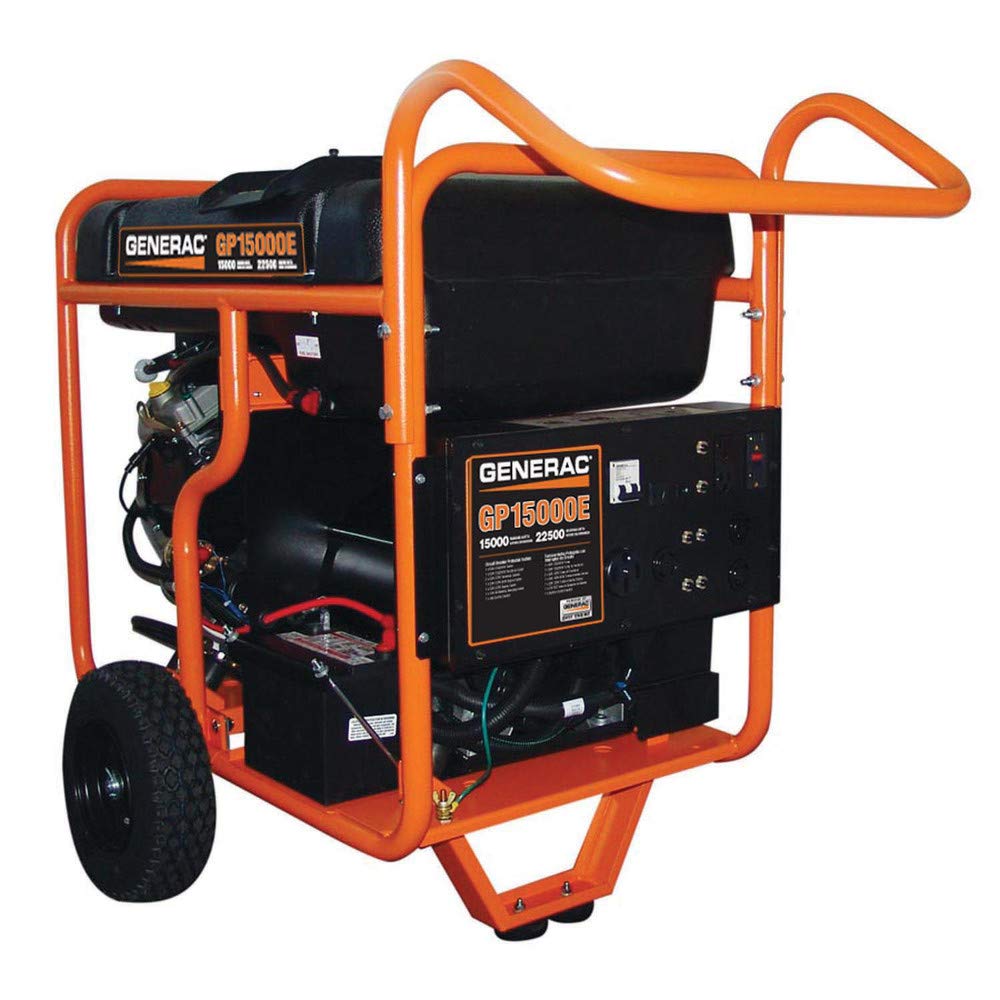
Generac GP15000E — Whole-House Capacity From a Portable Frame
Best for: Whole-house heavy loads
Some houses need more than 10,000 watts to run a 4-ton AC, an electric range, and a water heater without shedding loads, and most portable generators stop short of that. Generac lists the GP15000E at 15,000 starting and 12,500 running watts, the highest figures in this guide, with electric start and a 120/240V 50-amp outlet. It ranks sixth because most households will never use all of that output, and it is a gasoline-only unit well over 250 lb. Choose it only after you have totaled your loads and landed above 10,000 running watts.
- 12,500 running watts is 3,000 more than the WGen9500DF and the highest rating in this guide.
- A 9,000-watt load uses only about 72 percent of its rating, which eases engine strain over long outages.
- The 50-amp, 240V outlet can deliver up to 12,000 watts to a transfer switch, with the remainder on 120V receptacles.
- Gasoline only, and well over 250 lb makes moving it a two-person job. Fuel burn at heavy loads is steep, so expect frequent refills.
| Running watts | 12,500 |
| Starting watts | 15,000 |
| Fuel | Gasoline |
| Start | Electric |
10/10
8/10
7/10

Westinghouse WGen7500 — Right-Sized Backup for Essential Circuits
Best for: Essential-circuit home backup
Not every house needs 9,500 watts. If your plan is a refrigerator, furnace blower, sump pump, and a few lights, 7,500 running watts is the right size, and a smaller engine burns less fuel per hour. Westinghouse rates the WGen7500 at 7,500 running and 9,500 peak watts, with electric start and a 120/240V 30-amp outlet that a transfer switch or inlet box can use. It sits seventh because it is gasoline-only and gives up 2,000 running watts to the WGen9500DF.
- A 5,000-watt essentials load runs at roughly two-thirds of the 7,500-watt rating, a comfortable margin.
- The 30-amp locking outlet gives up to 7,200 watts at 240V to a transfer switch.
- Electric start and Westinghouse’s 3-year warranty with lifetime tech support cover first-time owners.
- Gasoline only, with no propane fallback, and it can’t start a 3-ton central AC alongside other loads without a soft-start device.
| Running watts | 7,500 |
| Peak watts | 9,500 |
| Fuel | Gasoline |
| Main outlet | 30A 120/240V |
8/10
8/10
8/10

A-iPower SUA12000E — High Wattage for Tight Budgets
Best for: Big output, tight budgets
When you need 9,000-plus running watts but can’t justify a premium-brand tier, a lesser-known manufacturer is the usual compromise. A-iPower lists the SUA12000E at 12,000 starting and 9,500 running watts with electric start, matching the WGen9500DF’s gasoline output on paper. It ranks eighth because the brand has a thinner service network and shorter track record than Generac, Honda, or Champion, and it runs on gasoline only. Buy it if output per dollar matters more than a local dealer.
- 9,500 running watts matches the gasoline rating of our top pick, enough for a central AC plus essentials.
- A 12,000-watt peak gives 2,500 watts of surge headroom above the running rating for motor startups.
- Electric start spares you a pull cord on an engine this size.
- Expect mail-order parts and phone or email support rather than a local dealer, and it has no propane option.
| Running watts | 9,500 |
| Peak watts | 12,000 |
| Fuel | Gasoline |
| Start | Electric |
9/10
6/10
8/10

WEN 56475 — Entry-Level Power That Keeps Things Simple
Best for: Light loads and RVs
If your outage plan is a refrigerator, a few lights, a phone charger, and a TV, a 9,500-watt unit is overkill. The WEN 56475 delivers 4,750 starting and 3,800 running watts from a 212cc engine, and its RV-ready 30-amp outlet makes it practical for camper hookups. It ranks ninth because it can’t run central air or most 240V loads, but it is the easiest unit here to move and the most budget-friendly. Choose it for essentials, tailgates, and RV trips.
- At roughly 100 lb it weighs about half as much as the 200-lb-plus models in this guide.
- 3,800 running watts covers a refrigerator, furnace blower, and lights at the same time.
- The RV-ready 30-amp outlet plugs a camper straight in, with no adapter chain.
- Recoil pull start only, with no electric start, and 3,800 watts rules out central AC and most well pumps running with other loads.
| Running watts | 3,800 |
| Surge watts | 4,750 |
| Engine | 212cc |
| Start | Recoil |
5/10
6/10
9/10
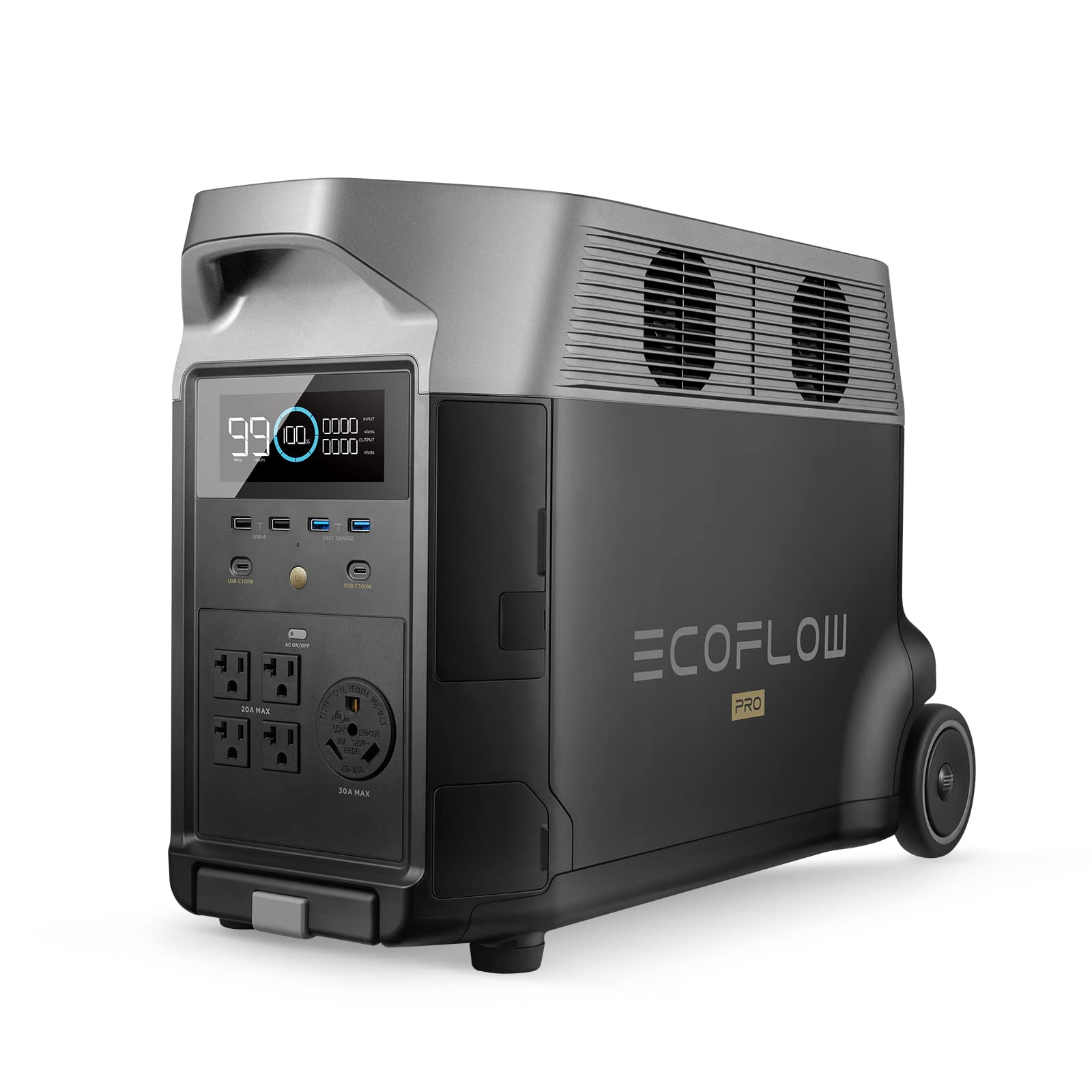
EcoFlow DELTA Pro — Silent, No-Exhaust Backup for Critical Loads
Best for: Quiet indoor-safe backup
If you live where fuel storage or exhaust is a problem, such as an apartment, a condo, or a basement, a gas generator is off the table. EcoFlow lists the DELTA Pro at 3,600 watt-hours of storage and 3,600 watts of continuous AC output, enough to run a refrigerator, furnace blower, and lights for roughly a day. It ranks last only because its capacity is finite and it can’t match a generator’s endless runtime. Choose it for short outages, noise limits, and anywhere combustion is not allowed.
- 3,600 watts of continuous output is close to the WEN 56475’s 3,800 running watts, with no fuel at all.
- Zero exhaust and no gasoline means it is safe to use indoors and has no stale-fuel storage problem.
- Expands with extra batteries and recharges from a wall outlet or solar panels.
- 3,600 Wh is only about an hour of a 3,000-watt load, recharging takes hours, and at about 99 lb it is no lighter than a small gas unit.
| Capacity | 3,600 Wh |
| AC output | 3,600 W continuous |
| Fuel | None (battery) |
| Weight | About 99 lb |
5/10
8/10
6/10
Top 3 Head-to-Head: WGen9500DF vs XP13000EH vs GP8000E
These three are the usual final choices for homeowners who want real backup power: two dual-fuel high-output units and the most widely serviced gasoline model. The decision comes down to total load, fuel flexibility, and how close the nearest repair shop is.
| Feature | #1 WGen9500DF | #2 XP13000EH | #3 GP8000E |
|---|---|---|---|
| Power and capacity | 9/10 — 9,500 W running | 10/10 — 10,500 W running — Best | 8/10 — 8,000 W running |
| Build and durability | 8/10 — newer service network | 8/10 — heavy frame, fewer dealers | 9/10 — widest parts network — Best |
| Value for money | 9/10 — dual fuel plus 50A outlet — Best | 8/10 — more watts, more weight | 8/10 — gasoline only |
| Choose if… | You want one balanced dual-fuel pick | Your loads top 9,000 watts | You want easy parts and service |
Who These Heavy Duty Portable Generators Are NOT For
Not every buyer needs a 200-pound, open-frame generator, and buying one for the wrong job wastes storage space and fuel.
If your home needs more than 12,500 running watts, such as a 5-ton AC, an electric range, and a dryer at the same time, a portable unit will force constant load-shedding. A permanently installed standby generator on a natural gas or propane line is the correct tool for that job.
Common Mistakes to Avoid
These are the mistakes that quietly ruin the experience, or the generator, even when you bought a good one.
Frequently Asked Questions About Heavy Duty Portable Generators
How many watts do I need to power a house during an outage?
Most homes that back up only essentials, such as a refrigerator, furnace blower, sump or well pump, lights, and electronics, fit within 5,000 to 7,500 running watts. Add central air or an electric water heater and plan on 9,000 running watts or more.
Can a portable generator run a central air conditioner?
Yes, if its running watts cover the AC plus your other loads and you manage the startup surge. A 3-ton unit can often start on about 7,500 running watts when fitted with a soft start kit, which cuts the startup surge by roughly 60 to 70 percent. Without one, plan on 9,500 watts or more.
How long can a heavy-duty portable generator run nonstop?
Mechanically, it can run as long as you keep fuel and oil topped up, but most manuals call for shutting down to refuel and checking oil each time. In practice that means a stop every 8 to 16 hours, depending on tank size and load.
Can you run a portable generator in the rain or snow?
Only under a dry, open-sided generator canopy or tent that keeps water off the outlets while letting exhaust vent freely. Never run it inside a shed, garage, or enclosed box, even in bad weather.
How much gas does a heavy-duty generator burn per day?
At about half load, a heavy-duty gas generator typically burns roughly 0.4 to 0.8 gallons per hour, which works out to about 10 to 20 gallons per day. Check the runtime rating for your specific model and store enough fuel for the longest outage in your area.
Is a heavy-duty generator better than a portable power station?
For outages longer than a few hours, yes, because a generator keeps producing power as long as you refuel it. A 3,600 Wh station like the DELTA Pro holds only about an hour of a 3,000-watt load, but it wins for silent, indoor-safe backup of a refrigerator and electronics.
How often should I test-run a backup generator?
Run it for 20 to 30 minutes at about half load once a month. That keeps the carburetor clear and shows you a weak battery or a stubborn start before an outage does.
Our Final Verdict
Heavy-duty generator shoppers fall into three groups: homeowners protecting essentials, owners of large houses with central air and 240V loads, and people who need quiet or fuel-free power. The tension is always the same, since more watts mean more weight, more fuel, and more noise.
If you want one generator that covers most homes, the WGen9500DF (#1) is best because dual fuel, 9,500 running watts, and a 50-amp outlet come together without a premium-brand tier. If your calculated load tops 10,000 watts, the XP13000EH (#2) or GP15000E (#6) is best because they add 1,000 to 3,000 running watts of headroom over the Westinghouse. If noise and long-term durability outweigh output, the Honda EU7000iS (#5) is best because its inverter design is quiet and clean.

Hi, I’m Michael Turner. I own a generator workshop in the United States and founded HomeGeneratorBlog to share practical, hands-on guidance about generator installation, maintenance, troubleshooting, safety, and backup power solutions. My goal is to help homeowners make smarter, more confident decisions through clear and reliable information