10 Best Portable Generator for Van Life 2026: Quiet, Compact Power on the Road
The best portable generator for van life right now is the Honda EU2200i — a 47-pound quiet inverter with clean power for laptops. We compared 10 inverter generators on Van-Life Power Fit, Quiet Operation, and Portability and Ease of Use. Most van generators look similar on paper but fail on noise, weight, or storage space in a real van. Whether you need weekend camping power, full-time van living, or quiet remote work, this guide gives you one clear answer.
Quick Comparison: All 10 Products Ranked
| # | Product | Best For | Rating | Badge | |
|---|---|---|---|---|---|
| 1 | Honda EU2200i | Quiet everyday van power | 4.9/5 | Best Overall | Buy → |
| 2 | Westinghouse iGen4500 | Bigger loads, long runtime | 4.8/5 | Best for Bigger Loads | Buy → |
| 3 | Champion 200988 4500-Watt Dual Fuel Inverter | Gas or propane flexibility | 4.7/5 | Best Dual Fuel | Buy → |
| 4 | Yamaha EF2200iS | Low-noise campsites | 4.6/5 | Quietest Pick | Buy → |
| 5 | Generac GP3000i | Mid-size everyday loads | 4.5/5 | Best Mid-Size Value | Buy → |
| 6 | WEN 56235i | Budget light loads | 4.4/5 | Best Budget | Buy → |
| 7 | Predator 3500 | Strong power for the size | 4.3/5 | Best Value Power | Buy → |
| 8 | Westinghouse iGen2200 | Compact backup power | 4.2/5 | Best Compact Backup | Buy → |
| 9 | Pulsar G2319N | Light weekend use | 4.1/5 | Best Budget Compact | Buy → |
| 10 | A-iPower SUA2300i | First van generator | 4.0/5 | Best Entry-Level | Buy → |
How We Chose These Portable Generators
What we compared
10 inverter models, using manufacturer-listed running watts, starting watts, noise, weight, tank size, runtime, and clean-power ratings.
Our 3 scoring criteria
Van-Life Power Fit, Quiet Operation, and Portability and Ease of Use, each scored out of 5.
What we did not do
This is a specification comparison. No hands-on testing, test duration, or expert consultation is claimed.
What we cut — and why
Large open-frame generators were cut for van use: too heavy, too loud, and too large to store safely in a van.
What to Look for When Buying a Portable Generator for Van Life
A van leaves no room for the wrong generator. Size, noise, weight, and fuel storage all matter at once, so choose for the van you actually live in, not for a house.
1. Size Your Load First
Add up the running watts of everything you will run at the same time, then add the highest starting watts for one motor-driven item. A 12V fridge, laptop, lights, and fan usually fit a 2,000-watt inverter. A microwave, coffee maker, or air conditioner needs far more, often 3,500 watts or above.
2. Noise Matters More in a Van
You sleep metres from the generator, and so do your neighbours. Look for inverter models rated near 50 dBA at quarter load, and check the rating distance. A few decibels make a real difference at night, and many campsites limit generator hours.
If quiet running is your top priority, compare the quietest portable generators before you choose, and place the unit downwind and away from sleeping areas.
3. Weight and Storage
A 47-pound inverter can be lifted in and out by one person. A 95-pound unit needs two people, a ramp, or a permanent mount. Measure your storage bay first, including height, ventilation, and a spill tray. Fuel and exhaust fumes must never share space with sleeping areas.
For tight builds, a lightweight portable generator is often the practical limit, even if a larger model looks better on paper.
4. Fuel Type and Runtime
Gasoline is easy to find, propane stores cleanly and never goes stale, and dual-fuel models let you switch. Runtime at quarter load matters more than tank size alone. For longer stays away from fuel, a larger tank or a dual-fuel model is the safer choice.
The same fuel-flexibility thinking applies to a portable generator for off-grid living, where refuelling is less frequent and storage matters more.
5. Clean Power for Electronics
Laptops, cameras, phones, and medical devices need stable, clean power. Inverter generators with low total harmonic distortion, usually under 3 percent, are the safer choice. Avoid running sensitive electronics from a conventional open-frame generator without an inverter.
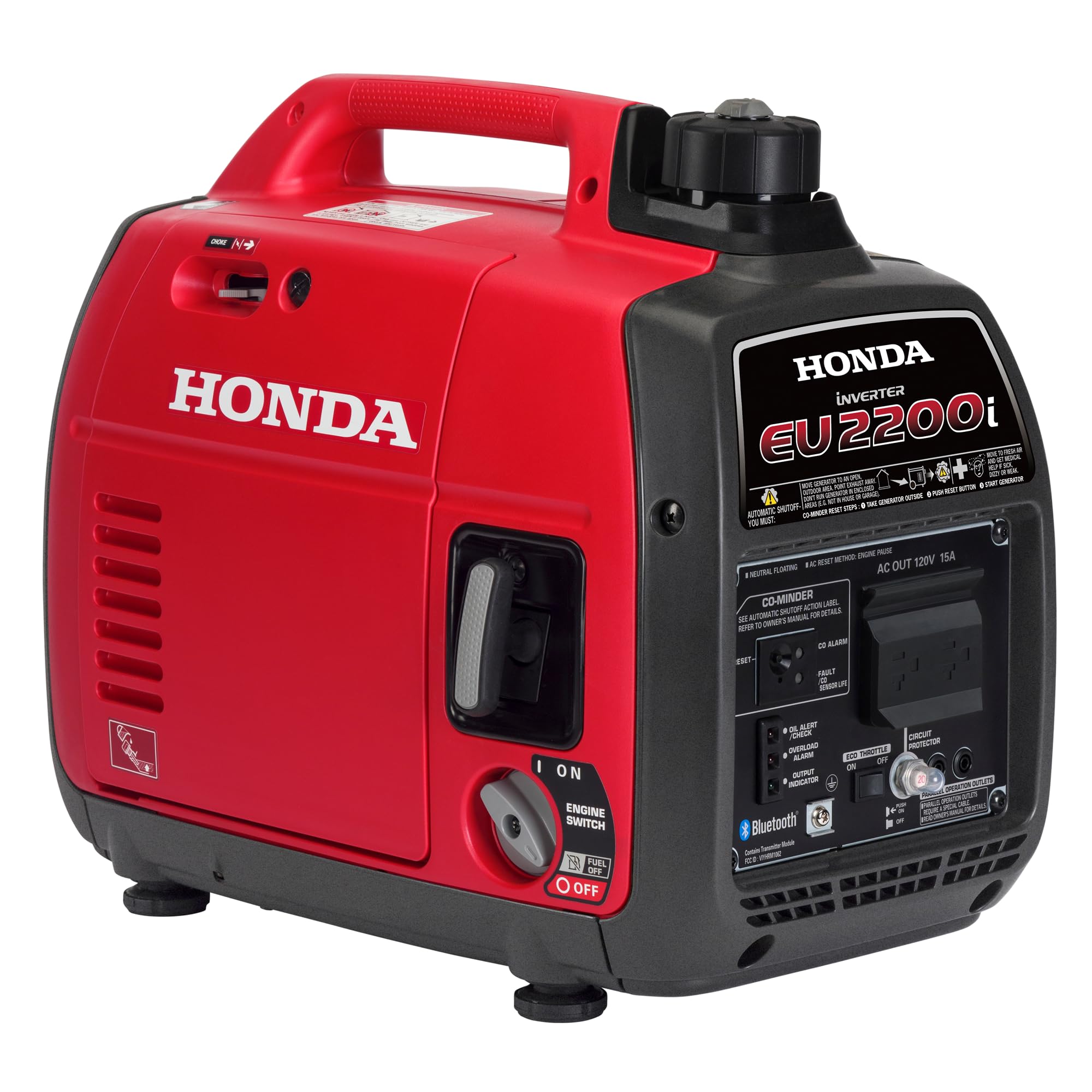
Honda EU2200i — Quiet, Light Van Power
Best for: Quiet everyday van power
Van life rewards small, quiet, reliable power, and the Honda EU2200i fits that brief better than any other model here. It delivers 1,800 running watts, enough for a 12V fridge, laptop, lights, fan, and phone charging at once, with clean inverter power under 3 percent THD. At 47.4 pounds it is easy to lift alone, and its 48 to 57 dBA range keeps campsite noise low. The trade-off is clear: it will not run an air conditioner or a microwave on its own. It also pairs well with a small solar setup for quiet daytime charging.
- 47.4 pounds, easy solo lift
- 48 dBA at quarter load
- Clean power under 3% THD
- Parallel capable for extra power
- No electric start
- Limited for air conditioning
- Premium price tier
4.8/5
5.0/5
4.9/5

Westinghouse iGen4500 — Long Runtime, RV-Ready Power
Best for: Bigger loads, long runtime
If your van runs more than the basics, the Westinghouse iGen4500 is the step up. It offers 3,700 running watts and 4,500 starting watts, so a small microwave, induction hob, or rooftop air conditioner becomes realistic with careful load management. Remote start, a 3.4-gallon tank, and up to 18 hours at quarter load reduce refuelling stops. At 93 pounds it is heavy for one person, so plan a fixed storage spot and a loading routine. Its LED display helps you watch load and fuel without guessing, and the enclosed design keeps noise down.
- 3,700 running watts
- Up to 18-hour runtime
- Remote start included
- RV-ready TT-30R outlet
- 93 pounds, heavy solo lift
- Needs larger storage space
- Gasoline only
4.9/5
4.7/5
4.8/5

Champion 200988 4500-Watt Dual Fuel Inverter — Gas or Propane
Best for: Gas or propane flexibility
Propane solves two van problems at once: it stores cleanly without going stale, and many vans already carry a propane tank. The Champion 200988 runs on gasoline or propane, with 3,500 running watts on gasoline and slightly less on propane, plus electric start and a CO shutoff sensor. It is a strong choice for longer trips and for vans with limited gasoline storage. Like the iGen4500, it is heavy at around 98 pounds, so it suits a larger van with a fixed storage plan. A propane hose and electric start make setup simple, even after storage.
- Gasoline or propane operation
- Electric start included
- CO shutoff sensor
- 3,500 running watts
- About 98 pounds
- 61 dBA, louder than rivals
- Less power on propane
4.8/5
4.6/5
4.7/5

Yamaha EF2200iS — Near-Silent Van Power
Best for: Low-noise campsites
If noise is your deal-breaker, the Yamaha EF2200iS deserves a close look. It delivers 1,800 running watts at 47.5 dBA at quarter load, one of the lowest noise figures in this list, with clean inverter power for laptops and cameras. At 55 pounds it is still manageable for one person, and its 1.24-gallon tank runs up to 10.5 hours at quarter load. It costs more than budget rivals and lacks electric start, but for quiet sites it is hard to beat. Its smart throttle adjusts engine speed to the load, saving fuel on light days.
- 47.5 dBA at quarter load
- Clean inverter power
- 10.5-hour runtime
- 55 pounds, manageable lift
- No electric start
- Premium price tier
- Limited for heavy loads
4.6/5
4.8/5
4.5/5

Generac GP3000i — Solid Mid-Size Van Power
Best for: Mid-size everyday loads
The Generac GP3000i sits in the useful middle ground for van life. With 2,300 running watts and 3,000 starting watts, it covers a fridge, laptop, lights, and a small cooking appliance without jumping to a 90-pound unit. It weighs 59.5 pounds, has USB charging, and runs up to about 9.5 hours at quarter load. Noise is higher than the Honda or Yamaha at 59 dBA, so it suits daytime use and sites where quiet hours are less strict. Its enclosed design and economy mode help keep fuel use reasonable on longer trips.
- 2,300 running watts
- USB charging built in
- 59.5 pounds, still portable
- Good mid-size value
- 59 dBA, louder than rivals
- No electric start
- Small 1.06-gallon tank
4.6/5
4.4/5
4.5/5
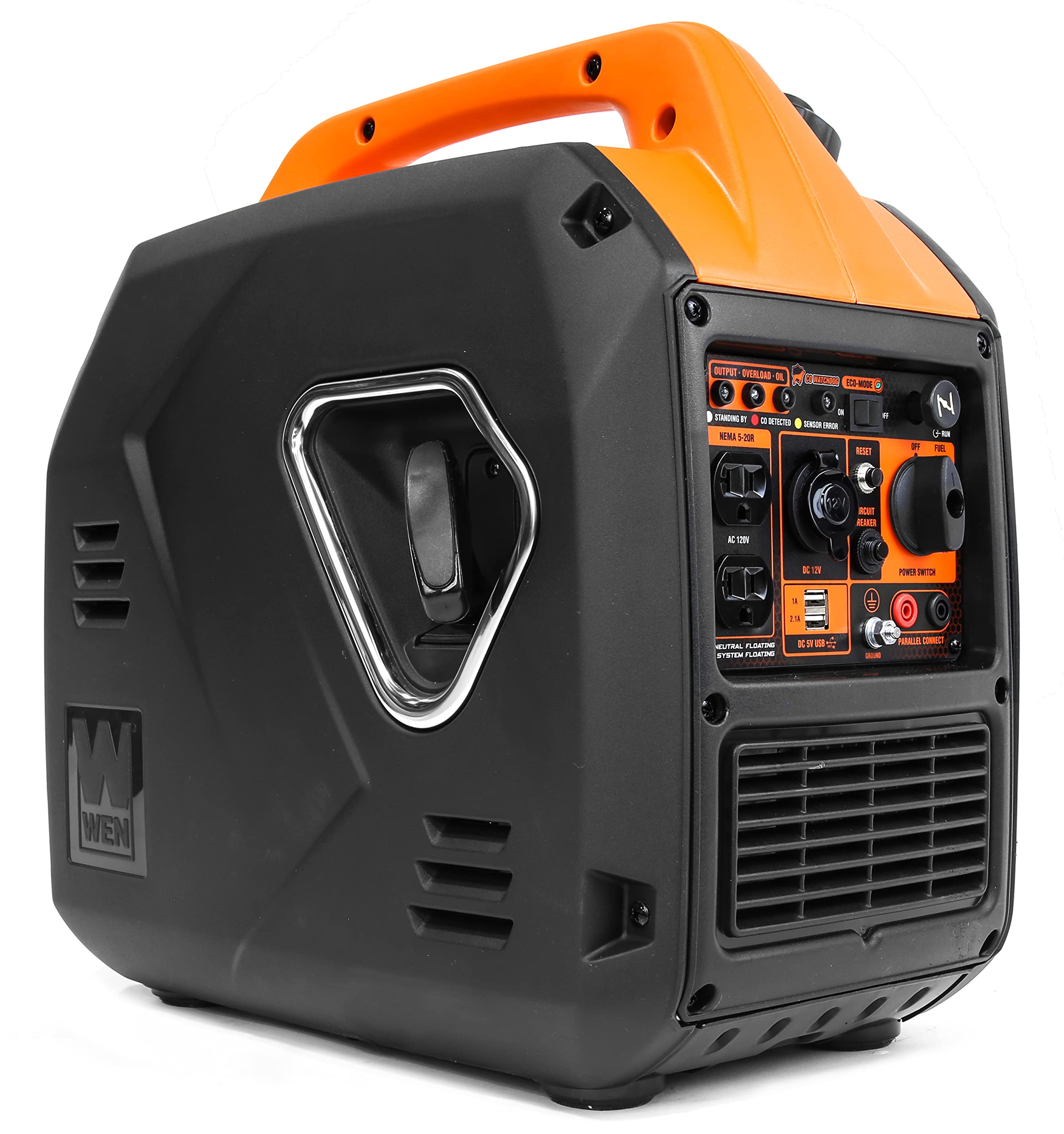
WEN 56235i — Light, Quiet Budget Pick
Best for: Budget light loads
The WEN 56235i is the budget pick that still feels made for van life. It weighs only 39 pounds, runs at 51 dBA, and delivers 1,900 running watts for a fridge, laptop, lights, and fan. Its 1-gallon tank runs up to 10.5 hours at half load, and the fuel shutoff helps prevent stale fuel in the carburettor. It will not run heavy appliances, and its build feels lighter than premium rivals, but for weekend trips it is excellent value. Its compact shape stores easily under a bed or in a rear garage bay.
- Only 39 pounds
- 51 dBA, quiet for budget
- Fuel shutoff included
- Strong budget value
- No electric start
- Limited for heavy loads
- Lighter build feel
4.3/5
4.5/5
4.4/5

Predator 3500 — Strong Power, Low Cost
Best for: Strong power for the size
The Predator 3500 gives van owners a lot of watts for the money. It offers 3,000 running watts and 3,500 starting watts, with electric start, a 2.6-gallon tank, and up to 11 hours at quarter load. That makes it useful for a microwave, induction cooking, or a small air conditioner with careful management. At 99.2 pounds it is the heaviest model in this list, so it suits a larger van, a trailer, or a semi-permanent setup rather than frequent lifting. Its large display shows voltage, frequency, and runtime at a glance.
- 3,000 running watts
- Electric start included
- 11-hour runtime
- Strong value for watts
- 99.2 pounds, heaviest here
- 56 dBA, not the quietest
- Limited dealer support
4.4/5
4.2/5
4.3/5

Westinghouse iGen2200 — Compact Backup Power
Best for: Compact backup power
The Westinghouse iGen2200 is a sensible backup for van owners who already have solar or a house battery. It delivers 1,800 running watts for a fridge, laptop, and lights when solar falls short, and it weighs 46 pounds. Noise is 52 dBA, runtime reaches 12 hours at quarter load, and the 1.2-gallon tank is easy to refuel. It is not a primary power source for heavy loads, but as a compact, quiet backup it earns its place in a small van. It also works well as a backup when clouds cut solar output for days.
- 46 pounds, very portable
- 12-hour runtime
- 52 dBA, quiet enough
- Good solar backup
- No electric start
- Limited for heavy loads
- No RV-ready outlet
4.2/5
4.3/5
4.1/5

Pulsar G2319N — Light Weekend Power
Best for: Light weekend use
The Pulsar G2319N is a simple, light option for short van trips. It offers 1,800 running watts and 2,300 starting watts, weighs 47 pounds, and runs up to 9.5 hours at half load from a 1.18-gallon tank. It covers a fridge, laptop, lights, and fan for a weekend, and its compact size fits easily in a small van. Noise is higher at 59 dBA, and it lacks the refinement of premium models, so keep expectations to light, occasional use. Its simple controls make it easy for a first-time generator owner to use.
- 47 pounds, easy to store
- 1,800 running watts
- Compact weekend size
- Low budget cost
- 59 dBA, louder than rivals
- No electric start
- Basic build quality
4.1/5
4.0/5
4.2/5
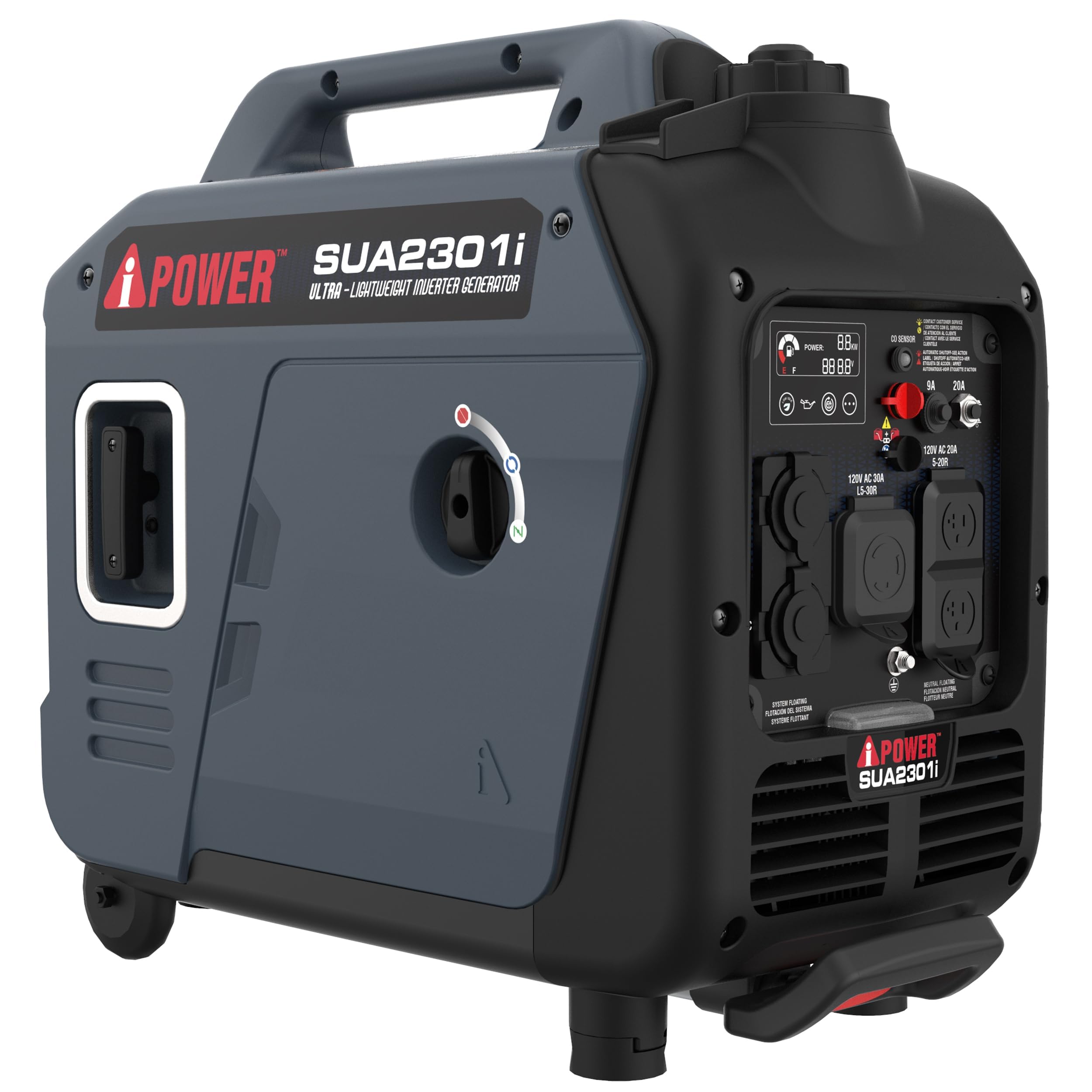
A-iPower SUA2300i — Simple First Van Generator
Best for: First van generator
The A-iPower SUA2300i is the simplest entry point in this list. It offers 1,800 running watts and 2,300 starting watts, weighs 50 pounds, and runs at 52 dBA with clean inverter power for laptops and phones. Its 1.1-gallon tank runs up to 9.5 hours at quarter load, and parallel capability lets you add a second unit later. It lacks electric start and premium refinement, but for a first van generator on a tight budget it covers the essentials well. Its low-oil shutoff adds a useful layer of protection on long trips.
- 52 dBA, quiet for budget
- Parallel capable
- 50 pounds, portable
- Simple entry-level price
- No electric start
- Limited for heavy loads
- Basic feature set
4.0/5
4.0/5
4.0/5
Top 3 Head-to-Head: Honda EU2200i vs Westinghouse iGen4500 vs Champion 200988
These three are the common final choices because they cover the three van-life trade-offs: light and quiet, big and long-running, and fuel-flexible.
| Feature | #1 Honda EU2200i | #2 Westinghouse iGen4500 | #3 Champion 200988 |
|---|---|---|---|
| Van-Life Power Fit | 4.8/5 | 4.9/5 — Best | 4.8/5 |
| Quiet Operation | 5.0/5 — Best | 4.7/5 | 4.6/5 |
| Portability and Ease of Use | 4.9/5 — Best | 4.8/5 | 4.7/5 |
| Choose if… | You want light, quiet everyday power | You run bigger loads for longer | You want gas or propane choice |
Who These Portable Generators Are NOT For
A portable gas generator is not the right power source for every van setup.
If you already have a large solar array and a big house battery, a generator may only be a backup. In that case a small model like the iGen2200 is enough. For larger RVs with a fixed 50-amp system, compare portable RV generators instead, because van-size inverters will not cover that load.
Common Mistakes to Avoid
Most van generator problems come from sizing, placement, or fuel storage, not from the brand.
Frequently Asked Questions About Portable Generators for Van Life
What size generator do I need for van life?
Most van owners need 2,000 to 2,200 watts for a fridge, laptop, lights, and fan. Add up running watts for everything you run together, then add the highest starting watts for one motor item. If you run a microwave or air conditioner, you will usually need 3,500 watts or more, with careful load management.
Can I run a generator inside a van?
No. Never run a gas generator inside a van, tent, or enclosed space. Exhaust contains carbon monoxide, which can build up quickly and is deadly. Always place the generator outdoors, downwind, away from doors, windows, and vents, and use a carbon monoxide alarm in the van.
How quiet should a van life generator be?
Look for about 50 dBA or less at quarter load, measured at the stated distance. Models near 48 dBA are noticeably quieter than models near 60 dBA, especially at night. Check the load and distance for each rating, because numbers measured differently cannot be compared directly.
Can a portable generator charge a van battery and run a 12V fridge?
Yes, in most cases. A generator can power a battery charger or an AC-powered fridge, and many models have a 12V DC outlet for light charging. For a 12V fridge, the most efficient route is usually charging the house battery, then running the fridge from the battery, rather than running the generator all day.
Gas or solar generator for van life?
Solar and a battery station are silent, fume-free, and best for light loads and indoor use. A gas inverter generator is better for high loads, cloudy days, and long stays without sun. Many full-time van owners use both: solar daily, and a small gas inverter as backup for heavy loads.
Can I run an air conditioner with a portable generator in a van?
It depends on the air conditioner size and starting watts. A small rooftop unit often needs 3,500 watts or more at startup, so a 2,200-watt inverter will usually trip. A soft-start kit can lower starting watts, but check the unit rating first and test the load before relying on it in hot weather.
How do I store fuel safely in a van?
Use only an approved fuel container, keep it upright and secured, and store it outside the sleeping area with ventilation. Avoid loose cans, overfilling, and storing fuel near heat. Propane stores more cleanly than gasoline for long trips, which is one reason dual-fuel models appeal to van owners.
Our Final Verdict
For most van life, a light, quiet 2,200-watt inverter is the right balance. Step up to 3,500 watts or more only if you run a microwave or air conditioner, and choose dual fuel if propane storage matters to you.

Hi, I’m Michael Turner. I own a generator workshop in the United States and founded HomeGeneratorBlog to share practical, hands-on guidance about generator installation, maintenance, troubleshooting, safety, and backup power solutions. My goal is to help homeowners make smarter, more confident decisions through clear and reliable information