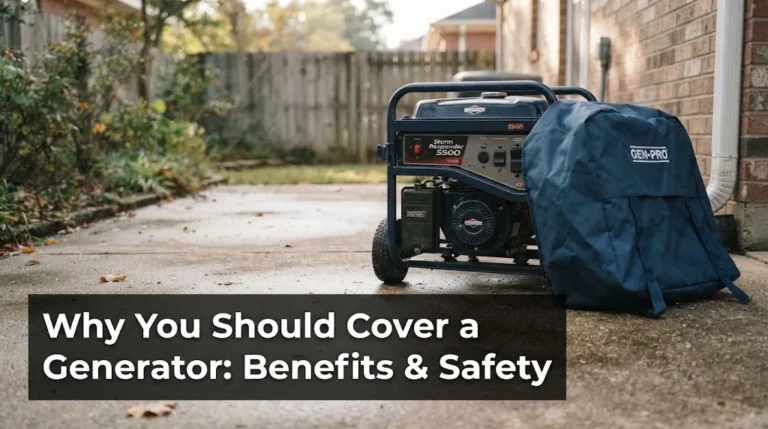
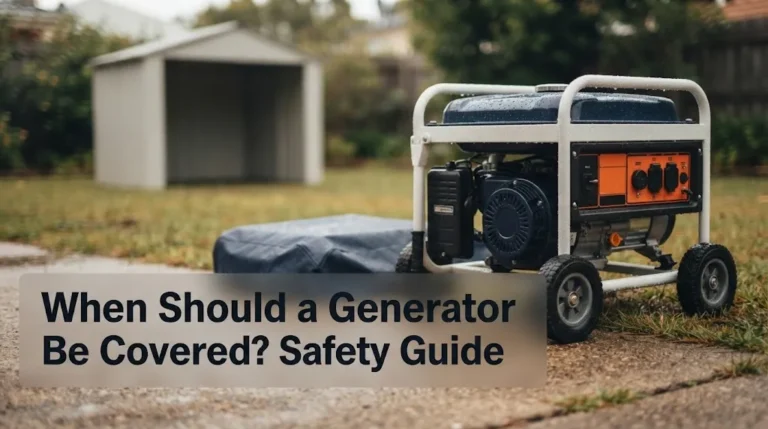
How to Protect a Generator During a Storm Safely
Quick Answer
You cannot simply run a portable generator uncovered in a rainstorm. Water entering the outlets, control panel, or engine can cause electrocution or destroy the unit. The safe approach is to operate the generator outdoors on a dry, elevated surface using a purpose-built, fire-rated running cover or a canopy that allows unrestricted airflow and keeps exhaust directed away from occupied spaces. Never use a tarp or storage cover on a running generator.
Why Rain and Storms Are Dangerous for Generators
A portable generator combines fuel, high heat, and live electricity. Add water, and every one of those elements becomes more hazardous.
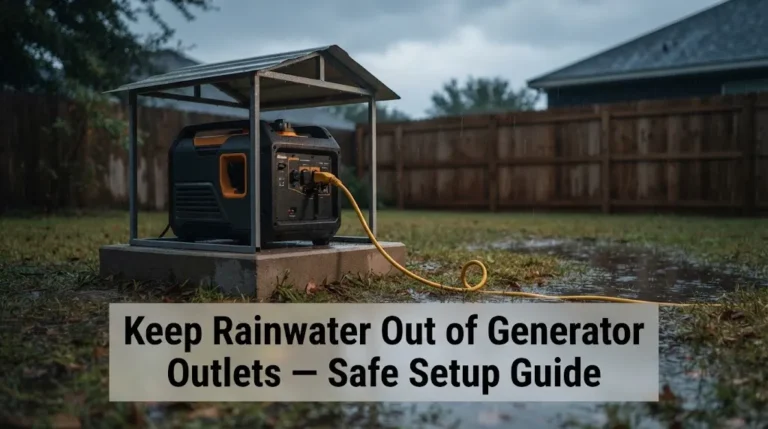
Water reaching the outlets or wiring can create a shock path. Moisture inside the control panel can short sensitive electronics. And a hot muffler meeting a makeshift cover can start a fire.
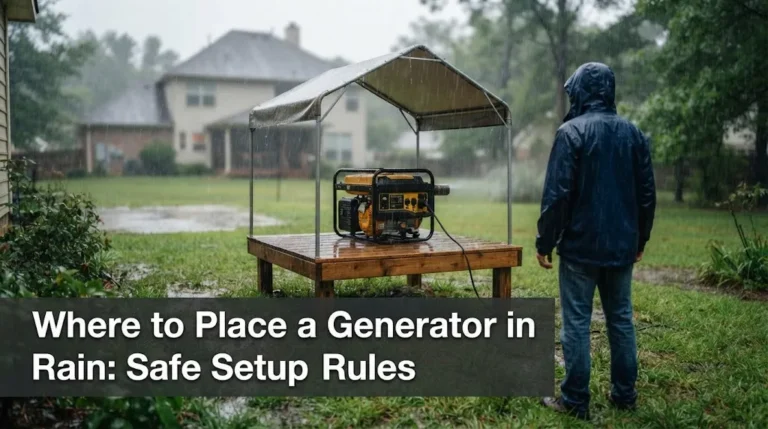
That is why safety authorities consistently warn against operating a generator in exposed wet conditions without protection. The U.S. Consumer Product Safety Commission advises operating generators “under an open, canopy-like structure on a dry surface where water cannot reach it or puddle or drain under it.” OSHA similarly recommends keeping generators dry and using a canopy when wet weather is unavoidable.
The risk is not theoretical. Rain can damage a generator in minutes, and the combination of wet hands, wet ground, and live connections creates a genuine electrocution hazard.
The Only Safe Way to Protect a Running Generator
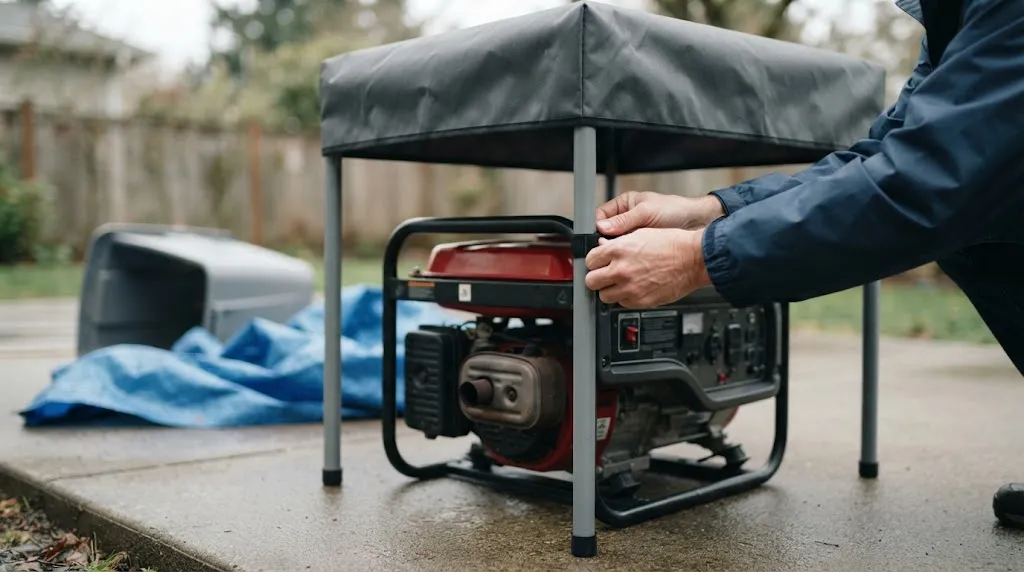
The core principle is simple: shield the generator from above and from blowing rain, but never enclose it.
A generator needs two things at all times: combustion air and cooling airflow. It also produces exhaust that must escape freely. Any cover that restricts airflow or traps exhaust near the unit defeats the purpose and creates new dangers.
That rules out the most common bad ideas. A plastic storage tote placed over the top traps heat. A tarp draped across the frame blocks exhaust and can melt or ignite. Running the generator in a shed or garage with the door cracked lets carbon monoxide accumulate and enter the home.
The workable solution is a running cover or generator tent designed for exactly this purpose. These products use a frame to hold a fire-retardant canopy above the generator, leaving the sides open for airflow while deflecting rain away from the control panel, outlets, and engine.
What to Look For in a Running Cover
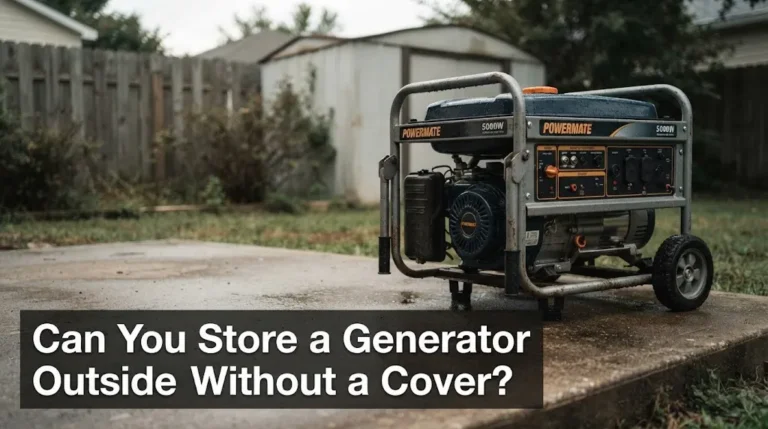
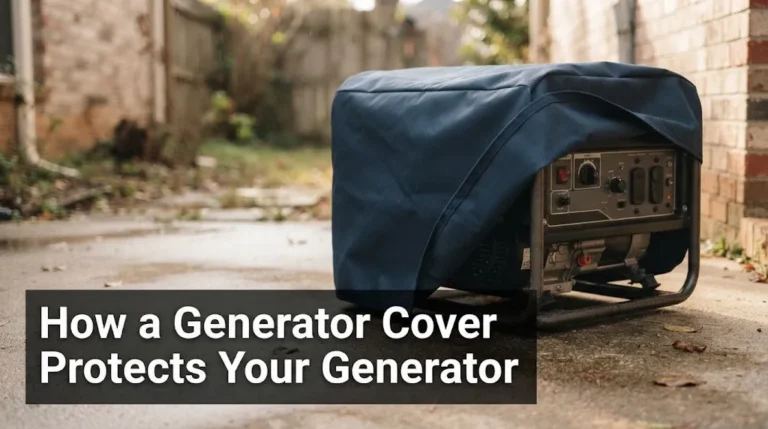
Not every product marketed as a generator cover is safe for running use. Storage covers, which fit tightly around the unit, must be removed before starting the engine.
A proper running cover has several distinguishing features:
- Fire-rated materials. The canopy should meet NFPA 701 flame retardancy standards or equivalent. Vinyl that is not flame-rated can melt or ignite near a hot muffler.
- An open frame design. The cover sits on poles or straps above the generator, not directly on the hot engine. It should not touch the muffler or block the exhaust outlet.
- Ventilation on all sides. Air must move freely under and around the canopy. Some covers include adjustable side panels or aprons that protect the outlets without sealing the unit.
- Weather resistance for wind and rain. Look for products rated for sustained wind and heavy rainfall. Reputable manufacturers publish these ratings based on independent testing.
- Compatibility with your generator type. Open-frame generators and fully encased inverter generators require different cover designs. A cover that fits loosely or leaves the control panel exposed defeats the purpose.
Brands like GenTent and Champion’s Storm Shield line are widely available and specifically engineered for running use. They cost roughly $100 to $200, which is modest compared to generator repair or replacement.
Tip
Set up and fit your running cover on a dry day before storm season. Practicing the assembly in calm conditions takes minutes; assembling a frame in wind and rain is frustrating and unsafe.
Placement Matters as Much as the Cover
A cover protects the generator. Placement protects the people inside the house.
The generator must run outdoors, at least 20 feet from doors, windows, and vents. Exhaust should point away from the home and any neighboring structures. Even with a cover, never operate a generator on a porch, in a carport, or in a garage with the door open. Carbon monoxide is odorless and can accumulate faster than expected.
The ground itself matters during prolonged rain. Place the generator on a dry, stable surface that will not flood or collect runoff. A concrete pad, gravel, or a wooden platform works. Wet grass or low spots where water pools create a shock risk and can submerge the unit’s base.
If your area is prone to flash flooding or the storm is expected to bring hurricane-force wind, the safest choice may be to wait. No cover is rated for every condition, and a cover that fails in high wind leaves the generator fully exposed.
Before the Storm: A Short Readiness Check
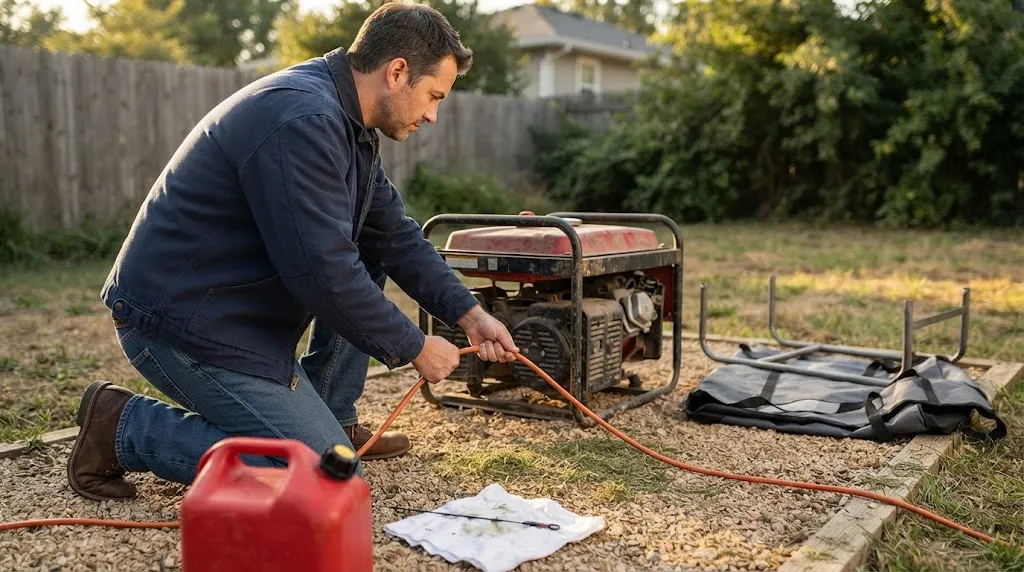
A generator that will not start is worse than useless during an outage. Run through these checks before the weather arrives, while you still have time to fix problems.
- Start the generator and let it run under load. A unit that idles fine can stumble when a refrigerator or sump pump kicks on. Listen for hesitation and check for fault codes.
- Inspect the fuel. Old gasoline can clog the carburetor and prevent starting. If fuel has been sitting for months, drain it and refill with fresh gas. For longer outages, have enough fuel on hand in approved containers, stored safely away from living spaces.
- Check the oil and air filter. Low oil triggers a shutdown on most modern generators. A dirty air filter causes rough running.
- Test the cover fit before the storm. Set up the running cover on a dry day so you know how it attaches. Trying to assemble a frame in wind and rain is frustrating and unsafe.
- Confirm your cords and connections. Use heavy-duty, outdoor-rated extension cords with a grounding pin. Route cords so they run downhill from the generator, preventing water from traveling along the cable toward the outlets.
During the Storm: Operating Rules
Once the storm arrives, keep interaction with the generator minimal.
Never refuel a hot generator. Turn it off, let it cool completely, and refuel outdoors away from any flame or pilot light. Spilled gasoline on a hot engine is a fire waiting to happen.
Keep the area around the generator clear of standing water. If water begins to rise toward the unit, shut it down and move it to higher ground if it is safe to do so. Touching a generator that is sitting in water is extremely dangerous.
Check the cover periodically. Wind can shift a canopy or loosen straps. If the cover has moved and is blocking exhaust or touching the muffler, shut the generator down before adjusting it.
Monitor for carbon monoxide. Even with the generator outdoors, a change in wind direction can push exhaust toward a window or vent. Working CO alarms inside the home are essential, and any symptoms of dizziness, headache, or nausea mean getting to fresh air immediately.
When the Storm Is a Slow-Moving Tropical System
Prolonged rain creates a different set of problems than a quick thunderstorm. The ground stays saturated for days, increasing the risk of flooding around the generator. Trees and limbs weakened by sustained wind can fall and damage the unit or block access to it.
If a tropical storm or hurricane is forecast to stall over your area, consider these additional precautions:
- Elevate the generator higher than usual. A platform of concrete blocks or pressure-treated wood can keep the base above minor flooding. Make sure the platform is stable and will not shift.
- Secure the cover against wind. Straps and frames should be tightened according to the manufacturer’s instructions. If wind speeds are expected to exceed the cover’s rating, plan to shut the generator down and wait for conditions to improve.
- Have a backup plan for power. If running the generator becomes unsafe, a battery-powered power station can keep phones and medical devices charged indoors without fuel or exhaust concerns.
Warning
Never bring a portable generator indoors, into a garage, or onto a covered porch during a storm, even with the door open or a fan running. Carbon monoxide from generator exhaust can build to lethal levels in minutes and is undetectable without an alarm.
After the Storm: What to Check
When the weather clears and utility power returns, do not simply wheel the generator back into storage.
Inspect it for water intrusion. Look for moisture inside the outlets, around the control panel, and under the oil fill cap. If the generator was exposed to flooding or heavy splash, let it dry completely before attempting to start it again.
Check the oil for a milky appearance, which indicates water contamination. If the oil looks off, change it before running the unit. Water in the crankcase can cause serious engine damage.
Clean and dry the cover before storing it. A cover packed away wet can grow mildew and lose its fire-retardant effectiveness over time.
Related Product
Generator Running Cover / Tent
A fire-rated running cover keeps rain off the control panel and outlets while leaving airflow and exhaust clear, so you can safely run your generator through a storm.
As an Amazon Associate, we earn from qualifying purchases.
Frequently Asked Questions
Can I just put a tarp over my generator while it runs?
No. A tarp blocks airflow, traps heat, and can melt or ignite if it touches the hot muffler or exhaust. It also does nothing to keep blowing rain out of the outlets. Use a purpose-built running cover with a rigid frame instead.
How much clearance does a generator need under a cover?
At least three to four feet of clear space on all sides and above the unit for ventilation and heat dissipation. The cover should sit well above the hottest parts of the engine, and the exhaust outlet must remain completely unobstructed.
Is it safe to run a generator in light rain without a cover?
No. Light rain can still enter the outlets and control panel, and the risk of shock increases whenever the generator is wet. Even a drizzle justifies using a proper cover. If you do not have one, wait until the rain stops.
Can I run a generator in a shed if I leave the door open?
No. Opening the door does not provide enough ventilation to prevent carbon monoxide from accumulating. Generators must run outdoors, away from any structure, with exhaust directed away from windows, doors, and vents.
What should I do if my generator gets wet while running?
Shut it down if you can do so safely without touching wet components. Do not touch the generator, cords, or outlets with wet hands. Let the unit dry completely before inspecting it. If water entered the engine or electrical components, have it checked by a technician before restarting.
How long can a generator run continuously during a storm?
Most portable generators can run for many hours, but runtime depends on fuel capacity and load. Check the oil level every time you refuel, and never let the unit run so long that the oil level drops below the safe mark. For multi-day outages, plan fuel resupply and oil checks in advance.
Conclusion
Protecting a generator during a storm comes down to one safe method: run it outdoors on dry, elevated ground under a fire-rated running cover that allows full airflow and keeps exhaust clear. Skip the tarps, the storage covers, and the garage-with-the-door-open shortcuts. They create fire, shock, and carbon monoxide hazards that are not worth the risk. Before the storm arrives, test the generator, check the fuel and oil, and practice setting up the cover. During the storm, keep the unit dry, monitor the cover, and never refuel a hot engine. A few minutes of preparation and the right cover make the difference between reliable backup power and a dangerous failure.

Hi, I’m Michael Turner. I own a generator workshop in the United States and founded HomeGeneratorBlog to share practical, hands-on guidance about generator installation, maintenance, troubleshooting, safety, and backup power solutions. My goal is to help homeowners make smarter, more confident decisions through clear and reliable information