How Much Rain Can a Portable Generator Withstand?
Quick Answer
Most portable generators are not designed to withstand direct rain and should never be operated in wet conditions. Manufacturer guidance from Generac and federal safety agencies is consistent: wait for the rain to pass, or use only a purpose-built running cover that the generator manufacturer explicitly permits. There is no universal “rain limit” in inches or millimeters for a standard portable generator because consumer-grade units lack sealed enclosures.
Why Portable Generators Are Not Built for Rain
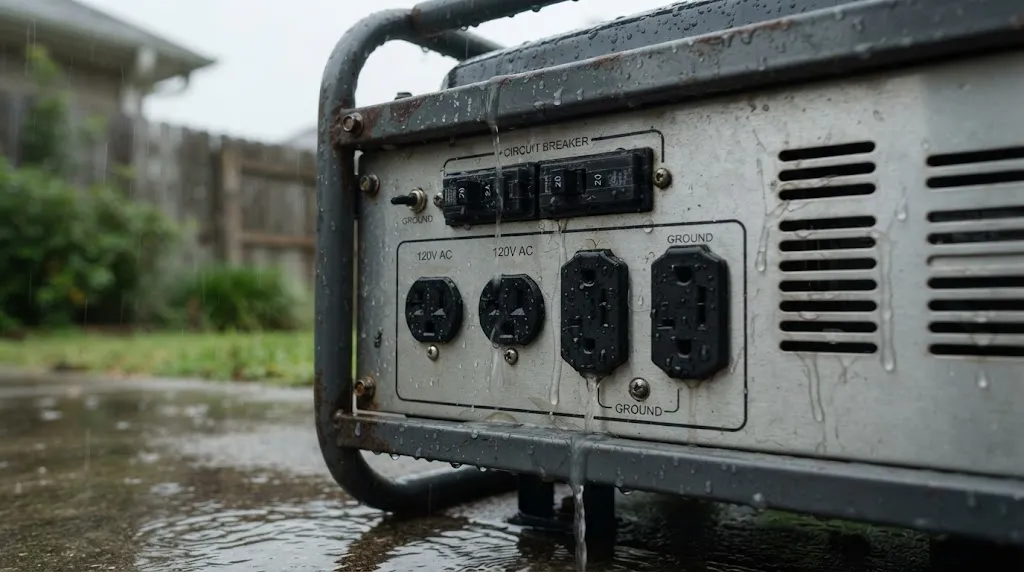
A portable generator is an electrical power source with exposed receptacles, vents, and often an open frame. Water entering a live outlet or the alternator creates a direct path for current to reach the frame or the user.
The U.S. Consumer Product Safety Commission has repeatedly warned that consumer-grade generators are not weatherproof and that using one in wet conditions can cause electrocution and shock. Generac’s own safety documentation states plainly: never operate the generator in rain or on a wet surface.
The core problem is not the engine. It is the electrical side. A generator’s power panel, circuit breakers, and receptacles are designed for dry operation. Unlike a stationary home standby generator with a sealed raintight enclosure, a portable unit must keep its outlets accessible while running. That design requirement makes true weatherproofing difficult.
Key Insight
There is no standardized rain rating for consumer portable generators equivalent to the IP ratings found on industrial equipment. Some industrial and diesel generators carry IP ratings like IP44 or IP55, but those are sealed, heavy-duty units, not the open-frame gasoline generators sold for home backup.
What About IP Ratings on Generators?
Ingress Protection (IP) ratings tell you how well an enclosure resists dust and water. The second digit indicates water resistance: IPX4 means protection against splashing water, IPX5 means protection against water jets, and IPX6 means protection against powerful water jets.
Some diesel generators and enclosed industrial units carry IP ratings in the IP21 to IP55 range, with IP44 to IP55 used for outdoor installations. But these are typically stationary or skid-mounted units with sealed control panels and hard-wired connections.
For a standard portable gasoline generator with an open frame and plug-in receptacles, you should not assume any IP rating applies. If your generator’s manual does not state a specific water resistance rating, treat it as unprotected against rain.
The Only Safe Way to Run a Generator in Rain
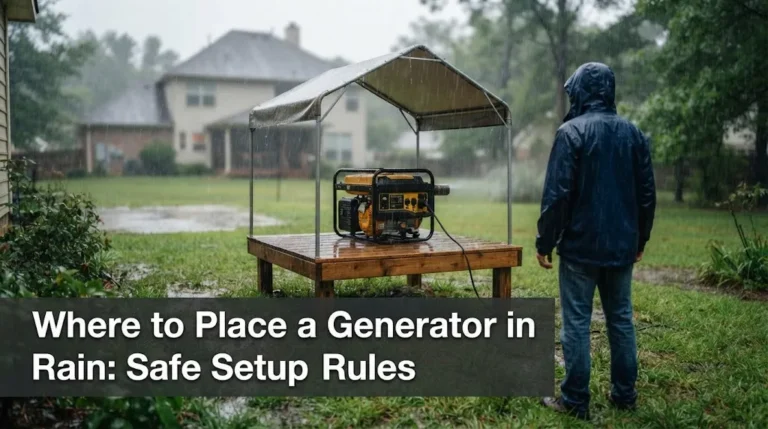
If you must run a generator during wet weather, the generator itself cannot be exposed to falling rain. There are two approaches that manufacturer guidance and safety agencies recognize.
Option 1: Wait for the rain to pass
This is the simplest and safest choice. The CPSC advises waiting for rain to stop before using a portable generator. If the power outage is not life-threatening and temperatures are manageable, waiting is the lowest-risk decision.
Option 2: Use a purpose-built running cover
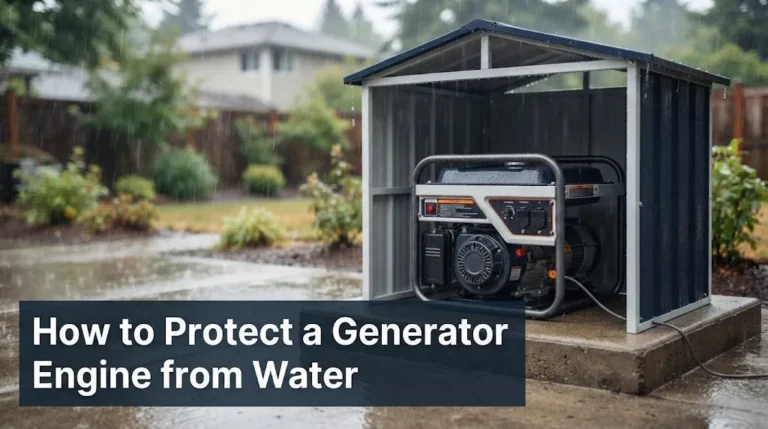
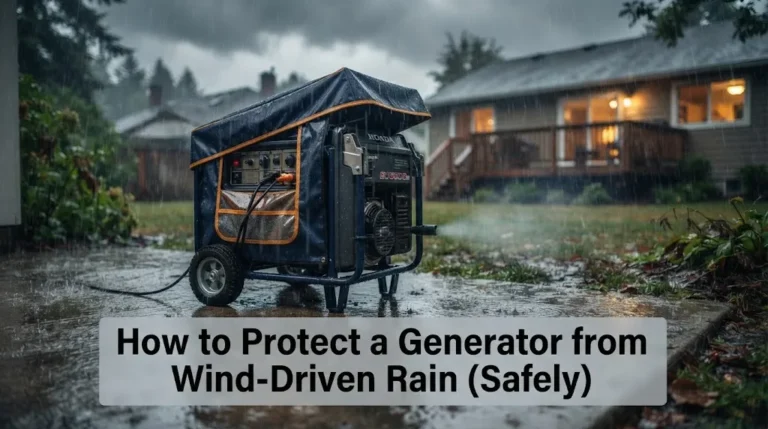
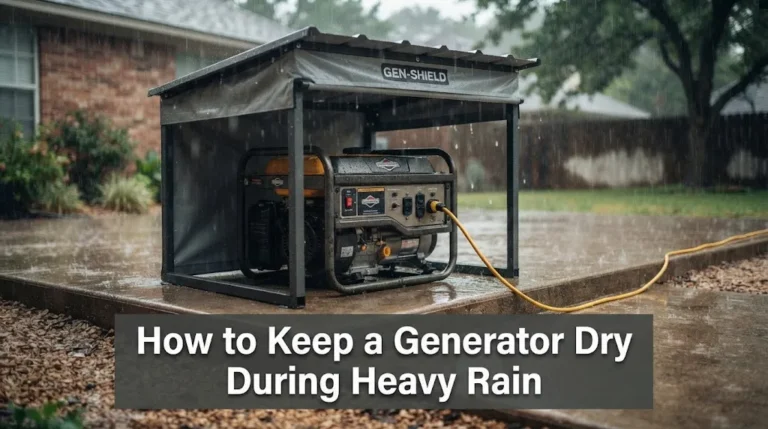
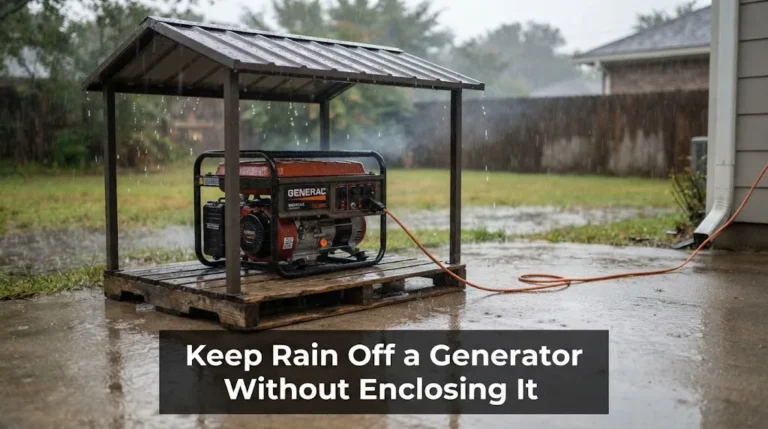
Generator running covers, sometimes called generator tents or storm shields, are designed to keep rain off the unit while allowing exhaust and cooling airflow. Champion Power Equipment sells Storm Shield covers that it rates for up to 12 inches of rain per day and winds up to 70 mph.
However, a running cover is only safe if the generator manufacturer permits its use. Generac’s guidance says to keep the generator dry and out of the rain, and does not endorse generic covers. Using an unapproved cover can trap heat, interfere with exhaust, or create a carbon monoxide hazard.
Warning
Never drape a tarp, plastic sheet, or storage cover over a running generator. Storage covers are for cold, turned-off units only. Wrapping a running generator traps engine heat, can melt wiring, and creates a fire risk. A running cover must be specifically designed for generator operation with proper ventilation.
Carbon Monoxide: The Risk That Rain Creates
The rain itself is not the only danger. When people try to protect a generator from rain, they sometimes move it into a garage, shed, or under a carport. This is extremely dangerous.
Portable generators produce carbon monoxide, an invisible and odorless gas that can build to lethal levels in minutes. FEMA and the CPSC both warn never to use a generator indoors, in a garage, basement, crawlspace, or any partially enclosed area.
Generac recommends running the generator at least 20 feet from doors, windows, and vents, with the exhaust pointed away from the building. If you cannot keep the generator dry while maintaining that clearance, the safer choice is to wait.
Practical Rain Protection Checklist
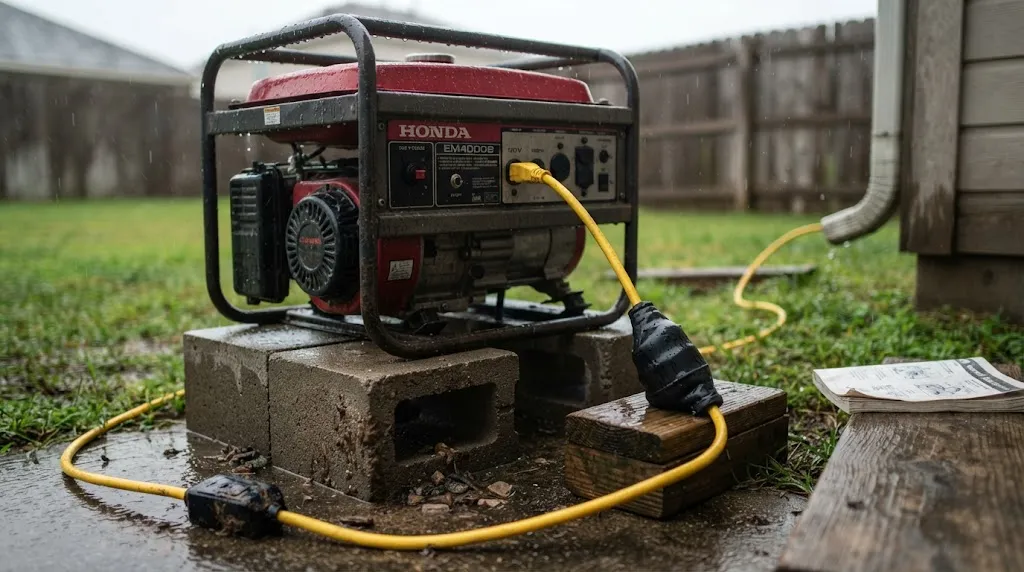
If you are preparing for a storm and want to keep your generator usable, these steps reduce risk without pretending the unit is waterproof.
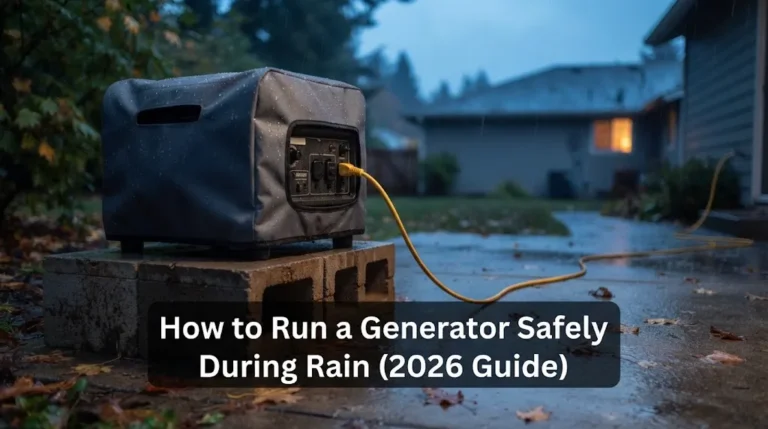
- Elevate the generator. Place it on concrete blocks, wooden boards, or a heavy rubber mat. Never let it sit in mud or a low spot where water pools.
- Form drip loops in cords. Let extension cords sag slightly below the outlet height before plugging them in. Water running down the cable will drip off the loop instead of entering the socket.
- Use GFCI protection. Plug into heavy-duty outdoor extension cords with built-in GFCI breakers. These trip instantly if moisture causes a current leak.
- Keep connections off the ground. Use weatherproof connection boots or elevated junction boxes for any cord joints outdoors.
- Check the manual. Read your specific generator’s owner’s manual for any wet-weather instructions. Some manufacturers permit specific accessories; others prohibit wet operation entirely.
When Rain Becomes a Safety Decision
There is no rain gauge reading that flips a portable generator from safe to unsafe. The safer way to think about it is this: if rain is actively falling on the generator’s electrical panel, it is not safe to run.
Light drizzle and heavy downpour both introduce moisture to live electrical components. The difference is speed, not principle. A generator that has been running in rain should be shut down, disconnected, and allowed to dry before the next use.
If you need backup power during a multi-day storm with continuous rain, a portable generator without a manufacturer-approved running cover is the wrong tool for the conditions. A battery-powered portable power station, which produces no exhaust and can be used in more sheltered locations when the manufacturer permits, may be a better fit for small loads like phones and lights. For larger home backup, a permanently installed standby generator with a sealed outdoor enclosure is designed for wet weather.
Frequently Asked Questions
Can a portable generator get wet while it is turned off?
A generator that is off and cool can tolerate some rain exposure, but prolonged wetness can cause rust and corrosion in the frame, fasteners, and internal components. Let it dry thoroughly before starting, and store it under cover when not in use.
Will a generator cover protect my unit in heavy rain?
Only a running cover specifically designed for generator operation is potentially safe. Storage covers and tarps must never be used on a running generator. Even with a running cover, follow the cover manufacturer’s wind and rain limits.
What happens if water gets into the alternator?
Water in the alternator can cause short circuits and damage the voltage regulator or other electrical components. If the unit was exposed to rain while running, shut it down and have it inspected before restarting.
Can I run a generator under a carport or open shed?
No. A carport or open shed is still a partially enclosed space where carbon monoxide can accumulate. Generators must run outdoors in an open area with exhaust directed away from buildings.
Do inverter generators handle rain better than open-frame generators?
Inverter generators are often more enclosed, but they are not inherently waterproof. Unless the manufacturer explicitly states a water resistance rating for a specific model, treat it the same as any portable generator: keep it out of direct rain.
How long should a generator dry before I use it again?
If the generator was exposed to rain while off, wipe down accessible surfaces and let it air dry in a well-ventilated area before starting. If it was running in rain, have it inspected by a qualified technician before the next use, especially if you noticed flickering power or tripped breakers.
Conclusion
Most portable generators are not built to withstand rain. Manufacturer guidance and federal safety agencies agree on the core rule: keep the unit dry, and never run it in wet conditions unless you have a running cover the generator maker explicitly approves.
The practical decision is straightforward. If rain is falling on the generator’s electrical panel, it is not safe to operate. Elevate the unit, use GFCI cords, form drip loops, and read your manual before the storm arrives. If the weather turns severe and continuous, waiting is almost always safer than improvising protection.

Hi, I’m Michael Turner. I own a generator workshop in the United States and founded HomeGeneratorBlog to share practical, hands-on guidance about generator installation, maintenance, troubleshooting, safety, and backup power solutions. My goal is to help homeowners make smarter, more confident decisions through clear and reliable information