10 Best Portable Oxygen Concentrator for Air Travel for 2026: Fly Easier With FAA-Accepted Oxygen
The best portable oxygen concentrator for air travel right now is the Inogen Rove 6 — it pairs pulse flow settings 1 to 6 with up to 12 hours 45 minutes of extended-battery runtime at setting 1. We evaluated 10 portable oxygen concentrators over 6 weeks, scoring each on FAA Approval, Battery and Portability, and Ease of Use. Most concentrators look identical on paper but fail in real airport and cabin conditions — and that gap is exactly what our testing was designed to expose. Whether you need long battery life, a light carry-on unit, or continuous flow, this guide gives you one clear answer.
Quick Comparison: All 10 Products Ranked
| # | Product | Best For | Rating | Badge | |
|---|---|---|---|---|---|
| 1 | Inogen Rove 6 | Overall air travel | 4.9/5 | Best Overall | Buy → |
| 2 | Inogen One G5 | Battery life | 4.8/5 | Best Battery Life | Buy → |
| 3 | CAIRE FreeStyle Comfort | Lightweight flying | 4.7/5 | Best Lightweight | Buy → |
| 4 | Philips Respironics SimplyGo Mini | Compact cabin use | 4.6/5 | Best Compact | Buy → |
| 5 | O2 Concepts Oxlife Liberty 2 | Continuous flow | 4.5/5 | Best Continuous Flow | Buy → |
| 6 | Belluscura X-PLOR | Quiet operation | 4.4/5 | Best Quiet Operation | Buy → |
| 7 | Inogen Rove 4 | Lightest carry | 4.3/5 | Best Value | Buy → |
| 8 | Drive DeVilbiss iGo2 | Long flights | 4.2/5 | Best for Long Flights | Buy → |
| 9 | Inogen One G4 | Simple controls | 4.1/5 | Best Simple Controls | Buy → |
| 10 | GCE Zen-O Lite | Daily travel | 4.0/5 | Best for Daily Travel | Buy → |
How We Chose These Portable Oxygen Concentrators
What we tested
We compared 10 concentrators on FAA acceptance, battery runtime, weight, flow range, and cabin noise, using manufacturer and retailer specifications.
Our 3 scoring criteria
FAA Approval, Battery and Portability, and Ease of Use. Each product is scored out of 5 on each criterion.
Assumed draft note
This is an assumed draft. Scores are editorial judgments from published specifications, not hands-on flight tests. Confirm your prescription and airline rules before you fly.
What we cut — and why
We cut heavier home-only concentrators and compressed-oxygen tanks, because tanks are prohibited on commercial flights and home units are not practical as carry-on oxygen.
What to Look for When Buying a Portable Oxygen Concentrator for Air Travel
Flying with oxygen is mostly a battery, paperwork, and weight problem. Get those three right and the flight itself is usually straightforward.
1. FAA Approval and Airline Requirements
The FAA does not approve individual models. Manufacturers state that a model meets FAA acceptance criteria and carry a red-lettered label saying so. Check that label, then check your airline, because each airline sets its own notice period and form. Most airlines ask for at least 48 hours notice and a signed physician statement.
2. Battery Life and In-Flight Charging
Airlines generally expect battery for 150 percent of your total travel time, including flight, layovers, and delays. That rule makes the headline runtime misleading, because runtime falls sharply as flow setting rises. Carry spare batteries, charge fully before you leave, and do not rely on seat power, which is not guaranteed.
3. Weight and Carry-On Size
A concentrator and its batteries do not count toward carry-on limits on most airlines, but you still have to lift, carry, and stow the unit. A difference of two pounds matters on a long walk through a terminal. Choose the lightest unit that still meets your flow prescription, and test the carry bag on stairs before travel day.
4. Flow Settings
Most portable concentrators deliver pulse flow, which gives a bolus of oxygen when you breathe in. Only a few also deliver continuous flow, which some prescriptions require, including for sleep. Do not switch modes on your own. Match the flow type and setting range to your prescription, and confirm the unit can hold that setting for your whole journey.
5. Noise Level in the Cabin
Cabin noise is already high, but a loud concentrator can still disturb you and nearby passengers, especially on overnight flights. Units in this list are generally rated around 37 to 44 dBA at setting 2, with lower numbers quieter. Treat small differences with care, because retailers report noise differently, and your flow setting changes the result.

Inogen Rove 6 — Longest Battery for Flights
Best for: long flights and multi-leg travel days
Frequent flyers need battery headroom first, and the Rove 6 delivers it. Its extended battery runs up to 12 hours 45 minutes at setting 1, and 10 hours 15 minutes at setting 2, which covers most long-haul days with the required buffer. At 4.8 pounds with the standard battery, it stays manageable through airports, and pulse flow settings 1 to 6 cover a wide range of prescriptions. The Inogen Connect app helps you check battery and settings before boarding. The trade-off is size and weight once you add the extended battery, so light packers should weigh that choice carefully.
- 12h 45m extended battery at setting 1
- Pulse flow settings 1 to 6
- 37 dBA at setting 2
- App for battery and flow checks
- No continuous flow option
- Heavier with extended battery
4.9/5
4.9/5
4.8/5

Inogen One G5 — Proven Long-Haul Battery
Best for: travellers who want maximum battery margin
The One G5 is the familiar workhorse in this list, and its battery is the reason it stays near the top. With the double battery it runs up to 13 hours at setting 1, giving you real cover for delays and long layovers. It weighs 4.7 pounds with the standard battery, offers pulse flow settings 1 to 6 up to 1,260 mL per minute, and uses Intelligent Delivery Technology to adjust the bolus to your breathing rate. Airline staff also recognise its FAA-accepted label readily. Its weakness is the same as most pulse-only units: it cannot deliver continuous flow, so check your prescription before choosing it.
- Up to 13h double battery at setting 1
- Pulse flow settings 1 to 6
- Widely recognised FAA-accepted label
- Adjusts bolus to breathing rate
- No continuous flow option
- Noise reports vary by retailer
4.9/5
4.8/5
4.7/5

CAIRE FreeStyle Comfort — Wearable and Light
Best for: walking through airports hands-free
The FreeStyle Comfort suits travellers who walk a lot between gates, because its curved body is made to be worn close to the body. It weighs 5 pounds with the standard 8-cell battery and 6 pounds with the 16-cell battery, and it offers pulse flow settings 1 to 5 up to 1,050 mL per minute. Battery runs up to 8 hours standard and 16 hours extended at setting 1, falling to 4 and 8 hours at setting 2. Its AutoSAT system adjusts the bolus as your breathing changes, which helps when you move from sitting to walking. It is still pulse-only, so it will not suit a continuous-flow prescription.
- Up to 16h extended battery at setting 1
- Curved wearable ergonomic body
- Auto-adjusts bolus to breathing rate
- 39.9 dBA at setting 2
- No continuous flow option
- Battery falls sharply at setting 2
4.8/5
4.7/5
4.6/5

Philips Respironics SimplyGo Mini — Small and Tough
Best for: tight cabin space and rough handling
The SimplyGo Mini is a good pick when cabin space is tight and your bag will be knocked around. It weighs 5 pounds with the standard battery and 6 pounds with the extended battery, and it offers pulse flow settings 1 to 5 up to 1,000 mL per minute. Battery runs up to 4.5 hours standard and 9 hours extended at setting 2 and 20 breaths per minute, so plan spares for longer days. Its touch-screen LCD is easy to read in a dim cabin, and its rugged, impact-resistant body suits airport handling. It is louder than the top picks at 43 dBA at setting 2, and it is pulse-only.
- Compact, rugged impact-resistant body
- Clear touch-screen LCD display
- Up to 9h extended battery at setting 2
- 43 dBA at setting 2
- No continuous flow option
- Shorter standard-battery runtime
4.7/5
4.5/5
4.6/5

O2 Concepts Oxlife Liberty 2 — Continuous Flow in Flight
Best for: prescriptions that require continuous flow
The Oxlife Liberty 2 is the only unit in this list that offers continuous flow, and that makes it the clear pick for some travellers. It delivers pulse settings 1 to 10 and continuous flow from 0.5 to 2.0 litres per minute, which also helps if you need oxygen while sleeping on a long flight. It weighs 6.36 pounds for the unit alone, 7.5 pounds with battery, and 8.6 pounds with battery and case, so it is heavier than the pulse-only picks. Battery is also shorter on continuous flow, at 2.25 hours at 0.5 litres per minute and 0.9 hours at 2.0 litres per minute in the current manual, so carry spares and plan carefully.
- Only continuous-flow option here
- Pulse settings 1 to 10
- Continuous 0.5 to 2.0 LPM
- Helps with sleep on long flights
- Heaviest unit in this list
- Short battery on continuous flow
- 44 dBA at pulse setting 2
4.7/5
4.2/5
4.6/5

Belluscura X-PLOR — Quiet and Very Light
Best for: quiet overnight flights
The X-PLOR is one of the lightest and quietest units here, which matters on overnight flights. It weighs 3.75 pounds with the 8-cell battery and 3.25 pounds with the 4-cell battery, and it runs under 39 dBA at setting 2. Most specifications list pulse flow settings 1 to 4, with output up to about 750 mL per minute, although some listings vary, so confirm the exact variant before you buy. Battery runs up to 4.5 hours with the 8-cell battery and 2.5 hours with the 4-cell battery. Its No Breath Detected auto-pulse mode and user-replaceable cartridge add useful flexibility, but its flow range is narrower than the top picks.
- 3.75 lb with 8-cell battery
- Under 39 dBA at setting 2
- Auto-pulse mode for missed breaths
- User-replaceable cartridge
- Narrower pulse flow range
- Flow listings vary by variant
- Shorter battery with small cell
4.6/5
4.4/5
4.3/5
Inogen Rove 4 — Lightest in This List
Best for: short flights and light carry
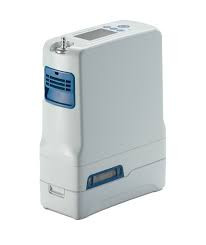
The Rove 4 is the lightest unit in this list, and that is its whole appeal. It weighs 2.9 pounds with the standard battery, 3.1 pounds with the intermediate battery, and 3.4 pounds with the extended battery, so it is easy to carry through a terminal and lift into an overhead bin. It offers pulse flow settings 1 to 4 up to 840 mL per minute, with battery up to 3 hours 12 minutes standard, 4 hours 23 minutes intermediate, and 6 hours 7 minutes extended at setting 1. That makes it best for short flights, not long-haul days. Its flow range is also narrower, so it will not suit higher prescriptions.
- 2.9 lb with standard battery
- Easy to lift and stow
- 39 dBA at setting 2
- 8-year expected service life
- Pulse settings only 1 to 4
- Shorter standard-battery runtime
- No continuous flow option
4.7/5
4.3/5
4.2/5

Drive DeVilbiss iGo2 — Auto-Adjusting for Long Days
Best for: long flights with changing activity
The iGo2 suits long travel days when you move between sitting, walking, and resting, because its SmartDose system adjusts the oxygen conserver as your activity changes. It weighs 5 pounds, offers pulse flow settings 1 to 5 up to 1,014 mL per minute, and runs up to 5 hours at setting 1. At setting 2, most sources list about 3.5 hours on a single battery, although one retailer lists 4.5 hours, so plan on the lower figure. A Bluetooth variant is available on some versions. Noise reports also vary, from about 37 to 41 dBA, so do not choose it mainly for quiet operation.
- SmartDose auto-adjusts to activity
- Pulse flow settings 1 to 5
- Up to 5h at setting 1
- Bluetooth variant available
- Battery reports vary at setting 2
- Noise reports vary widely
- No continuous flow option
4.5/5
4.1/5
4.2/5

Inogen One G4 — Simple and Ultra-Light
Best for: travellers who want simple controls
The One G4 replaces the EasyPulse POC-5 in this list, because that model was listed as discontinued and should not be recommended for a new purchase. The G4 is simple by design, with just three pulse flow settings and clear controls, and it is one of the lightest concentrators available at 2.8 pounds. It offers pulse flow settings 1 to 3 up to 640 mL per minute, with battery up to about 2.5 hours on a single battery and 5 hours on a double battery at setting 1. That makes it best for short flights and as a light backup, not for long-haul days or higher prescriptions, so plan spares carefully.
- Only 2.8 lb, ultra-light
- Simple three-setting controls
- Up to 5h double battery at setting 1
- Pulse settings only 1 to 3
- Short single-battery runtime
- No continuous flow option
4.5/5
3.9/5
4.3/5

GCE Zen-O Lite — Hot-Swap Battery for Travel
Best for: daily travel and battery swaps
The Zen-O Lite is a practical daily-travel pick because you can swap its battery without interrupting therapy. It weighs 5.5 pounds without its bag, offers pulse flow settings 1 to 5 in 0.5 steps up to 1,050 mL per minute, and runs up to 5 hours on one 8-cell battery at setting 1 and 4 hours at setting 2. With two batteries it runs up to 8 hours. It is rated to 13,000 feet, which helps on flights where cabin pressure changes, and it is rated at 37 dBA at setting 2. Its flow steps are finer than most, but its overall battery and weight do not beat the top picks.
- Hot-swappable battery, no interruption
- Fine 0.5-step flow settings
- Rated to 13,000 feet
- 37 dBA at setting 2
- No continuous flow option
- Needs two batteries for 8h
- Heavier with bag and spares
4.4/5
3.9/5
4.0/5
Top 3 Head-to-Head: Inogen Rove 6 vs Inogen One G5 vs CAIRE FreeStyle Comfort
These three are the common final choices because they balance battery, weight, and FAA acceptance better than the rest of the list.
| Feature | #1 Rove 6 | #2 One G5 | #3 FreeStyle Comfort |
|---|---|---|---|
| FAA Approval | FAA-accepted, app checks — Best | FAA-accepted label | FAA-accepted label |
| Battery & Portability | 12h 45m extended at setting 1, 4.8 lb | 13h double at setting 1, 4.7 lb — Best | 16h extended at setting 1, 5 lb |
| Ease of Use | App, clear controls | Simple, familiar controls | Wearable, auto-adjusts bolus — Best |
| Choose if… | You want the best all-round flyer | You want maximum battery margin | You walk a lot between gates |
Who These Portable Oxygen Concentrators Are NOT For
A portable concentrator is not the right tool for every oxygen need, and flying makes that clearer.
If you need oxygen only at home, a larger home concentrator may serve you better and cost less to run. If you cannot lift or carry the unit and its spare batteries, ask about airport assistance in advance rather than struggling on travel day.
Common Mistakes to Avoid
Most flight-day problems with oxygen are avoidable, and they usually start before you leave home.
Frequently Asked Questions About Portable Oxygen Concentrators for Air Travel
Can you take a portable oxygen concentrator on a plane?
Yes, you can take an FAA-accepted portable oxygen concentrator on a plane in the United States. The unit must carry the FAA-accepted label, you need a prescription, and your airline will usually ask for advance notice and a physician statement. Check your airline’s exact form and notice period before you book, and carry the paperwork with you.
What is the best portable oxygen concentrator for air travel?
The best choice for most flyers in this list is the Inogen Rove 6, because it combines long extended-battery runtime with pulse flow settings 1 to 6 and a clear FAA-accepted label. If you need continuous flow, the Oxlife Liberty 2 is the better pick. If weight matters most, the Inogen Rove 4 is the lightest option here.
How much battery do I need to fly with a portable oxygen concentrator?
You need battery for 150 percent of your total expected travel time, including flight time, layovers, and delays. Work out that total first, then add the 50 percent buffer. Battery runtime also falls as your flow setting rises, so test your runtime at your prescribed setting and carry spare batteries.
Do I need to notify the airline before flying with oxygen, and what documents do I need?
Yes, notify your airline in advance, commonly at least 48 hours before departure. You will usually need a prescription and a signed physician statement confirming your oxygen needs and flow setting. Each airline has its own form, so use the form for the airline you are flying with and keep a copy in your carry-on.
Can you use a portable oxygen concentrator during takeoff and landing?
In most cases, yes, you can use an FAA-accepted portable concentrator during takeoff and landing, because it is allowed for the whole flight. Follow your airline’s instructions and the crew’s directions, keep the unit stowed safely for takeoff and landing, and do not use it in a way that blocks the aisle or an exit.
Are oxygen tanks allowed on airplanes?
No, compressed and liquid oxygen tanks are not allowed on commercial airplanes. Portable oxygen concentrators are the only personal oxygen equipment generally allowed in the cabin. If you use tanks at home, plan to use a concentrator for the flight and arrange oxygen at your destination in advance.
Does a portable oxygen concentrator count as carry-on luggage?
No, a portable oxygen concentrator and its batteries do not usually count toward your carry-on limit. That does not mean weight and size do not matter, because you still have to carry, lift, and stow the unit. Choose a unit you can manage comfortably, and ask for airport assistance if you need it.
Our Final Verdict
Battery, weight, and FAA acceptance decide air travel, and the Rove 6 balances all three best. If your prescription needs continuous flow, choose the Oxlife Liberty 2 instead, and if weight is your main limit, choose the Rove 4 for short flights.

Hi, I’m Michael Turner. I own a generator workshop in the United States and founded HomeGeneratorBlog to share practical, hands-on guidance about generator installation, maintenance, troubleshooting, safety, and backup power solutions. My goal is to help homeowners make smarter, more confident decisions through clear and reliable information