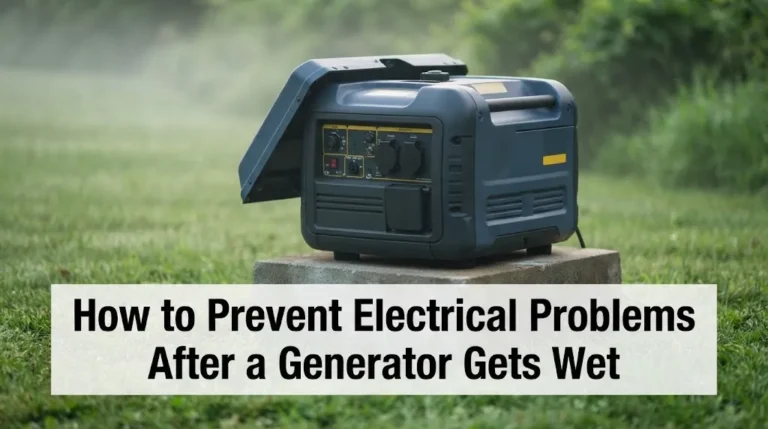
How to Ventilate a Generator Shelter: Complete Cross Airflow Guide
Quick Answer
To provide effective cross ventilation for a generator shelter, you need a dedicated low-level fresh air intake vent on one side and a high-level exhaust vent on the opposite side. This configuration leverages the natural stack effect and wind pressure to continuously flush out exhaust heat and prevent dangerous carbon monoxide accumulation.
Why Generator Shelters Require Specialized Ventilation
Portable and standby generators produce massive amounts of heat and toxic exhaust gasses, primarily carbon monoxide (CO). When placed inside a custom enclosure, shed, or dedicated shelter, airflow restriction quickly leads to engine overheating, thermal shutdown, and severe safety risks.
Without proper cross ventilation, hot air recirculates within the enclosure. As ambient temperatures inside the shelter rise, the generator’s alternator efficiency drops, engine cooling fins become less effective, and electronic components risk premature failure. More importantly, stagnant air pockets can allow carbon monoxide to pool or seep toward structural cracks, endangering anyone nearby.
Cross ventilation solves these issues by creating a continuous, unidirectional sweep of ambient air across the unit. Cool air enters near the base, absorbs heat as it passes the engine block and alternator, and exits through high-level vents driven by thermal buoyancy and external wind flow.
Understanding the Stack Effect and Wind Dynamics
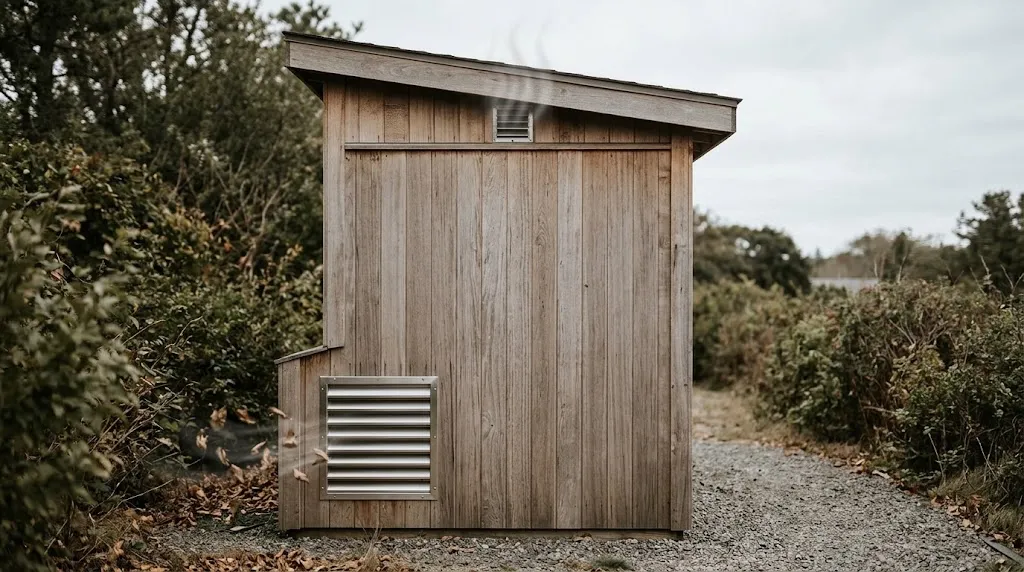
Designing an effective shelter ventilation system relies on two physical principles: wind pressure and the stack effect.
The stack effect occurs because hot air is less dense than cool air. As the generator runs, it heats the air inside the enclosure, causing it to rise naturally toward the ceiling. Placing exhaust vents high on the shelter wall or roof allows this buoyant hot air to escape without requiring mechanical assistance.
Simultaneously, exterior wind creates positive pressure on the windward side of a shelter and negative pressure (suction) on the leeward side. Positioning your intake vents facing prevailing winds and exhaust vents on the opposite or leeward side maximizes airflow velocity through the shelter.
| Vent Type | Ideal Placement | Primary Function |
|---|---|---|
| Low-Level Intake | Lower third of the wall, facing prevailing wind | Pulls dense, cool ambient air into the enclosure at engine level. |
| High-Level Exhaust | Upper wall or roof on the opposite side | Allows rising heat and expelled exhaust to escape via thermal buoyancy. |
Calculating Vent Sizing and Free Air Area
A common mistake in generator shelter construction is installing decorative louvers that look adequate but severely restrict airflow. Generators require specific net free area (NFA) vent sizing to breathe and cool properly.
Net free area is the total unobstructed opening through which air can pass, accounting for the physical blockage caused by louver blades, insect screens, and protective wire mesh. Standard insect mesh can reduce airflow capacity by up to 40 percent.
Consult your generator manufacturer’s owner manual for specific combustion and cooling air requirements, typically measured in cubic feet per minute (CFM). As a general baseline, most portable generators require a minimum of 1 to 2 square feet of unobstructed intake and exhaust vent area. Larger standby units require significantly more space, often necessitating motorized louvers tied into the generator’s control panel.
Tip
When sizing your louvers, always choose models with a high free-area percentage (usually 50% to 60% or greater) and subtract the surface area blocked by frames and hardware.
Step-by-Step Guide to Designing and Installing Shelter Vents
Implementing a reliable cross-ventilation system requires careful layout planning before cutting structural panels.
- Map Airflow Paths: Identify the orientation of your shelter relative to prevailing seasonal winds. Ensure intake vents face the windward direction and exhaust vents open away from living areas, windows, and doors.
- Align with Generator Openings: Position the low-level intake vent directly aligned with the generator’s alternator and engine intake side to supply fresh air where cooling is most critical.
- Mark Vent Openings: Trace your vent frames onto the shelter walls, keeping the intake low to the ground and the exhaust near the peak or upper ceiling line on the opposite wall.
- Cut and Frame Openings: Use a reciprocating saw or circular saw to cut the openings. Frame the interior perimeter with 2×4 lumber to restore structural integrity to the wall studs.
- Install Weather-Resistant Louvers: Mount exterior weather louvers with integrated rain baffles to prevent driving rain, snow, and debris from blowing directly onto the electrical alternator windings.
- Add Protective Hardware Cloth: Install 1/4-inch galvanized hardware cloth behind the louvers to block rodents and larger pests while preserving maximum airflow.
Managing Exhaust Gas and Direct Ducting
Cross ventilation cools the shelter, but it does not replace proper engine exhaust management. Engine exhaust fumes must be expelled safely outside the enclosure entirely.
Never rely solely on shelter cross-ventilation to dilute raw engine exhaust. Install a stainless steel, high-temperature exhaust extension kit that routes the muffler output through a dedicated, fire-rated thimble in the wall.
Ensure a minimum clearance of 12 inches between hot exhaust piping and any combustible wood, vinyl siding, or insulation. Flexible metal exhaust connectors must allow for engine vibration without placing shear stress on the exhaust manifold.
Warning
Never run a generator inside a completely sealed box or garage without verified mechanical ventilation. Carbon monoxide is odorless, colorless, and fatal within minutes.
When to Use Mechanical Ventilation Assistance
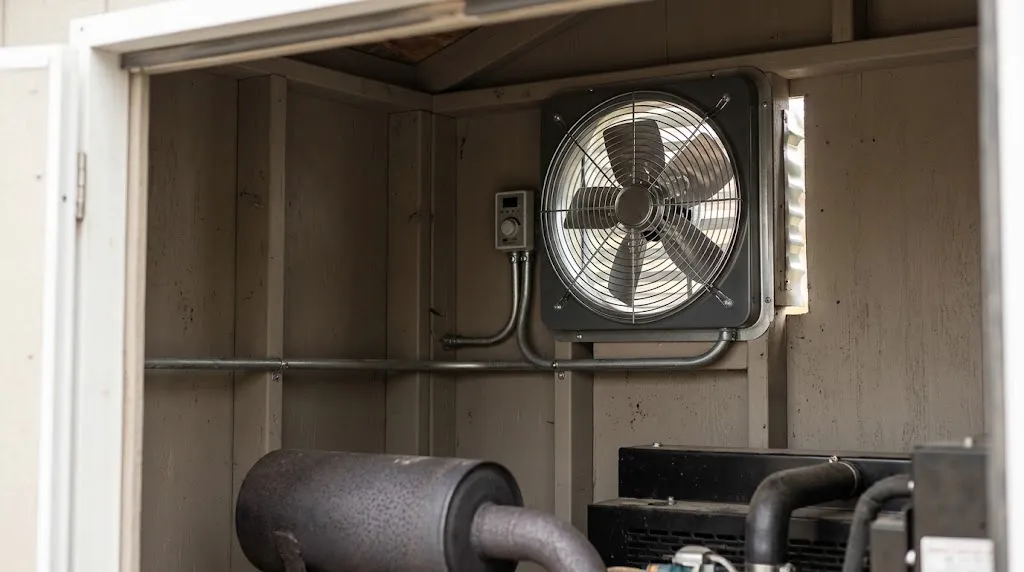
Passive cross ventilation relies entirely on natural wind and thermal lift. In certain installations, passive airflow is insufficient to maintain safe operating temperatures.
You should consider adding thermostatically controlled exhaust fans if:
- The generator shelter is enclosed on three or more sides with minimal open yard wind.
- Ambient summer temperatures frequently exceed 90°F in your region.
- Your generator runs under heavy, continuous electrical load for extended periods.
- The shelter lacks sufficient vertical height to generate an effective stack effect.
When installing electric ventilation fans, wire them to a snap-disc thermostat set to activate around 100°F. Ensure the fan’s CFM rating exceeds the generator manufacturer’s cooling air specification to maintain positive airflow displacement.
Related Product
Weatherproof Generator Shelter Louvers and Intake Vents
Durable aluminum exterior louvers with built-in rain guards and insect screening protect your enclosure while maintaining high net free airflow.
As an Amazon Associate, we earn from qualifying purchases.
Frequently Asked Questions
Can I use standard household gable vents for a generator shelter?
Standard residential gable vents often feature fine insect screening and louvers that restrict up to 60% of airflow. Generator shelters require high-flow industrial louvers specifically rated for heavy equipment ventilation to prevent overheating.
How do I keep rain from blowing into the intake vents during severe storms?
Use louvered vents with downward-slanted blades and integrated water baffles. You can also construct an exterior baffle wall or cowl hood that deflects horizontal driving rain while allowing unrestricted lateral air intake.
Should generator vents remain open year-round?
In cold winter climates, leaving large vents wide open can cause freezing temperatures inside the shelter, affecting battery voltage and cold-weather starting. Install adjustable, manually operated damper shutters or insulated covers that can be partially closed when the generator is idle in sub-freezing weather.
Does generator cross ventilation increase noise levels outside the shelter?
Yes, open louvers allow engine noise to escape more easily than a solid wall. If noise is a concern in residential neighborhoods, install acoustic sound-attenuating baffles or an offset labyrinth vent design that traps sound waves while permitting smooth airflow.
What happens if my generator shelter intake is too small?
An undersized intake creates a negative pressure vacuum inside the shelter. This starves the engine of combustion oxygen, reduces cooling fan efficiency, causes fuel mixture imbalances, and leads to rapid engine overheating and thermal shutdown.
How far off the ground should the low-level intake vent be placed?
Position the lower intake vent approximately 6 to 12 inches off the ground level. This height prevents ground-level dirt, leaves, and blowing snow from clogging the opening while keeping the cool air stream directed straight at the lower engine block and alternator.
Conclusion
Providing effective cross ventilation for a generator shelter is a critical step in ensuring reliable backup power performance and long-term equipment safety. By balancing a low-level fresh air intake with a high-level exhaust vent, you maintain continuous thermal regulation and prevent hazardous heat buildup. Always verify louver free-area sizing against your generator manufacturer specifications and keep engine exhaust safely ducted outside the enclosure to protect both your equipment and your home.
Key Insight
Proper shelter ventilation protects your generator investment from thermal degradation while ensuring toxic exhaust gasses are never trapped near structural walls.

Hi, I’m Michael Turner. I own a generator workshop in the United States and founded HomeGeneratorBlog to share practical, hands-on guidance about generator installation, maintenance, troubleshooting, safety, and backup power solutions. My goal is to help homeowners make smarter, more confident decisions through clear and reliable information