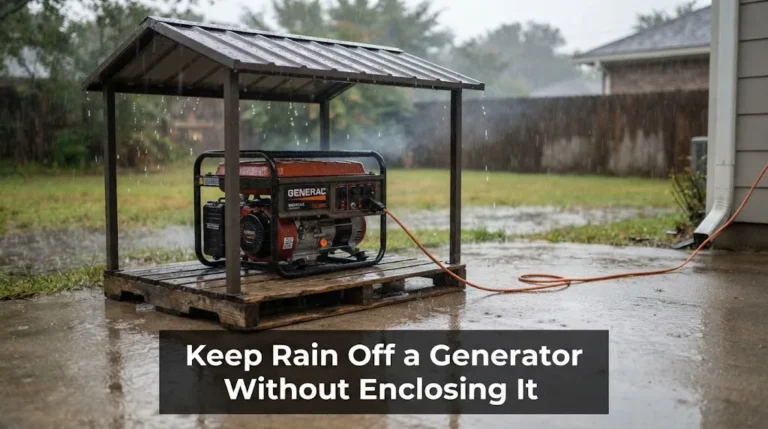
What to Use to Cover a Generator in the Rain Safely
Quick Answer
You can use a dedicated heavy-duty generator cover, a weighted waterproof tarp, or place the generator under a temporary canopy, slanted shelter, or open-sided structure. Never cover a running generator directly with plastic wrap, blankets, or tarps touching the hot exhaust, and always ensure adequate ventilation to prevent carbon monoxide poisoning and electrical shock.
Why Protecting Your Generator From Rain Matters
Rain and portable generators create a severe safety hazard if moisture reaches electrical outlets, control panels, or internal windings. Water intrusion can cause short circuits, permanent alternator damage, or dangerous electrical shocks to anyone operating the unit.
At the same time, operating a generator requires massive airflow for combustion and cooling. Covering a generator incorrectly restricts exhaust clearance or traps lethal carbon monoxide gas, making improper weatherproofing just as dangerous as direct exposure to water.
Effective Options for Covering a Generator in the Rain
Choosing the right shelter depends on whether your generator is running or stored, how severe the weather is, and whether you need portable or permanent protection.
1. Custom Weatherproof Generator Tents and Covers
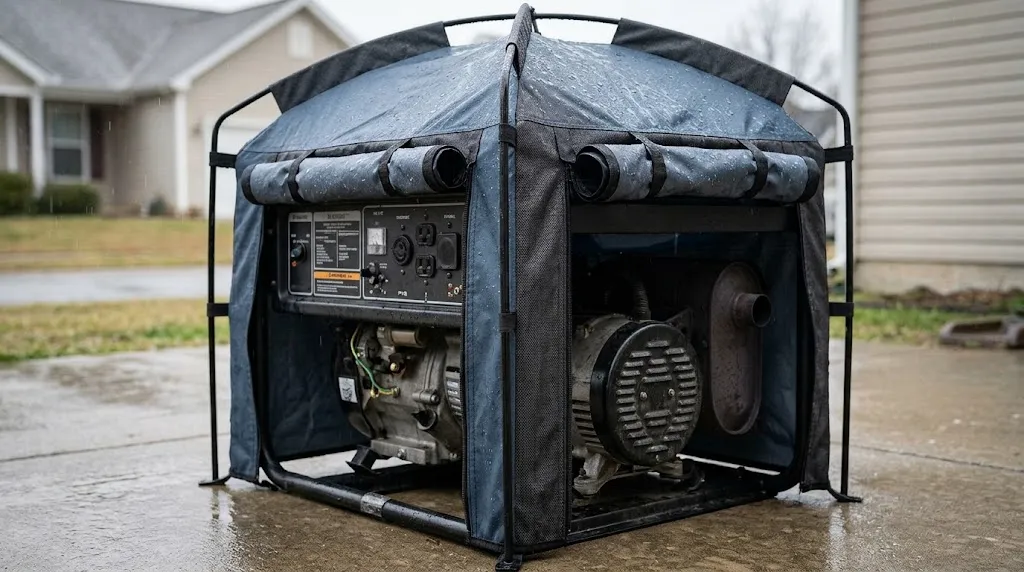
Specially engineered generator tents feature a skeletal frame that fits over the running unit, keeping heavy rain off the electrical panel while leaving the exhaust side completely open. These covers are constructed from flame-retardant, waterproof materials designed to withstand wind and severe storms without collapsing against hot engine components.
2. Open-Sided Canopies and Pop-Up Shelters
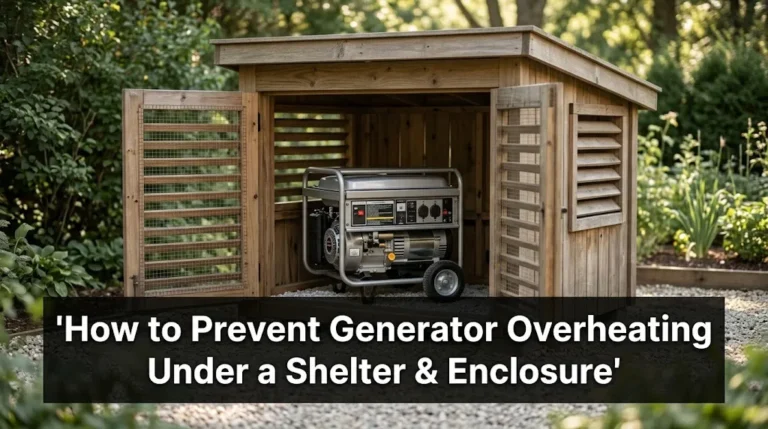
A standard pop-up canopy or a small lawn shed can shelter a generator effectively during an outage. Position the canopy at least 15 to 20 feet away from windows, doors, and vents to prevent exhaust fumes from entering living spaces. Leave all sides open or raised to allow continuous cross-ventilation.
3. Slanted DIY PVC or Wood Frames
You can construct a simple, open-sided lean-to using exterior-grade plywood or PVC pipes covered with heavy-duty vinyl. Ensure the roof slopes away from the exhaust and that the structure stands far enough off the ground and away from the unit so that hot metal parts never make direct contact with the shelter material.
Warning
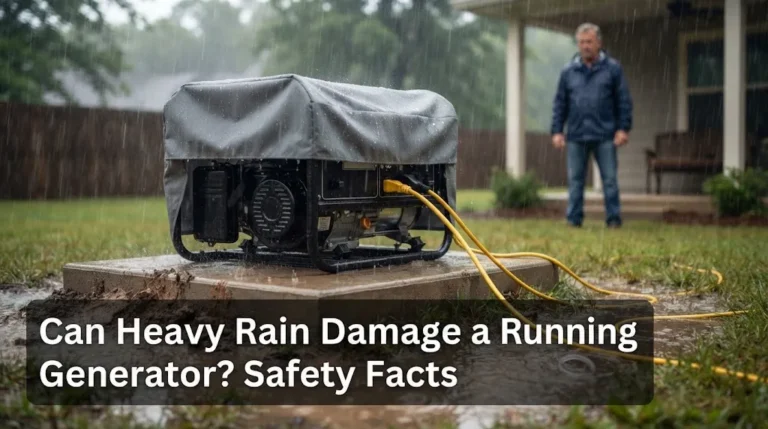
Never drape a standard plastic tarp directly over a running generator. Tarps can melt against hot mufflers, restrict critical airflow, and trap dangerous carbon monoxide gas near the engine housing.
Critical Safety Rules for Wet-Weather Generator Operation
Operating power equipment in wet conditions requires strict adherence to electrical and ventilation safety protocols to protect your home and family.
- Maintain Distance: Always operate portable generators outdoors, maintaining a distance of at least 15 to 20 feet from your home with the exhaust pointing away from all doors and windows.
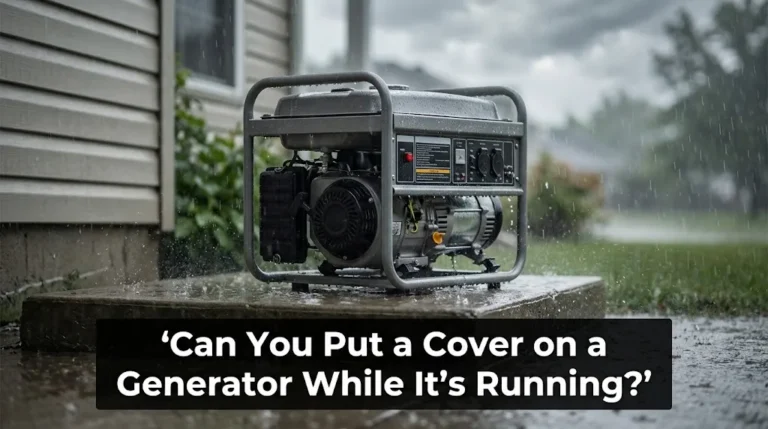
- Elevate the Unit: Place the generator on a dry, elevated surface such as concrete blocks or a wooden pallet to prevent pooling water from submerging the wheels, frame, or electrical grounding points.
- Use Outdoor-Rated Cords: Connect appliances using heavy-duty, outdoor-rated extension cords with proper wire gauges that match your generator’s amperage output.
- Never Touch With Wet Hands: Always dry your hands thoroughly before plugging cords into the generator panel or flipping circuit breakers.
What to Avoid When Improvising Rain Protection
Homeowners facing sudden storms sometimes attempt quick fixes that compromise safety. Avoid these common mistakes:
- Running generators inside garages or sheds: Even with open doors, enclosed spaces rapidly accumulate lethal concentrations of carbon monoxide.
- Placing covers over the exhaust: Blocking the muffler restricts exhaust flow, causing the engine to stall, overheat, or create a severe fire hazard.
- Using ungrounded connections: Wet ground increases shock risks; verify that your setup complies with local electrical grounding recommendations.
Tip
If heavy winds accompany the rain, secure your generator shelter using ground anchors or heavy weights to prevent the structure from blowing over and exposing the running unit.
Protecting Your Generator During Storage
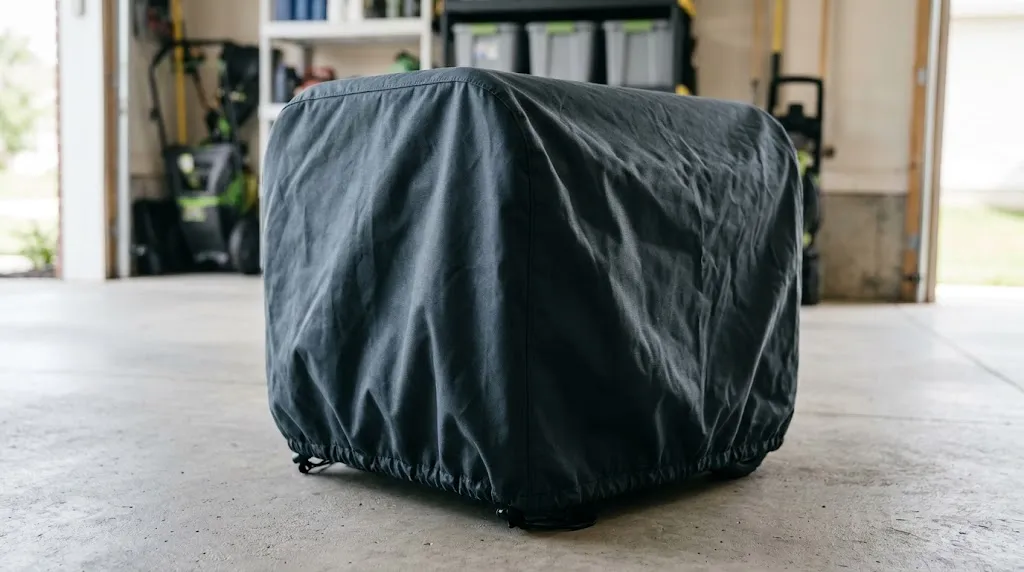
When the storm passes and the generator is no longer needed, allow the engine to cool completely before applying a full storage cover. Long-term storage covers should fit snugly to keep out dust, humidity, and condensation, preventing rust on the alternator windings and frame components during the off-season.
Related Product
Weatherproof Generator Tent
A breathable, heavy-duty running cover protects your portable generator from heavy rain and snow while maintaining proper clearance for exhaust and ventilation.
As an Amazon Associate, we earn from qualifying purchases.
Frequently Asked Questions
Can I run a portable generator directly in the rain without a cover?
Running a generator directly in heavy rain is dangerous because moisture can enter electrical outlets and control panels, increasing the risk of short circuits and electrical shock. Always use a protective canopy or running tent designed to shield electrical components while keeping the exhaust clear.
Why is covering a running generator with a standard plastic tarp dangerous?
Standard plastic tarps lack heat resistance and can easily melt against a hot engine muffler, creating a fire hazard. Furthermore, flat tarps trap heat, restrict necessary airflow, and can accumulate carbon monoxide gas around the unit.
How far away from my house should a covered generator be placed?
You should place a portable generator at least 15 to 20 feet away from your home, with the exhaust pointing away from doors, windows, and air intake vents to prevent deadly carbon monoxide from drifting indoors.
What should I do if my generator gets soaked during a storm?
Shut down the generator immediately if water floods the electrical panel or engine housing. Allow the unit to dry completely in a safe, sheltered outdoor area, and have a qualified technician inspect the electrical windings before restarting it.
Can I build my own DIY generator enclosure for rainy weather?
Yes, you can build a simple open-sided wooden or PVC shelter, provided it allows ample cross-ventilation on all sides and keeps the hot exhaust completely clear of any flammable building materials.
How do I protect my generator when it is not running?
When the generator is powered off and completely cooled down, install a fitted, weather-resistant storage cover to protect against rain, dust, and humidity, and store the unit in a dry garage or shed.
Conclusion
Protecting your generator from rain requires balancing weather defense with critical ventilation and exhaust clearance. Utilizing a specialized running tent, an open-sided canopy, or an elevated custom shelter ensures your equipment stays dry and operational during severe weather without introducing carbon monoxide or fire risks. Prioritize safe operating distances and proper electrical setup whenever you run backup power outdoors.

Hi, I’m Michael Turner. I own a generator workshop in the United States and founded HomeGeneratorBlog to share practical, hands-on guidance about generator installation, maintenance, troubleshooting, safety, and backup power solutions. My goal is to help homeowners make smarter, more confident decisions through clear and reliable information