Can You Use an Inverter Generator for Camping? Quiet Power, Real Rules & Smart Sizing
Quick Answer
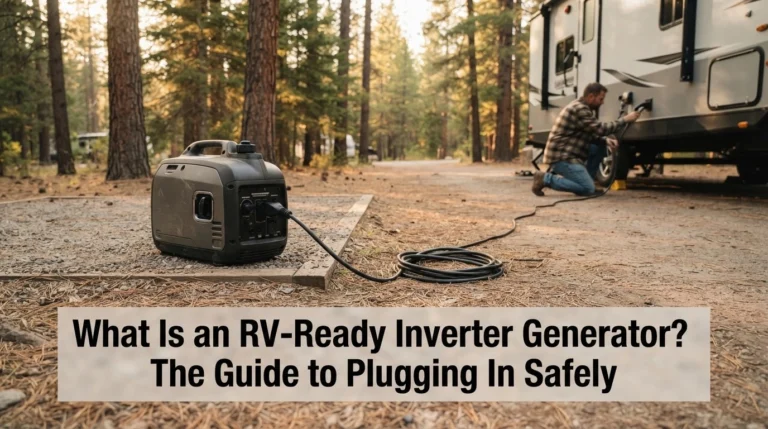
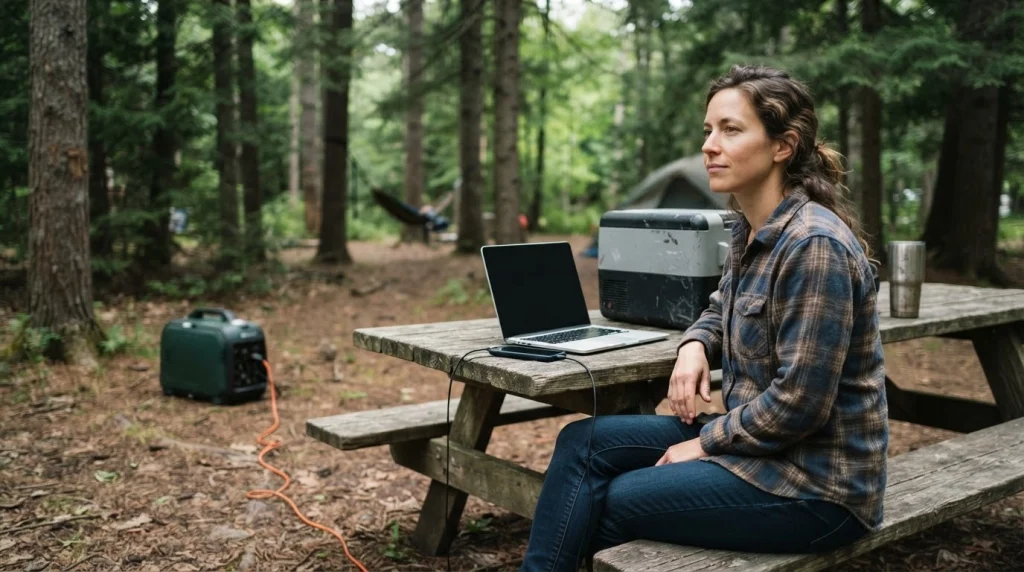
Yes, you can use an inverter generator for camping. It is the best fit for most campsites because it is quiet, light, fuel-efficient, and safe for phones, laptops, and other sensitive electronics, as long as you size it to your loads, follow campground rules, and run it outdoors away from tents and RVs. For RV trips, start with portable generators for RV camping to match power, weight, and outlet needs before you buy.
The short version for campers
- Best size range: Most tent and RV campers do well with 2,000 to 3,500 running watts.
- Quiet matters most: Look for 50 to 60 decibels at quarter load, measured at 23 feet.
- Clean power: Pure sine wave output protects laptops, CPAP machines, and phone chargers.
- Never run indoors: Always place it outside, downwind, at least 20 feet from tents, RVs, and people.
- Check the rules first: Many campgrounds limit generator hours, noise, and placement.
If you only remember one thing
- Add up running watts, then add the highest starting watts. That total is your real size.
I’ve run an inverter generator beside a tent, inside a truck bed at a trailhead, and next to an RV on a hot July night. It kept the lights on, the fridge cold, and the coffee hot without waking the whole loop.
It also taught me a hard lesson early on. I once bought a cheap open-frame unit because the price looked right, then spent a whole weekend apologizing to neighbors and refueling every few hours.
This guide goes deeper than a yes-or-no answer. You’ll learn how inverter generators work, when campgrounds allow them, what size you need, what they can run, how to set one up safely, and how to pick the right model for tent camping, car camping, and RV camping in 2026.
In This Guide
- What Makes an Inverter Generator Different?
- Are Inverter Generators Allowed at Campgrounds?
- What Size Inverter Generator Do You Need for Camping?
- What Can You Run on an Inverter Generator While Camping?
- Inverter vs. Conventional Generator for Camping
- How Do You Set Up an Inverter Generator Safely at Camp?
- How to Choose the Best Inverter Generator for Camping
- Frequently Asked Questions
What Makes an Inverter Generator Different?
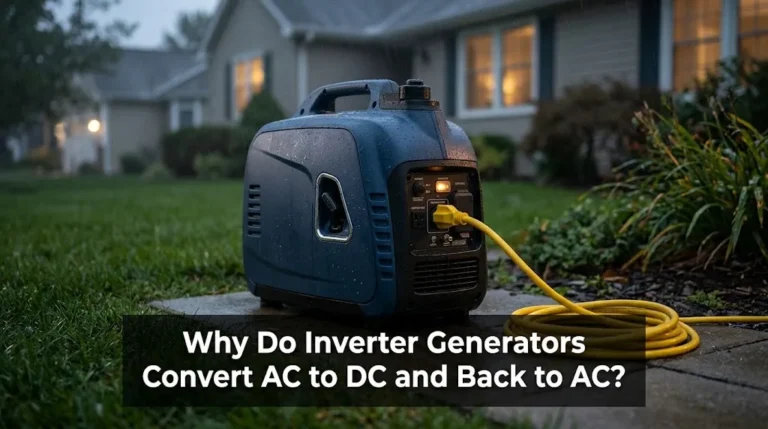
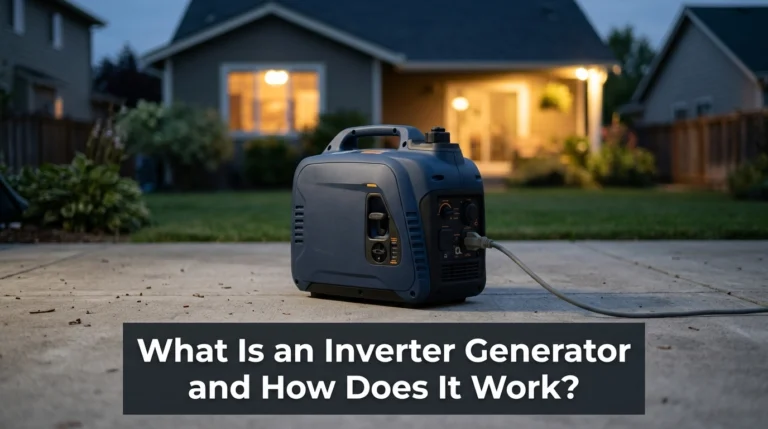
An inverter generator makes clean, stable power by converting raw AC power to DC, then back to AC again. That extra step smooths voltage and frequency, so sensitive electronics get steady power.
A conventional generator ties engine speed directly to output frequency. It must run at full speed even for a small load, which wastes fuel and makes more noise.
Why does clean power matter at a campsite?
Clean power matters because camp gear is full of sensitive electronics now. Phones, laptops, CPAP machines, cameras, and portable fridges all prefer stable voltage.
Most quality inverter generators advertise total harmonic distortion, or THD, below 3%. That low THD is the simplest sign the power is safe for electronics.
What is eco mode, and should you use it while camping?
Eco mode lets the engine slow down when the load is light. It saves fuel, cuts noise, and stretches a tank through a long evening.
Use eco mode for lights, charging, and a small fridge. Turn it off when you start an air conditioner, a microwave, or any motor that needs a surge.
I learned that the hard way on a summer trip. My fridge cycled on while eco mode was active, the generator bogged down, and the breaker tripped at 2 a.m.
- Quieter by design: Enclosed cases and slower engine speeds cut sound at the source.
- Lighter to carry: Many 2,000-watt models weigh 40 to 55 pounds, so one person can lift them.
- Better fuel use: Throttle control matches engine speed to load, not the other way around.
- Parallel ready: Many models link together for double power when you need it later.
Section Takeaway: An inverter generator is not just a smaller generator. It is a quieter, cleaner, and more fuel-efficient power source built for campsites, RVs, and sensitive electronics.
Are Inverter Generators Allowed at Campgrounds?
Yes, most campgrounds allow inverter generators, but almost none allow them without limits. Rules vary by park, site type, season, and even the loop you book.
Private RV parks are usually the most flexible. National parks, state parks, and quiet tent loops are often the strictest.
What are the most common campground generator rules?
Most parks set allowed hours, such as 8 a.m. to 8 p.m. or 10 a.m. to 6 p.m. Quiet hours usually ban generator use overnight, even for a CPAP or fridge.
Some parks limit noise to 60 decibels at 50 feet. Others ban generators in tent-only loops, near water, or during fire season.
Always read the park rules before you arrive. A quick check saves an awkward talk with a ranger at dusk.
How loud is too loud for camping?
A 2,000-watt inverter generator often runs at 48 to 58 decibels at quarter load. That sounds like a quiet conversation, not a lawn mower.
A conventional open-frame generator can hit 68 to 78 decibels at the same distance. That level carries across a whole campground and draws complaints fast.
If you want to be a good neighbor, learn how to reduce generator noise with placement, distance, and a simple sound barrier. Point the exhaust away from other sites, and never face it toward a tent.
Do you need a permit or special site for a generator?
Most campgrounds do not require a permit for a small inverter generator. Some dry-camping areas and boondocking sites expect generator use and list it in the site details.
Dispersed camping on public land is often more relaxed. Still check local fire rules, noise limits, and any seasonal bans before you start it.
Section Takeaway: Inverter generators are welcome at most campgrounds, but hours, noise, and placement rules decide when and where you can run one. Check the park rules first, then pick a quiet model.
What Size Inverter Generator Do You Need for Camping?
Size depends on what you run at the same time, not on the size of your tent or RV. A couple charging phones needs far less power than a family running an air conditioner.
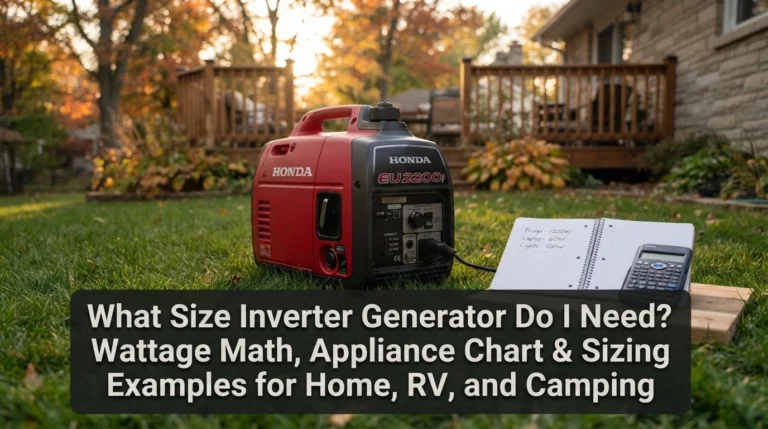
Start with running watts, which is the steady power a device uses. Then add starting watts, which is the short surge a motor needs to start.
How do you size a generator in three steps?
- List your loads: Write down every device you plan to run together.
- Add running watts: Use the label, manual, or a watt meter for real numbers.
- Add the biggest surge: Add the highest starting watts once, then pick a generator above that total.
Check your owner’s manual for the exact running and starting watts of your RV air conditioner, fridge, and microwave. Labels beat guesses every time.
What size works for tent, car, and RV camping?
Tent campers often do fine with 1,000 to 2,200 watts. That range covers lights, phones, a fan, and a small portable fridge.
Car campers and small trailers usually need 2,000 to 3,000 watts. That range adds a coffee maker, a laptop setup, and a 12-volt fridge without strain.
RV campers with a 13,500 BTU air conditioner usually need 3,000 to 3,500 watts, or two 2,000-watt units in parallel. A soft-start kit can lower that surge, but it does not remove it.
For a clear load-by-load breakdown, see what a 2,000-watt inverter generator can run before you pick a size. It helps you avoid buying too small and tripping the breaker on a hot night.
- 1,000–2,200W: Tent camping, charging, lights, fan, small fridge.
- 2,200–3,000W: Car camping, small trailer, coffee maker, portable fridge, laptop.
- 3,000–4,000W: RV with microwave, TV, and a small air conditioner.
- 4,000W+ or parallel: Larger RV air conditioner, plus other loads at once.
Section Takeaway: Do not size by guesswork. Add running watts, add the biggest starting surge, and choose a generator with headroom above that total.
What Can You Run on an Inverter Generator While Camping?
You can run most camp essentials on an inverter generator, as long as you stay within its running watts. Lights, charging, cooking, cooling, and comfort gear all fit with the right size.
The trick is timing. Run the biggest loads one at a time, and stagger the rest.
What can a 2,000-watt generator run at camp?
A 2,000-watt unit can run LED lights, phone chargers, a laptop, a fan, and a small portable fridge at once. It can also run a coffee maker or a small electric kettle, but not both with the fridge cycling.
It will not run a 13,500 BTU RV air conditioner on its own. It may run a small window unit or a portable air conditioner, so check the label first.
What can a 3,000-watt generator run at camp?
A 3,000-watt unit adds real comfort. It can run a microwave, a TV, a coffee maker, and a fridge in rotation, plus lights and charging.
It can often start a 13,500 BTU RV air conditioner, especially with a soft start. Once the air conditioner is running, keep other big loads off until it settles.
For a full load list at this size, see what a 3,000-watt inverter generator can run and match it to your own camp list. The examples help you plan meals, cooling, and charging without overloads.
Can an inverter generator run a CPAP, fridge, and Starlink?
Yes, with the right size and clean power. A CPAP uses about 30 to 60 watts, a portable fridge uses 40 to 100 watts while running, and Starlink uses about 40 to 100 watts.
Those three together often total under 300 running watts. A 2,000-watt inverter generator handles them easily and leaves room for lights and charging.
Use a surge protector and a short, heavy-duty extension cord for sensitive gear. Long, thin cords drop voltage and can cause odd shutdowns.
Section Takeaway: A 2,000-watt unit covers charging and light camp life, while a 3,000-watt unit adds cooking and cooling. Stagger big loads and you will rarely trip the breaker.
Inverter vs. Conventional Generator for Camping
An inverter generator is the better camping choice for most people. A conventional generator wins only when you need a lot of raw watts for the lowest upfront cost.
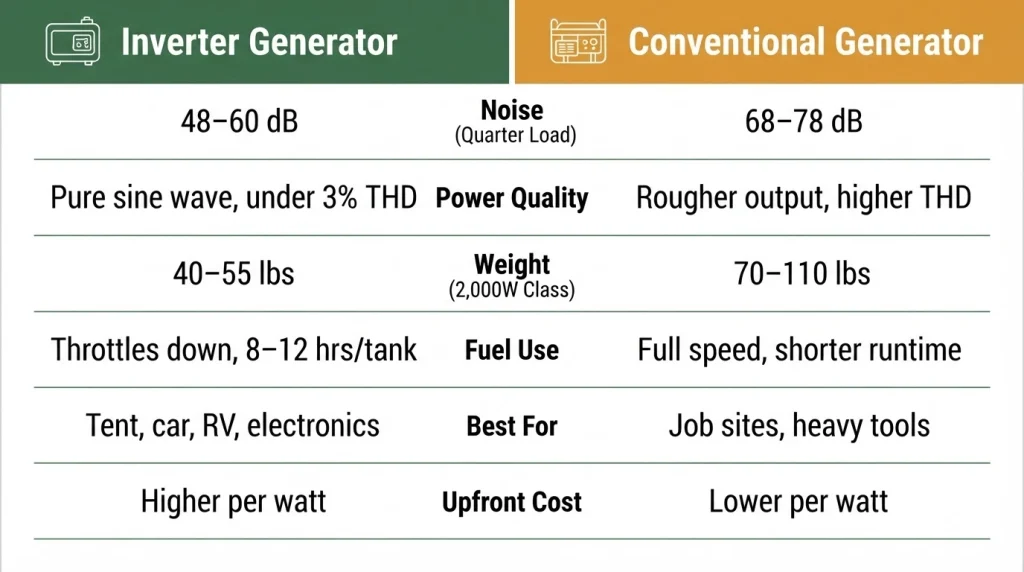
The table below makes the trade-off clear. Noise, weight, fuel use, and clean power matter more at a campsite than peak watts alone.
| Feature | Inverter Generator | Conventional Generator |
|---|---|---|
| Noise at quarter load | 48–60 decibels | 68–78 decibels |
| Power quality | Pure sine wave, under 3% THD | Rougher output, higher THD |
| Weight (2,000W class) | 40–55 pounds | 70–110 pounds |
| Fuel use | Throttles down, 8–12 hours per tank | Runs full speed, shorter runtime |
| Best for | Tent, car, RV, electronics | Job sites, large loads, budget power |
| Upfront cost | Higher per watt | Lower per watt |
I still own a conventional unit for home backup and heavy tools. I never take it camping anymore, because the noise and weight are not worth the savings.
If you camp in a group, noise is a shared cost. One loud generator can ruin a quiet evening for a dozen sites.
Section Takeaway: For camping, quiet power, clean output, and light weight beat raw watts. Choose an inverter generator unless you truly need high-watt, low-cost power for tools.
How Do You Set Up an Inverter Generator Safely at Camp?
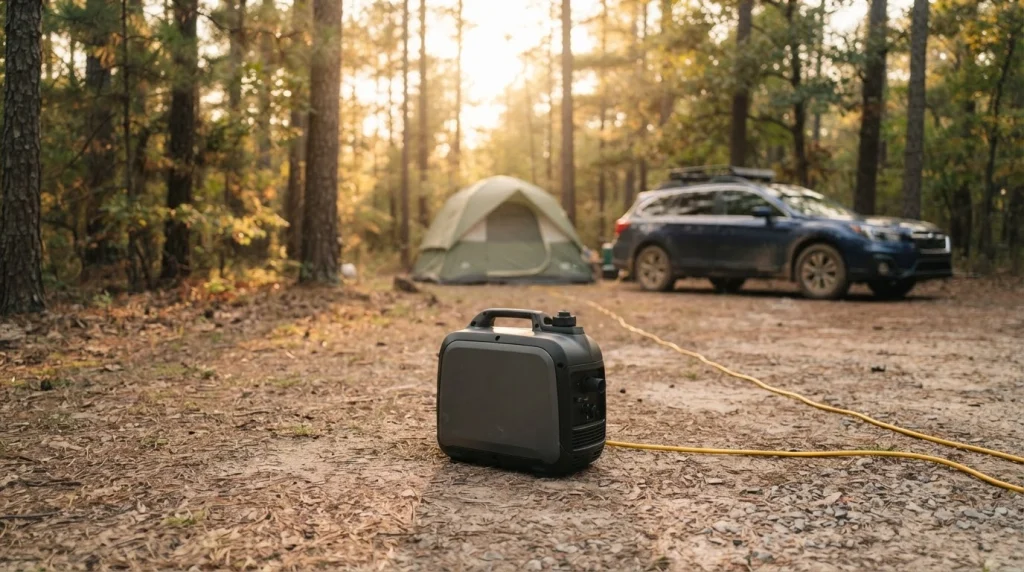
Safe setup starts before you pull the starter cord. Place the generator outside, on level ground, away from tents, RVs, and sleeping areas.
Carbon monoxide is colorless and odorless, and it can build up fast in a tent, RV, or enclosed awning. Never run a generator inside any enclosed space, even with a door open.
Safety note: Keep the generator at least 20 feet from tents and RVs, point the exhaust away from people, and use a battery-powered carbon monoxide alarm in your tent or RV. Follow your owner’s manual and local fire rules.
Where should you place it at your site?
Place it downwind, on dry, level ground, with clear air flow on all sides. Keep it away from dry grass, leaves, and fuel cans.
Use a short, outdoor-rated extension cord, 12-gauge for longer runs. Keep cords out of walkways and water puddles.
Do not cover a running generator with a tarp or a standard cover. Heat builds up fast, and exhaust needs a clear path out.
How do you refuel and store fuel at camp?
Turn the generator off and let it cool before you refuel. Hot exhaust and spilled fuel are a bad mix.
Store fuel in an approved container, away from the generator and away from open flame. Keep it in shade and out of a hot car or tent.
For general outdoor and vehicle safety guidance, NHTSA and AAA both publish practical road-trip and emergency-preparedness advice. Their checklists are a good habit before a long camping drive.
What about rain, dust, and cold mornings?
Most inverter generators can run in light rain with a proper running cover or a ventilated shelter. Never run one in standing water or a flooded site.
Cold starts are easier with fresh fuel, the right oil weight, and a full choke. Check your manual for cold-weather oil and starting steps.
After a dusty trip, clean the air filter and check the spark plug. Dust is the quiet killer of small engines at camp.
Section Takeaway: Place it outside and downwind, keep it cool and dry, refuel only when it is off and cool, and use a carbon monoxide alarm every night you run it.
How to Choose the Best Inverter Generator for Camping
Choose by your real load list, not by the biggest number on the box. A 2,000-watt unit you can lift beats a 4,000-watt unit you leave at home.
Weight, noise, runtime, and outlets matter as much as watts. A great camp generator is one you will actually carry, start, and run without fuss.
What features matter most for campers?
- Noise rating: Look for 60 decibels or less at quarter load, measured at 23 feet.
- Running watts: Match this number to your load list, not the peak number.
- Outlets: You need at least two 120V outlets, USB ports, and a 30-amp RV outlet if you tow.
- Runtime: Look for 8 hours or more at quarter load on one tank.
- Weight and handles: Under 55 pounds is easy for one person; over 70 pounds needs wheels.
- Parallel kit: This lets you link two small units later instead of buying a big one now.
Should you buy gas, dual-fuel, or propane for camping?
Gasoline is the most common choice for camping. It is easy to find, starts fast, and gives full rated power.
Dual-fuel models add propane, which stores longer and burns cleaner. Propane gives about 10% less power, so size with that drop in mind.
Propane-only models are rare for camping. They suit long storage and clean operation, but fuel can be harder to find on the road.
Compare current models in our best inverter generators guide before you buy. It groups models by size, noise, and use case, so you can match one to tent, car, or RV camping.
What about tent camping vs. car camping vs. RV camping?
Tent camping favors light weight and quiet operation. A 1,000- to 2,200-watt unit, a small solar panel, and a power station often cover the whole trip.
Car camping favors compact size and easy storage. A 2,000-watt unit fits in a trunk or truck bed and powers a fridge, lights, and cooking gear.
RV camping favors outlets, runtime, and parallel power. A 3,000- to 3,500-watt unit, or two linked 2,000-watt units, covers air conditioning and kitchen loads.
If you camp from a car or SUV, see portable generators for car camping for models that balance size, weight, and power. The right pick fits your vehicle and your load list, not just your budget.
For independent test notes and long-term reliability, Consumer Reports is a useful cross-check before a big purchase. For fuel and emissions basics, the EPA site explains small-engine rules in plain language.
Section Takeaway: Buy for your real loads, your vehicle, and your campground rules. Quiet, light, and parallel-ready beats big and loud for most campers.
Frequently Asked Questions
Can you use an inverter generator for camping in a tent?
Yes, you can use an inverter generator for tent camping if the campground allows it. Place it at least 20 feet from your tent, downwind, and never run it inside a tent, vestibule, or enclosed shelter.
Can you run an inverter generator all night while camping?
Most campgrounds ban overnight generator use during quiet hours, even for a CPAP or fridge. Use a battery or power station at night, and recharge it with the generator during allowed hours.
Is an inverter generator safe for a CPAP machine?
Yes, a pure sine wave inverter generator is safe for most CPAP machines. Check your CPAP wattage, use a surge protector, and test the setup at home before your first trip.
How far should an inverter generator be from a tent or RV?
Keep it at least 20 feet away, downwind, with the exhaust pointed away from people. Use a battery-powered carbon monoxide alarm inside your tent or RV every time you run it.
Can a 2,000-watt inverter generator run an RV air conditioner?
No, a single 2,000-watt unit usually cannot start a 13,500 BTU RV air conditioner. You need a 3,000- to 3,500-watt unit, a soft-start kit, or two 2,000-watt units in parallel.
Do you need a special cord to connect an inverter generator to an RV?
Yes, use an RV adapter and a short, outdoor-rated extension cord, usually 12-gauge or heavier. Match the plug to your RV inlet, and never use a damaged cord or a household adapter for a 30-amp load.
The Bottom Line for Campers in 2026
Yes, you can use an inverter generator for camping, and for most campers it is the best power choice. It is quiet, light, fuel-efficient, and safe for the electronics you actually bring.
Size it to your real loads, check campground hours and noise rules, and set it up outside and downwind. Do that, and you will have power for lights, cooking, cooling, and charging without ruining the quiet that made you go camping in the first place.
Start with your load list tonight. Add running watts, add the biggest surge, and pick a quiet model with headroom above that total.

Hi, I’m Michael Turner. I own a generator workshop in the United States and founded HomeGeneratorBlog to share practical, hands-on guidance about generator installation, maintenance, troubleshooting, safety, and backup power solutions. My goal is to help homeowners make smarter, more confident decisions through clear and reliable information