Can Inverter Generators Support Whole-House Backup Systems? Sizing, 240V Power & Safe Setup
Quick Answer
Yes, inverter generators can support whole-house backup systems, but only when the setup matches the home. You need enough running watts, a 240V outlet or parallel kit for larger loads, and a safe transfer-switch or interlock hookup. Start by choosing the right generator size for a power outage before you buy.
The short version
- Essentials are easy: A 3,000 to 5,000-watt inverter can often run lights, a fridge, phones, a furnace blower, and a sump pump.
- Whole house is harder: Central air, electric heat, a well pump, and an electric water heater can push demand past 10,000 watts.
- 240V matters most: Many large inverter models offer 240V, while most small models are 120V only.
- Parallel helps: Two matched inverter generators can double usable power when the kit and outlets allow it.
- Hookup must be safe: Use a transfer switch or interlock installed by a licensed electrician, never a suicide cord.
Start here
- List your must-run circuits first, then add their running watts and the largest starting watts.
- Pick a generator with at least 20% headroom above that total.
I have run a fridge, a CPAP, lights, and a furnace blower through a multi-day outage on an inverter generator. It worked well because I planned the loads first.
This guide goes deeper than a yes-or-no answer. You will learn what whole-house backup means, how to size it, when 240V and parallel power help, and when a standby generator makes more sense.
In This Guide
- What Does Whole-House Backup Actually Mean?
- Can an Inverter Generator Support a Whole-House Backup System?
- How Much Power Does a Whole House Really Need?
- What Size Inverter Generator Do You Need for Whole-House Backup?
- Do You Need 240V Power, Parallel Kits, or Both?
- Inverter Generator vs Standby Generator vs Conventional Generator
- How Do You Connect an Inverter Generator to a Whole-House System Safely?
- How Long Can an Inverter Generator Run a House, and What Limits It?
- When Is an Inverter Generator Not Enough?
- Frequently Asked Questions
- Final Takeaway
What Does Whole-House Backup Actually Mean?
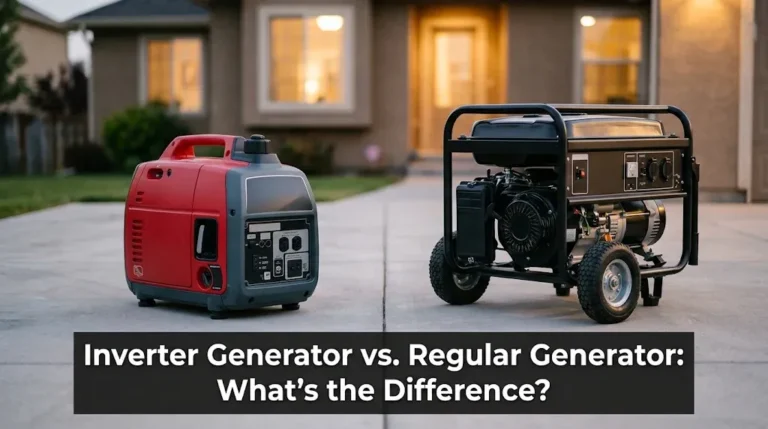
An inverter generator is a portable generator that makes clean, stable power by converting raw AC power to DC, then back to AC. That clean sine wave suits phones, laptops, and modern furnace controls.
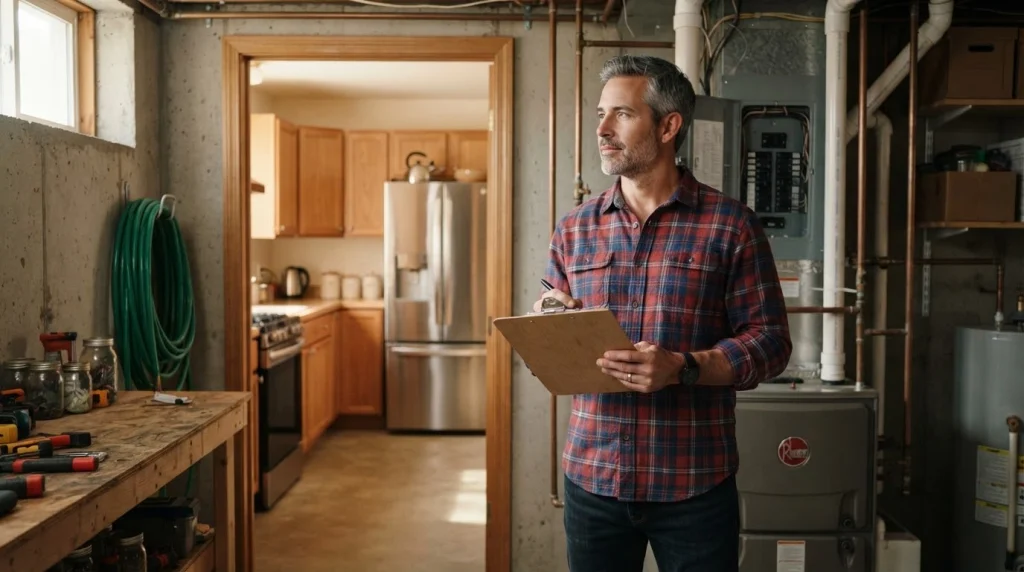
Whole-house backup does not always mean every circuit at once. For most homes, it means the panel can power the circuits you choose during an outage.
Some people mean full, normal use with no changes. Others mean heat, water, food, lights, and medical gear, with the rest switched off.
That difference changes the size you need by thousands of watts. A clear load list keeps the plan honest.
Three common whole-house setups
- Essentials only: Fridge, freezer, lights, phones, furnace blower, sump pump, and CPAP.
- Comfort backup: Essentials plus a window AC, microwave, well pump, or small water heater used one at a time.
- Near-normal use: Most circuits live, including central air or electric heat, with careful load control.
Inverter generators shine in the first two setups. They are quiet, fuel-efficient, and safe for sensitive electronics.
Near-normal use is possible, but it takes a large inverter, parallel units, or a standby system. Check the best whole-home portable generators to see how size and outlets change with the load.
Section takeaway: Whole-house backup means powering your chosen circuits safely, not running every appliance at once without a plan.
Can an Inverter Generator Support a Whole-House Backup System?
Yes, in many homes. The key is matching watts, voltage, and hookup to the loads you plan to run.
A small 2,000-watt inverter will not run a whole house. A 7,500 to 9,500-watt inverter, or two paralleled units, can cover far more.
Clean power is a real plus here. Inverter output has low total harmonic distortion, often called THD, which means less risk to circuit boards and chargers.
THD measures how clean the power wave is. Lower THD is better for electronics.
What works well on an inverter generator?
- Refrigerator and freezer: Steady running watts, with a short surge at startup.
- Furnace blower: Gas heat needs far less power than electric heat.
- Sump pump: Needs strong starting watts, so check the surge rating.
- Lights and electronics: Low draw, and clean power helps here.
- Window AC: Possible on a mid-size inverter, but watch the startup surge.
I once watched a window AC surge trip a small inverter at dusk. The fridge had just cycled on too.
That taught me a simple rule. Start the biggest motor first, then add smaller loads one by one.
Safety note: Run any generator outdoors, at least 20 feet from the home, with exhaust pointed away from windows, doors, and vents. Follow the CDC carbon monoxide guidance and your owner’s manual.
Section takeaway: An inverter generator can support whole-house backup when its watts, voltage, and hookup match your chosen circuits.
How Much Power Does a Whole House Really Need?
Most homes need 5,000 to 10,000 running watts for a useful backup plan. Full, carefree use can need 12,000 watts or more.
Running watts are the steady power a load uses. Starting watts, also called surge watts, are the short spike when a motor starts.
Motors cause the biggest spikes. A fridge may run at 150 watts but need 1,200 watts to start.
Typical appliance wattage ranges
| Appliance | Running watts | Starting watts |
|---|---|---|
| Refrigerator | 150-800 | 800-2,200 |
| Freezer | 100-500 | 800-1,500 |
| Furnace blower (gas) | 500-1,200 | 1,200-2,200 |
| Sump pump | 800-1,500 | 1,500-3,000 |
| Well pump | 1,000-2,000 | 2,000-4,000 |
| Window AC (8,000-12,000 BTU) | 700-1,500 | 1,800-3,000 |
| Central AC (3-ton) | 3,000-4,000 | 6,000-9,000 |
| Electric water heater | 4,000-5,500 | 4,000-5,500 |
Use these ranges as a guide only. Check each appliance label or manual for its true draw.
Add the running watts of everything you will run at once. Then add the largest starting watts on top.
That total is your real target. A generator sized only for running watts will trip when motors start.
Section takeaway: Add running watts together, then add the largest starting surge, and size for that combined peak.
What Size Inverter Generator Do You Need for Whole-House Backup?
Size follows your load list, not a guess. A 3,000-watt inverter suits essentials in a small home.
A 5,000-watt inverter covers more comfort loads. A 7,500 to 9,500-watt inverter, or a parallel pair, fits many whole-house plans.
Use this simple sizing method. It takes ten minutes and saves a costly mistake.
- Write down each must-run circuit and appliance.
- Note running watts and starting watts for each one.
- Add all running watts together.
- Add the single largest starting watts to that sum.
- Add 20% headroom for surges, heat, and altitude.
- Match the result to a generator’s running watts, not its peak watts.
Here is a quick example. Fridge (600 running), freezer (400), furnace blower (800), sump pump (1,000), lights and phones (400) total 3,200 running watts.
Add the sump pump surge of 2,000 watts, and the peak hits 5,200 watts. With 20% headroom, you want about 6,200 running watts of capacity.
That is why a 5,000-watt unit can feel tight here. Learn how to calculate the generator wattage you need with your own loads before you choose a model.
Size guide by backup goal
- 2,000-3,000 watts: Lights, phones, fridge, CPAP, and small electronics.
- 3,500-5,000 watts: Essentials plus furnace blower, sump pump, and window AC used in turns.
- 7,500-9,500 watts: Broad whole-house backup, often with 240V and larger motor loads.
- Parallel pair: Two mid-size inverters for flexible power and easier lifting.
Section takeaway: Buy for running watts with headroom, and let your load list set the size, not the box label.
Do You Need 240V Power, Parallel Kits, or Both?
You need 240V power for many whole-house circuits. Well pumps, central air, electric dryers, and electric water heaters often run on 240V.
A 120V-only generator can feed only one side of a panel through a transfer switch. That limits what you can run.
Check the outlet before you buy. Look for a 240V twist-lock outlet, often marked L14-30R, on larger inverter models.
How does parallel power work?
Parallel capability lets two matched inverter generators join into one larger power source. A parallel kit links them and adds a shared outlet.
Two 3,500-watt inverters can give about 7,000 running watts combined. That can beat one heavy unit for lifting and storage.
Not every parallel kit offers 240V, though. Some kits stay at 120V, so read the kit specs first.
Use matched models from the same brand and series when the manual calls for it. Mixing brands or sizes can cause faults or poor sync.
Compare parallel-capable portable generators if you want flexible power without one very large unit.
When is 240V a must?
- Well pump: Most deep-well pumps need 240V to start and run.
- Central air: The compressor and air handler often need 240V.
- Electric heat: High draw, and often not practical on a portable inverter.
- Full panel feed: A 240V inlet feeds both legs of the panel.
Section takeaway: If you need 240V loads, buy a 240V inverter or a parallel kit that clearly supports 240V.
Inverter Generator vs Standby Generator vs Conventional Generator
Each type fits a different home. Inverter units win on clean power and noise, while standby units win on hands-free power.
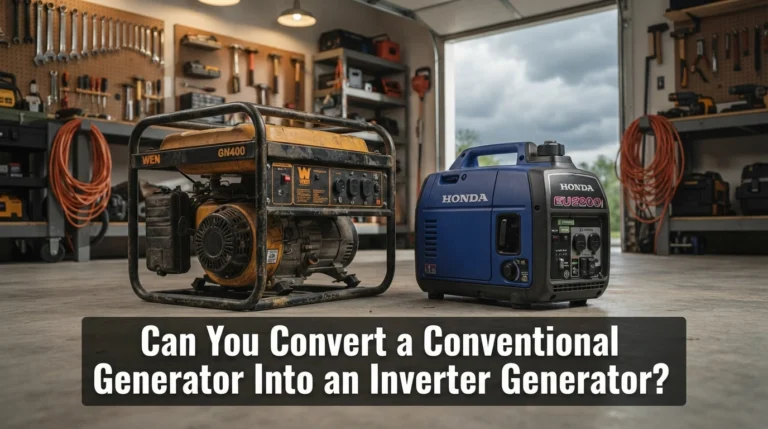
Conventional open-frame generators often cost less per watt. They are louder and their power is less clean for sensitive gear.
| Feature | Inverter generator | Standby generator | Conventional generator |
|---|---|---|---|
| Power quality | Clean sine wave, low THD | Good, model-dependent | Rougher, higher THD |
| Noise | Quiet, often 50-65 dB range | Moderate, fixed install | Loud, often 70 dB or more |
| Fuel use | Efficient, eco-throttle helps | Runs on gas or propane | Higher at light loads |
| Startup | Manual, needs setup | Automatic, self-tests | Manual, needs setup |
| Whole-house fit | Strong for essentials and mid-size loads | Best for full, hands-free backup | Strong watts, louder and less clean |
| Cost | Mid to high per watt | High, plus install | Lowest per watt |
Eco-throttle, also called economy mode, slows the engine at light loads. It saves fuel and cuts noise.
Turn eco mode off for large motor starts. The engine needs full speed to meet the surge.
If you want automatic power during long outages, compare the best standby home generators before you commit to a portable setup.
Section takeaway: Choose an inverter for clean, quiet, flexible backup, and a standby unit for automatic whole-house power.
How Do You Connect an Inverter Generator to a Whole-House System Safely?
Safe hookup starts with the right hardware. A transfer switch or an interlock kit stops generator power from feeding back into the grid.
Backfeed can kill line workers and damage your home. Never use a double-male extension cord, often called a suicide cord.
A transfer switch moves chosen circuits from grid power to generator power. An interlock kit locks the main breaker off while the generator breaker is on.
Both need a proper inlet box outside the home. The generator plugs into the inlet with a heavy-duty cord rated for the load.
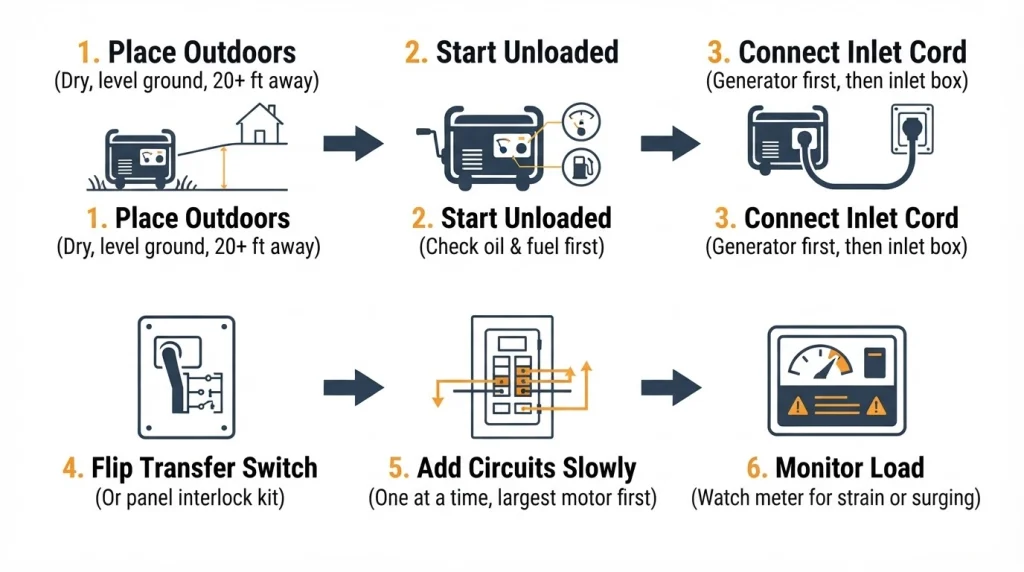
Safe connection steps
- Place the generator outdoors, far from the home, on dry, level ground.
- Check oil and fuel, then start it with no load attached.
- Plug the inlet cord into the generator first, then into the inlet box.
- Switch the transfer switch or interlock to generator power.
- Turn on circuits one at a time, largest motor first.
- Watch the load meter and listen for strain or surging.
Extension cords are fine for a fridge or a lamp. They are not a whole-house hookup.
Use outdoor-rated cords, keep them dry, and never run them through a door or window that pinches the cord. Check the CPSC generator safety guidance before your first outage run.
Safety note: Have a transfer switch or interlock installed by a licensed electrician. Check your owner’s manual and local code before use.
Section takeaway: Use a transfer switch or interlock, a proper inlet, and a licensed electrician, and never backfeed the grid.
How Long Can an Inverter Generator Run a House, and What Limits It?
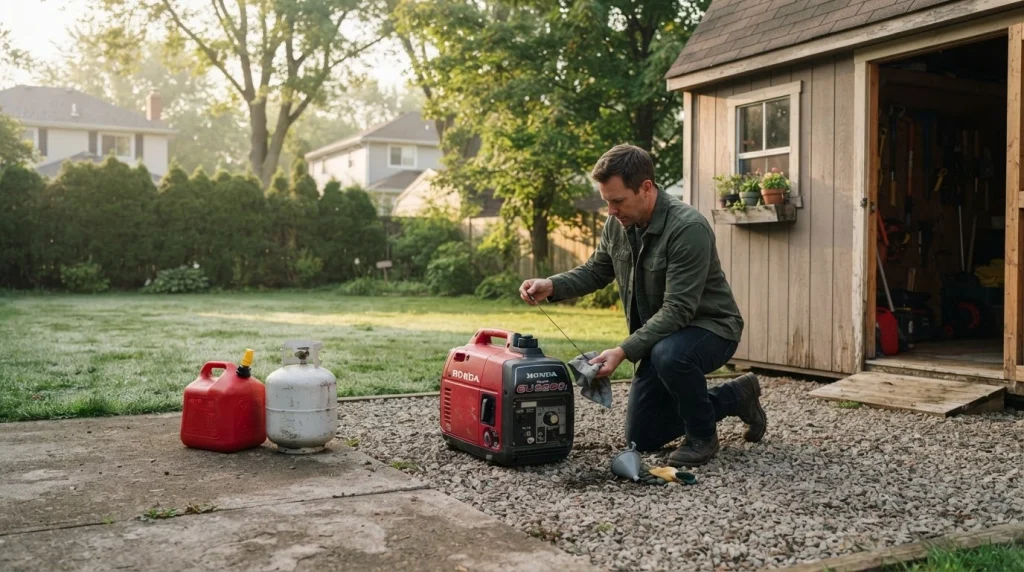
Runtime depends on tank size, load, and fuel type. A mid-size inverter may run 8 to 12 hours at 25% load on one tank.
At 50% load, that runtime drops fast. Heavy loads burn fuel much faster than light loads.
Eco mode helps at light loads. It will not help much when the fridge, pump, and AC all run at once.
Fuel storage is the real limit in a long outage. Gasoline goes stale in months, so use stabilizer and rotate stock.
What limits multi-day backup?
- Fuel supply: Plan for at least 24 to 48 hours of fuel, stored safely outdoors.
- Oil checks: Check oil often during long runs, per your manual.
- Heat and ventilation: Keep airflow clear and never cover a running unit.
- Noise and neighbors: Night runs need a quiet spot and good placement.
- Refueling: Shut the unit down and let it cool before you refuel.
Dual-fuel models add flexibility. Propane stores longer than gasoline and burns cleaner, though it may cut peak watts slightly.
A portable power station or solar generator can cover phones and lights. It will not replace a fuel generator for motors and heat.
Remember the difference between running watts and starting watts when you plan runtime, since surges raise fuel use too.
Safety note: Store fuel outdoors in approved containers, away from heat and living space. Check the EPA fuel and generator guidance for safe handling.
Section takeaway: Runtime is set by load and fuel supply, so plan fuel, oil checks, and rest breaks for long outages.
When Is an Inverter Generator Not Enough?
An inverter generator is not enough when your must-run loads exceed its running watts. Electric heat, large central air, and an electric water heater often push past that line.
It is also a poor fit when no one is home to start it. A standby unit starts on its own and can run for days on a gas line.
Medical gear adds another test. A CPAP is easy, but a home oxygen concentrator or powered lift needs a firm wattage and runtime plan.
Check local rules too. Some homes, rentals, and HOAs limit generator use, fuel storage, or noise hours.
Signs you need a bigger plan
- Frequent overload trips: The load list is bigger than the generator.
- No 240V loads: You need a well pump or central air, but the unit is 120V only.
- Long outages: You need days of power with little refueling.
- No one home: You need automatic start and transfer.
In those cases, size up, add a parallel unit, or price a standby system. The U.S. Department of Energy home energy guidance can help you weigh backup options.
Section takeaway: When loads, 240V needs, or outage length exceed a portable inverter, move to a larger or automatic system.
Frequently Asked Questions
Can a 2000-watt inverter generator run a house?
No, not a whole house. It can run lights, phones, a fridge in turns, and a CPAP, but it lacks the watts and 240V power for pumps, heat, and air conditioning.
Can an inverter generator run central air?
Sometimes, with a large 240V inverter or parallel pair and a soft-start kit. A 3-ton unit can need 6,000 to 9,000 starting watts, so check the compressor label first.
Do I need a transfer switch for an inverter generator?
Yes, for whole-house backup through the panel. A transfer switch or interlock prevents backfeed, and a licensed electrician should install it.
Can I parallel two inverter generators for whole-house backup?
Yes, if both units and the kit support it. Use matched models, follow the manual, and confirm whether the kit offers 240V output.
How long will an inverter generator power a house?
It depends on load and fuel. A mid-size unit may run 8 to 12 hours at light load, but heavy loads and small tanks cut that time sharply.
Is an inverter generator safe for electronics?
Yes, most inverter models make clean sine-wave power with low THD. That suits laptops, phones, and modern furnace controls better than many open-frame units.
What is the best inverter generator size for whole-house backup?
There is no single best size. Many homes need 7,500 to 9,500 running watts, or a parallel pair, while smaller homes can manage with 5,000 watts and load control.
Final Takeaway
Inverter generators can support whole-house backup systems when you size them with care. Pick your must-run circuits, add running and starting watts, and leave headroom.
Choose 240V power or a parallel kit when your loads demand it. Connect through a transfer switch or interlock, and test the full setup before the next storm.
As of 2026, large inverter models keep getting quieter and more capable. A planned setup still beats a bigger box with no load list.
Start with your load list today. Your next outage will feel calmer because you already know what will run, and what will wait.

Hi, I’m Michael Turner. I own a generator workshop in the United States and founded HomeGeneratorBlog to share practical, hands-on guidance about generator installation, maintenance, troubleshooting, safety, and backup power solutions. My goal is to help homeowners make smarter, more confident decisions through clear and reliable information